Seriously?

I noticed some chewed looking leaves on my pepper plants in my front window. Then I noticed one of the pepper fruits dangling strangely. I picked it up, and it wasn’t actually attached because a caterpillar had eaten through the stem. The culprit was caught because it was still inside the pepper. Like Peter pumpkin eater. Or maybe his wife. Peter Peter pepper eater. Or is that Peter piper and peppers. Hm. Any who, that’s a different rabbit hole.

Photo description: small green pepper with no stem and the body of a caterpillar visible inside the pepper

So not only do I have pollinators in the house, there are consumers (besides my house spiders). For background, these plants were grown from seed in peat pots and store bought soil. They have never been outside.

Hot

My outside vegetable garden didn’t happen this year. I started basil and bell peppers inside, then waited to plant because a friend planted outside too soon and their peppers all died. Then it got hot (it’s Texas y’all), and the raised bed needed an overhaul because it isn’t draining, which is a yucky job in the heat. So now it is September and my peppers and basil are still in the window. The pepper leaves are a rich dark green and the plant is fruiting. What is pollinating them inside? I’ve actually had more fruit set inside than outside. Hm.

Photo description: small red orange pepper peeking out between dark green pepper plant leaves

The seeds I started were labeled Bell Pepper Carnival Mix, and I am getting some different colors: red, green, purple. The peppers are quite small, probably because they are still in their starter pots. We picked and ate the pepper pictured above and were surprised at the heat, not like a bell pepper at all. It also is shaped more like a fresno pepper. So I’m wondering if my Carnival mix was a pepper mix rather than a bell pepper mix, or if smaller fruit from restricted growing conditions makes for a hotter pepper. Hm.

Left over moss

I had been keeping the left over moss I purchased for my mossarium in the plastic container it shipped in, but I noticed some mold growing in there, so introduced the moss to an empty glass jar. I put some orchid substrate on the bottom, formed a loose ball with the moss, and tucked it i to the jar. Because it is a patterned jar, it doesn’t show the moss clearly, so looks… questionable.

Photo description: moss and substrate in an old glass jar with glass lid

Moss is happy though. We’ll see how it goes.

Mossarium: update

The natural moss that I gathered from the back yard for my mossarium all died in a dramatic going-brown-and-crumbling way, except for one small patch. I bought some cultivated moss to replace it (it came in a multi-pack, ooo).

Photo description: four kinds of moss and the plastic container they were shipped in

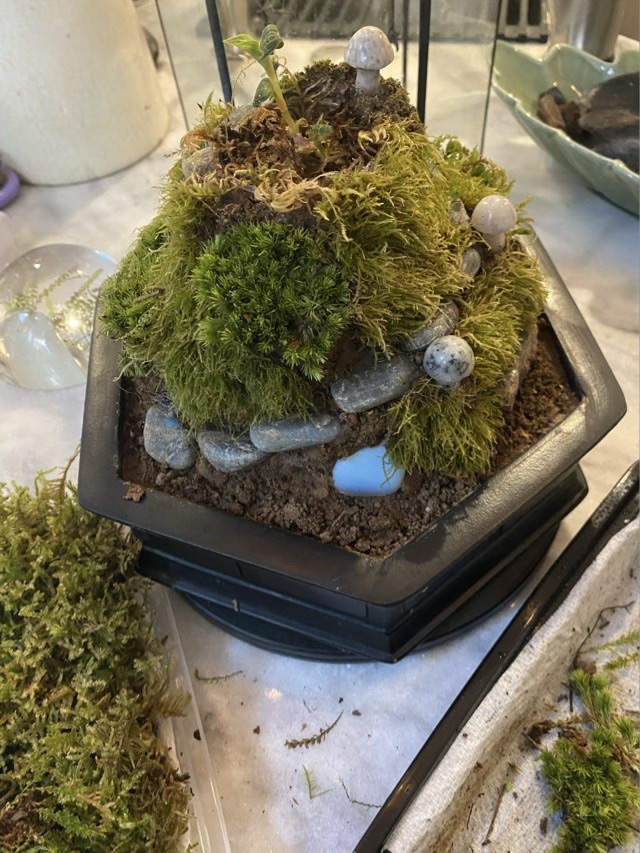
I tucked the moss in crevices that I formed in my clay terrarium base, and used the sheet moss on the vertical slopes. To keep the sheet moss in place, I used short sections of a broken toothpick as tiny stakes.

Photo description: using a section of a wood toothpick to stake down sheet moss

I left some open areas of dirt, but not many. I quite enjoyed the placing of the moss, although I’m hoping that this round survives.

Photo description: mossarium with new moss applied to the small artificial hill with labradorite steps spiraling to the top and jewel orchid at the crown

I do have extra sphagnum moss and another similar looking moss. I put them back in the container and will keep them moist until I figure out something better.

Orchid mount

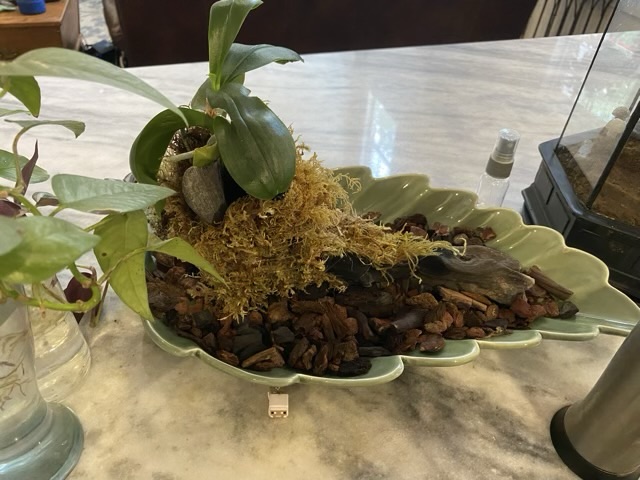
My orchid count has doubled. I purchased a jewel orchid for my terrarium, and now I have a full size orchid from family. I’m rather fascinated with mounted orchids, despite the daily misting requirements, so I took a piece of lake drift wood that I collected years ago, placed the orchid, and wrapped the roots lightly with sphagnum moss. I secured the whole thing, until the orchid can establish contact, with fishing line wrapped gently around. To catch overspray, I put the mounted orchid in a leaf dish filled with orchid mix.

Photo description: orchid on its new mount with sphagnum moss to help keep the roots moist
Photo description: opposite side of the orchid setup

The center leaf has continued to grow, so I’m hoping the orchid continues to enjoy its new habitat.