A ray of light from my garden to you.

My honey suckle is blooming again too. Nice!

A ray of light from my garden to you.
My honey suckle is blooming again too. Nice!
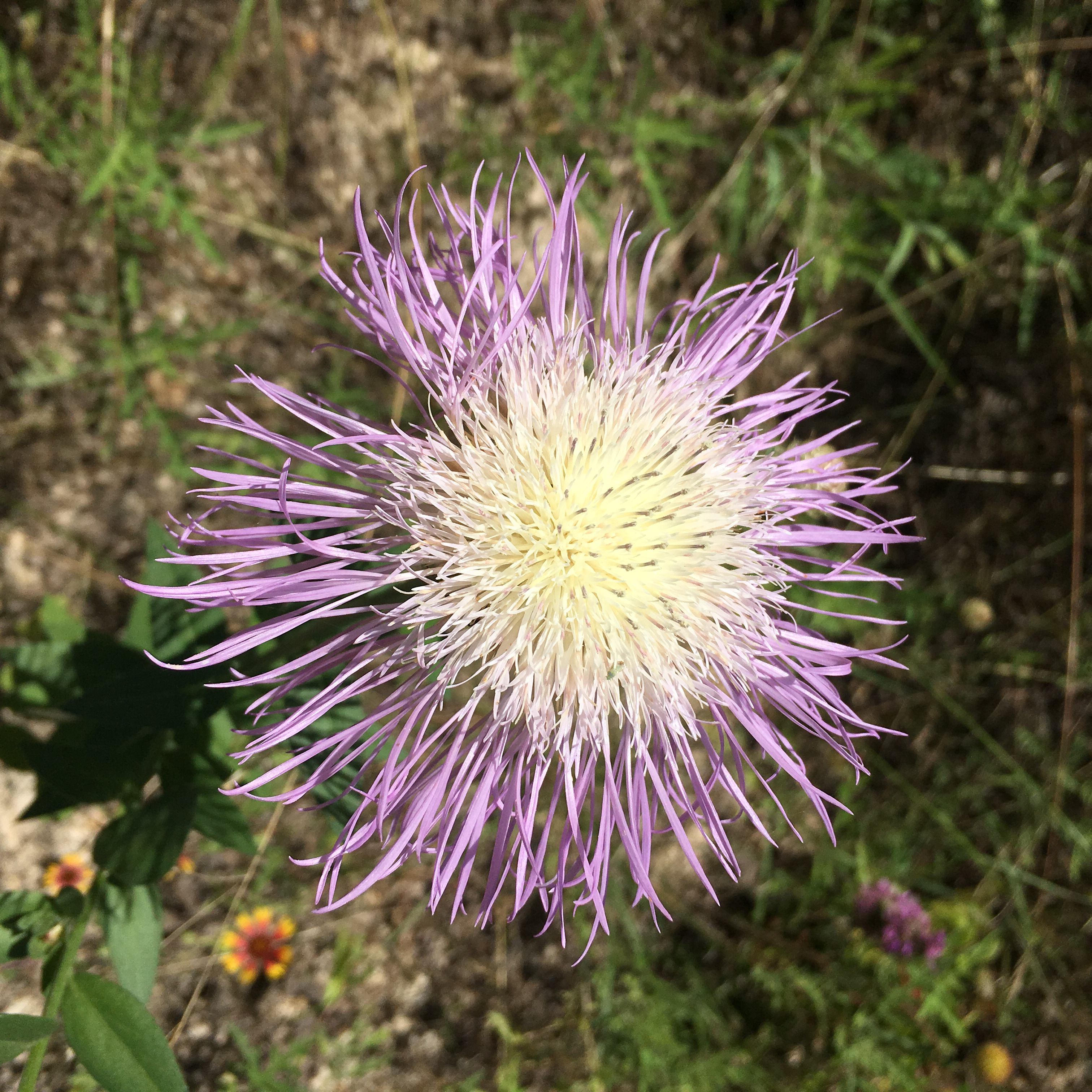
Every time a new flower blooms in our meadow I think I have a new favorite flower! This week’s favorite is the American basket flower. I love that it looks like a purple thistle without the prickly bits!

Now one bonus flower (Standing cypress aka Scarlet gilia) is one thing, but two is suspicious. I think that I planted a hummingbird and song bird flower mix as well as a shade flower mix, and Lady Bird Johnson’s mix. All at different times in the last year and a half, all (I thought), duds. Apparently we are getting the right amount of rain for the meadow. So there we go, mystery solved. Kind of exciting to see what my next favorite flower is going to be.

Uh, hello. My iNaturalist app tells me that this might be a variety of bark scorpion that was crawling across my back porch. It was on its way to being a former bark scorpion; I’m pretty sure it was suffering from the effects of the spray the exterminator put down around the house last week (not around the coop, just the house). It did not have to suffer long. Out in the meadow, under a nice rock is a good place for scorpions. On my back porch is not.
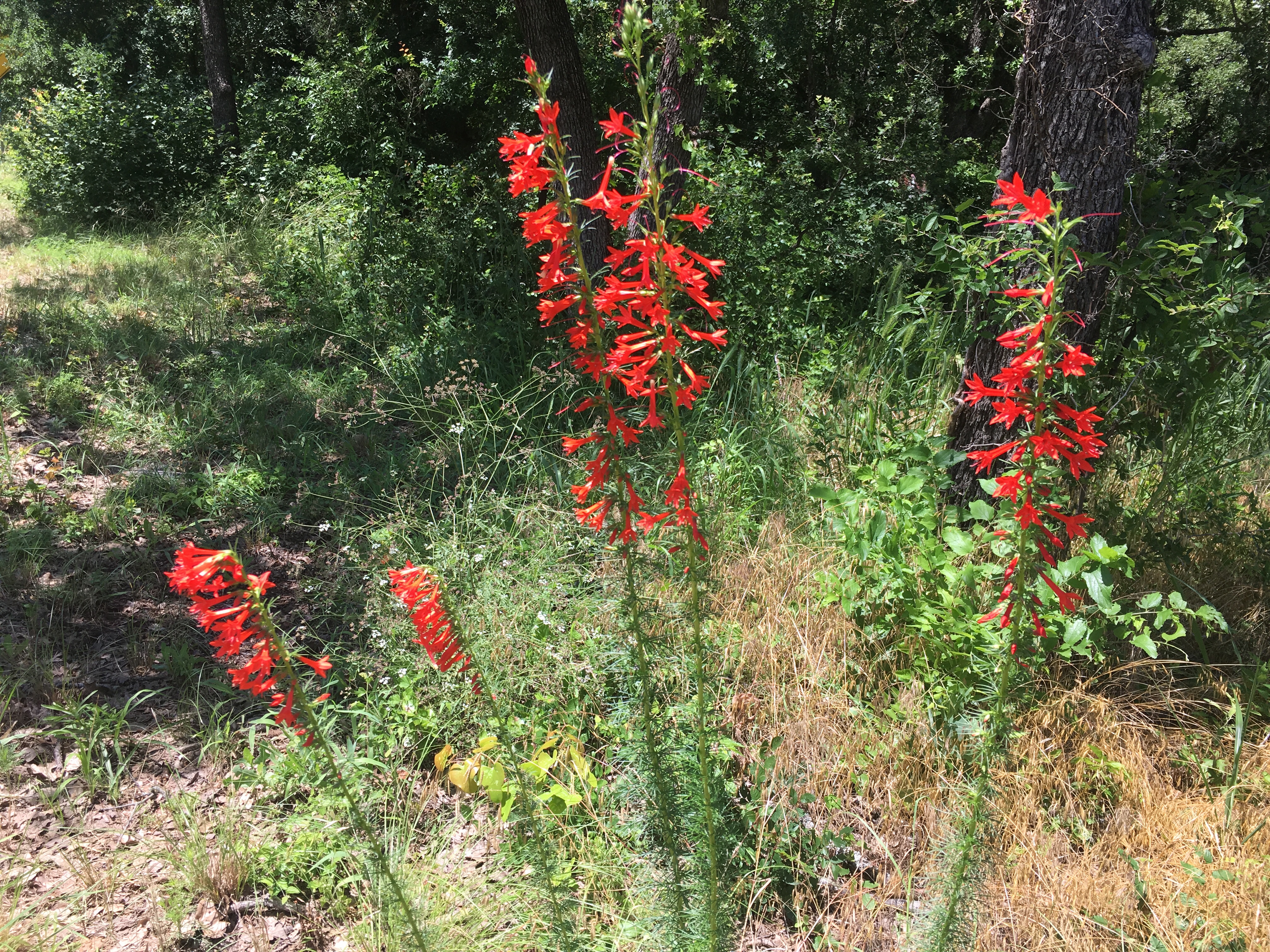
Aren’t these pretty? The app PlantSnap identifies these as Scarlet gilia. Here is an interesting article on the Scarlet Gilia, which is native to the western US. I’ve spread native wild flower seeds, but this one wasn’t in the mix. Bonus flower!
The hummingbirds love them, which I love, because I am terrible about remembering to change hummingbird food every three days, and after reading that the black mold kills hummingbirds, I don’t even bother making sugar water anymore. I plant flowers the hummingbirds like instead. Win win.
We ordered some Scarlet gilia seed too, since this plant is doing well. We are all about planting native species that don’t need lots of specialty care and attention!

Here is another early spring bloomer in Texas: Nothoscordum bivalve also known as false garlic or Crow poison. We had so many in the lawn at our last house that I would make wreaths and crowns for my kids. The long thin stems make it easy to braid into garland (albeit tiny tiny garland!)
I was excited to see it bloom in our new neck of the woods. It has definitely been a sure sign of spring for me for many years.
I stumbled upon a good article about the toxicity and history of this plant too. Apparently some chicken farmers would spread a paste of this flower in the heads of their chickens so if a crow ate the chicken, the crow would die.
I think I will just cover my runs, thank you very much.
 Critters and Craft