Largest leaf

Mulberry leaf

This is the largest leaf on our property. iNaturalist identifies it, consistently, as a kind of mulberry. We have a few saplings with this kind of leaf in the back woods, one of which is about 12 feet tall. I have not seen any berries, but the trees are all under a canopy of post oak and cedar elm, so don’t get much sunlight. I’m keeping an eye on them though, and I’ve marked a couple of the smaller saplings for possible transplant to a sunnier location. The idea of mulberry pie is enticing.
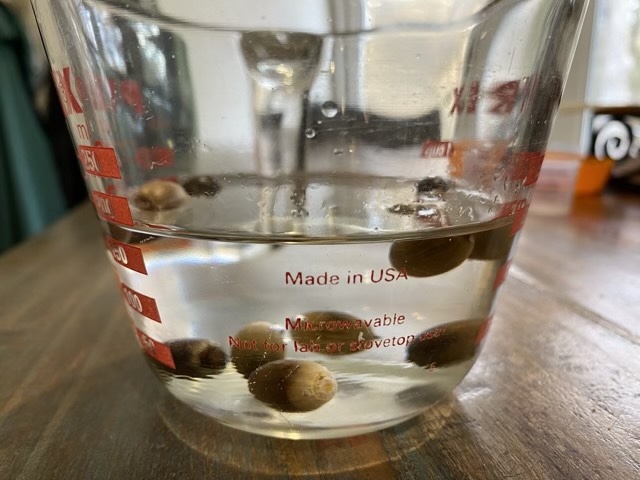
Acorn float test

In reading more about acorn weevils, I stumbled across a float test for acorns. If the acorn floats, it most likely has been inhabited by a grub, because the grub eats the nut meat and lessens the acorn density. I took a handful of carefully selected acorns, that I believed were grub free, and put them in a cup of water.

Acorn float test

Half of my acorns floated. I broke one of the floating ones open, and sure enough, there was a grub inside. Hm. I also read that squirrels will leave the grub infested nuts, so when humans are searching the ground it will seem like the weevil infestation is total, but really the whole nuts have already been found and buried. Learn something new everyday.

Surprise lilies

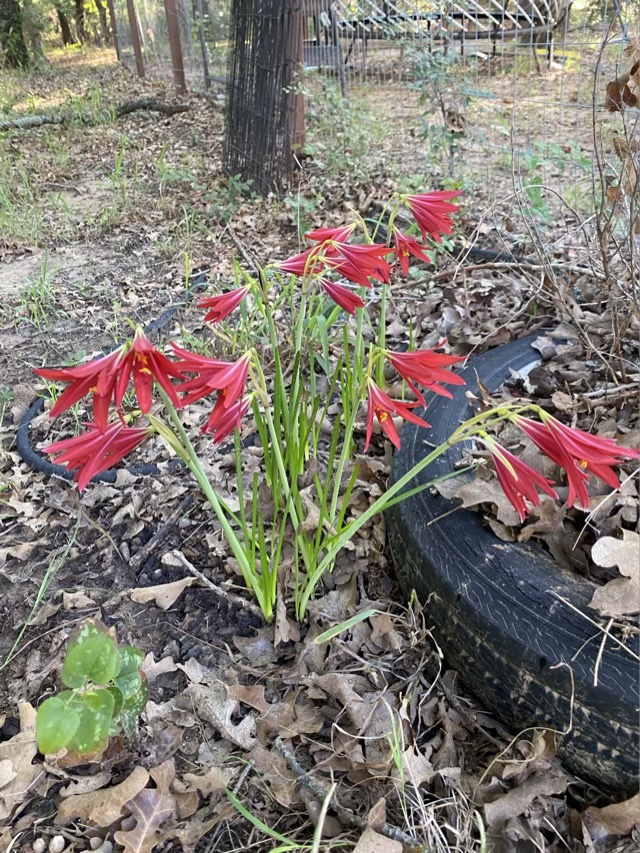
Our big rain was over a week ago. After a summer of 100 degrees everyday and no rain, the fields and most yards were yellow. One big gusher and a few days and almost everything is green again. We did have some losses, and I think the accounting is not finished, but I was surprised by rain lilies and school house lilies this week.

Drummond’s Rain Lily (aka Giant Rain Lily)
Drummond’s Rain Lily in three stages (not picked, just growing that close)
Schoolhouse lilies (aka oxblood or surprise lilies)
Mr Tom was not interested in posing with the lilies, so the picture is blurry; he was much more interested in scritches

Can you spot it?

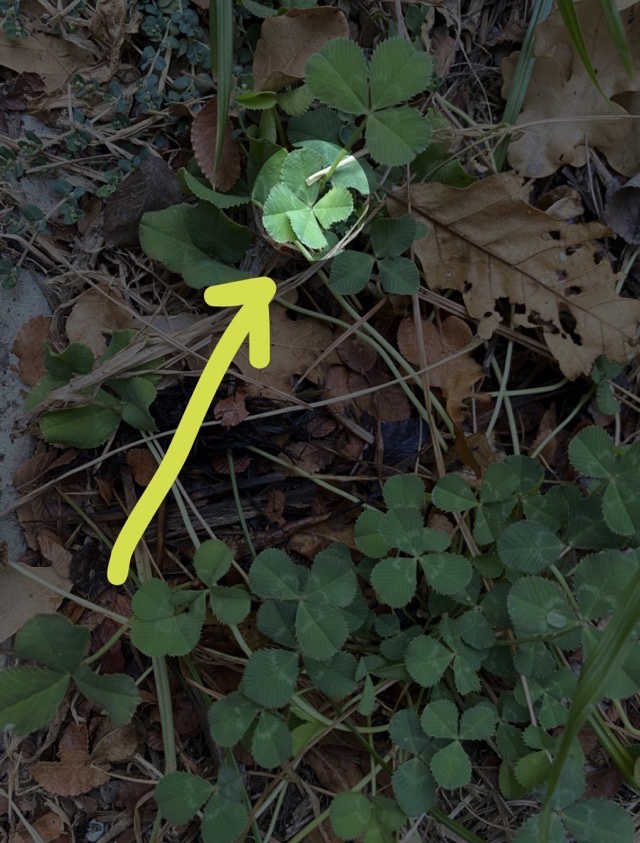
Our very hot, very dry summer killed off most of our clover. Most, but not all. One small clump managed to survive by setting root under the watering manifold (which has a small leak so the soil is damp beneath). The small collection of three-leaved clover managed to provide me with a four-leaf. I did not pick it when I found it, which was good because it hadn’t fully grown. Later the fourth leaf filled out better. Can you spot it in the photo below? Remember to think squares as you are looking, as opposed to triangles.

Clover patch with a four-leaf clover amongst the three-leaved variety
Four-leaf clover highlighted (in case you needed the hint)

I’m looking over…

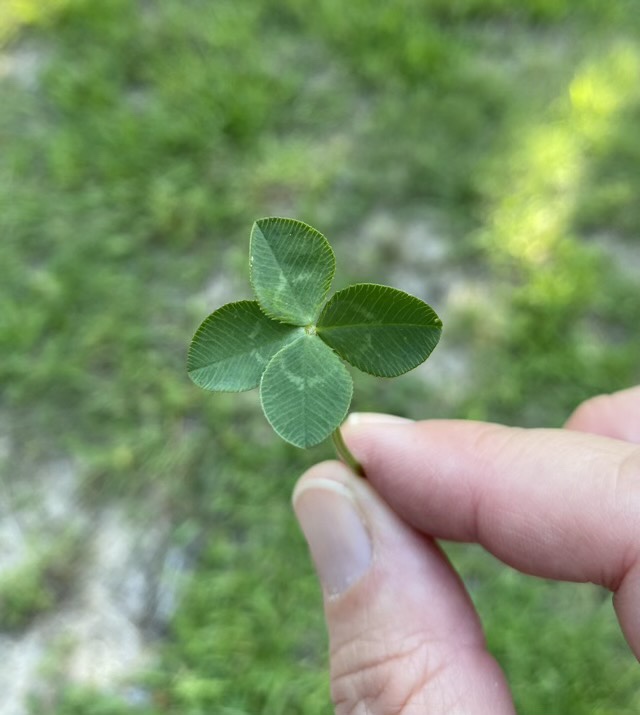
A four-leaf clover. My first time ever finding a four-leaf clover!

Four-leaf clover

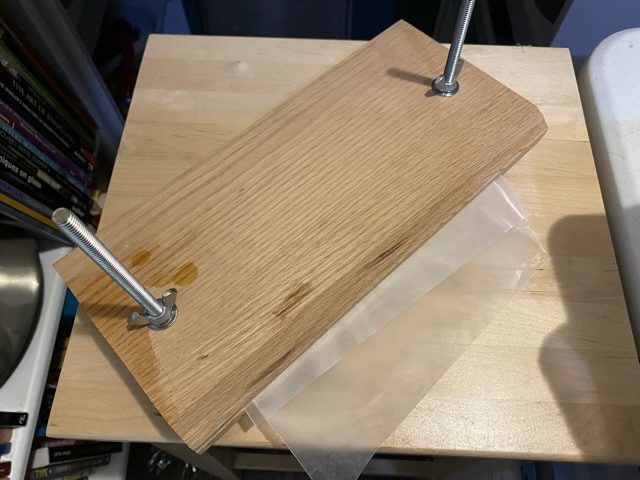
I recently read an article on four-leaf clovers, and one finder suggested looking for squares amongst the triangles made by three-leaf clovers. Apparently this works. Day 2 of thinking of squares and triangles, I spot one. I carefully laid it flat between layers of wax paper and put it in one of my book presses that my Dad helped me make years and years ago.

Oak plank book press

The method for looking works for me, because I found a second one the next day, and two more the following day. My eldest also found one after I told her the trick to it.

Four-leaf clover in situ, can you spot it?