Throwback Thursday: wire roots

When my kids were young I turned to making more jewelry. The projects were usually quick (under a couple hours), easily stashed out of reach, and didn’t involve things like knives or torches. Wire is one of my favorite crafting media, and I still like this wire wrapped stone with braided wire necklace I made in July 2007. I feel the photography on this piece also shows skill improvement.

Photo description: triangular polished stone wrapped with twisted wire “roots”, combined at the top, then split and braided to form the sides of the necklace, finished with a magnetic clasp

Ironically, when my kids were babies, I stopped wearing necklaces and earrings so they wouldn’t be targets for little hands. Over that time I developed a neck sensitivity and can now only wear a very light necklace for an hour tops before it bugs me and has to come off. Heavier necklaces like this one don’t last 30 seconds.

Happy Fourth of July, may your neighbors celebrate quietly and early, and may your animals be calm.

P.S. My apologies for email subscribers on a partial post yesterday. I started writing tomorrow’s post, stuck my phone in my pocket, and the post published itself, incomplete. The full post should go out tomorrow, barring more technology hiccups.
Sprang attempt 2

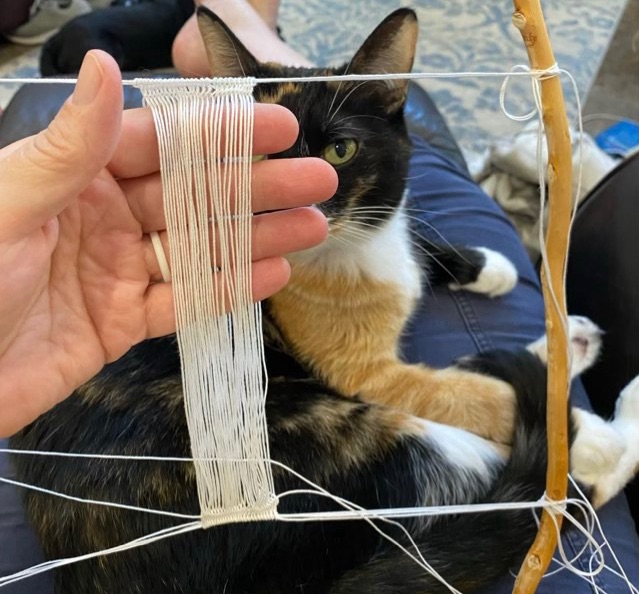
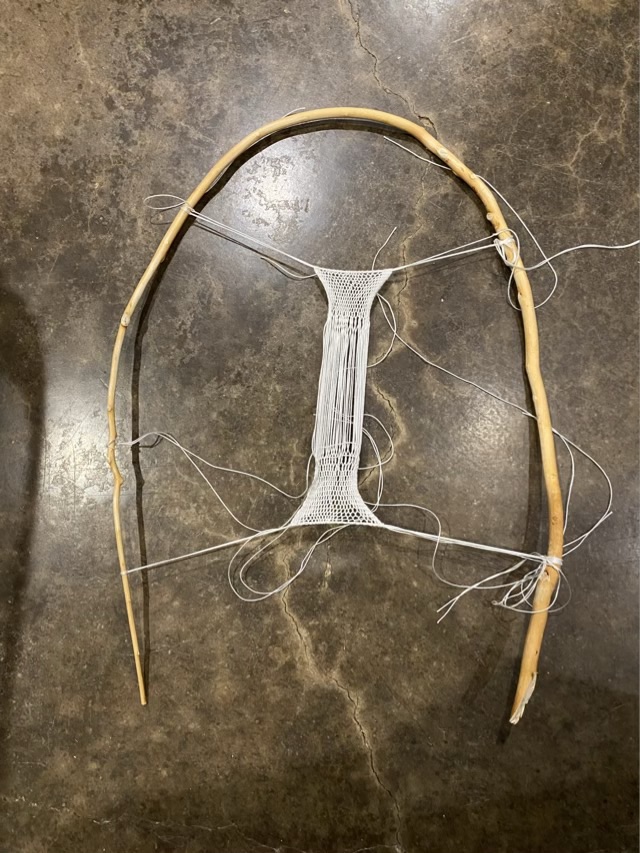
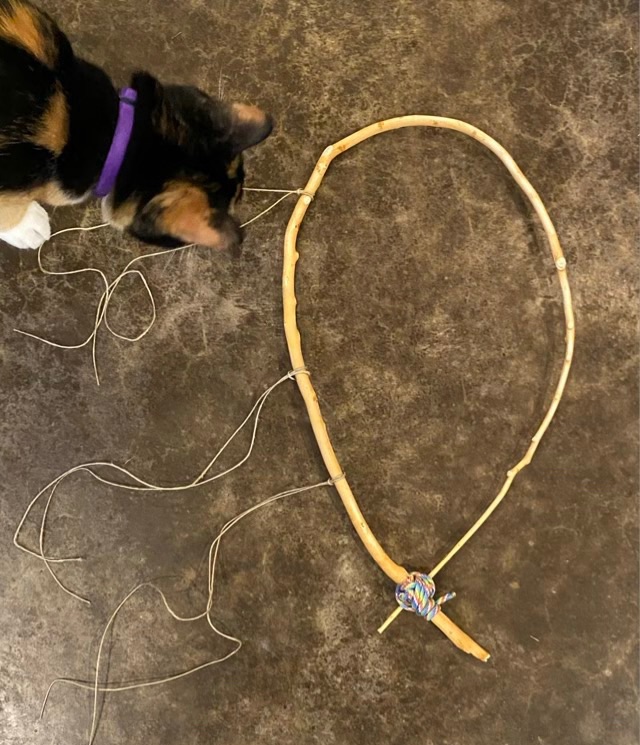
I’m determined to add Sprang to my crafting repertoire. This round, I secured the bottom of my small bent cane loom with some paracord so it was less loosey-goosey. I added life lines using hemp string, and used hemp for the header and footer ties. (Why hemp and paracord? That was what was next to me. The paracord is too thick for the lifelines (to me), so I replaced them with thinner hemp.)

Photo description: restructured small sprang loom with Izzy the cat investigating the string

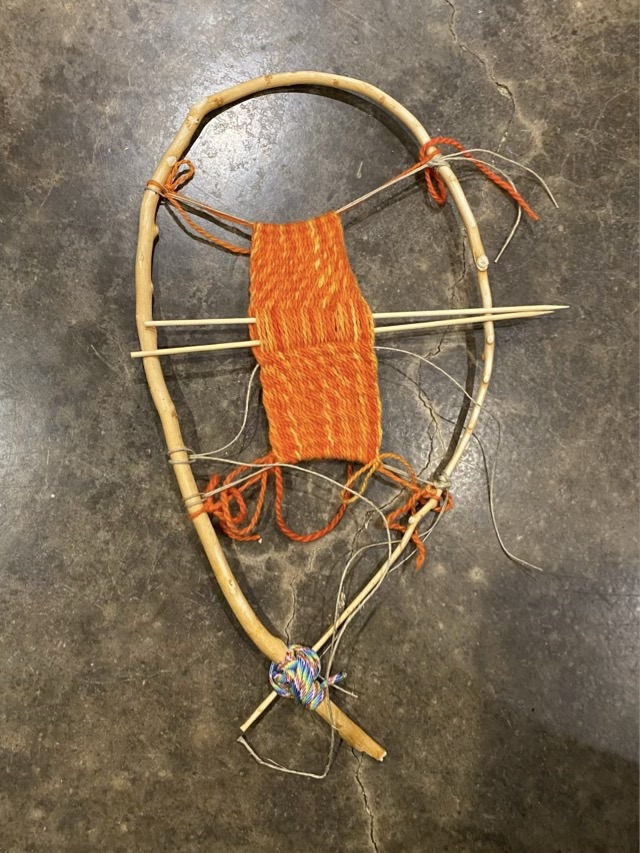
Using wool yarn and making a wider sample did help with the bias twist a little while I was working. I did some interlinked rows, and tried some intertwined rows to the middle.

Photo description: orange wool yarn woven on a small sprang loom using lifelines and bamboo skewers

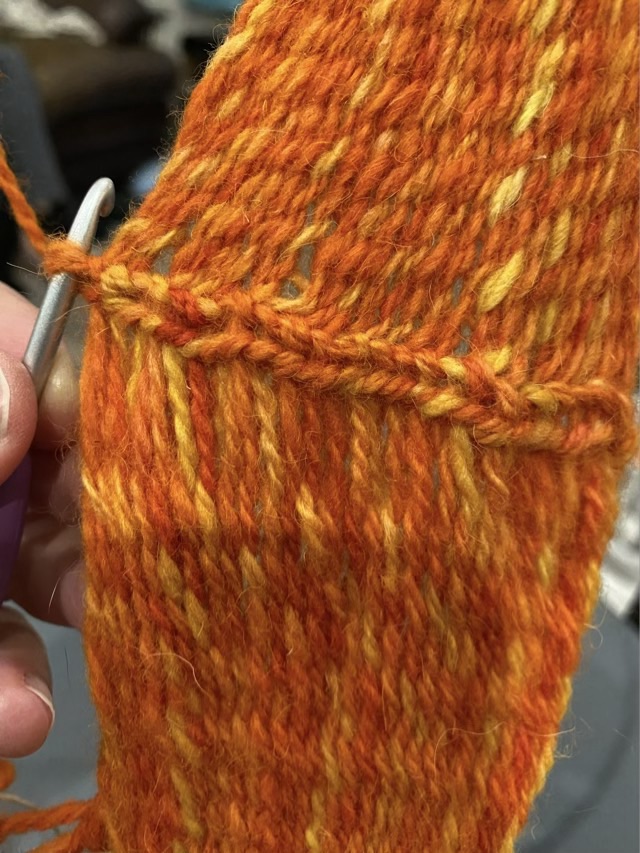
I went to finish the center with a crochet chain and everything went wonky. The chain crawled upward on the yarn, making the two uneven halves even more uneven.

Photo description: botched attempt at finishing the middle of the sprang with a crochet chain stitch

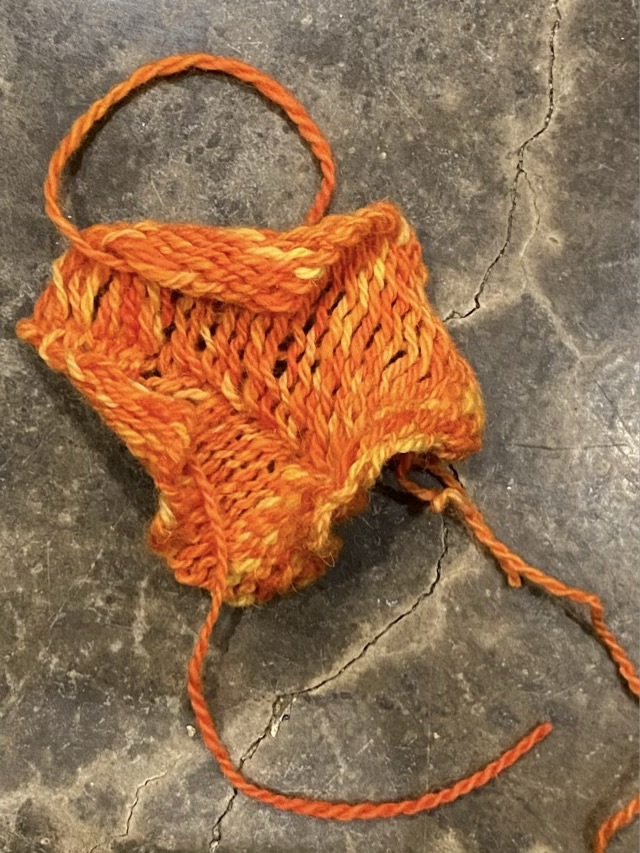
When I took the sample off the loom it curled unevenly, wonky and crumpled.

Photo description: sprang sample off the loom, twisted

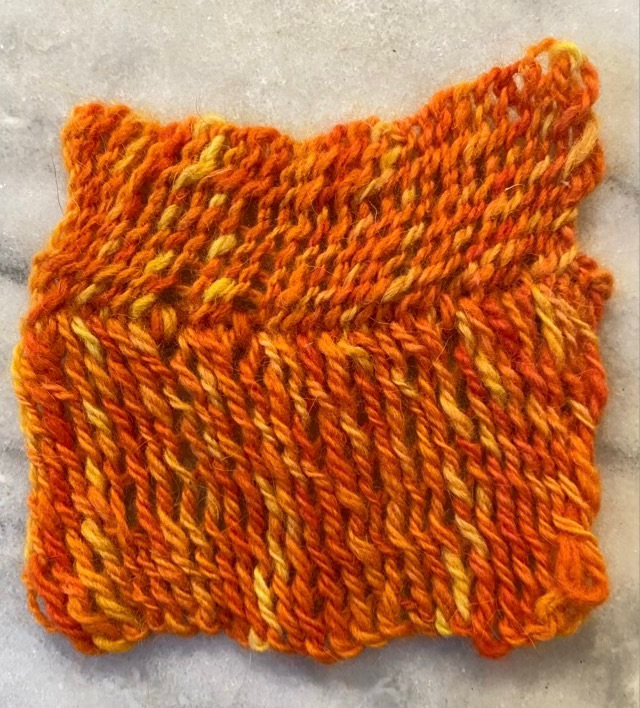
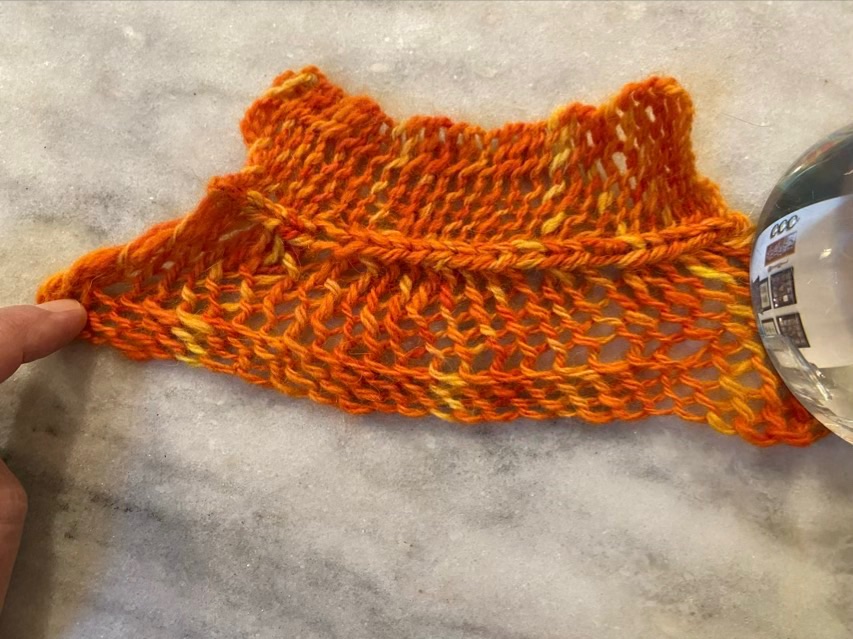
I wove in the ends, catching the live loop of the crochet chain when I went up the side, and blocked the piece by wetting and pinning it to dry.

Photo description: blocked and slightly less wonky bit of sprang work in orange yarn
Photo description: same bit of sprang, opposite side, shown stretched, it really has a very pleasing sideways stretch

Undeterred, I made a third attempt. Rather than the chain finish, I tried warp and weft plain weaving the center part. Abysmal. The plain weave has no stretch and completely threw off the stretch of the sprang. I mention it only so I remember that I tried, and rejected, the method. It doesn’t even deserve its own post. I’m not giving up, though.

Sprang attempt

I’ve been wanting to attempt making sprang fabric for awhile now. I even made a small sprang loom from a trimmed elm branch. Sprang is a type of weaving where all the threads are warp threads (vertical), with no weft (horizontal). The threads are twisted around each other and the fabric is worked from the top or bottom simultaneously (what is done with threads at the top happens in opposite to the threads at the bottom). AI tells me that sprang dates back to the bronze age, although it seems like the summary was gleaned from Wikipedia, which at least gives me a list of references that confirm this art is ancient.

I had some #10 crochet cotton next to my chair (crochet is probably my youngest craft), so decided to use that after watching a video from Sally Pointer, who is an accomplished heritage educator.

Photo description: starting to weave sprang, I was warned that sprang holds special fascination for cats, and Izzy the cat was quite enthralled with the many strings
Photo description: sprang in progress with the loom on the floor and several rows completed

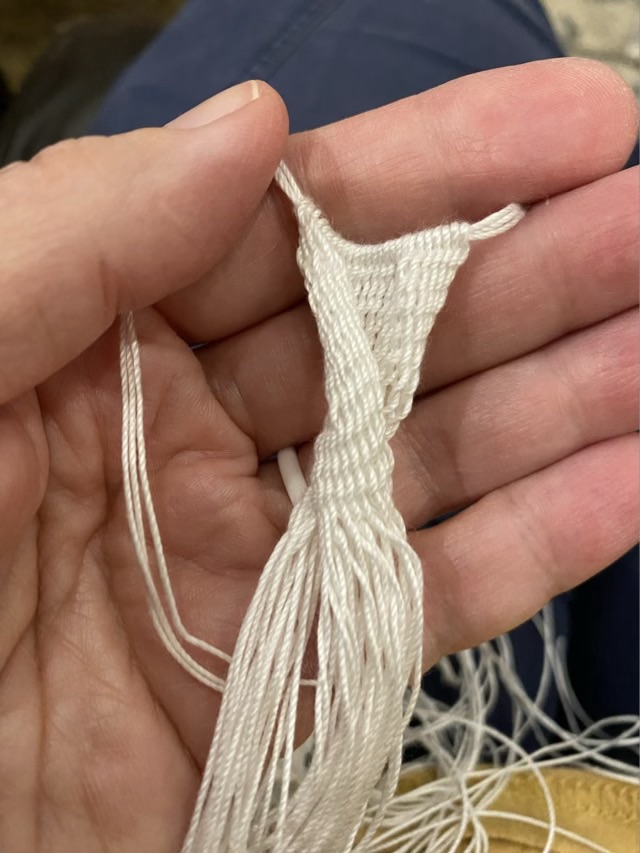
I achieved several rows without too much panic, but then the fabric started to make a hard bias twist that made it difficult to sort where the threads needed to go. I gave up and removed it from the loom, took a picture, and consulted a Sprang group on FB.

Photo description: partially woven sprang made from cotton thread, removed from the loom to show the twist

I was assured that twisting is what sprang does, and to try wool which blocks very well. While scanning the group posts, I also noticed that some weavers secure the edges to the loom periodically, which would also help manage the twist. I was told that narrow bands are particularly susceptible, and another way to manage the phenomenon is to switch twist direction, which is a more advanced technique. I have my marching orders.

Throwback Thursday: coaster study

In June of 2007 I did a wood and epoxy coaster study for Father’s Day.

Photo description: wood coaster with recessed center filled with symmetrically placed fishing lure, hooks, weights, and swivels covered in clear two part expoxy
Photo description: back side of coaster showing three round carved wooden “feet” and the words “CJH 2007 Coaster Study #1”
Photo description: wood coaster with offset rectangle carved out and filled with a slice of polymer clay in shades of blue and gray of a jumping fish, drawn fly hook on a line, all covered in a thick layer of clear two part epoxy
Photo description: back side of the coaster with three oblong “feet” carved in the wood and the words “CJH 2007 Coaster Study #2”

I used a hand held router setup with my rotary tool to carve the recesses and feet on each coaster.

My Dad sent me a picture of the fish coaster, 17 years later, and the coaster has held up well living in a display case. Interestingly, the blue “feather” I drew on the hook has faded.

Photo description: 17 year old wood and epoxy coaster

Tension ring

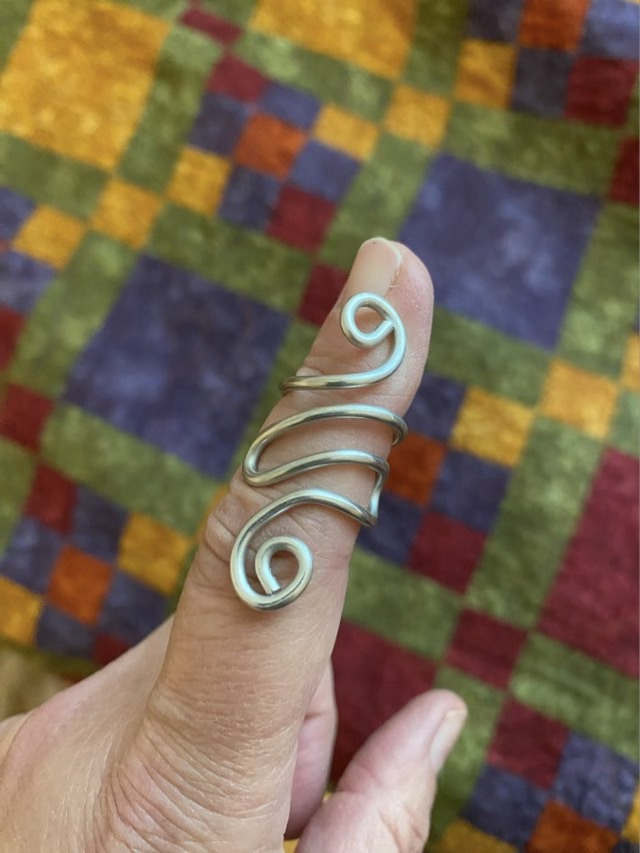
My youngest is showing interest in crochet. One of the hardest parts of crochet (and knitting) is keeping an even tension. To assist, I made a tension ring. Yes, I did model it off of one I saw for sale, but I used 14 gauge aluminum wire from my stash to make it. Aluminum wire is very malleable, so a larger gauge (smaller number) is needed to hold the shape under use, but it is still easy to form toa finger in order to get good skin contact.

Photo description: aluminum ring made of 14 gauge wire with two spirals and two loops

The shape of this ring makes it easy to slide the yarn under either a loop or a spiral, or have multiple points of contact. The more contact, the more drag, the more tension. It was a game changer for my daughter, who went from only being successful with assistance to chaining on her own.

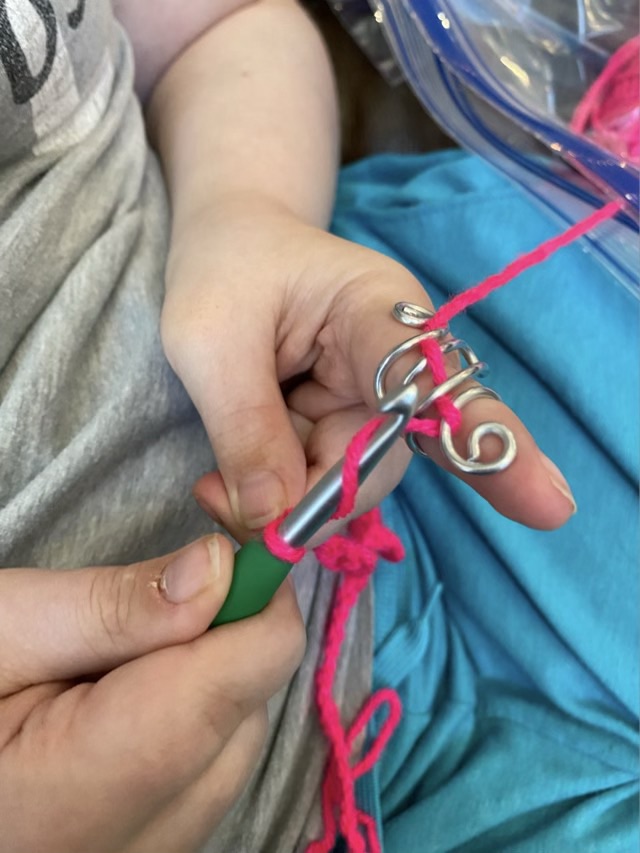
Photo description: my daughter’s hands making her own chain using the ring tensioner and bulky weight pink yarn

I then made the mistake of introducing the double crochet. Too many steps. When she shows interest again, we’ll try a slip stitch, which only has one more step than a chain (inserting the hook into the work). There are historically created items that are made with only a slip stitch, so she can still feel accomplished. Sometimes baby steps are what works, and breaking tasks down to parts, finding what parts can be delegated or assisted to order to be successful.