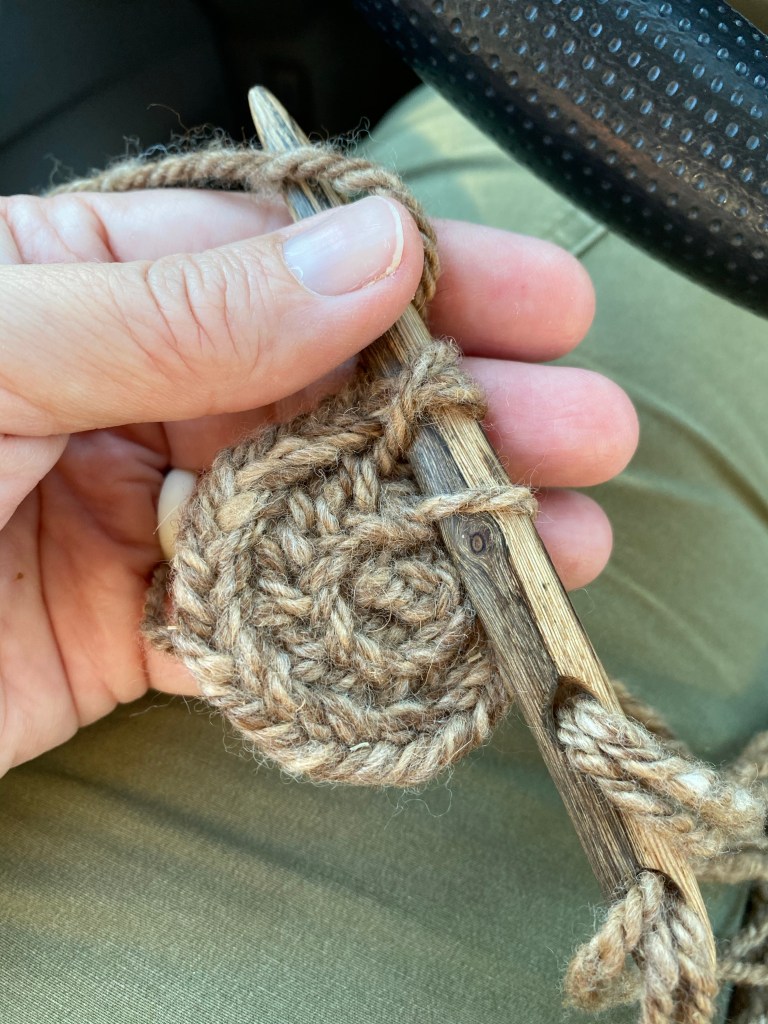
Unlike knitting and crochet, nålbinding (which I have heard pronounced as nawl-bending) is made by passing lengths of yarn through loops. Since the yarn must pass through, the crafter works with sections of yarn, rather than from a ball. A way to increase the amount of yarn that can pass through a thumb-sized loop is to use a nål (needle) with two or more holes. I also carve a channel along the holes to reduce bulk. In the picture above I have the nål loaded as much as I dare! I made 4 four-foot loops and threaded two loops through each hole. As you work, you can pull the working yarn through the hole and keep the loops neat. If you would like to see a short video on an in-process piece, here it is.
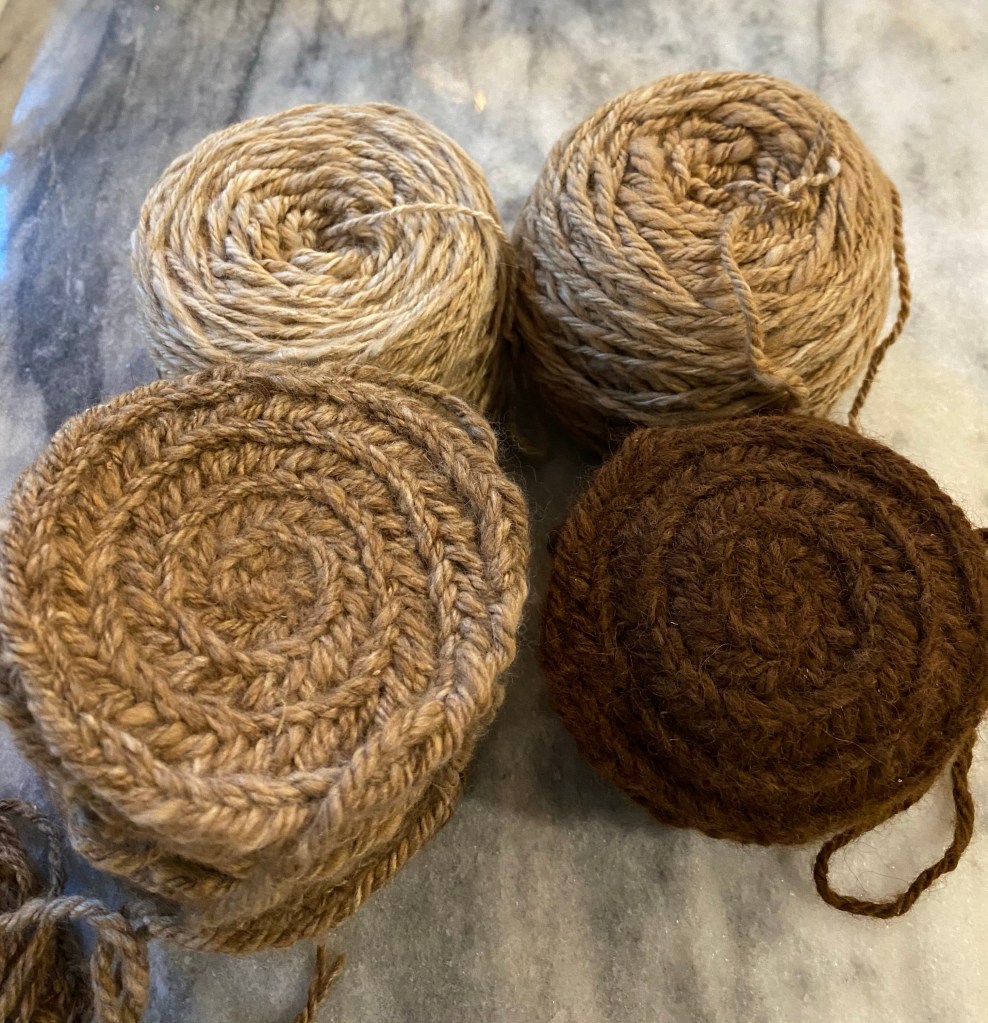
This is my forever project. I’m making something for me, so it is on the bottom of the priority list and I use it to fill the gaps between other projects. I decided to make spirals (I like spirals), and sew them all together, because it gives me flexibility if I change goals mid stream. Current goal is to make an ombre vest. I have made two hand spun yarn cakes into nålbound spirals, and have two more yarn cakes ready for nålbinding.
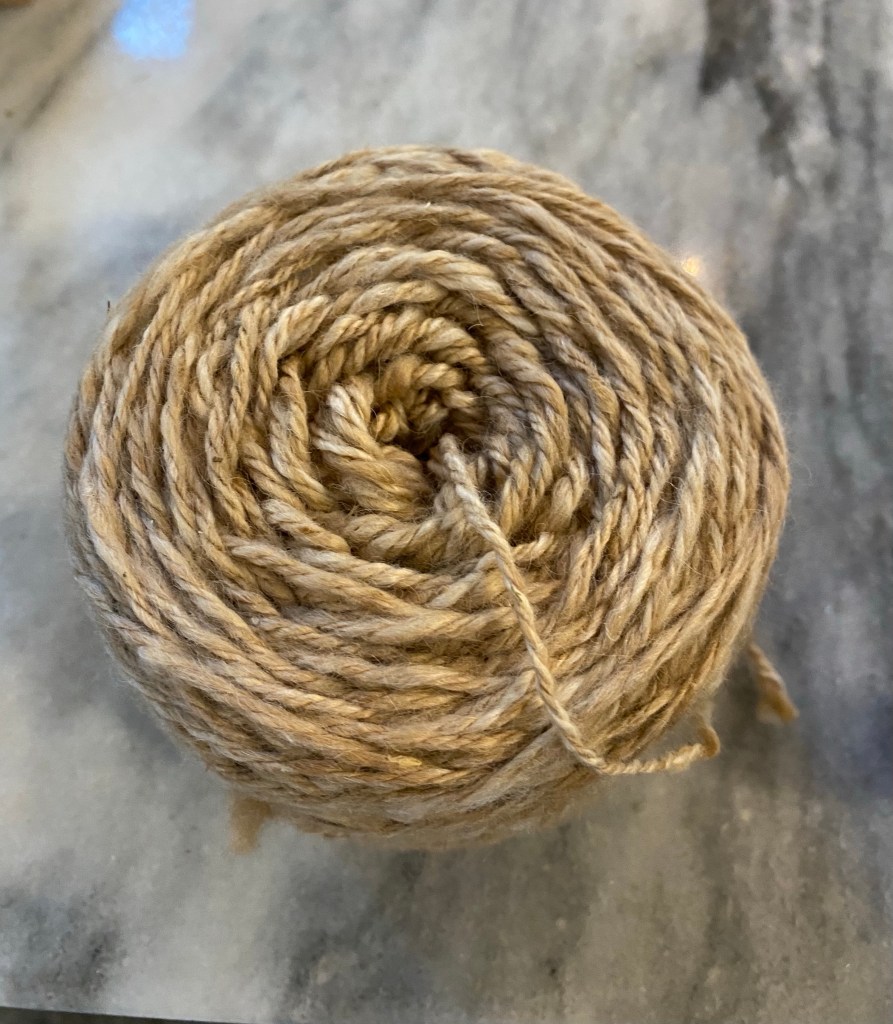
Nålbinding spirals (Mammon stitch) with yarn cakesOne spiral fell to the floor and the puppy found it. Ugh. I’m going to have to watch her for intestinal distress. It looks like she chewed off loop halves, which should pass OK. If this had been crochet or knitting, she would have been able to pull off and consume long strings in the same two minutes of chewing. So, yay, nålbinding.
I finished another cake of yarn and thought it would be fun to show the pictorial progression of fluff to stuff.
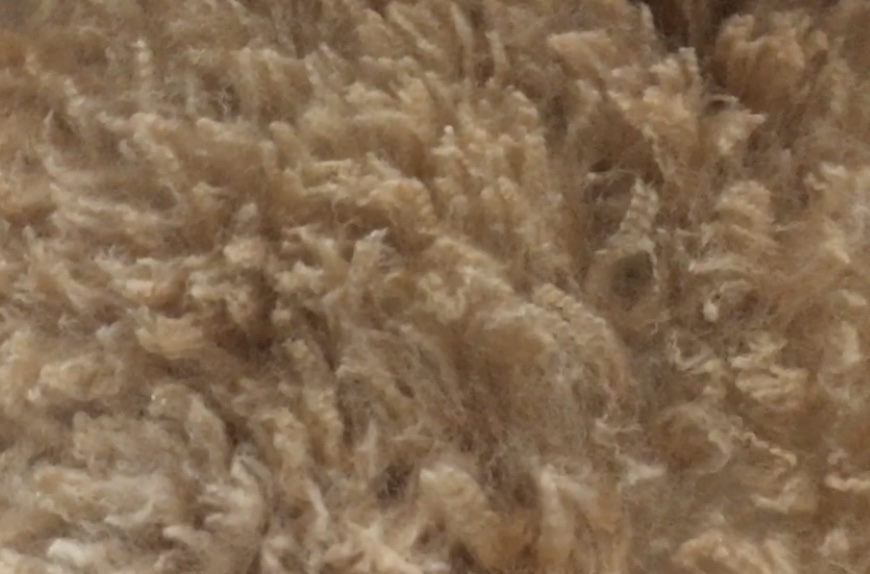
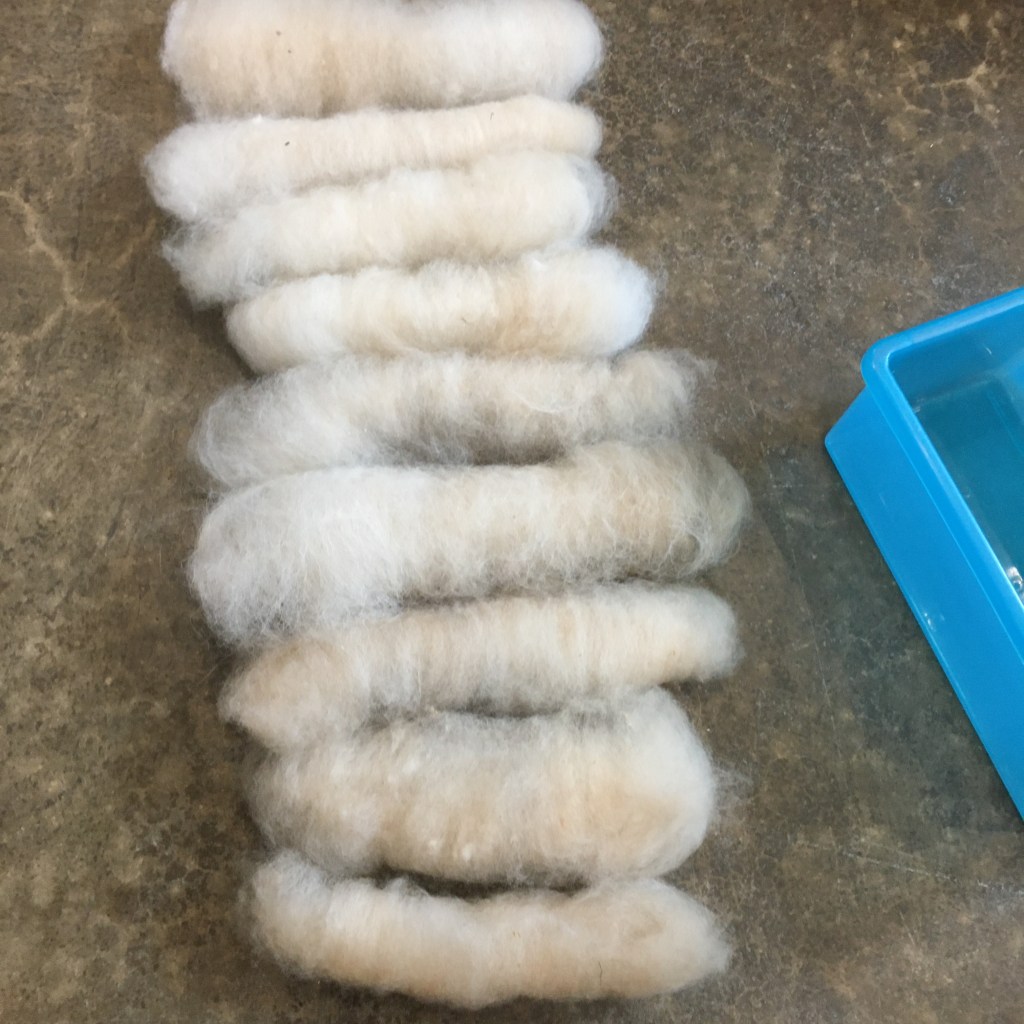
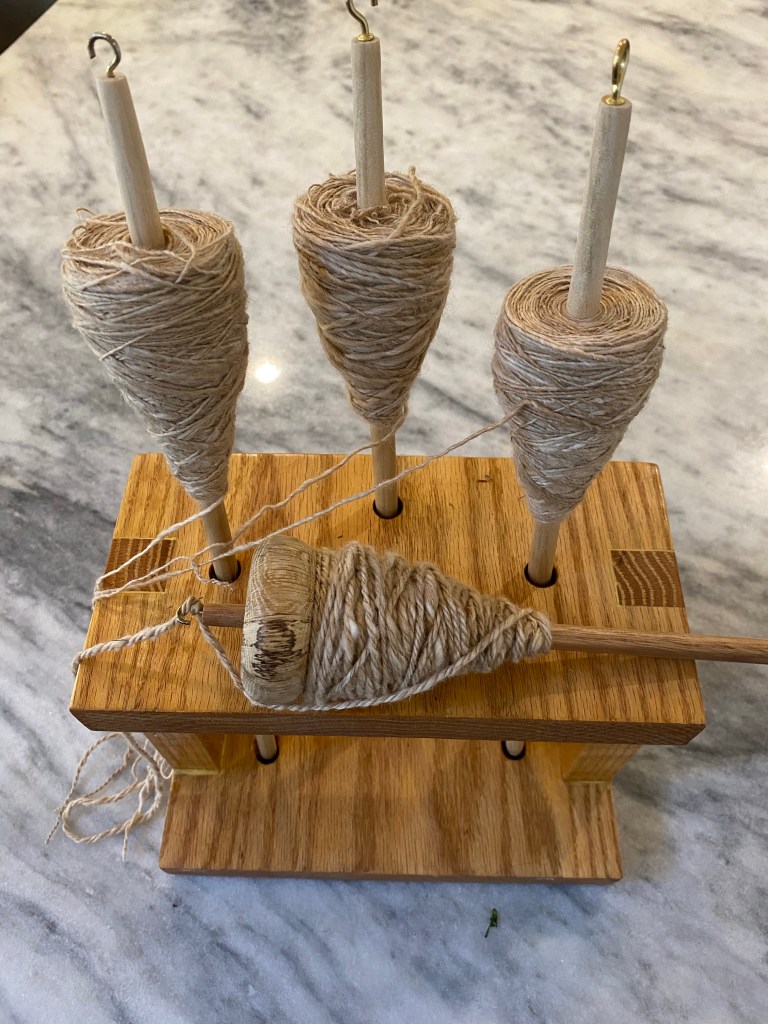
Alpaca fleece, skirted (shaken out and undesirable areas and some vegetable matter removed).Carding and blending washed alpaca fleece.Rolags created from carding.Three spun singles being plied into yarn.Plied yarn transferred to a niddy noddy and ready to be set (wetted and allowed to dry).Skein of yarn on a swift to help hold the yarn while making a yarn cake with a winderFinished yarn cake (well, now I need to make something with the yarn, but that is another story).
Aw, look how nicely the blended colors in the yarn go with the needle! I’m still plugging away at making a gazillion nålbound circles to construct a larger piece. I can usually do one spiral per car pick up line session. It is going to take awhile. The yarn is spindle spun undyed local alpaca, and the needle was carved from an aged grape vine and sealed with tung oil. I just enjoyed the color play today.
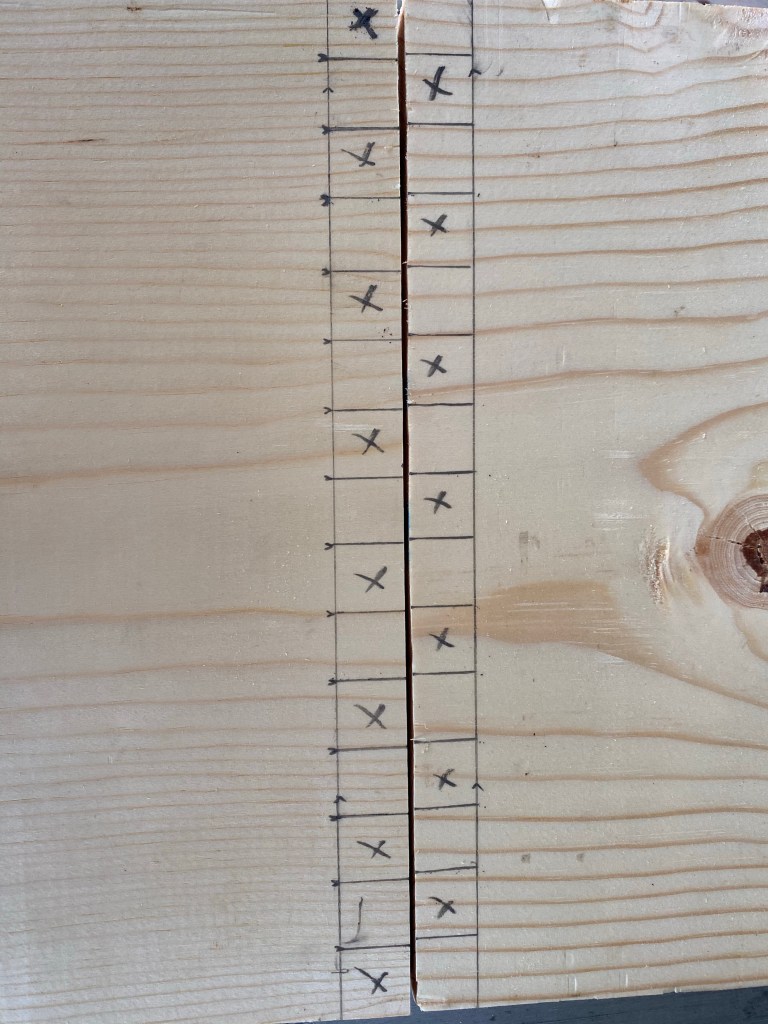
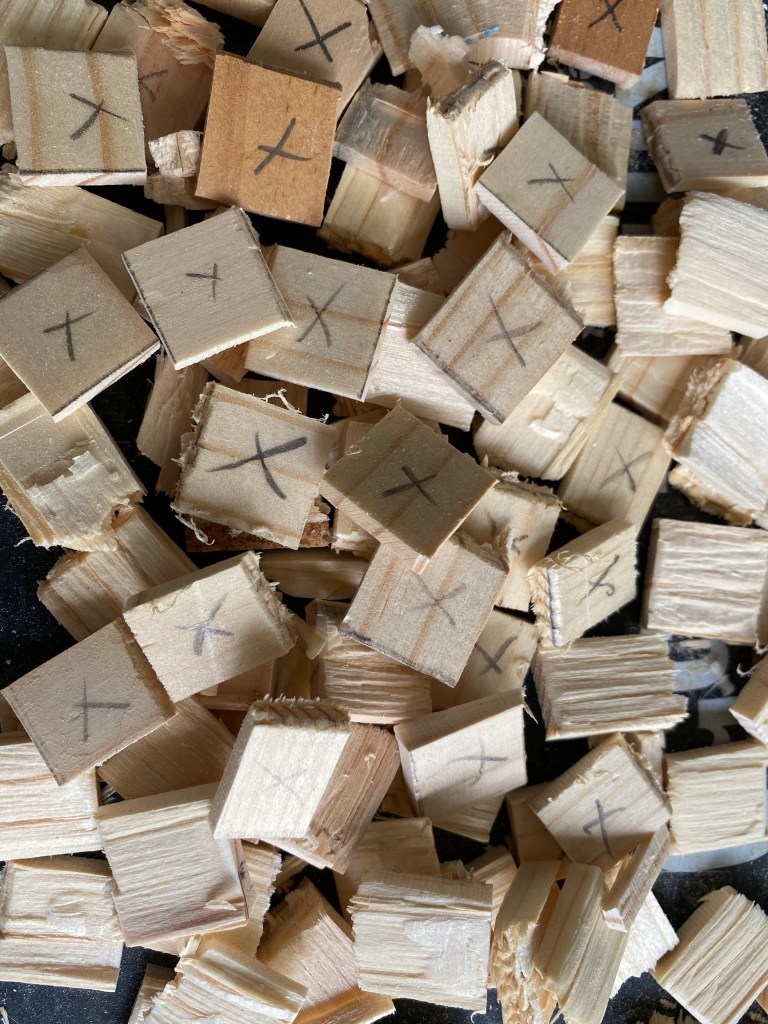
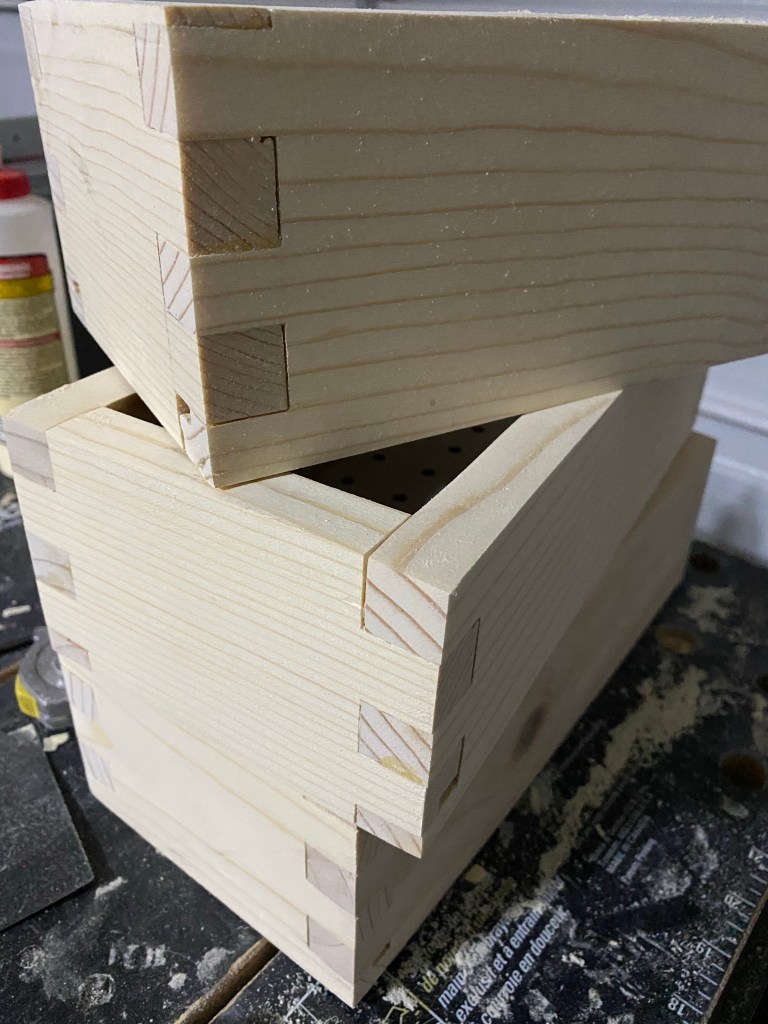
It started as a desire to practice making finger joints. It ended in an entirely scrap sourced organizer! The wood is pine from drops from the storage shelves my husband recently made. I marked the finger joints, cut the sides with a band saw, and excised the waste with a chisel. Sawing on the inside of the line (toward the X) gives a tighter fit.
Finger joints marked on adjoining boardsX-tracted waste wood (haha)
After cutting and fitting all the joints, I used the table saw to cut the boards into thirds to make three boxes rather than one. It is a little strange to do it this way, but I was testing a technique. I do not recommend this method if you will be cutting dados for a base, because the dados will cut into your joints, making a gap. I filled the gaps with wood filler. I used peg board for the base because it was a good thickness and it was left over from other projects.
Boxes assembled
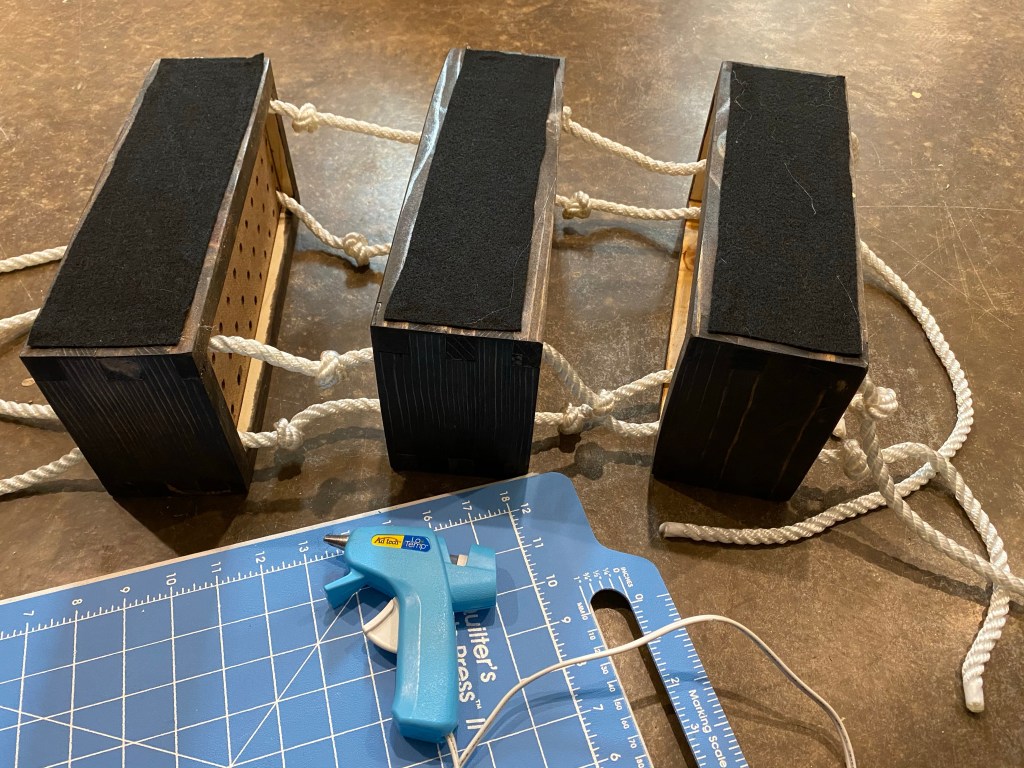
After sanding down the wood filler, I used the stain and sealer that was in the garage (again, left overs). I drilled 1/2” holes in the corners of the base, through the peg board to accommodate the 3/8” rope I found in my craft room, and knotted the rope to support the boxes. I hot glued felt (also from the craft room) onto the backs of the boxes to protect the wall.
Felt backing applied to boxes
The hook for the wall is a handrail support. I have no idea why we had just one in the garage, it is possible it has been hanging out with us for almost 20 years, and now it has a purpose!
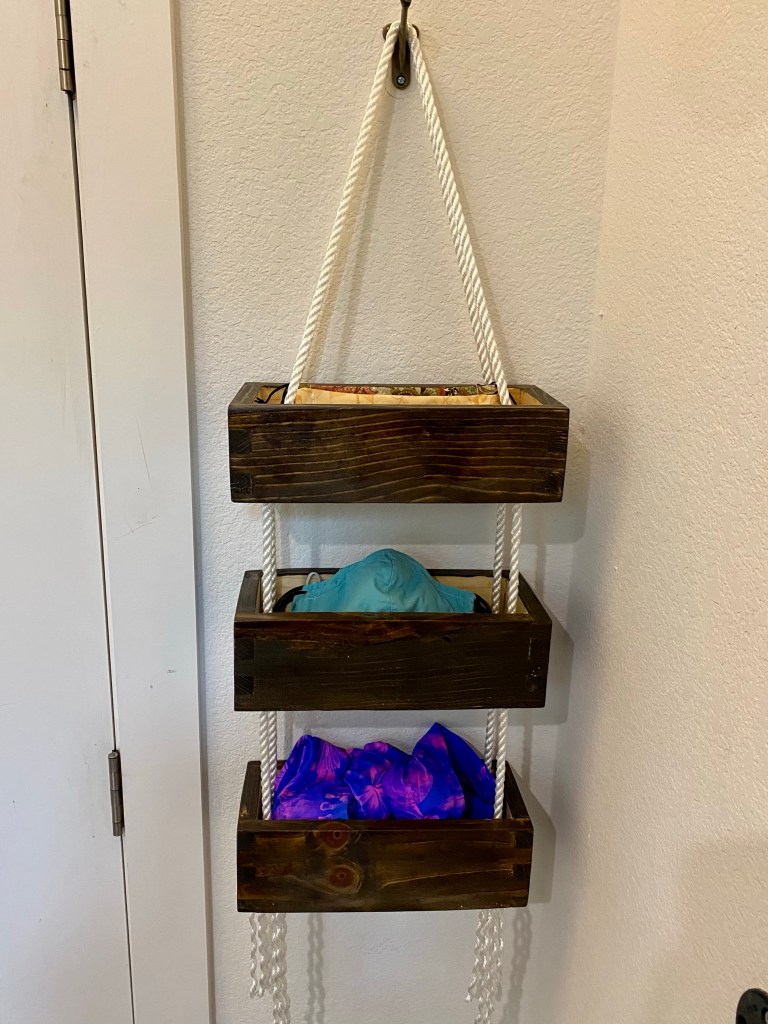
Completed mask organizer, with masks
So there we go, a new organizer from left over bits. Nothing like stretching the creativity muscles to make it work with what you have!