Poster board boxes

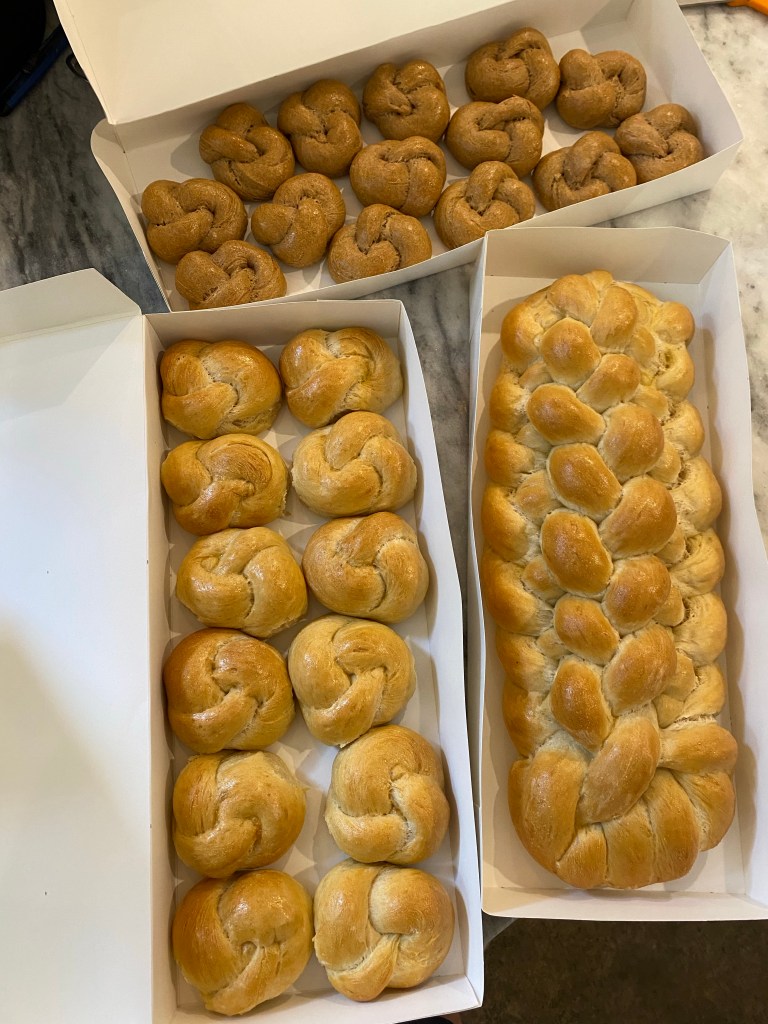
I declared a baking day for myself and then got a little carried away. Instead of making two batches as I planned, I made three. Instead of two braided loaves, which I’ve practiced, I made a loaf and two batches of rolls. It isn’t often that I bake for many people, and I was just so excited. Then it came to how to transport the bread. Hm. I read that cloth lets too much water out and the bread gets dry. Plastic and foil keeps the moisture in, but the crust goes soft. I also didn’t want the bread to get squashed in transport. So I made some boxes out of poster board. I made measurements and drew lines in pencil, cut flaps, and glued the corners with hot glue (which helps structurally as well).
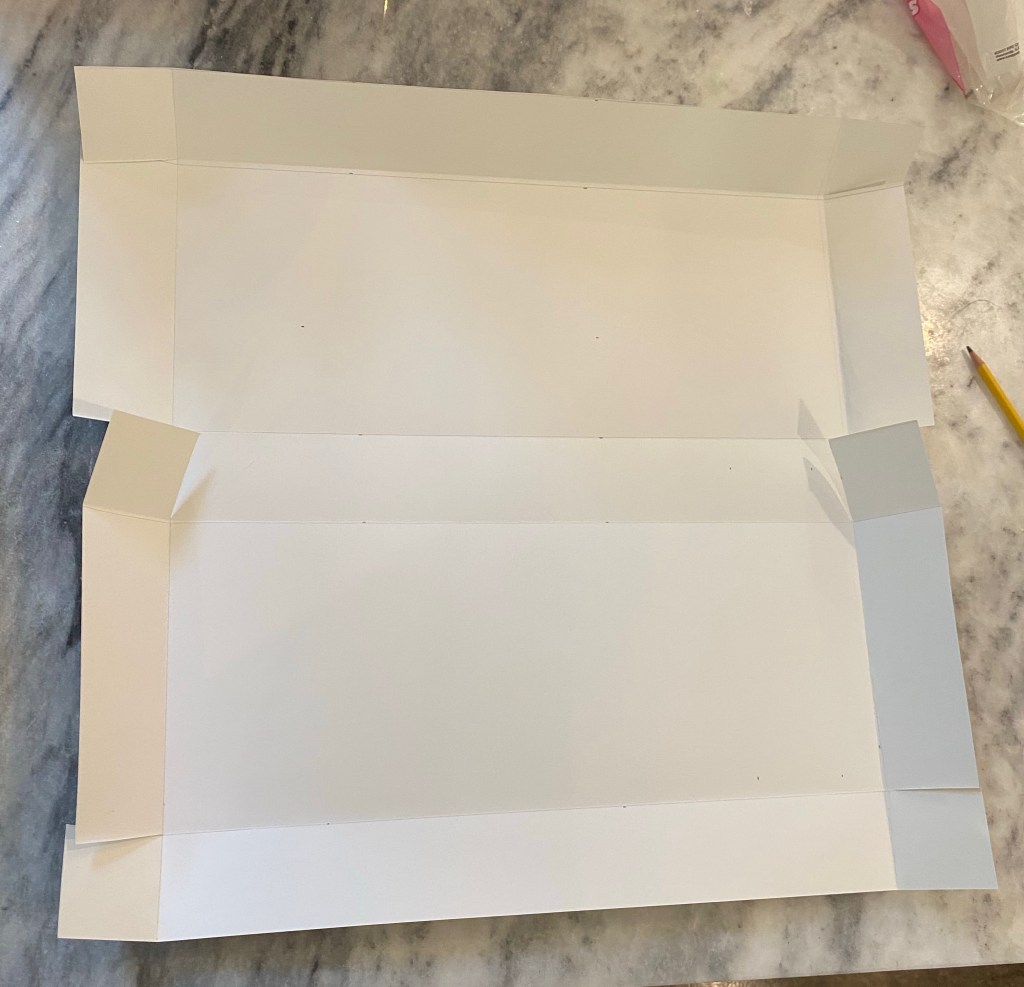
Attached lid poster board box before assembly
Homemade bread in homemade boxes

The boxes worked well, and the white bread was quite good, even the second day. The whole wheat rolls were more dense and tough. (Good thing they were the extra batch!)
Emergency crafting

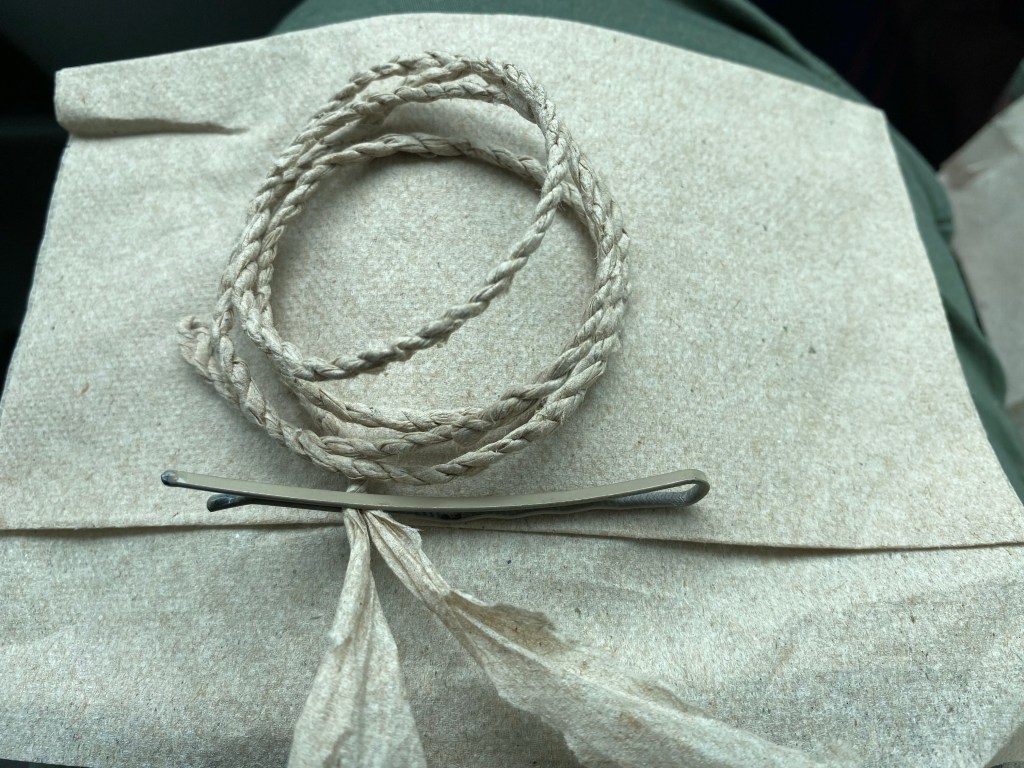
This is not about crafting things for an emergency, this is about having to wait in the car for a half-hour, and despite my best intentions I still have not squirreled away a small spindle and fiber about my person, and I was getting fidgety. My oldest handed me a fast food napkin. I tore it into strips and twined it. Ah. Better. We almost always have a stash of napkins in the car, and the resulting twine is surprisingly robust, for a short stapled fiber stuck together with starch. So there we go, fidgets fidgeted with readily available materials.

Twine made from a paper napkin (the pin is to keep if from unraveling until I get back to it)

Spin, spun, almost done

This phrase goes through my head often lately. Wonder why.

Singles spun of BFL/silk blend (and the start of two-plying because I ran out of roving mid-walk)

My balsam-colored Blue-Faced Leicester and silk blend spinning is done. Spun and plied entirely during walks around the neighborhood. Ok, well except for getting the cop started and detangling, which were more efficiently done sitting at home. I have a plan for this yarn, but it involves knitting, which is not my favorite, so may take awhile (to get started and to finish). Plans change, though, so maybe another possibility will present itself in the meantime.

Two-ply hand spun BFL/silk (with sticky notes rolled for the centers and marked with the date it was spun and plied)

Working up the test yarn

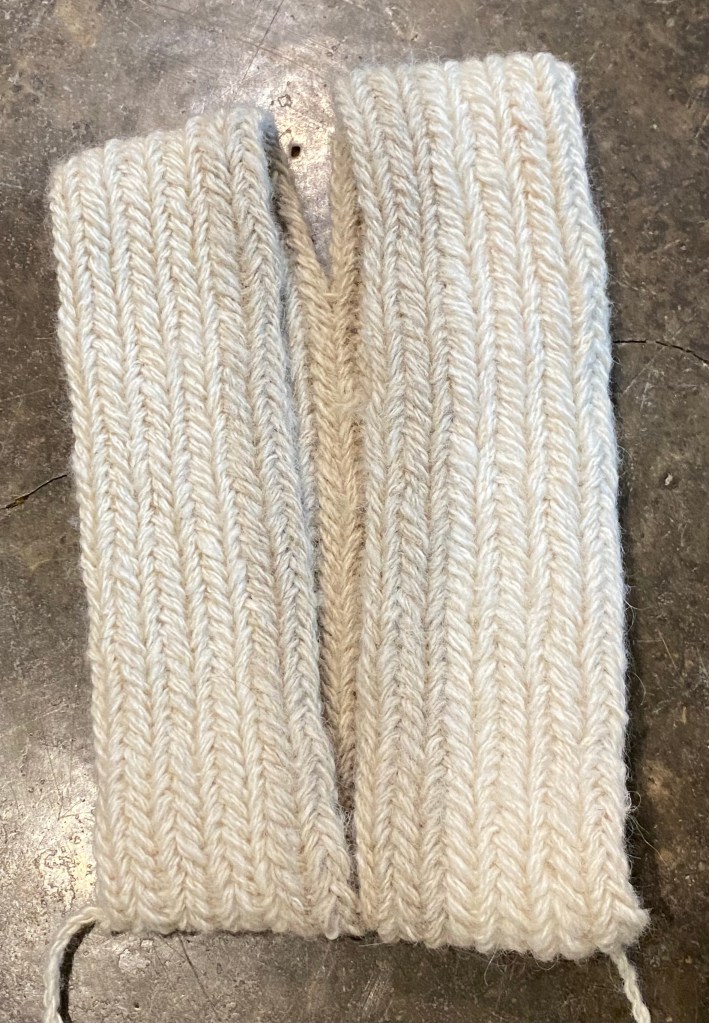
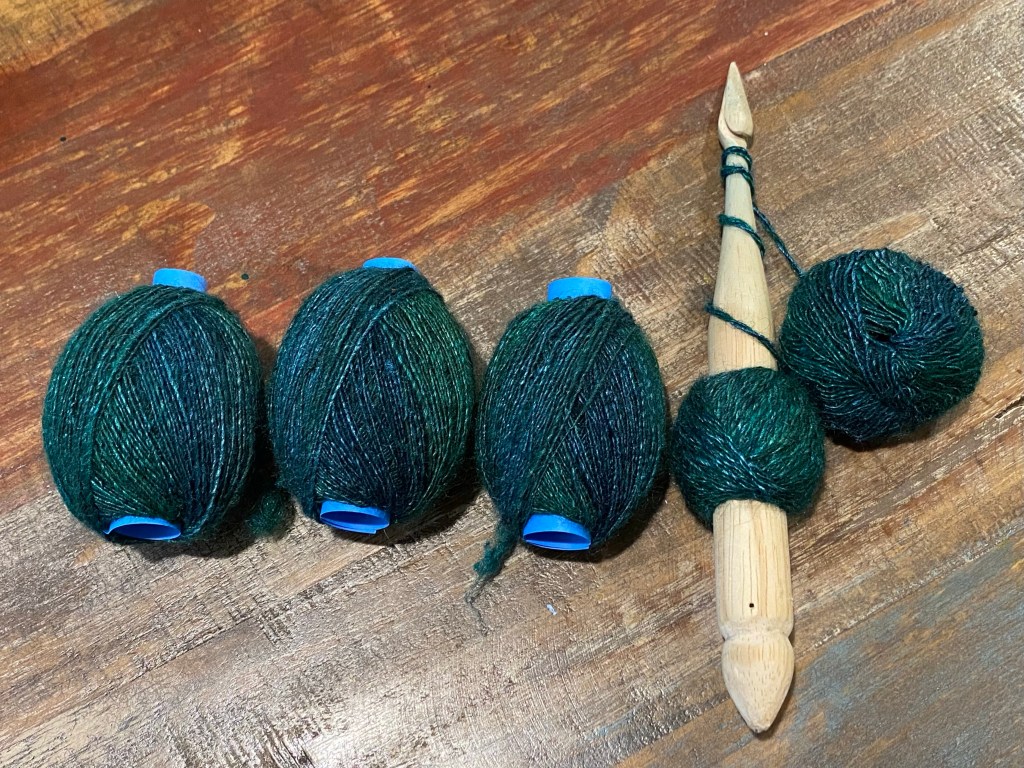
As I was contemplating what to make with the mini balls of test alpaca that I spun, my youngest announced that her other doll needed a new jacket. Ok, that can be done. I chose to nålbind (because I like it best) and used a Finish 2 + 2 stitch with an F2 connection. Because the three skeins were different colors, I decided to put the darkest in the center. I also tried a different construction technique, working in vertical rounds, rather than horizontal. Making the neck and front slit was just a matter of chaining along, rather than connecting, as long as I needed.

Doll vest before cutting

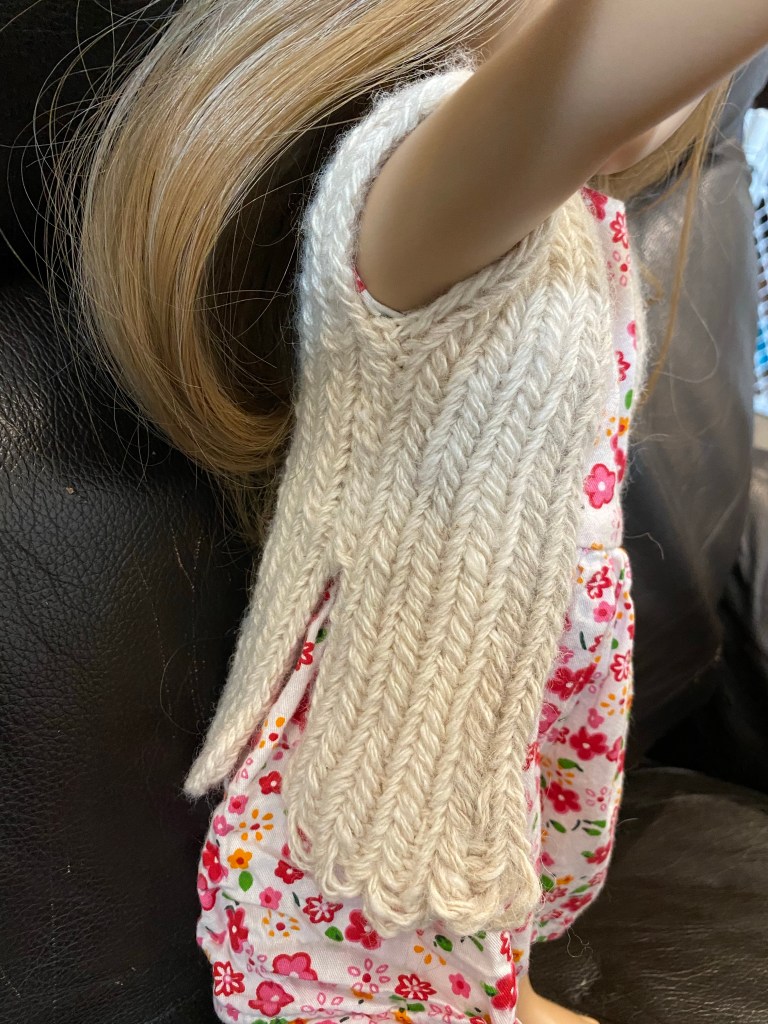
Once I had the sides of the vest even, I cut the bottom, pulled out the loose threads, and tightened and wove in the attached ends. I then sewed up a section of each side to form the arm holes but leave side slits.

Bottom edge neatened (I like the scallops), and sides sewn
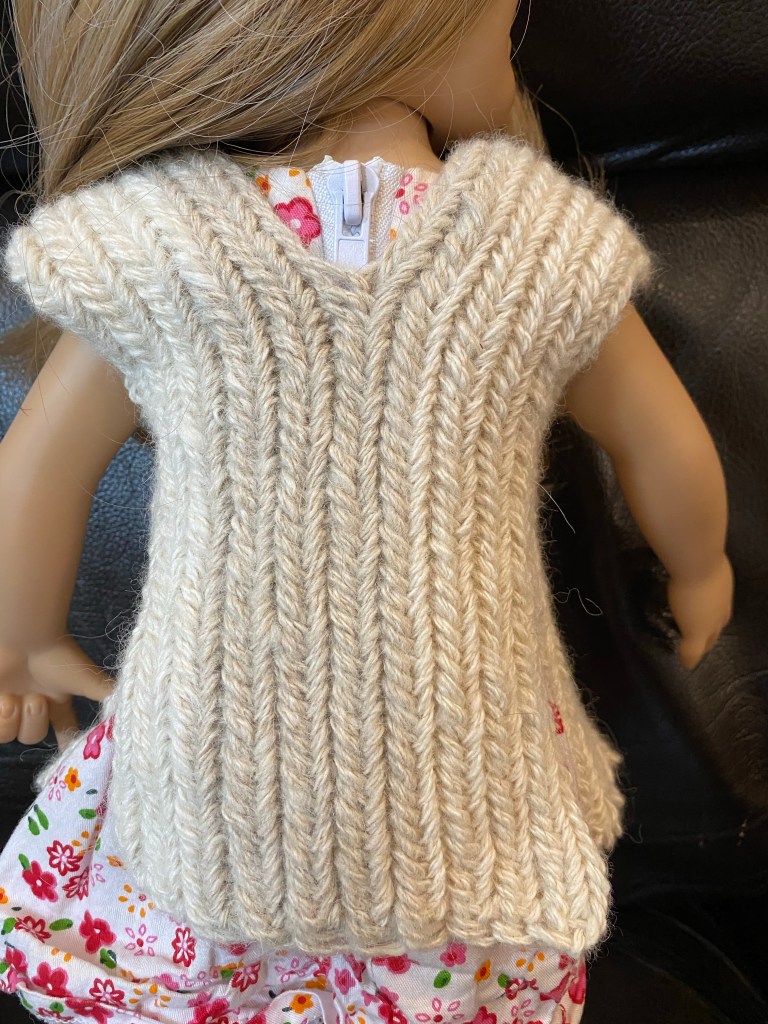
Back of doll vest showing all three preparations of yarn

Really there was no difference in the three preparations of fiber after the initial single spinning. Even the finished fabric just has color variations, but is otherwise consistent in texture.

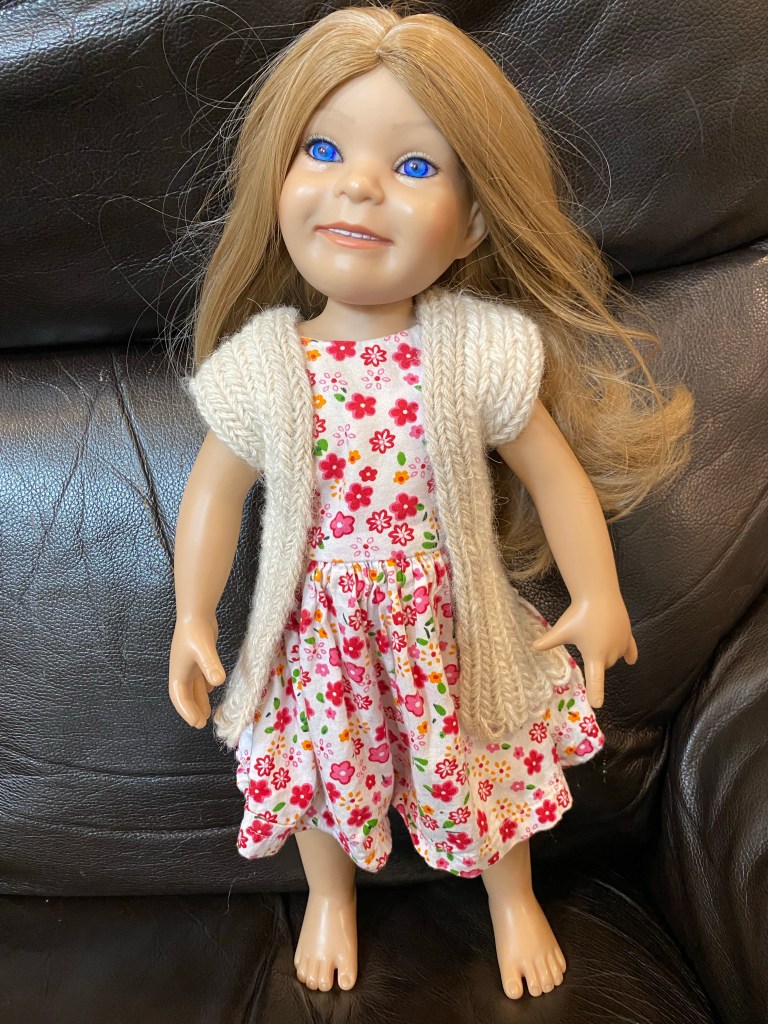
Front of doll vest

This was an excellent test. The alpaca yarn combined with this stitch made a very dense fabric. I think a human-sized version would be quite heavy.

Time to wash

I had a panic moment. My spinning and walking is going well, and my speed is improving, and I realized that once I was done with the current preparation of fiber I didn’t have anything ready to spin. The horror!!

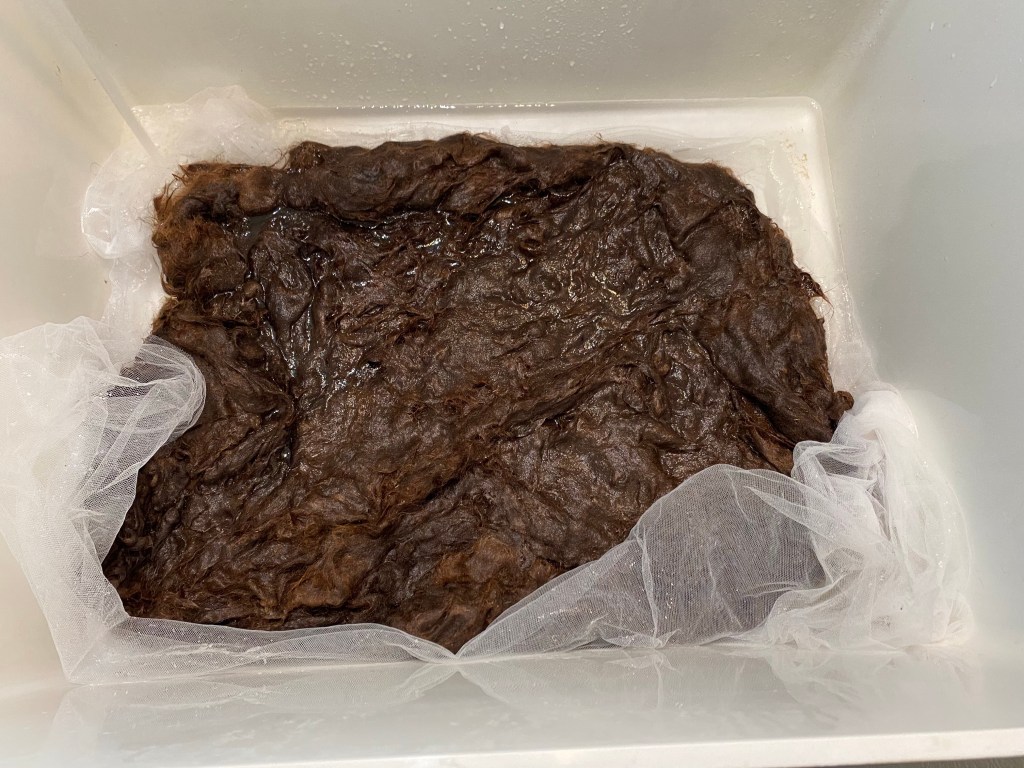
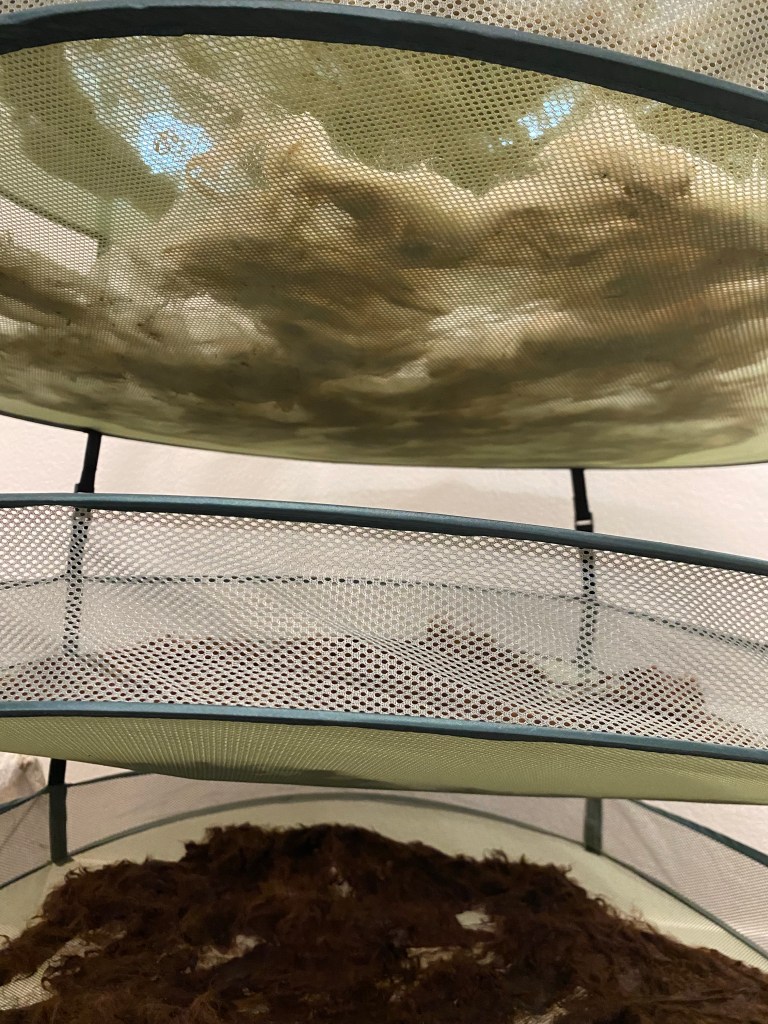
So I washed up some more alpaca fiber, this time using the utility sink and some netting, rather than bowls and towels. Since alpaca does not have heavy lanolin to scour away, I was not concerned about the wash water going down the drain. It was much like washing a dog. To keep the fibers out of the drain, I used a section of netting, which also helped squeeze out the water gently to avoid felting the fleece. I used Amway LOC liquid soap and rinsed each section three times. So much dirt. I laid each section out to dry on my hanging circular trays. There is still some vegetable matter (VM) in the fleece, but I am planning on picking and carding most of that out. I figure the evening activity will be carding and then I can spin in the morning.

Part of Aimee’s fleece after rinsing

I washed the last of Donna Bella’s fleece, and about half each of Sugar Plum’s and Aimee’s. I have five trays full of fiber. That should get me through the summer! Maybe longer.

Washed fleece set to dry on a drying rack