The tapestry loom experiment provided valuable data: mostly that I don’t like to sit still and weave. After taking up space on my kitchen counter for many, many months, I finally decided to take it off the loom. It is a shame that I couldn’t bear making it into a scarf size; the fabric drapes beautifully and has a nice feel, but I truly could not face the project any longer. The killer was the loose stripes. My concept for the weaving was “identity crisis” and to show that I had two striped color schemes warring across the field of fabric. I intended to have several “loose” stripes instead of just two, but those two slowed my production to a near standstill. Once I decided to move on, the remaining stripes went fairly quickly. I removed it from the loom and let it rest for a couple weeks. Then I finished the edges by braiding the warp threads, weaving in the loose weft threads, and machine sewing a hem on the top and bottom.
“Identity Crisis” weaving cotton and acrylic
I do like the “war” between the color schemes, and I may cut down the very large (to me) tapestry frame to a lap size, but for now there are many, many portable projects to pursue.
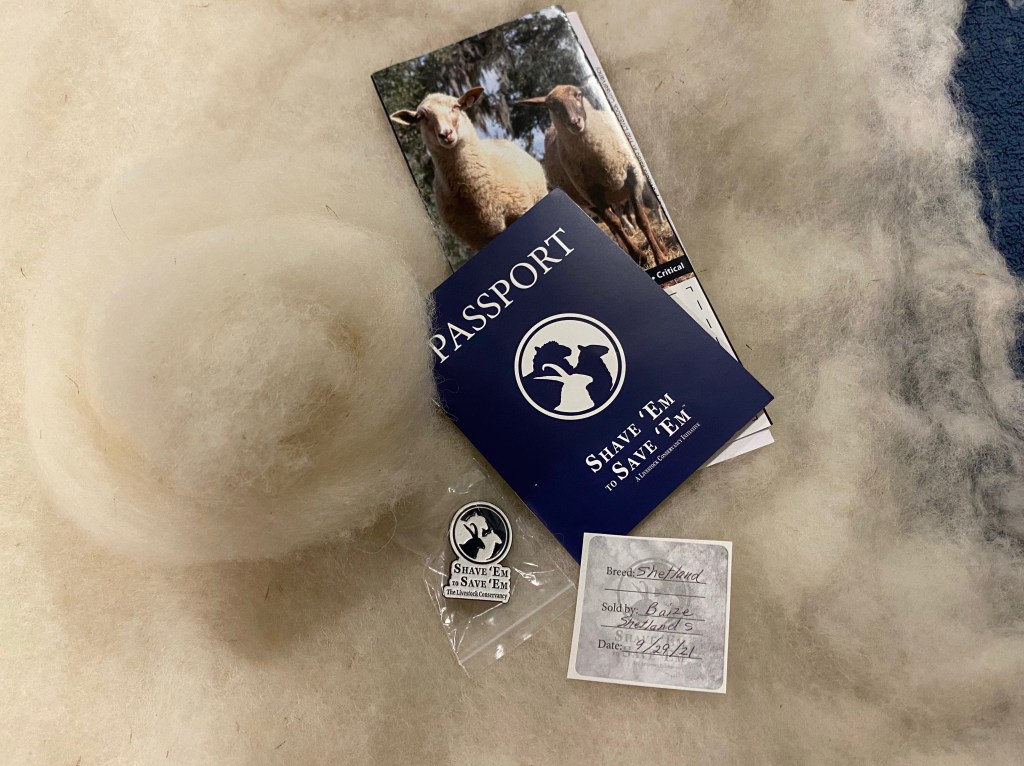
I found some more Texas grown spinning fiber! I was connected to another spinner through our local coffee shop, and she sent me many resources, including the name of a Texas rancher that raises Shetland Sheep (https://baizeshetlands.weebly.com/). Shetland sheep were developed in Scotland to be competition for Italian Merino wool. These sheep are also thriving in the Davis mountains of Texas! I ordered a prepared batt, since I wanted to see how the fiber is supposed to handle before I delve into the raw fleece. In the box with the wool was a passport stamp for the Shave ‘Em to Save ‘Em initiative by the Livestock conservancy. So of course I ordered a passport for my new sticker. There are many breeds of endangered sheep in the passport, and so many opportunities to learn about different wool!
Shetland wool batt from Baize Shetland Sheep with my new wool passport
The Shetland knitters are known for “wedding ring” shawls; large lacy knitted fabric that is so fine, it can be passed through a wedding ring. I am awed by their skill. I read more and found out that the lace uses only knit stitches, no purl stitches so it is double sided. I am not fond of purl stitches, so this might be a way for me to enjoy knitting. I don’t intend on embarking on a wedding ring shawl, but maybe trying some of this lace on a small project. It seems only fitting to try Shetland knitting with Shetland wool. Oh, and knitters in Scotland historically used a knitting belt, which allowed them to walk and knit. I have my work cut out for me.
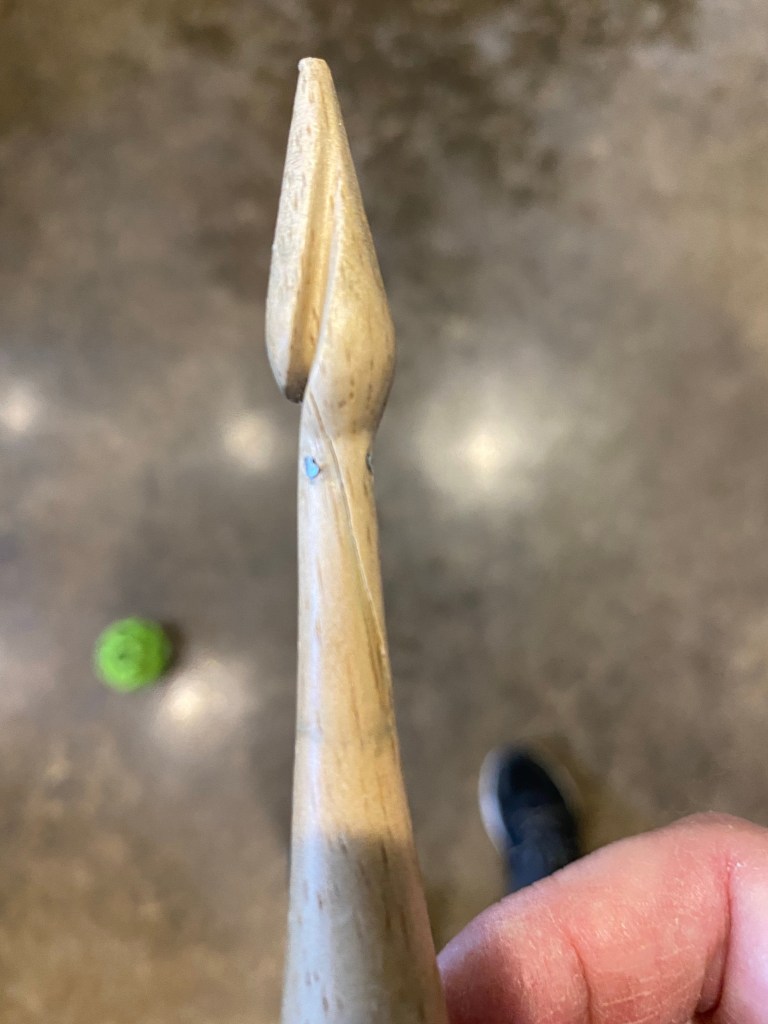
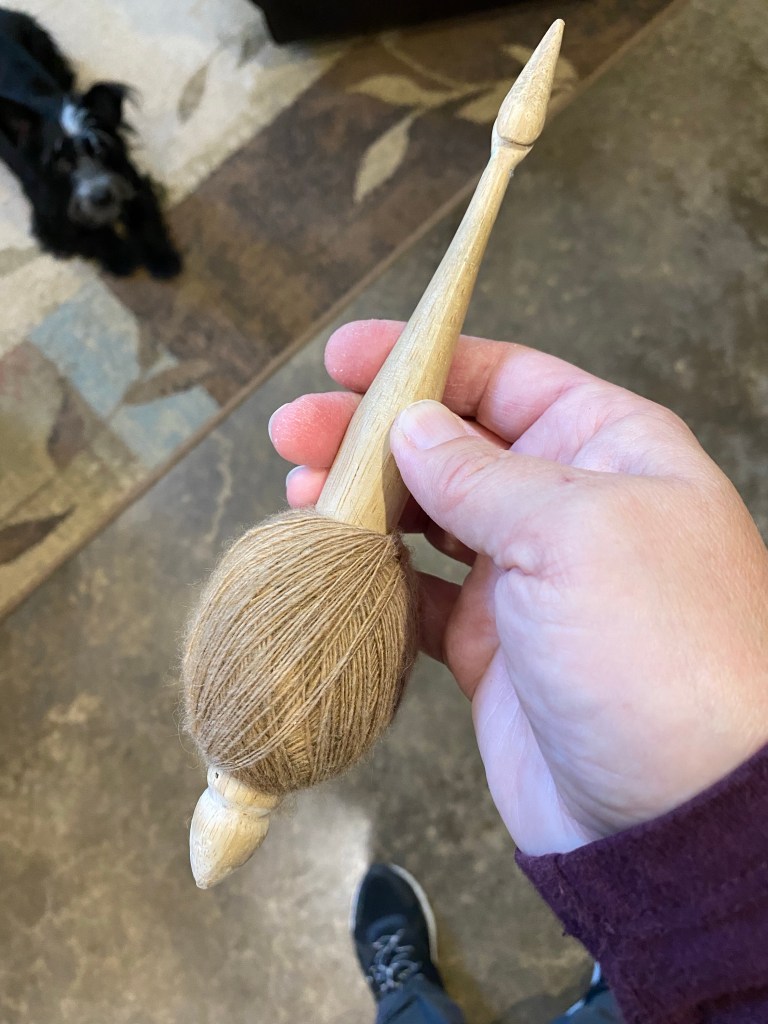
Riveting the head of my drop spindle worked. It took a dozen drops, but I eventually dropped the spindle on its head and cracked it again. The rivet held. I was able to continue spinning for the rest of my walk, then when I was home, I put a little glue in the crack and tightened up the rivet with a few careful hammer taps. In mitigation, I was pushing the amount of yarn I could load on the spindle, so it was heavy and starting to get unwieldy, so my lesson is to keep the cop of yarn smaller so I reduce the chance of another drop to the head.
Crack barely visible on the neck of the spindle Yarn cop that is too big for this spindle
Missy would really like for me to stop taking pictures and kick her ball already.
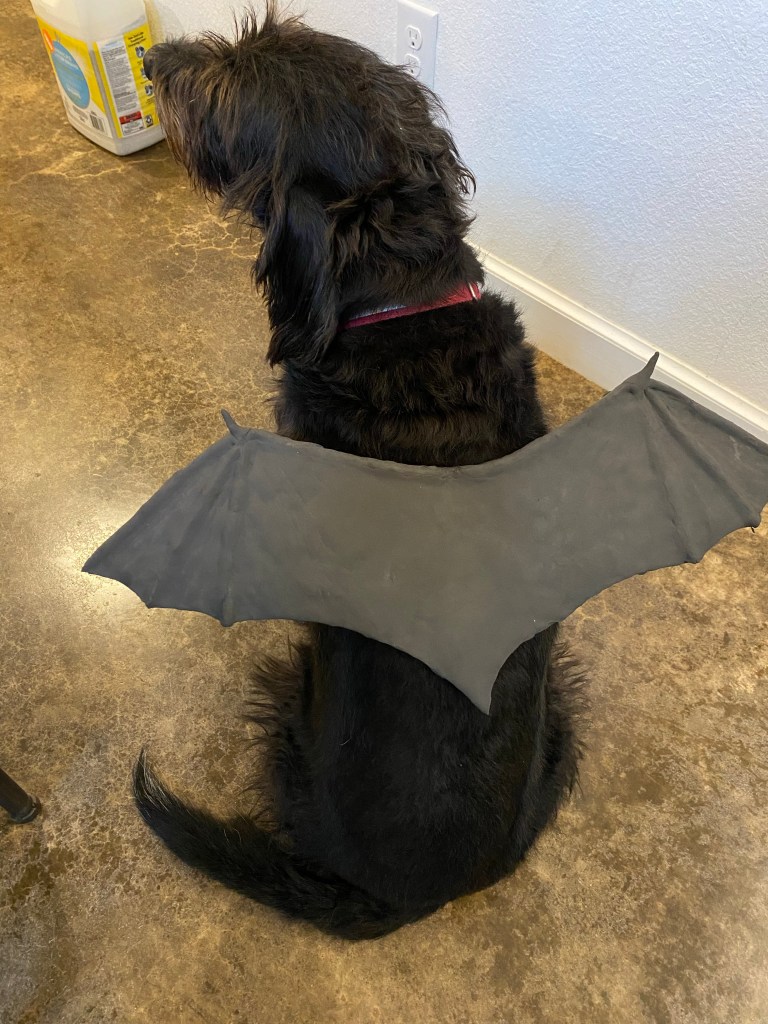
We had some extra EVA foam and foam clay, so I thought the dogs needed bat wings. Just one set, just to see how sculpting with the clay goes. It was good I only made one; Griffin thought it was cool and pranced about, Missy looked like I was attempting homicide. The black foam clay dried to gray, which defeated the point of black wings on black dogs, but I suppose I could spray paint it, if I wish. I cut the wing shape from the sheet foam, then laid on the finger bones with thin snakes of clay. The clay and sheet foam didn’t have the same color, so I rolled out thin sheets between layers of wax paper and applied that between the finger bones. I attempted to imprint stretch marks like the skin of bat wings, but the foam clay self leveled somewhat and the lines all but disappeared. Interesting. I hot glued a wide elastic strap underneath so it would stay on the dog.
Griffin thought his wings were pretty coolMissy couldn’t understand why I was applying a torture device to her back
Yes, we are big fans of the video game Zelda: Breath of the Wild. When my eldest and I made a diamond circlet in May, she thought it would be awesome to have the ancient armor to go with it. She even did up drawings on how the pieces would go together.
My eldest’s schematics for guardian armor
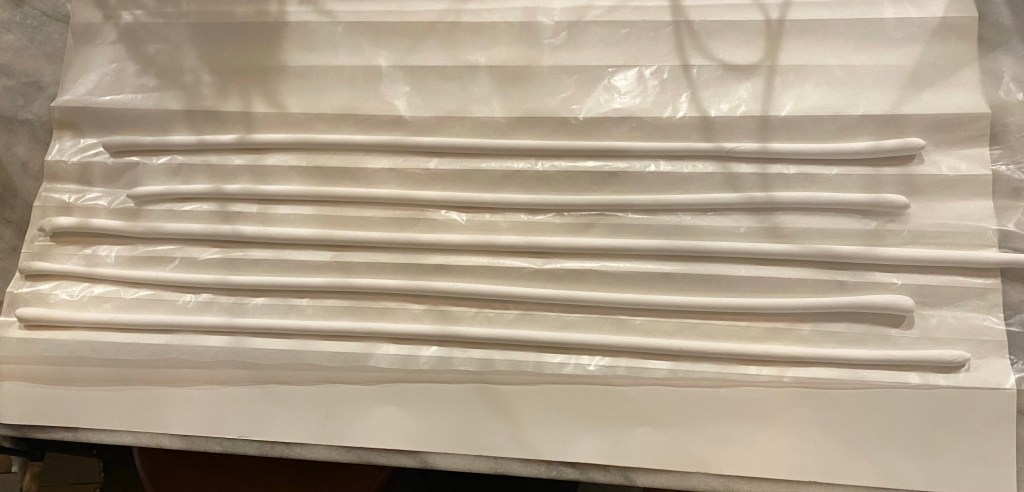
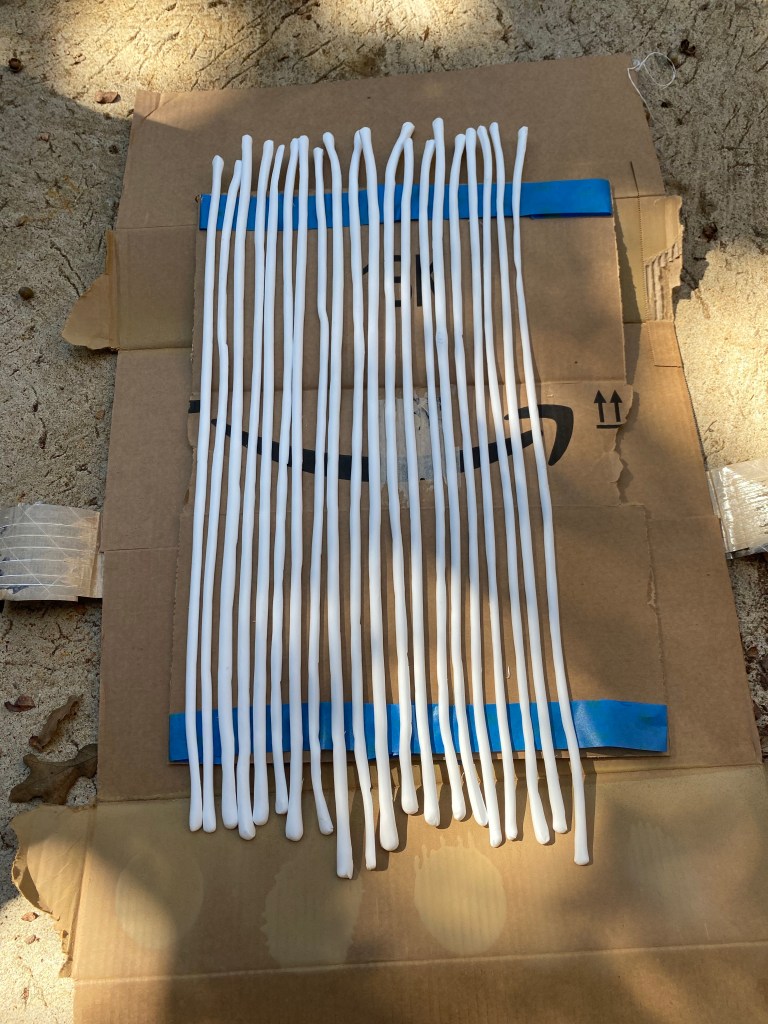
I have been itching to experiment with EVA foam sheets and this was the perfect project to use them. We started construction over the summer, and I have to tell you that I love this foam. It behaves like thick leather, except you warm it with a heat gun and it becomes pliable and will hold its shape when it cools. It isn’t as tough as leather, but it is wonderfully light. To do the trim I purchased foam clay, which I also now love. The clay is very soft and has a long working time. We found that the best way to make trim was to roll long sticks of foam and let them dry. To keep the bottoms from flattening in the drying process, I constructed channels with poster board and lined it with wax paper to keep the foam from sticking. When the sticks were firm, I cut them lengthwise to make half round strips, then spray painted them. Light weight foam is difficult to spray paint as the force of the spray sends it flying. To combat this we used masking tape loops and short bursts of spray. My eldest used hot glue to apply all the trim.
Foam clay sticks drying in round channels made with poster boardHalf round sticks prepped for spray paint
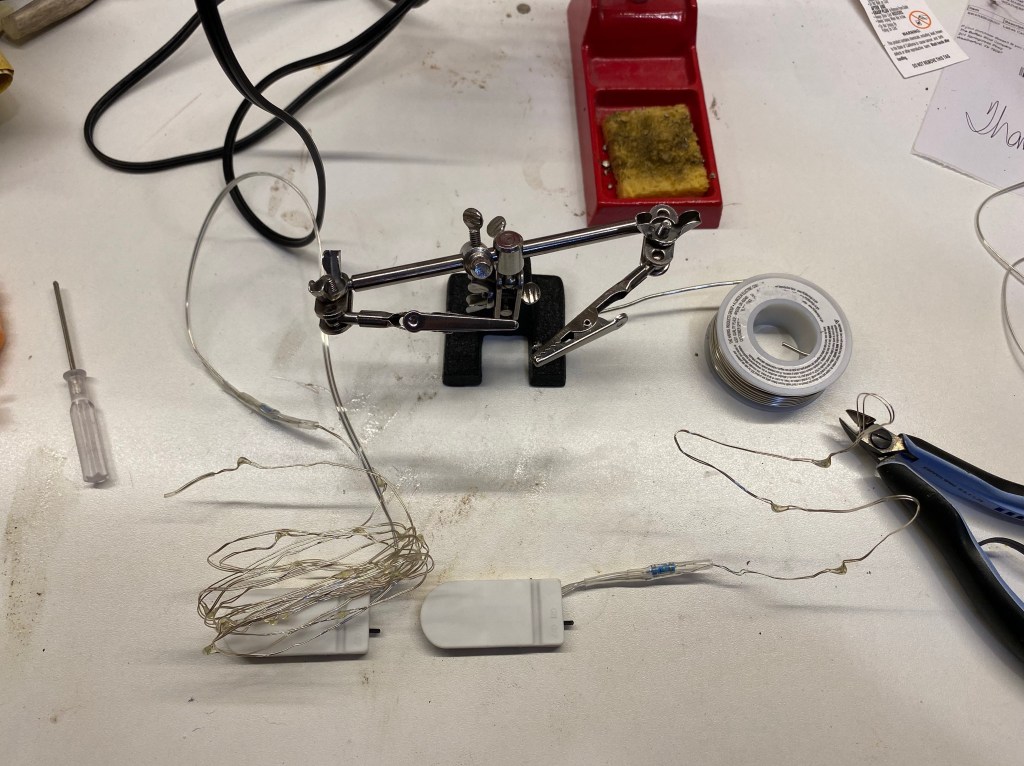
To make the blue lights on the armor we found a blue pill bottle and cut it in pieces with a band saw, then flattened the sections with a heat gun. Rubbing the sections with 400 grit sandpaper gave them a nice soft glow. The lights themselves are battery powered fairy lights that I hot glued to the inside of the armor. The lights on the hand pieces were a little trickier, as I needed to reduce the length so had to do some electrical soldering. In all, there are four battery packs in the armor, secured with wide elastic so the batteries can be changed.
Full size lights on left, reduced length on right
The armor pieces are connected with wide black elastic to give some flexibility and grip. The orange glow around some of the decoration was done with foam brushes; first white acrylic paint, then orange. If I were do do this again, I would paint the glow first, then glue the trim over the top. The shoes are my favorite part because I was able to form a proper toe shape with the EVA foam. We used some old canvas shoes as a base. I had plans to sew the undergarment, but my eldest wisely suggested clothing pieces that could be used again as … clothes. So the navy base layer is store bought shirt, leggings, socks, and gloves.
Ancient Armor costume modeled from the Breath of the Wild video game