Update on Grandma’s blanket

Current progress on Grandma’s blanket

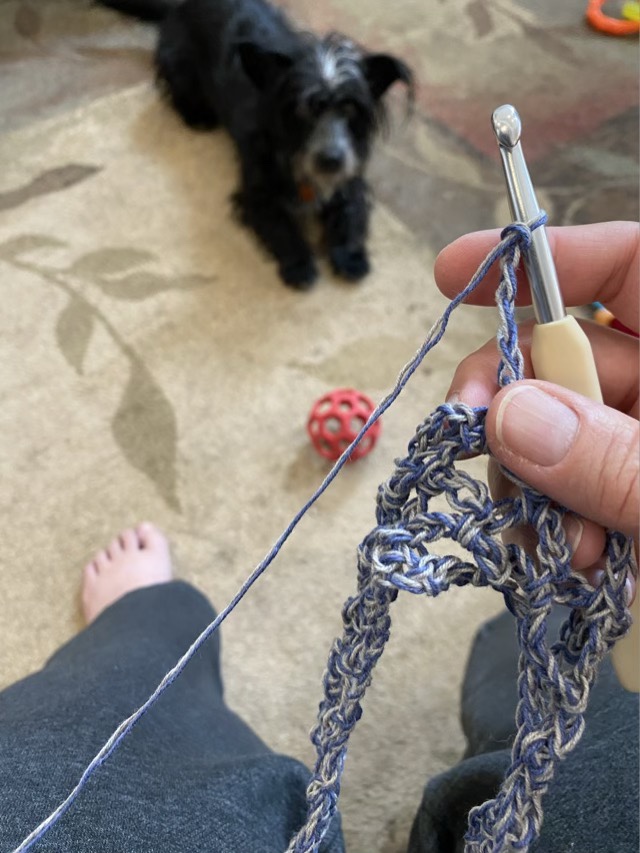
I have four borders and most of the center field done of Grandma’s blanket. The side borders are not finished because the plan is to maximize the length of the blanket with the yarn I have remaining. The pattern calls for tassels, but I don’t like tassels (because they become a tangled mess), so I’m going to use the tassel intended yarn to make the blanket longer (we have tall people in our family). The yarn remaining is laid out on the center portion. I will use one skein to make the length, and the other skein for the join technique I want to use. I consider this a calculated risk, not yarn roulette.

Tracking rows

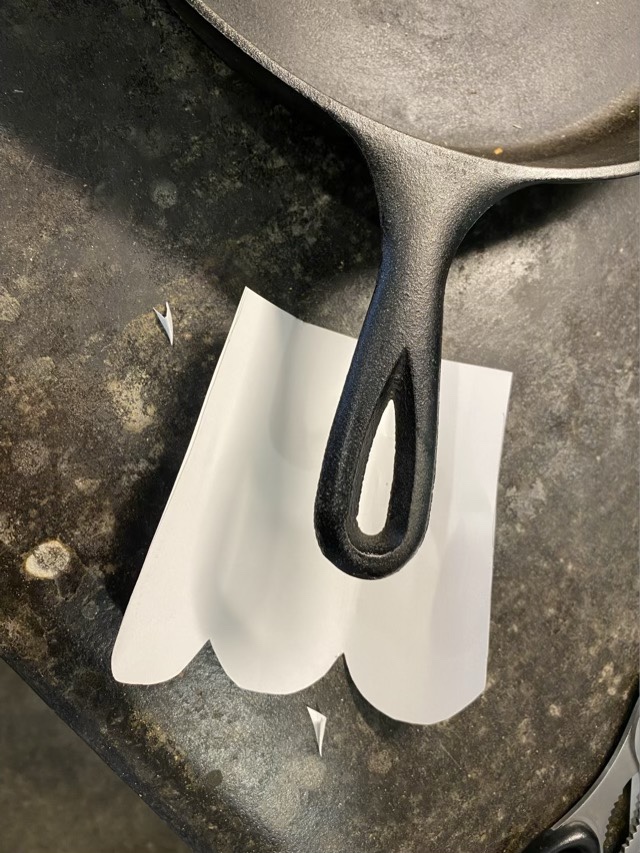
I’m still plugging away at finishing Grandma’s blanket. I have a renewed fervor for finishing, since I now have five projects in queue. I’m currently working on the border pieces, which are mostly a five row repeat. At this point I have the five rows memorized, but to keep track of where I am, I made a simple chart. Since I have to make two, I make the first leg of the X for one side, and the second for the other. Then they should come out the same length.

3D spindle design #2

I reworked my spindle design in the Blender software and asked my local 3D printer to print it in cream resin for me. I redesigned the head and neck to make the top lighter and route the yarn better.

New spindle design (prototype 2)

It spins easier than the first prototype, and is a bit more elegant, but isn’t quite where I want it.

Green combed top spun on a 3D printed spindle

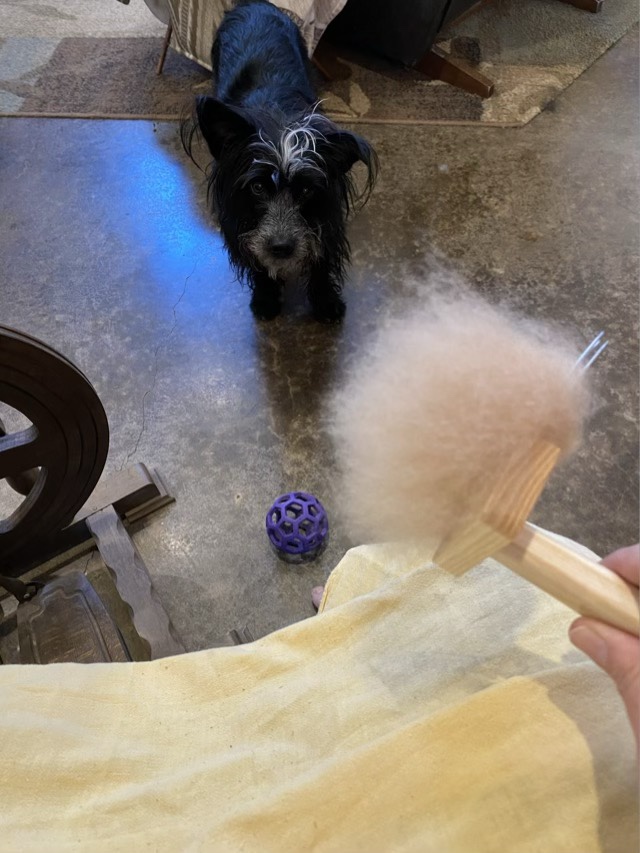
I have realized that elegance is really what attracts spinners to a spindle. Yes, sometimes we need a workhorse to just get the job done, but a tool with elegance or history, or both, sing more to the soul. I have recently learned, when watching a history piece on spindles by Judith MacKenzie, that it possible to spin yarn by thigh rolling. No wheel, no spindle, hands and leg together to not only spin, but ply simultaneously. (I will report back on my attempts at that!) So why accumulate a collection of different objects to do the same thing? Because we are hoarders that like shiny things. We like to share and show our hoard and thus spread the knowledge farther. It is not a bad thing, in balance, and a good reason to strive for elegance on occasion.

Setting the twist

After plying my hand dyed chain ply yarn, I transferred it to my PVC niddy noddy and soaked it with water to set the twist.

Gradient yarn on a niddy noddy

When the yarn was dry, I wound it into a cake using a swift and a ball winder.

Cake of yarn made from Supernova Dye Works’ “Spruce it up” hand dyed Merino wool roving

I have picked a crochet pattern that I think will do nicely with this yarn, but it is fifth in my queue, so I better get to making!

Plying on a wheel

Some spinners set the twist in their singles before plying. I usually can’t wait, and the hand dyed single I spun on the Befra Willy Spinning wheel was no exception. I couldn’t even wait a day. As soon as the last of the roving twisted into yarn, I had the bobbin off, mounted on the bobbin holder, and was plying the newly spun yarn. I chose to chain ply to keep the color change consistent with the spun singles. Chain plying results in a three ply yarn. If you have made a chain in crochet, or shortened a long rope after tying off a horse, it is a similar concept, but with bigger loops. It took me 2 hours to ply the same amount of yarn it took me four days to spin, and I did it all in one go. (Can you say obsessed?)

Chain plied yarn

The shocker? The flyer assembly worked. The flyer was moving slightly slower than the bobbin, so it was adding twist as the yarn was wound onto the shaft of the bobbin. Wha? I think it was that the new bobbin fit loosely on the flyer shaft, where the bobbin I used to spin had a tight fit. Hm. Learning.