I finished my spun mohair fiber page. This mohair is from Rutabaga the Angora goat and is from her first shearing.
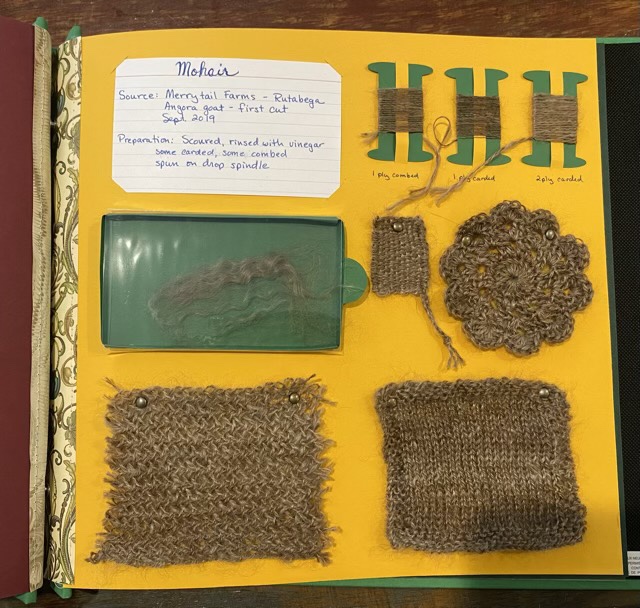
I did a knitting swatch in stockinette stitch with a garter stitch border, crochet round, a minute weaver, and a nålbound swatch.


I finished my spun mohair fiber page. This mohair is from Rutabaga the Angora goat and is from her first shearing.
I did a knitting swatch in stockinette stitch with a garter stitch border, crochet round, a minute weaver, and a nålbound swatch.
For my fiber book, I made a nålbinding swatch with hand spun mohair. The thing I love about nålbinding is the ability to cut it. Nålbinding is usually worked in the round, and each loop is connected to the next as well as to the row below. This makes it possible to cut the fabric vertically or horizontally and still have interlocked rows.
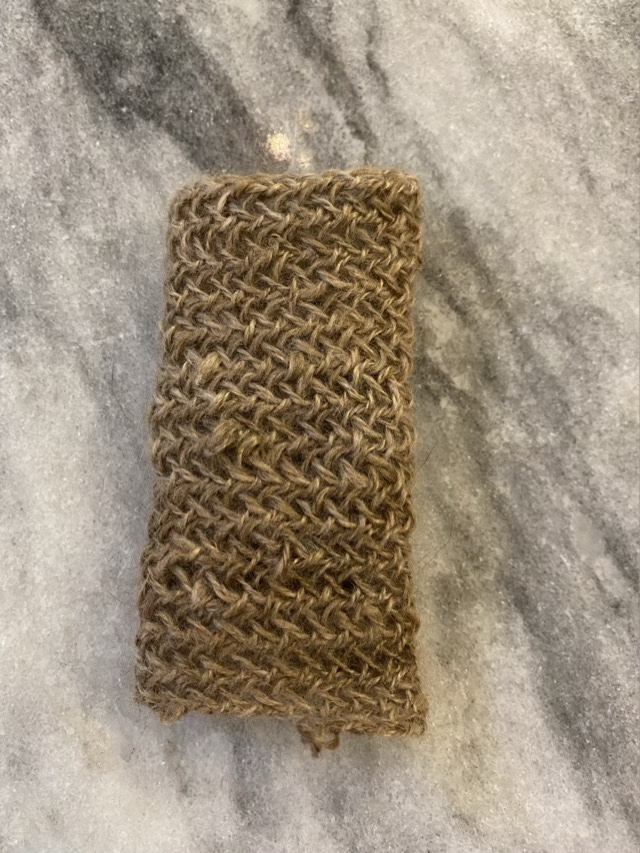
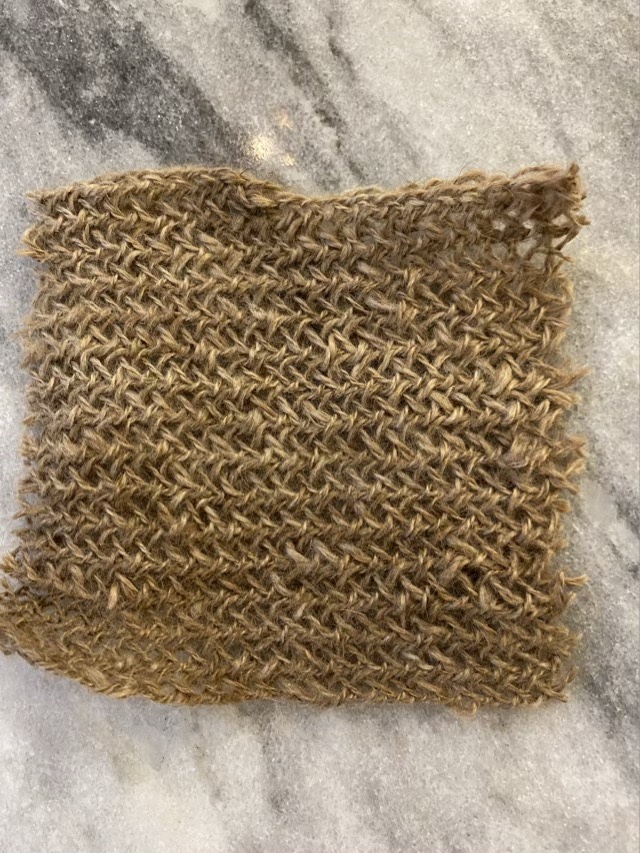
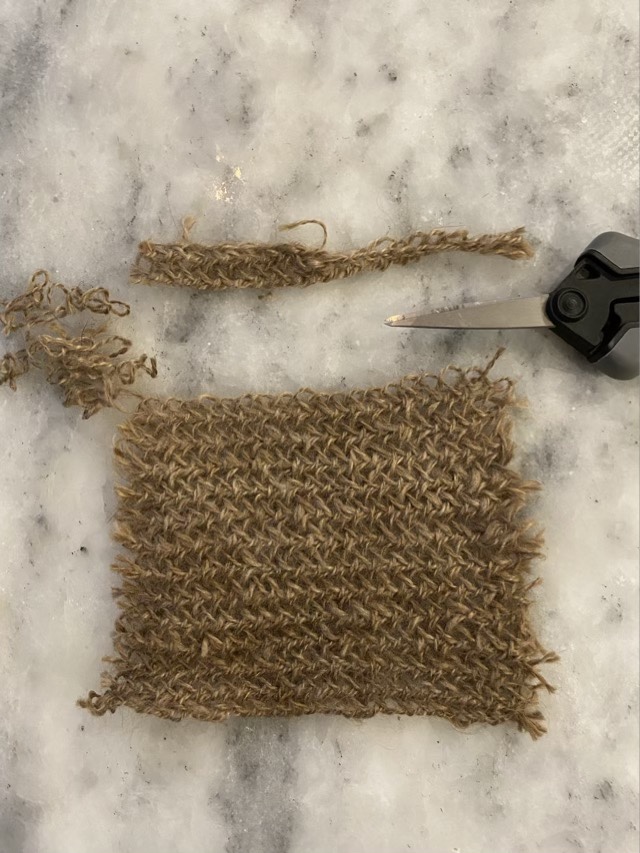
When nålbinding is cut, there are portions of loops that can be removed. I left the side edges raw, but removed the loose pieces along the top. This is going to be mounted on a page in a book, so won’t see too much wear and tear. It will still be interesting to see how it fares over the years.
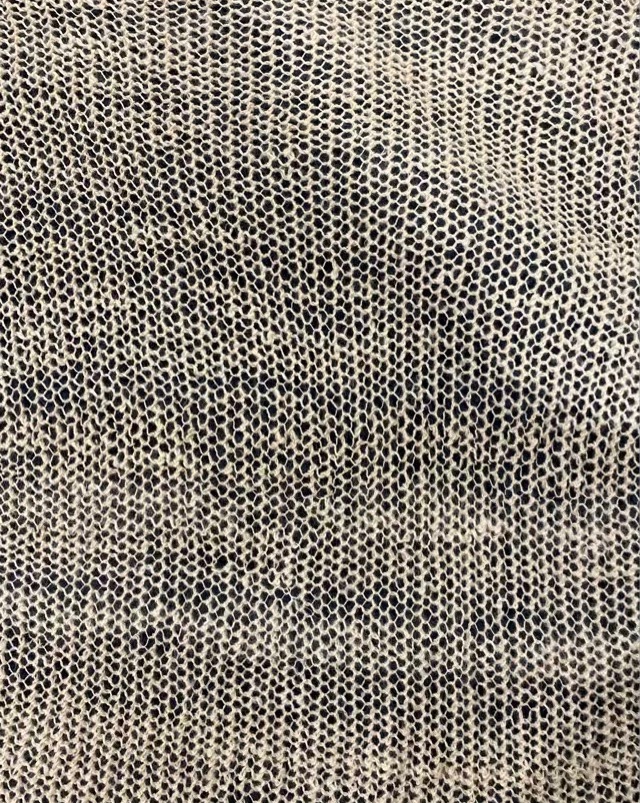
I am calling this my waiting shawl, since I knitted it while waiting. Waiting in the car rider line, waiting in the doctor’s office, waiting in the parking lot. It feels like I’ve been waiting forever, but I’ve only been knitting for six months. I started spinning the fiber over a year ago, though. So. This is made from fiber from Sugar Plum the alpaca, washed, carded, and hand-spun with a drop spindle and some on my upcycled bicycle spinning wheel. The knit pattern is yarn over, purl two together, both front and back, with knit stitches on the edges to get the stripes vertical

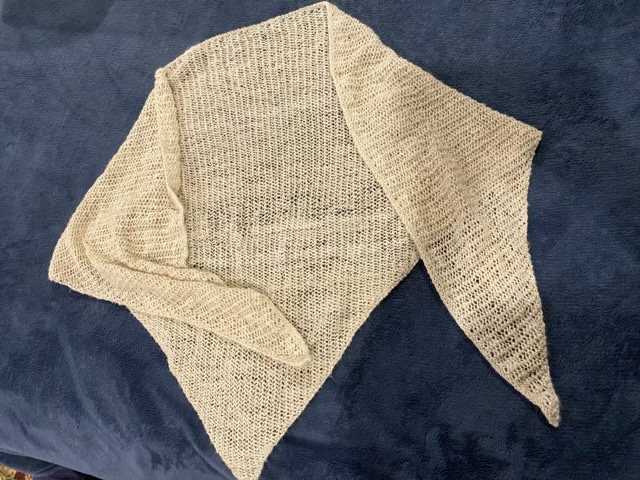
The amazing thing about this shawl happened when I did a light wash and blocked it. First, there was still quite a bit of dust in the yarn that came out in the wash. Second, when I blocked it, it doubled in size. All the lace holes opened up, evened out and expanded. Wow. It made my spinning seem much more even. I’ll take it.

I found an LED light that casts wave like forms in selectable colors. What a perfect thing to set under a ghost!

I set up one of my chicken wire ghosts and draped with with fine netting fabric. This is a basic version using my wire ghost instructions (which are currently selling like hot cakes on Etsy, wow). The ghosts in the instructions are more detailed with stylized netting, this version has no arms and uses just a long section of netting thrown over the top. I tried just setting the light under the ghost, but didn’t like that I could see it. I found a dark pot (which is actually part of a helium can that I cut off the top and painted black a while back), and placed that under the ghost with the light inside. I had to adjust the lengths of steel posts that stabilize the ghost from an X formation to parallel to accommodate the can, but it worked.
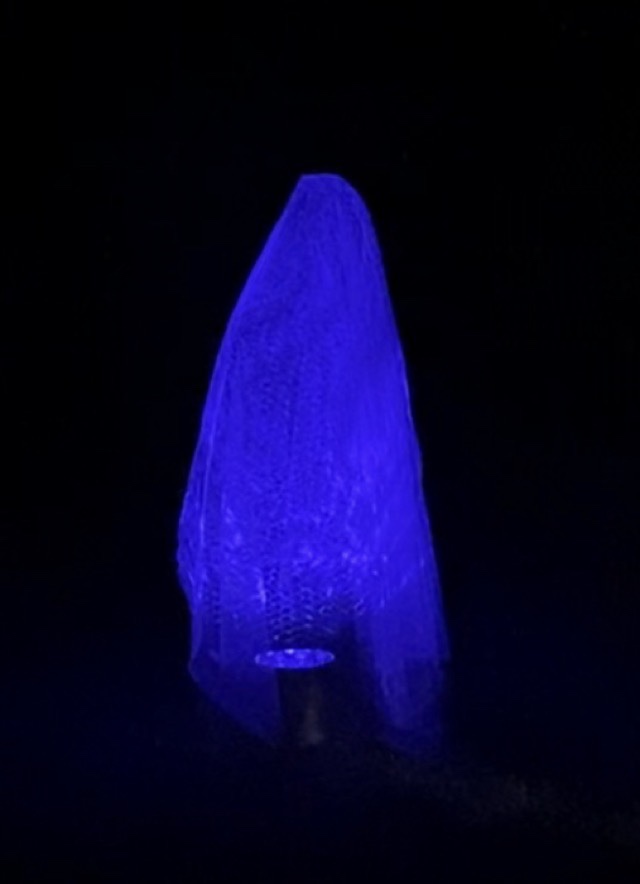
The white light is quite bright, but I think the blue color is nice.

I decided to try my new wool combs with the alpaca fleece that I washed and dried a year ago. I love them! Combing removes so much more vegetable matter and short cuts than carding. The fibers pulled off the comb are light and airy and beautifully aligned. I do get much more waste; I’m putting that in a bag to put out for nesting material for the squirrels and birds. I was going to comb all the fibers then spin, but the preparation was so fluffy I just had to spin it right away and not risk compaction in storage.
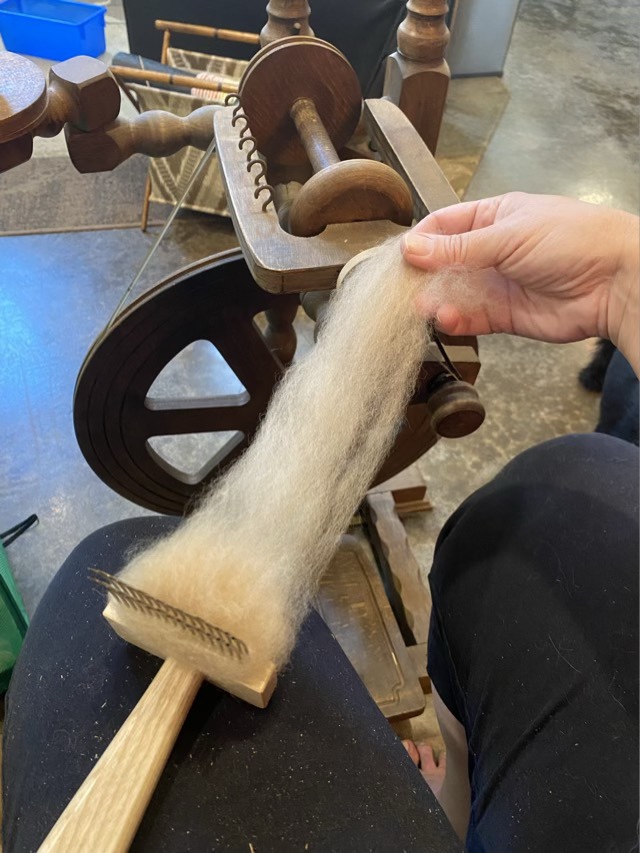
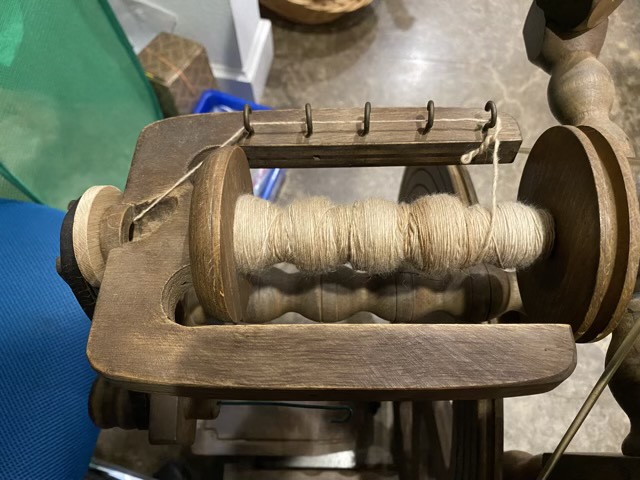
I tried spinning directly off the comb, but my skills are not that advanced yet, so I pulled off the fiber then spun on my vintage Befra Willy wheel. I now see how the yarn on a Irish tension wheel (flyer is slowed down) has to be thicker. There is more strain on the yarn and thinner yarns snap. I’m still pleased with the thickness of the yarn for multipurpose projects, but this will not be lace yarn.
 Critters and Craft