So if putting fiber on a distaff is called “dressing”, then taking it off would be “undressing”? I’ll just file this under: Things that pop into my mind as I spin.


So if putting fiber on a distaff is called “dressing”, then taking it off would be “undressing”? I’ll just file this under: Things that pop into my mind as I spin.
I bought a grab bag of scraps from the local quilt store because it had fabric that matched what I have in my stash. I set it on the sewing table of the Singer model 66 and later decided to try sewing some squares together. I haven’t pressed the seams yet, but I love the way the machine works. It is the advice from The Treadle Lady to take these old machines on a “Sunday drive”. Using them weekly encourages proper regular maintenance, and keeps everything moving.
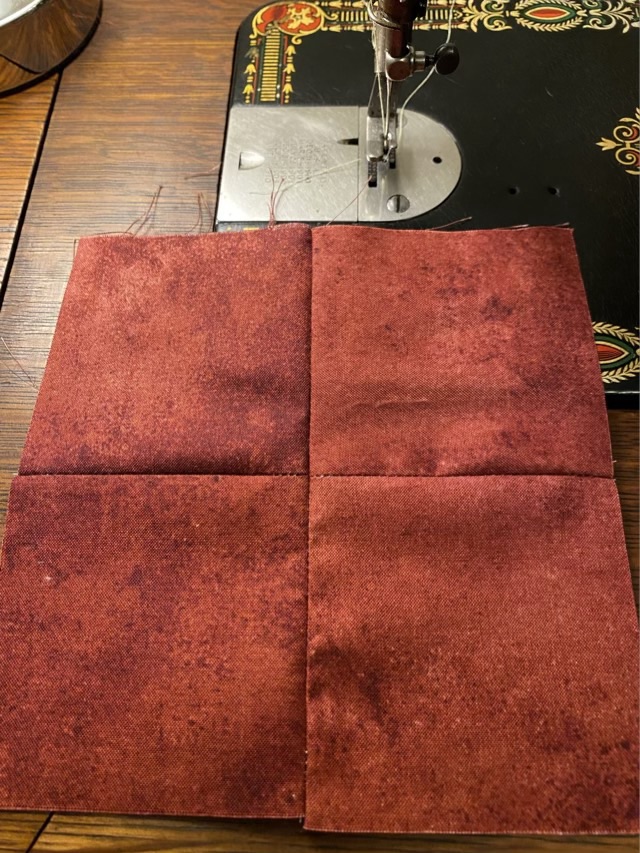
I thought the Singer model 66 was set at the tiniest stitch, so I’ve been gradually turning the stitch length knob, pictured below and marked with an arrow, to the left. This knob on both my machines was quite difficult to turn and needed extra sewing machine oil, and a wrench with the jaws wrapped in leather, so as not to damage the knob.
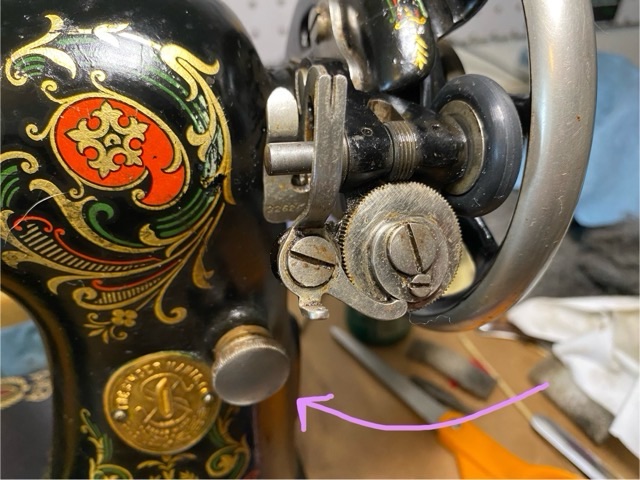
My assumption was wrong. Turning the knob to the left makes the stitches even tinier!

So now it makes sense that I have seen these knobs all the way screwed in, the longest stitch works well for sewing the most common fabrics. There wouldn’t have been much call for changing the stitch length, so more time for the knob threads to seize up.
I also figured out a way to “reverse” stitch on the treadle machine that absolutely does not have a reverse capability: I turn the fabric around. I sew a few stitches, bury the needle, lift the pressure foot, turn the fabric 180 degrees, lower the pressure foot, sew a few stitches back to the beginning, then turn again and continue with my seam. Here is a video. These stitches are so small I probably don’t need the extra reinforcement, but it makes me feel better.
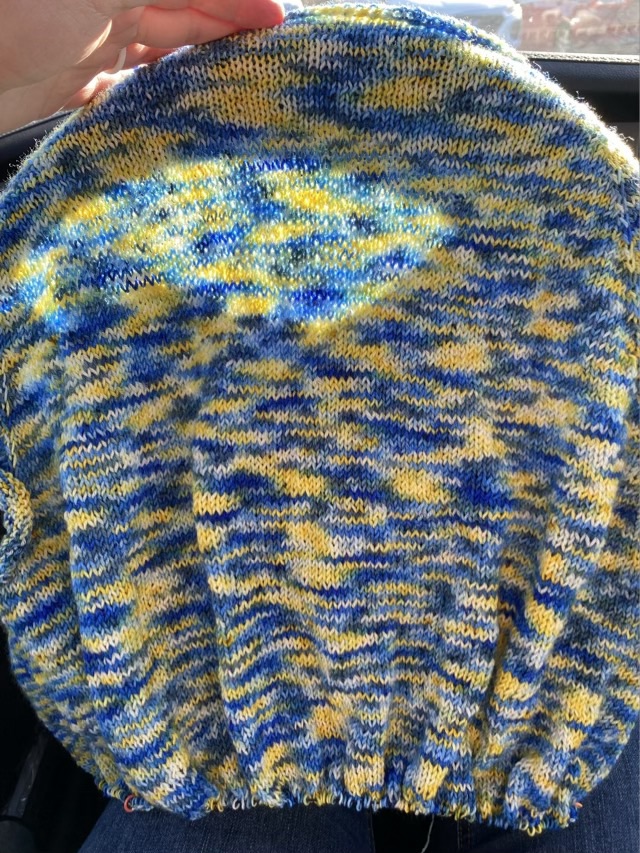
I decided to move my cardigan knitting project to be a car waiting project. When school is going, I regularly carve out an hour of my day to yarn works while waiting for pick up. It is a time that I am uninterrupted by tasks that cause me to get up and move away from the knitting, such as letting animals outside, or getting distracted by another craft. I enjoy listening to an audio book and work away. That is all this cardigan needs, is some regular focused time. I might get it done before spring.
I saw a picture on Pinterest of a tatted bracelet that I recognized most of the elements used for construction. I’m having trouble interpreting written tatting instructions, but a picture is almost as good as a chart, and much easier for me to follow. I loaded up my tatting shuttle with #10 cotton, left it attached to the ball, and started with the ring part of the clasp. It took me a few hours to complete, and I carried it around in my purse for a while to work on when I was waiting. The bracelet is worked with the same series of a closed loop and a chain on both sides, and each connection used a picot.
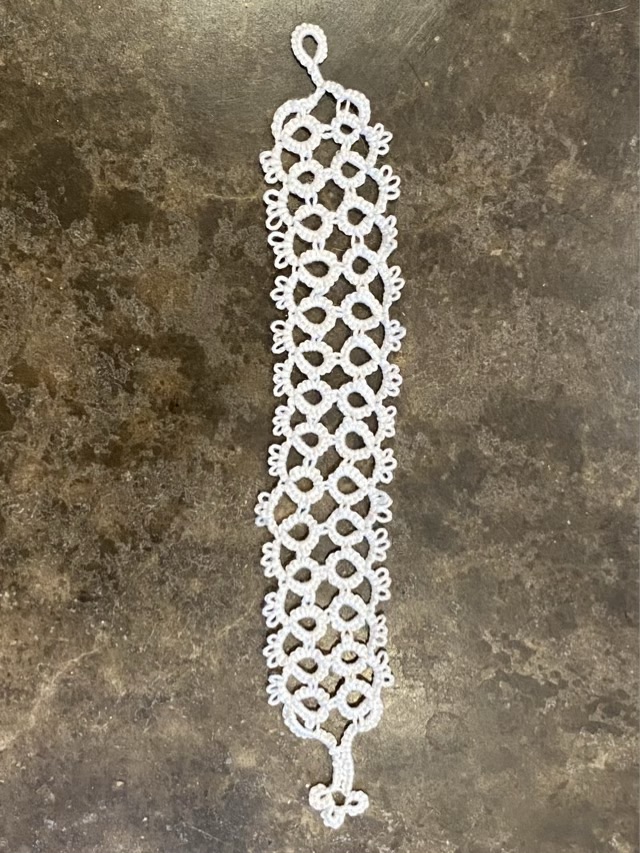
I did have to join in more bobbin yarn, but the ends were easy to weave in with a needle. I joined the last chain to the opposite side with a square knot and wove in the ends. To block it, I soaked it in a solution of white glue and water, to give it some stiffness and protect it from staining. I need to experiment with the ratio of glue to water. The bracelet turned out stiff and itchy, and didn’t resist a tea stain when tea accidentally spilled across the counter.

The clasp works reasonably well, although it takes a different set of hands to close.
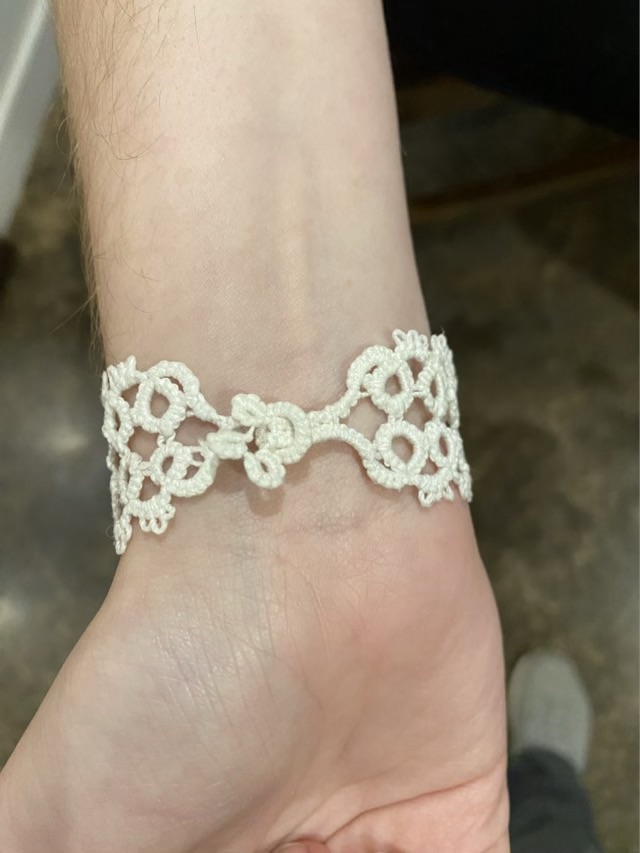
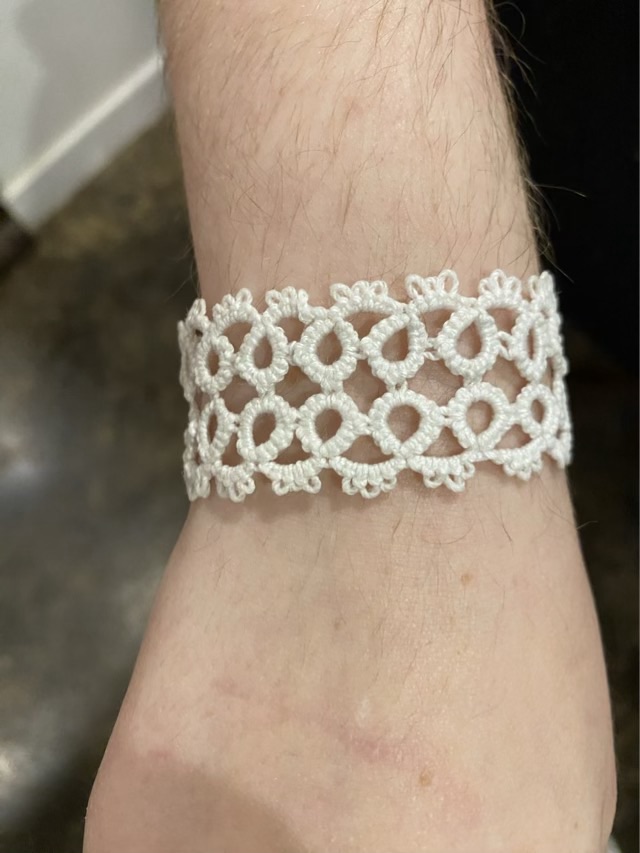
I need to work on the tension of my knots, the consistency of picot size, and the consistency of the closed loop size. I may try another bracelet to get the basics down. The tatted lace is sturdier than crocheted lace, but the counting slows me down, and I need a different way to hold the shuttle so it doesn’t hurt my thumb. So, not my favorite craft, but could be useful in a future project on a small scale.

