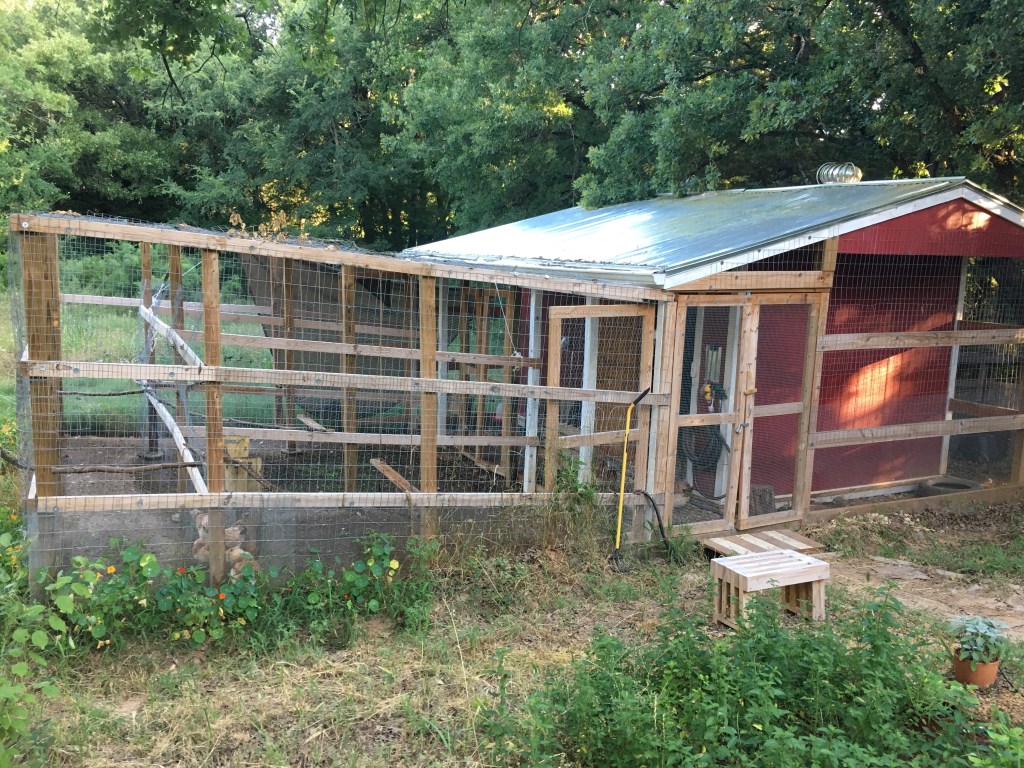
Chickens: 1 year plus, what has worked and what hasn’t (pt 2)

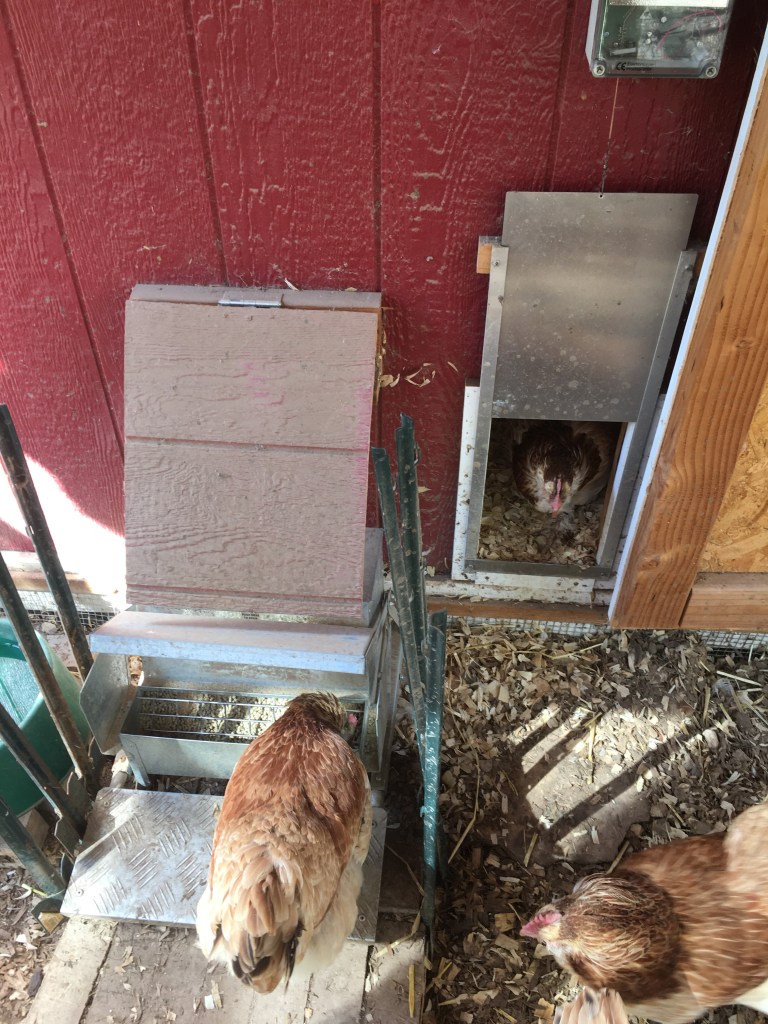
Single level roost with deep litter

Roost: The roost I built is plenty big! The eleven chickens only take up about half at night, mainly because some of the hens tuck themselves under their sisters. I don’t want more chickens, even though the coop is nice and roomy. We get enough eggs for the family and have enough to occasionally give some to neighbors as well. I discovered that butchering chickens is not for me, so there is no need to hatch more for meat. I don’t have a rooster, either, so no chicks anyway. I had grand schemes for a droppings catcher under the roost, but it scared the chickens, so we use the deep litter method instead. I get soft flake pine shavings to cover the floor and clean out the whole mess when the odor gets out of control (about every six months).

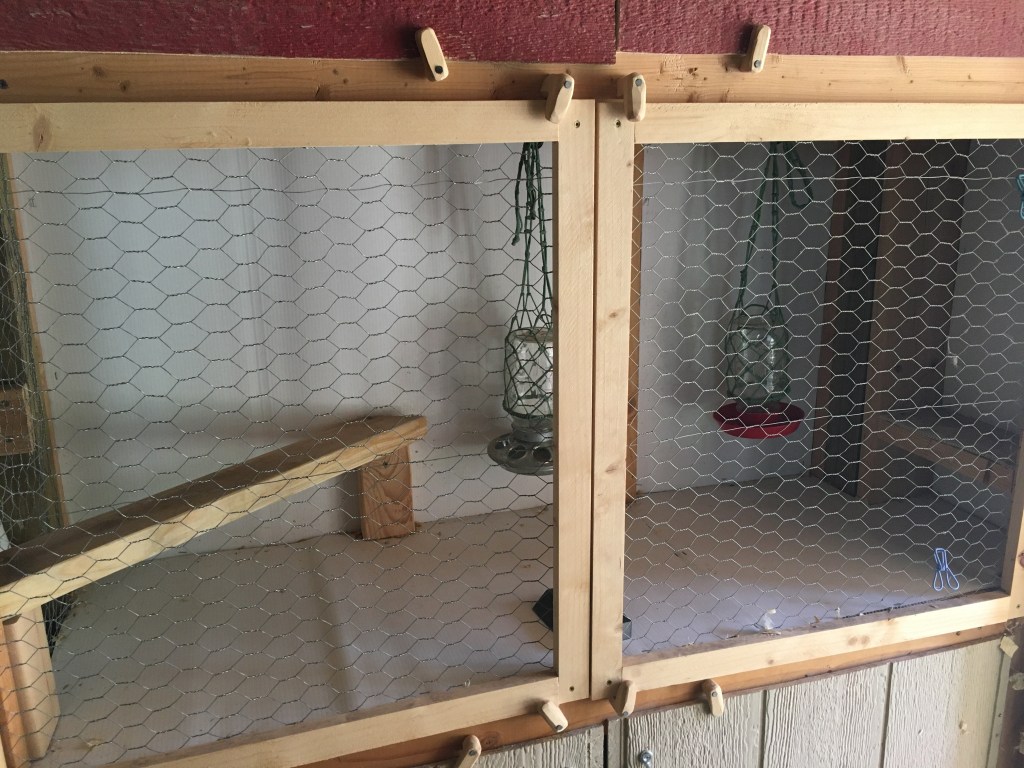
Isolation ward built between storage cabinets

Isolation ward: This has been brilliant. I built storage cabinets on one side of the coop, and made one that can also function as an isolation ward. I’ve used this to brood the chicks, when one of the chickens has an injury, when I need to give medicated water to just one, or when one is broody (broody chickens don’t lay eggs and can die trying to hatch dud eggs). For my broody hens, I usually just move them off the nest at night and put them back on the roost with their sisters. I’ve had a couple go hard enough broody that they yell at me when I approach the nest. That is when they get the isolation ward with a perch and no nest. It usually only takes a day in isolation to break the nesting need. The isolation ward is lined with plastic cardboard, which makes cleaning up much easier.

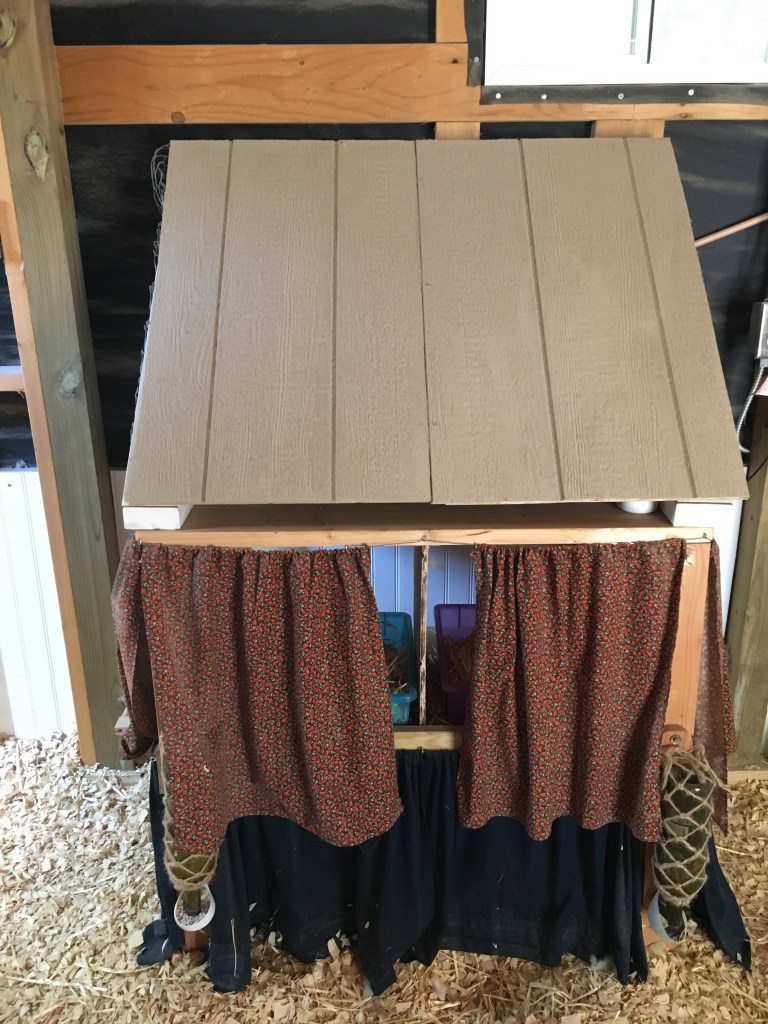
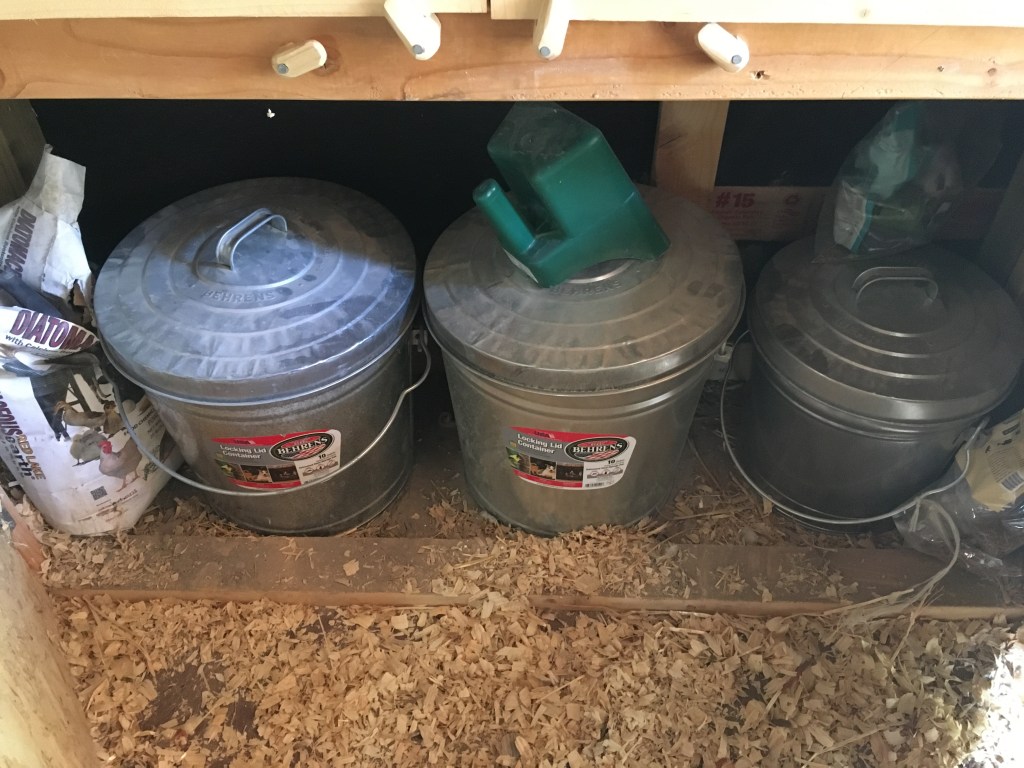
Feed storage

Metal locking cans: I store extra feed, scratch, and mealworms in the bottom cabinet in metal trash cans. I sprinkle diatomaceous earth around the outside of the bins to discourage bugs. So far, nothing has invaded the cans!

More tomorrow!

Chickens: 1 year plus, what has worked and what hasn’t (pt 1)

I thought I’d summarize some of the good and meh of our chicken choices so far! I’m going to break this up into parts, apparently I have much to discuss.

Faverolle hens

Faverolles: I do like this breed, even though mine are hatchery quality and not for show. After reading about what it takes to show chickens, I’m OK with not. My hens are friendly and will still get on my lap if it isn’t too hot. We do deal with bumblefoot often, but sanding down the roosts and perches seems to have helped. We get a variety of egg colors as well, which is interesting.

Tire Dust Bath: I was unsure of this at first, and so were the chickens, but after a few months, the hens really took to this dust bath. When I put in a new batch of wood ash, dirt, and diatomaceous earth, they somehow squeeze two of themselves in the tire to bathe together and there is a waiting line. Their feathers hold a ton of dust and the bath empties out faster than I can refill it. The tire came from our mechanic: I asked if they had any used and they had one that the recycler missed. It doesn’t hurt to ask!

Foot Baths: These are the best for my hens in the hot Texas summer. I bought large plant drip pans from the hardware store and I keep them filled with fresh water. When the temperature is forecast to be over 95, I put a gallon bottle of ice in too. I do clean these out 2 or 3 times a day, but I have a hose run into the coop with a spray handle, so it isn’t a big deal to do when I am out checking for eggs. The hens LOVE these. They go and stand in the water to cool off. Yes, they drink the water too (yuck), which is another reason I clean out the pans frequently. What didn’t work is the homemade AC unit using a styrofoam cooler, fan, and ice packs. It was a pain to setup, it was hard to keep the chickens from eating the styrofoam, and did not make an appreciable difference in the temperature of the coop.

There will be more lessons learned tomorrow!

Spot the cat

Can you find the cat?

Little stinker. I put up the sunscreens and Sophie thought she can wiggle into the coop like she did last year (she can walk on the fabric, but not the wire). She forgot that I used 2x4s to block her entrance. So she’ll settle for looking over the edge like a gargoyle.

Spring coop clean

The sun has started to shine again. The spring rains aren’t done, but my eldest and I had some time to clean out the coop. Exercise and cleaning and out of the house! We put the chickens in a run with some scratch and some water, since they freak out when we mess with their coop. It worked well to have them not underfoot and not panicking.

Chickens locked in their run and out of the way

We removed all the old pine shavings and droppings, washed down the roost and sprayed it with vinegar, swept up and dusted. Then we put the roost back in, put new straw and dried lavender in the nest boxes, dusted everything with diatomaceous earth, and spread out four and a half bags of pine shavings. We didn’t spread out one the bags to see how long it would take the chickens to disperse it themselves. They did a fair job and had a low hill by the end of the day. Oh were they happy to go back to their coop!

Spring rain storm

Well that was a gully washer. A right spring storm (and yes, it is January). Almost three inches in about two hours. And all those fallen fall leaves ganged up with the twigs and dammed my drainage, flooding the chicken runs. My poor wet chickens were blocked out of their coop. I opened the people door and they all ran back inside. The coop stayed dry (except for beneath the window I left open, sigh).

Covered run flooded

It took about 30 minutes with a hoe and a rake to clear the ditches and let the water drain. My Fitbit says I burned 1,000 calories. Not bad for 30 minutes.

Covered run after the water drained

I cleared the drainage just in time, since the water was almost to the bottom of the feeder and rising. I found a nice sturdy rock to put outside the pop door so the chickens have a landing spot, even if it floods again, and I pushed all the detritus against the run thresholds and packed it down to help redirect water. When it dries out I’ll have to haul in some more dirt to replace what washed away.

Captures from the outside camera

The outside camera caught most of the action. I combined pictures from 5am dry, 7:48am wet, 8:05am completely flooded, and 8:39 when I had at least found land even if it was muddy. I took pity on them and strung up a feeder inside.

Temporary inside feeder while the water receeds