A change in plans

I was planning to brood the chicks in a spare dog crate, but then I started building shelves for storage and my folks suggested that it would be easy to build in an isolation/brooder shelf. So I did! (The brooder table I made can be used for nesting boxes, so no wasted work.)

New brooder/isolation ward

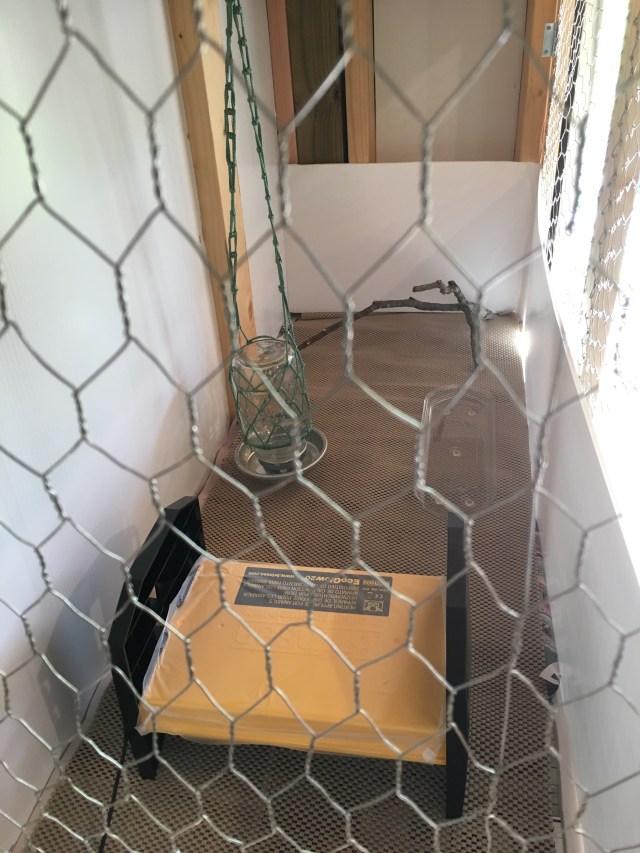
I covered the asphalt paper and OSB board with plastic cardboard to protect the surface from the chicks and vice versa. My eldest helped me make wood frames for the doors (she is learning to use power tools), and then I stapled chicken wire on the doors and the open end. We put metal rods (threaded was cheaper than non-threaded) inside to hang the water and feed containers.

I made wood latches to hold the doors closed (I used the band saw, band sander, drill press, and compound miter saw today, it must be a good day!), and used nails to hold them in place so they will still turn easily.

The brooder area is about at counter height, to make it easier to access and to not freak out the chicks by swooping down from above. There is still lots of storage space above and below (doors will come later, but before the chicks have free run of the coop.)
Brooder set up

I used another piece of plastic cardboard to make a draft barrier. My eldest and I worked together to line the brooder with paper and rubber shelf liner, and we put Press and Seal on the top and plugged in the warmer to make sure it works.

I have chick starter, electrolytes and probiotic to add to the water, more paper, more shelf liner…there is still quite a bit to do before the chicks are older, but I think we are ready for chicks.

Now, will they come this week? I turned on informed delivery with USPS and there are no notifications. Hmm.
Painted the floor

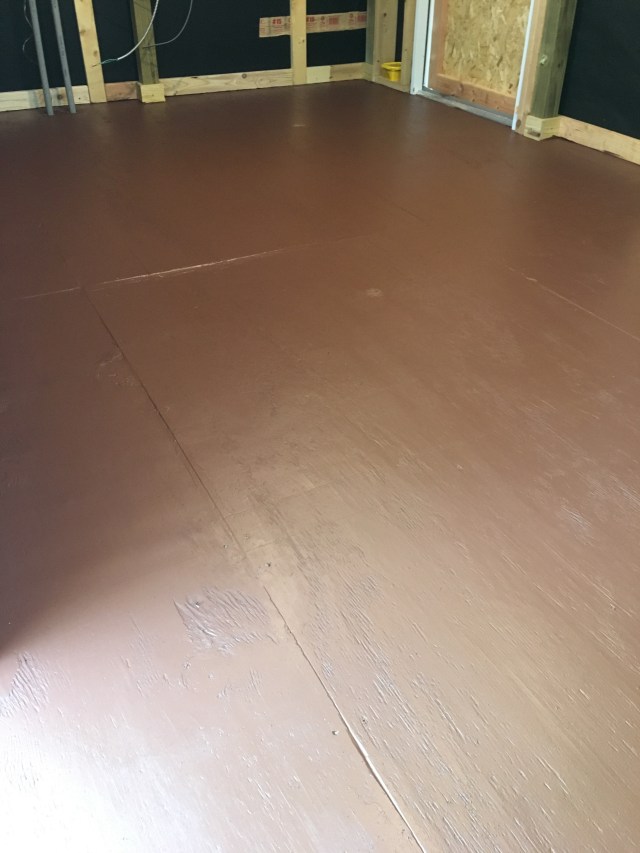
There was some debate on whether to paint the floor of the coop or not. Painted floors are more water resistant and easier to clean. But because most people keep some kind of litter on the coop floor at all times to make the clean up of the droppings easier, bare floor does just fine as well. It came down to: if the floor was to be painted, it needed to be now or never. This week is forecast to be beautiful and a can of latex floor paint is $23. So my husband and I cleaned out the coop last weekend, and this week I painted the floor a nice brown. I like it better than gray for floors. And it didn’t cost any more than the gray, except for about 5 minutes to get it mixed (I went to the store early on a weekday). Totally worth it.

The paint needs 72 hours to fully cure, so I should be able to move things back in this weekend.

Raise the roof

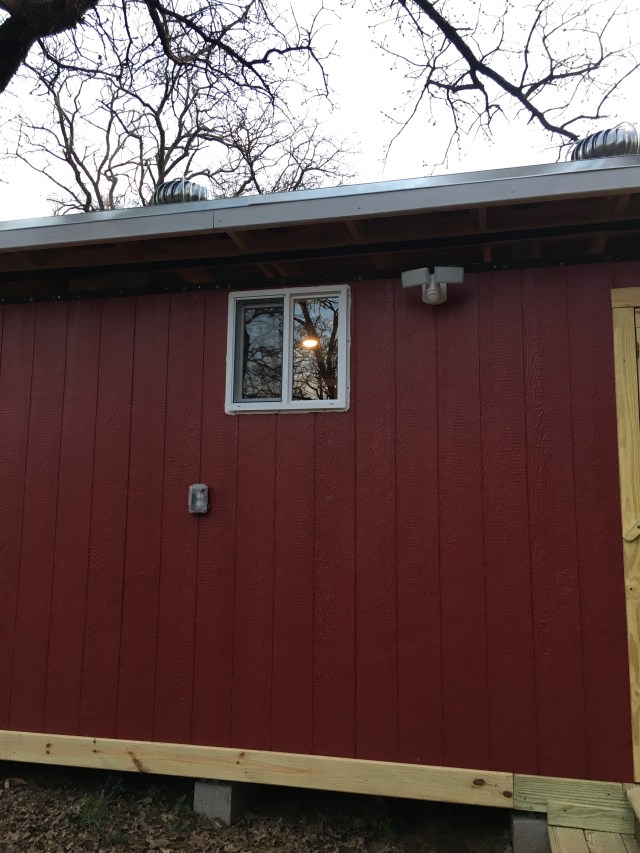
My husband put up the metal roofing last weekend! Hurray! Another tick on the check list. It is pretty and shiny right now, and reflecting the spring green from the budding trees.

I did paint the doors, but still need to get the trim painted. It was not in the cards today.

E-lectricity

Lights on in the coop!

I have had Schoolhouse Rock “Electricity” stuck in my head all day. Why? Because the coop now has power! My husband hooked everything up and it is now live. Yay! We have outlets and lights inside and out.

Now, we are not planning on heating the coop, nor adjusting the light for the hens to increase egg production through the winter. The lights are for safety (inside for counting sleeping chickens, outside to scare away predators). The outlets are so we can brood the chicks in the coop and not in our living space. When the heat of the summer is at its worst, some electric fans may do some good as well. And just in case this whole endeavor goes south, the hen mansion can easily be converted to shop space. Just in case.

By the way, if the song is now stuck in your head too, you’re welcome.

Steps

One step at a time. Baby steps. It’s a big step. Stepping stones.

But in this case, it is steps for the back door of the coop! Dad and I made a step and a small porch out of treated lumber, with a rail to keep the door from going open too far (my husband’s good idea). They came out well! And when it started to sprinkle (darn it weather!), we put away the electric tools, got out the hand tools, and kept working under the front overhang. Yay!