The fold down benches that I installed in the chicken coop are still high on my recommended list. I used 2x4s, heavy duty hinges, two lengths of chain with lockable links, screw eyes, and a hook and eye to keep it in the upright position. It folds up so the chickens can’t poop on the surface, but is easy to fold down. It makes a great work bench for filling water, and is fantastic when I need to sit when I’m not feeling well but still need to tend the chickens.
Photo description: Fold down bench held up with chain, with an empty large poultry waterer and two chickens looking for grubblies underneath.
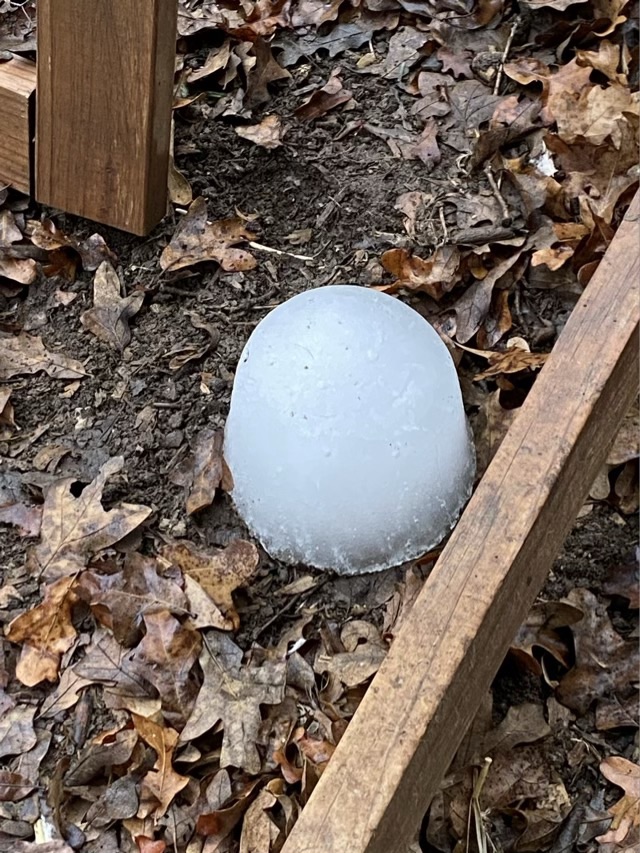
After our hard freeze a bit ago, I decided to empty out and refill the hanging chicken water when the temperatures rose back above 40. The chickens do have access to unfrozen water in a heated dog dish, but I’m glad I dumped out the ice blocks that had formed in the chambers.
Photo description: 5 quart chicken water container open with the block of ice next to it on the ground of the run.Photo description: block of ice from the 3.5 gallon poultry waterer.Photo description: block of ice from the 3.5 gallon poultry waterer 5 days later.
Even though our temperatures were above freezing the week after, it still took over five days for the big block of ice to melt.
It has been cold here, very cold for Texas even in January, cold enough to get a reluctant nod from the north. Although they still scoff that we shut down for a little snow. Tropical problems. The chickens also think it is cold, and turn from sleek ground raptors to fluffy balls of stillness.
Photo description: Chicken on the roost with her feathers so puffed up she is spherical.
I have a hen, Seashell, sleeping in the nest box at night. Historically when this happens I take the hen off the nest and put her back on the roost with her sisters, which helps break the broody cycle, but this hen isn’t broody. There are no eggs in the nest, and haven’t been since September. They won’t start laying again until February, if they follow the same pattern as the previous three years. She started this behavior after we lost the last chicken, so I’m wondering if the hen that passed was her buddy and she would rather sleep alone than with the flock. Or the other hen offered her protection that is absent with the rest. The flock is quite clicky.
Photo description: Night vision photo of four nest boxes built in under a work bench, with curtains pulled aside, the back of a hen visible in the top right box. Pine shavings cover the floor, and there is a inverted wine bottle with dispenser for grit.
I have another hen sleeping off the roost, but that is Magic, who has periodic leg issues that impede her jumping up to the roost. She sleeps on her pedestal of pine in the left corner of the coop.
Photo description: Night vision photo of the inside of our coop, with three hens on the roost, one in the corner, and one in the nest boxes.
Another hen passed. She was looking quite ragged and tired, but didn’t seem distressed. She was with the flock eating and drinking, until she couldn’t. I gave her access to one last grubbly treat, and helped her access water, then let her lay in the coop where she grew up, surrounded by her sister hens. It is a hard call, letting go or assisting. Since she wasn’t in obvious pain, I chose to let her slip away on her own time. I’ve done the final scramble before, with force feeding and medicines and stress, both for me and the hen, and it really isn’t dignified, and completely unnecessary to put her through that in her last days. Hatchery quality hens only have a life span of about 4-7 years, and she was there. May her next life be as peaceful.
Photo description: My five remaining Faverolle hens eating grubblies in the covered run.