Coop clean out

We decided to clean out the coop because we haven’t since the chickens took over the whole space.

Carrying of pine shavings by the bucketful

At first the chickens were wary, but as we progressed, carrying more and more things out of the coop, they freaked.
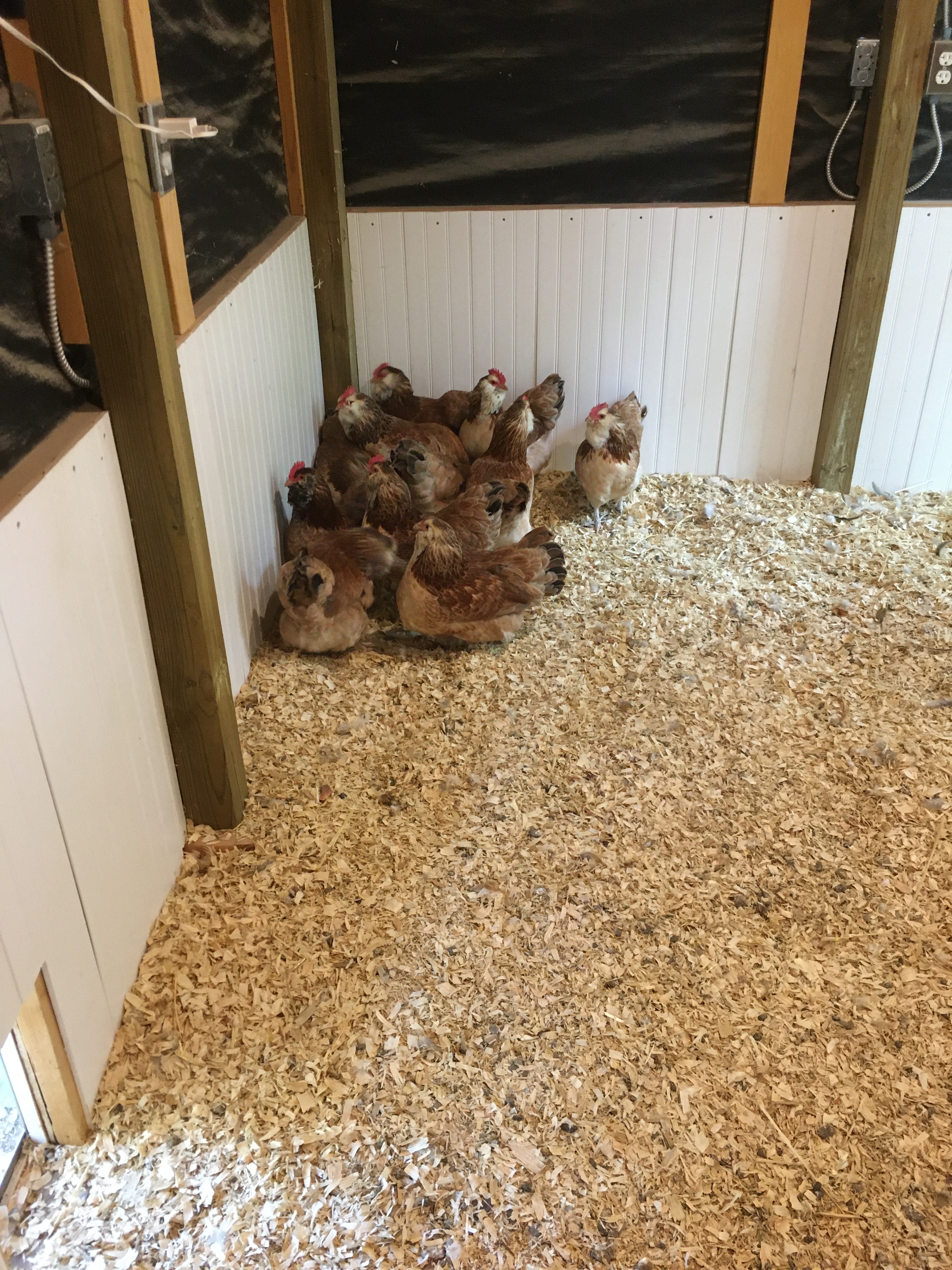
Freaked out chickens

Tigger did something to hurt her feet, probably when she was flying wildly about, so we locked them all in the run so they couldn’t cause themselves more damage. Next time, we will start with them locked in a run! Live and learn.
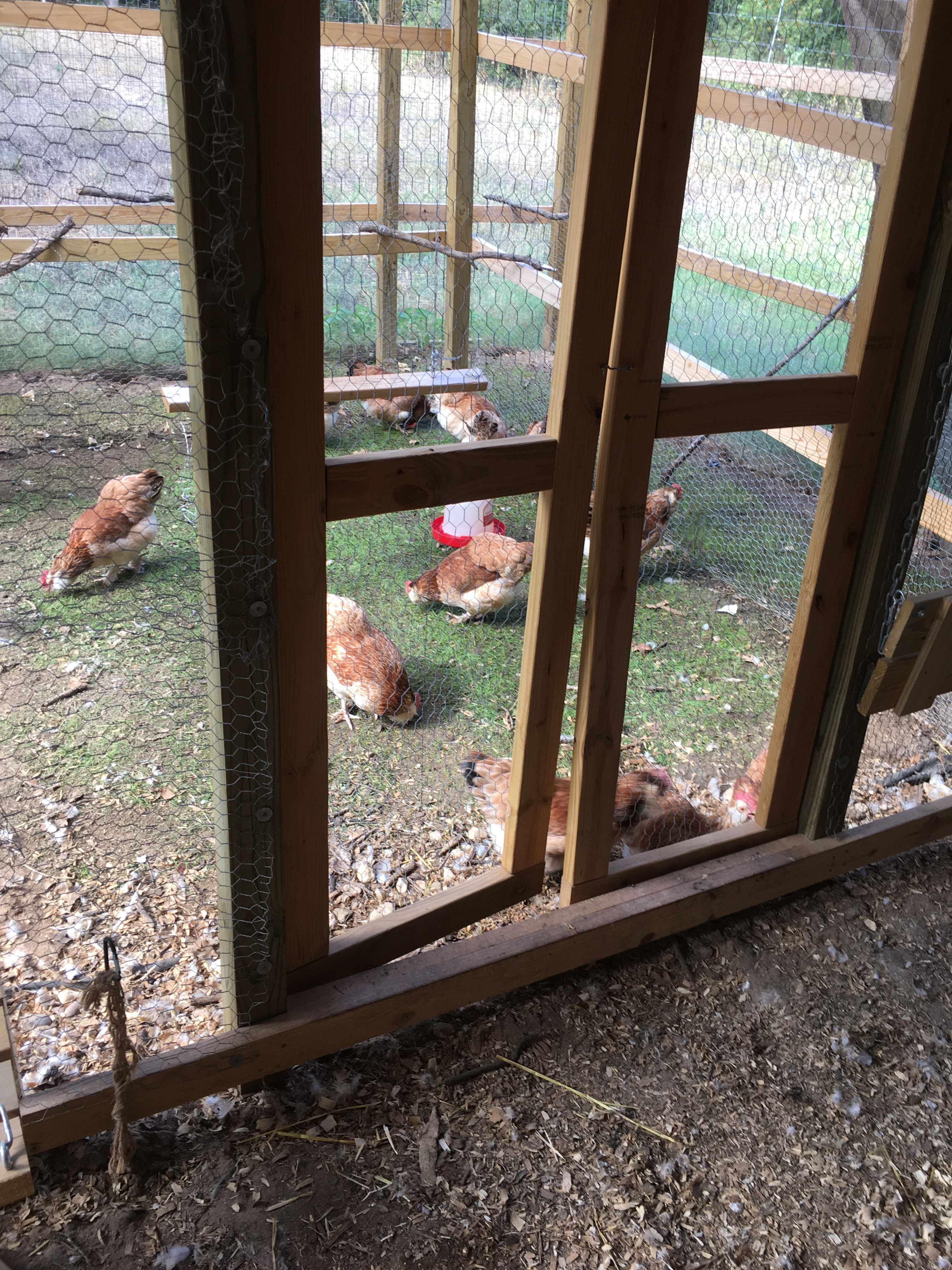
Confined chickens
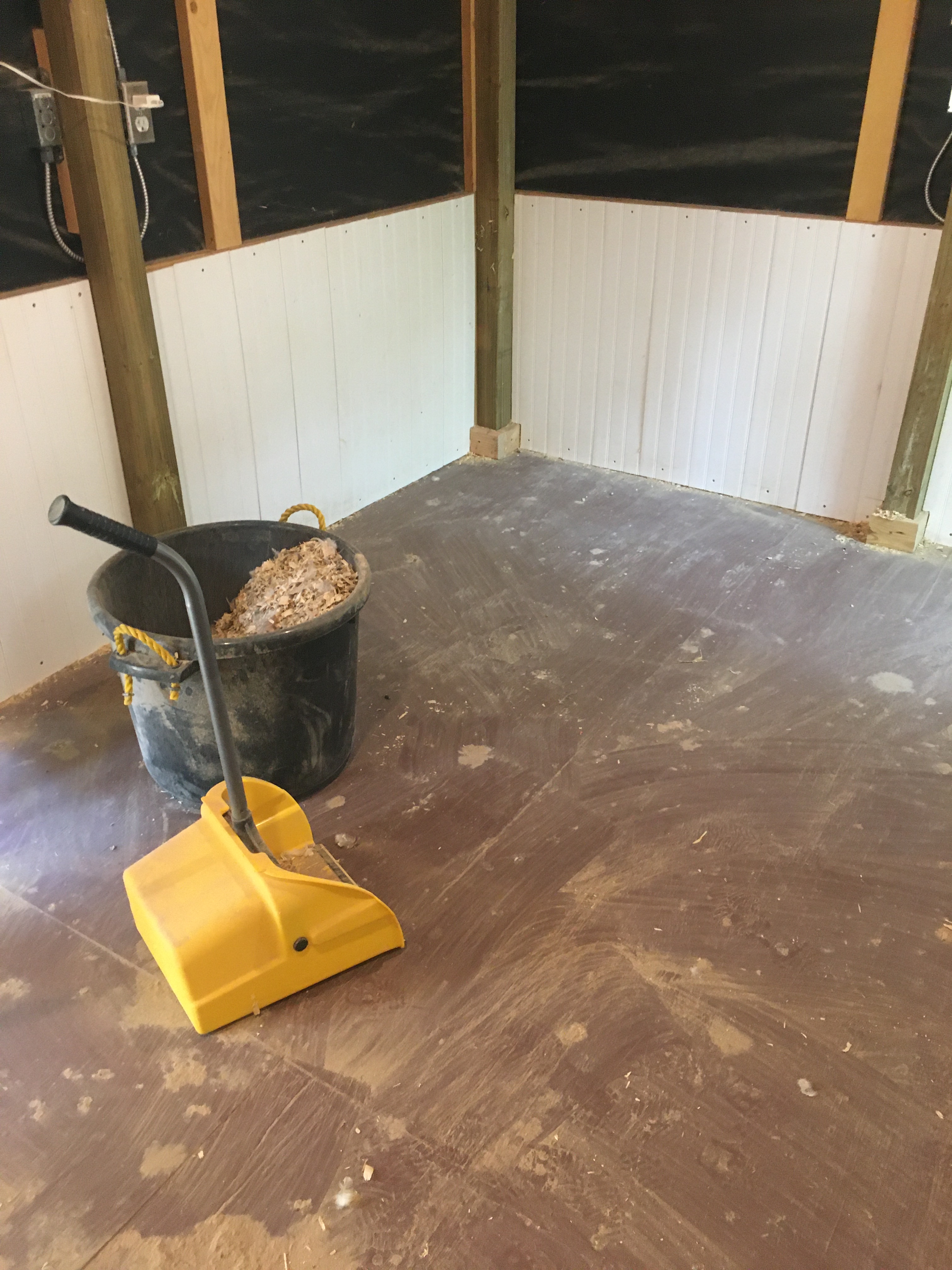
All swept up

We swept up all the pine shavings and dust and feathers, put some down as mulch where I am trying to suppress weeds, and the rest went into the compost pile. We then had to do a little rearranging. The metal nest boxes needed to be moved so the back door opened properly (my math missed the perch, sigh). Then we moved the washed and sanitized roost back in. Everything got a good dust of diatomaceous earth, then we put down four bags of pine shavings. Yikes. The chickens eventually calmed down. My youngest made an egg foray into the coop, only to find no eggs. Darn it.

Tigger was struggling still, and just sitting in the back of the coop, so we tried wrapping her right leg. She did not like that at all, but can’t get to the bandage, so we’ll leave it on a bit to see if it helps. We could not identify any obviously broken bones, so we hope rest will help. I put her in the cleaned out isolation ward with the food and water lowered so she could drink and eat while laying down.
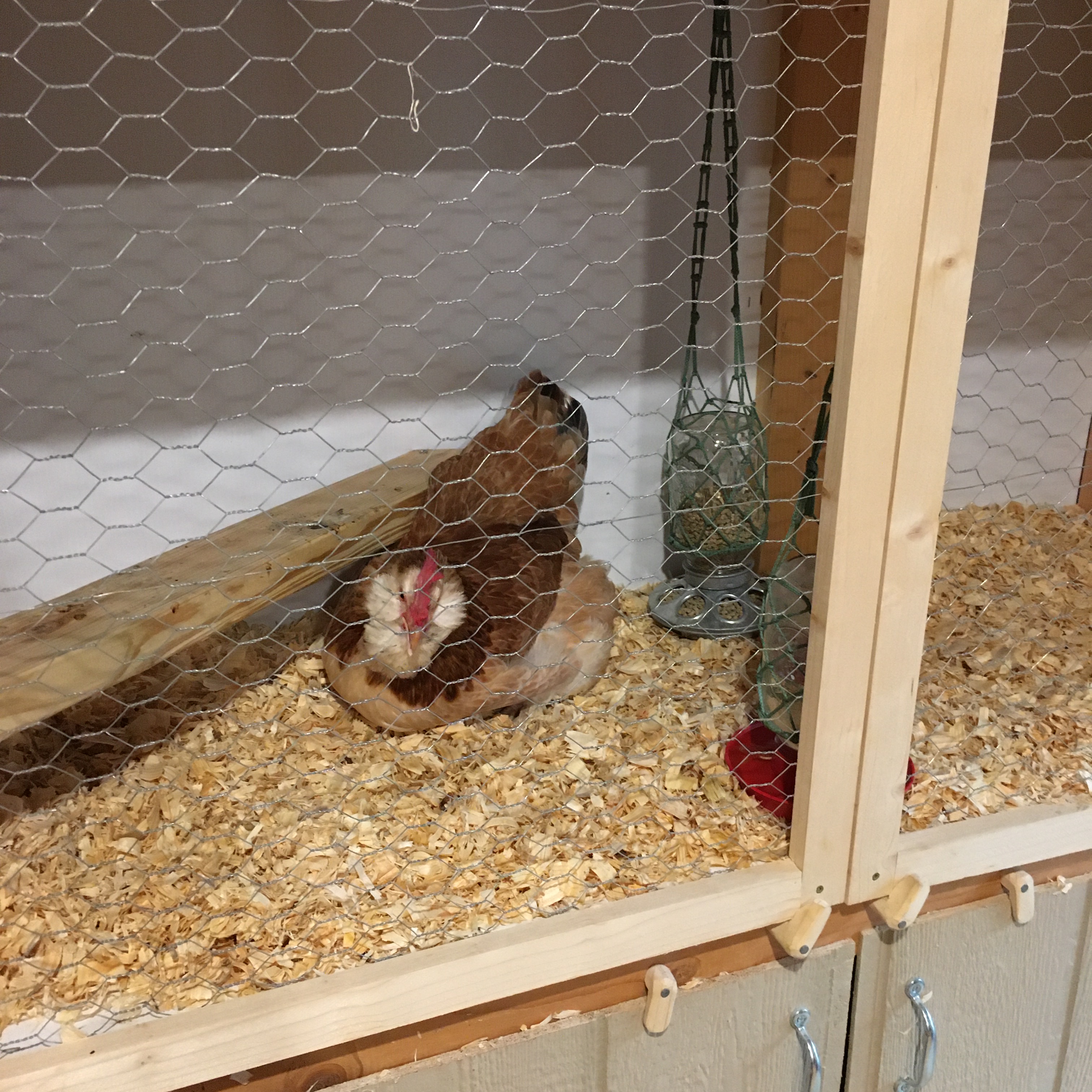
Isolated Tigger

In happy news, Navi has gained weight, but her crop is large and squishy again. Sigh.
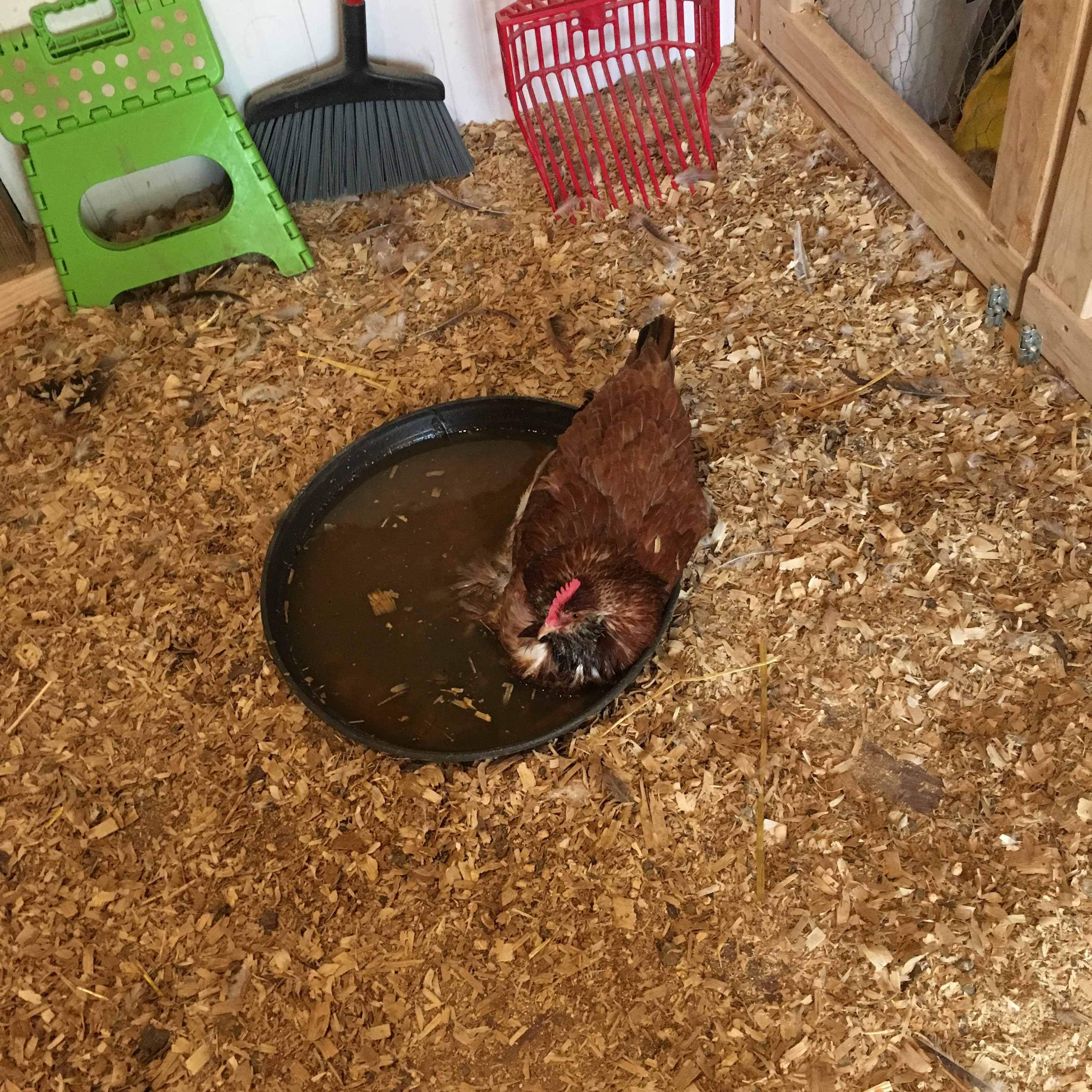
Uh, that is not a dust bath.

Seashell laying in the foot bath

Seriously? I thought chickens didn’t like to be wet. I’ve been watching the chickens dust bath closer and closer to the foot bath, but I didn’t expect to find one laying in the water. She wasn’t stuck, can walk fine, didn’t seem overly bothered that her feathers were wet, just … confused. I will have to keep an eye on her too. That was definitely not a fresh foot bath. Ew.

Chemistry

Had to dust off my chemistry degree to tend to Navi. The treatments for impacted crop were not working, so we moved on to treatments for sour crop, thinking that she has a fungal infection in her crop. I’m still following the advice in “The Chicken Health Handbook” by Gail Damerow. For sour crop, she recommends a flush, then treatment with Copper Sulfate. To make the Copper Sulfate drinking solution, first you have to make a stock solution, then add a little of the stock solution to a gallon of water. This is where my chemistry neurons had to be dusted off, and frankly I had to consult with my chemist Mom, because inorganic chemistry has never been my strong point. I made the stock solution and drinking water, which promptly turned cloudy and a little while later had precipitates at the bottom.

Copper Sulfate Solution made with softened water (precipitate formed)

Copper Sulfate solution should be clear. I figured out that it was probably that I used softened water from the sink, so remade both solutions using Reverse Osmosis water. Ah, a clear solution. My Mom hypothesizes that the precipitate was probably Copper Chloride Hydrate. I could have tested the precipitate, but I had already used the solution for a root killer in the yard, pouring it on poison ivy and saw briar stems. Copper Sulfate is a fungicide and a root killer.

Copper Sulfate solution made with reverse osmosis water (clear!)

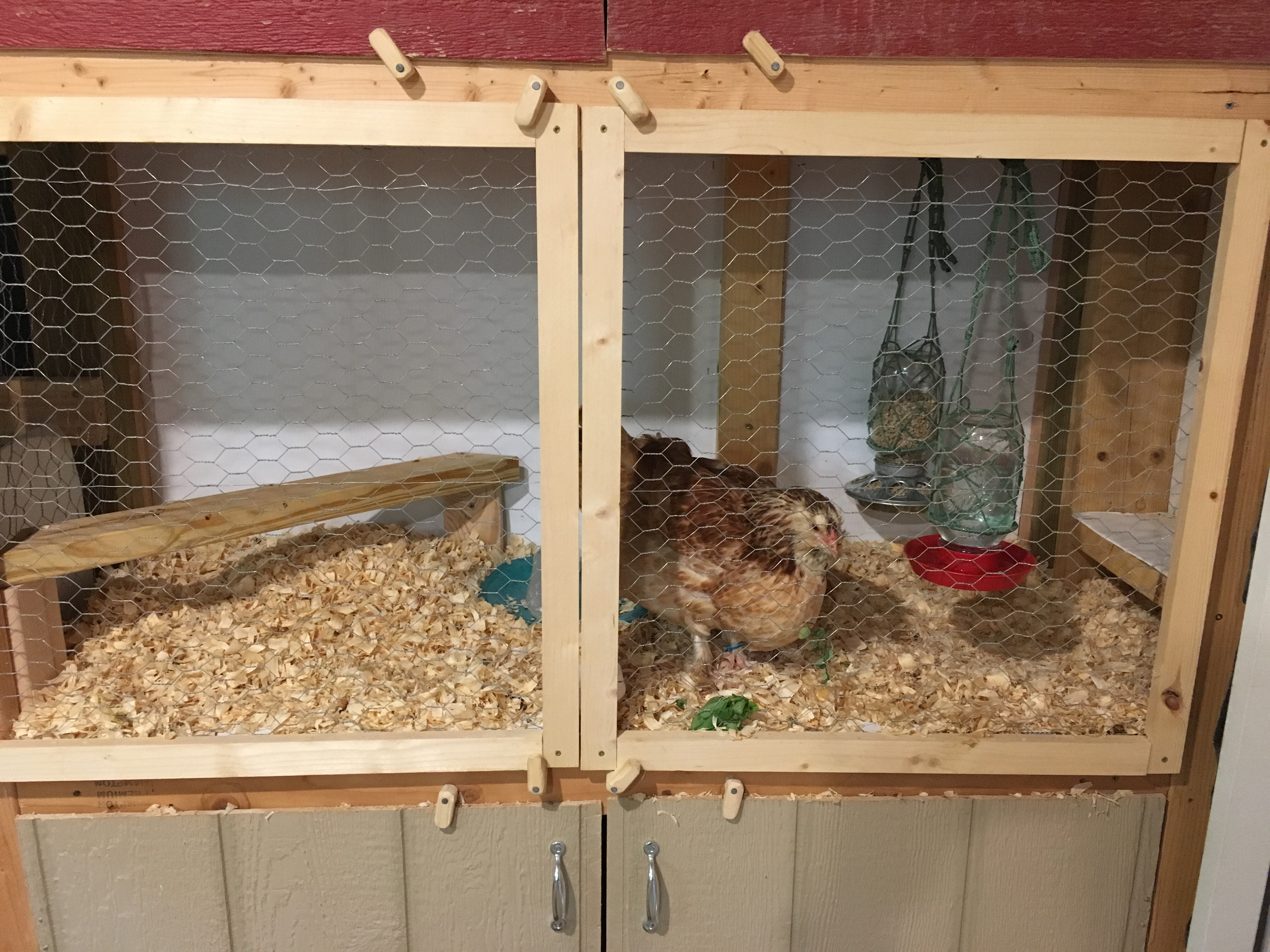
We’ll see if this treatment helps Navi. She is in isolation, but I’m glad I took my Dad’s advice because the isolation ward is at a good height, I can lean in, and it is plenty big for one chicken. Navi can see the other chickens, has a roost, food, water, and even a small foot bath. Although with her medicated water, she only gets a frozen water bottle on a plate so she doesn’t drink foot water. Ugh.

Navi in the isolation ward

Hindsight

We did our monthly health check of the whole flock: checked vents, looked for parasites under the wing, checked feet, checked weight. This time we moved all the bands to the chickens’ left leg to make it easier to identify them. Navi’s colors were changed too, because a white band on a white feathered leg is not helpful. Although honestly, it is really easy to tell which one is Navi since her crop is distended.

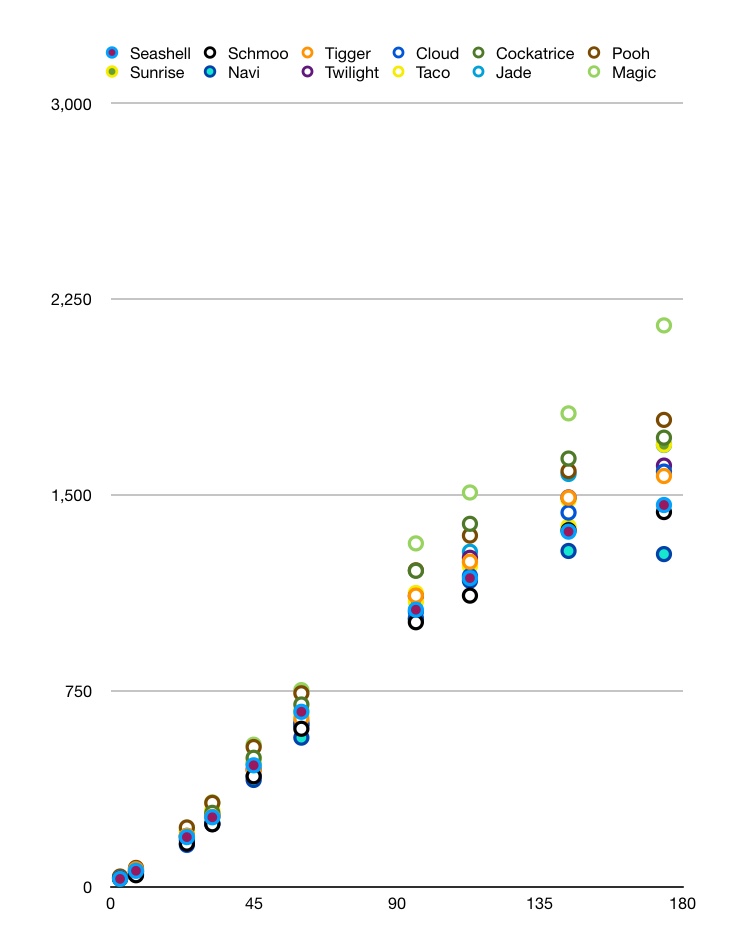
Updated weight chart, note Navi’s decline

Not surprising, Navi lost some weight. It looks like what ever is ailing her started over a month ago. Although she gained weight the month before, it was not in proportion to her flock mates and dropped her to the lowest weight bird. Her comb also has not developed, which may or may not be related. Most of the flock now have bright red defined combs, while Navi has almost no comb and the area is still light pink.

Isolation and eggs

What an eventful day. We have had our first eggs (!!!) and put the first chicken in isolation.

Navi in the center

The move to isolation came first. I noticed a couple days ago that Navi had a larger crop than everyone else, like softball size and squishy. But she is eating and moving around, and I kept checking in the afternoon and evening. After consulting with my Mom and the chicken health book, we decided to check again in the morning to see if her crop empties. The isolation is to be able to observe her droppings and catch her before she hit the food bin in the morning. We decided not to make any further measures because her breath is not sour smelling as would be the case with sour crop.

Navi in isolation ward. She has a roost, but came off it when we left.

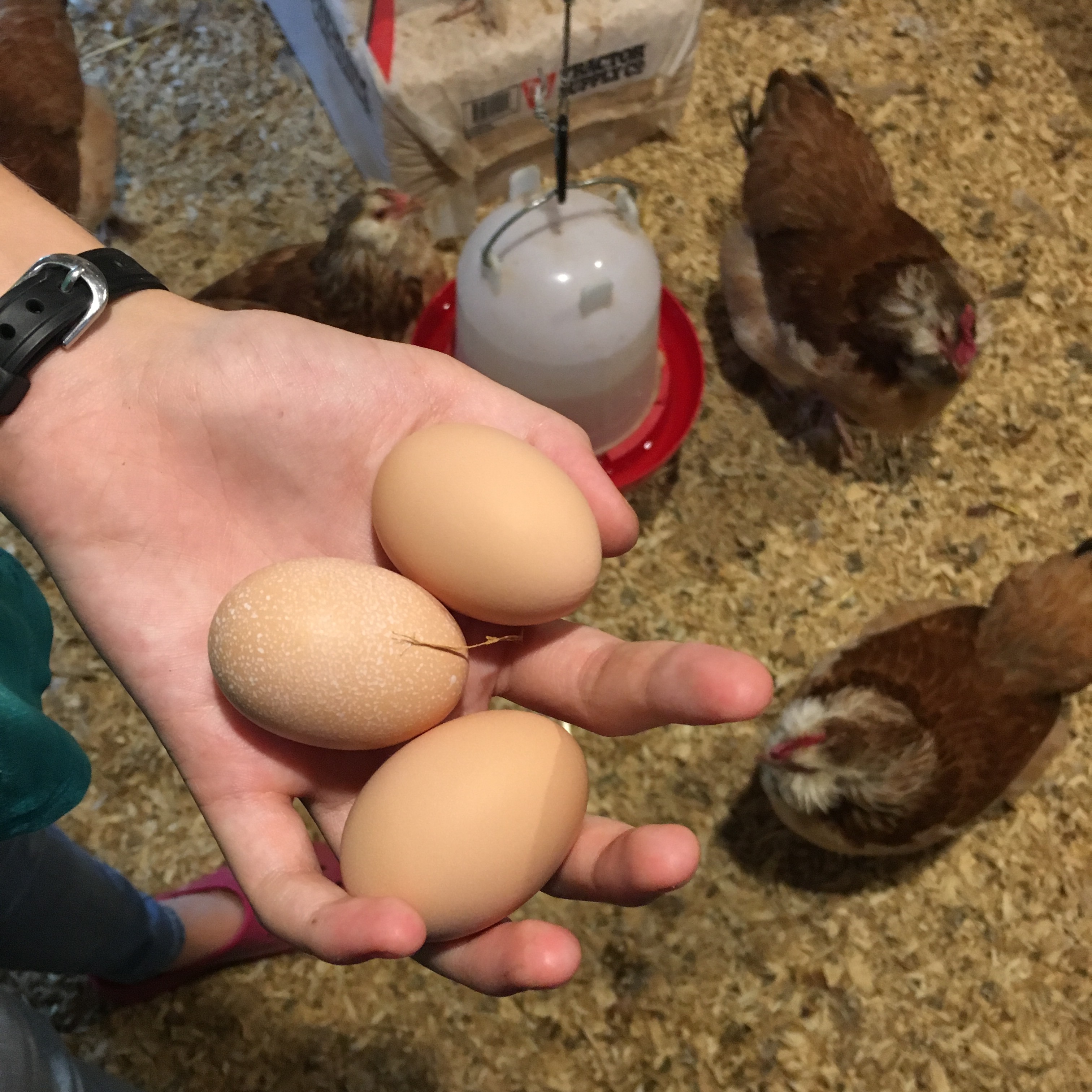
While setting up the isolation ward (I had been using it for storage), my eldest asked if I had checked the nest boxes for eggs. Honestly I had not in a couple days because I had resigned myself to no eggs until the chickens were 8 months old. So she checked. Not only were the nesting boxes behind the curtains visibly sat in, there were eggs in both bins! Holy cow! Three itty bitty eggs! (Yes, I weighed them! 38g, 38g, and 35g, which is about 1.3 ounces each. Extra small eggs.)

First eggs!!!