Molting, I hope

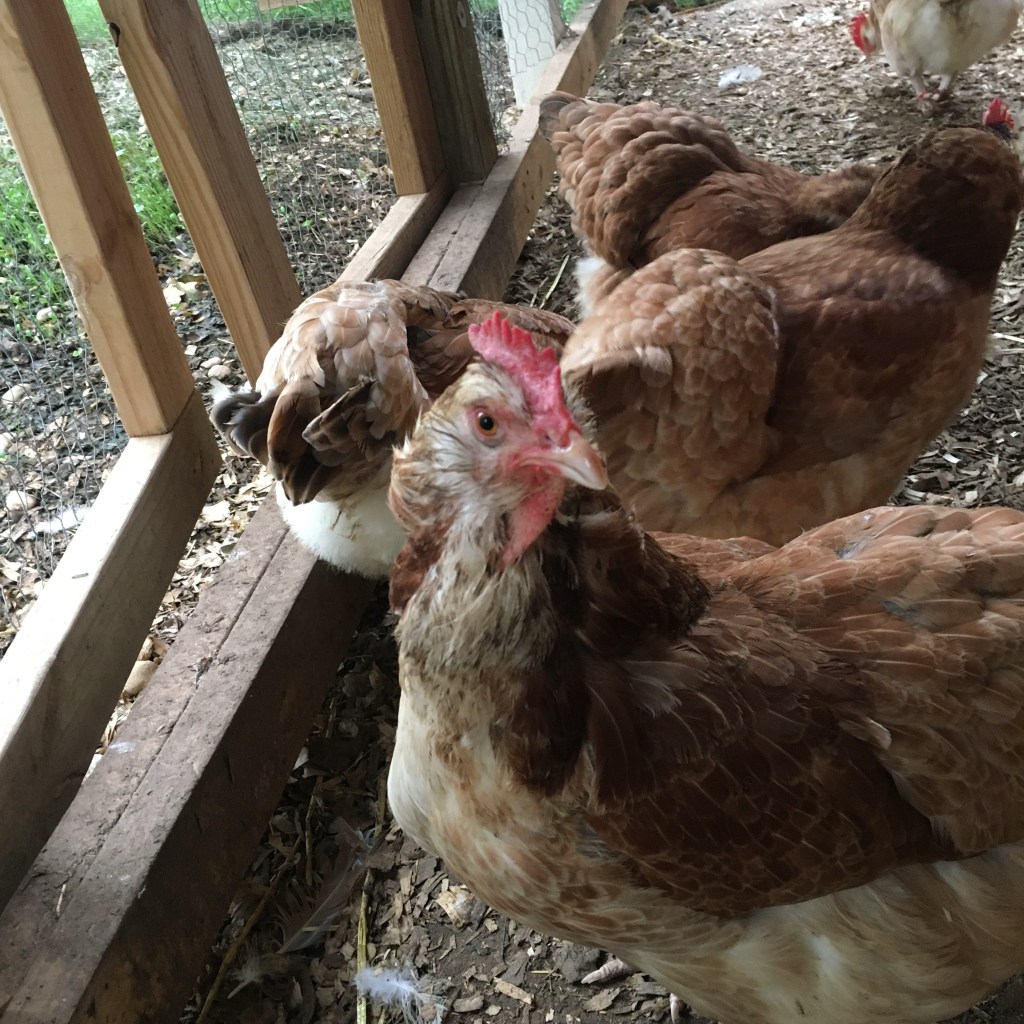
Faverolle with no beard or muffs

My poor hens have no beards or muffs, just red wobbly bits under their beaks. I am hoping that this is a result of spring molting and not a permanent condition. Their undersides too have bare patches. Egg production is down, which I thought was because we have had a series of broody hens (when they go broody, they stop laying, even for awhile after they stop sitting the nest). But seeing their naked necks and all the drifting feathers in the coop, perhaps the cause is molting, which also decreases egg production. Time will tell.

Hens enjoying a slice of watermelon, all beardless

Forage

I purchased some chicken forage seed to grow in the runs around the coop. It takes a little longer to grow, but I realized the rye seed I was using was coated for lawns, so uncoated seeds is a better way to go. The chickens love it.

Chickens getting into the fresh forage

The mix contains Ryegrass, Buckwheat, Forage Peas, Flax, Millet, Red Clover and Alfalfa Seed. I went to order another bag and the price had gone up, so I’m trying another manufacturer’s mix next.

In a pinch

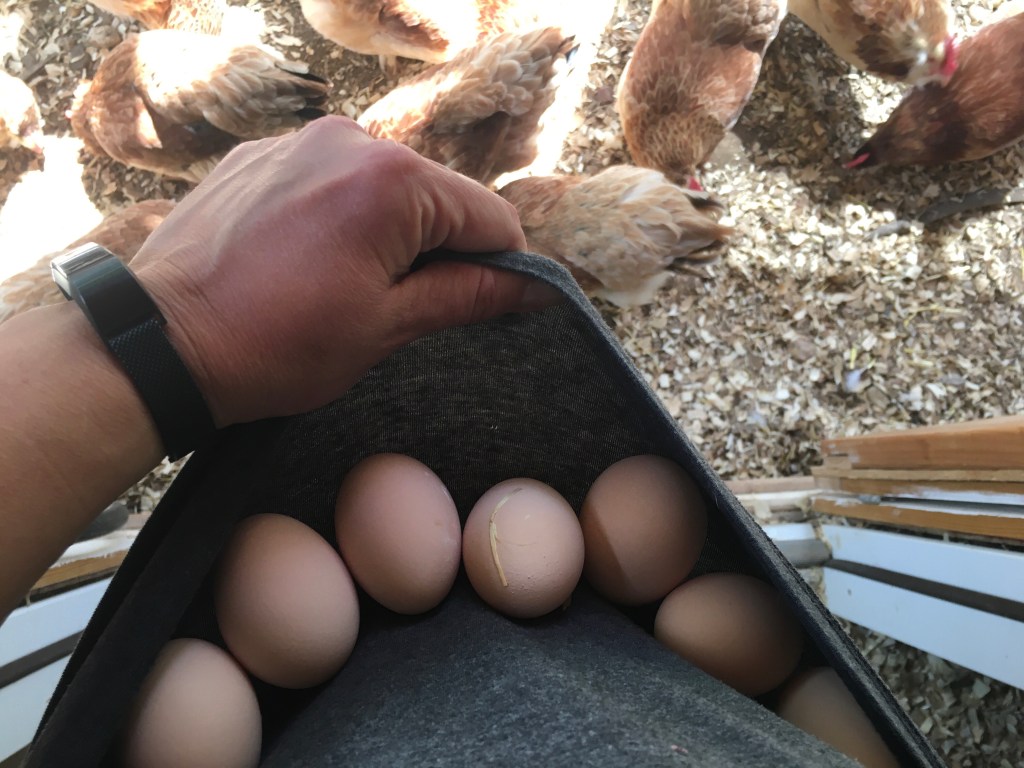
What to do when you go out to check the chicken and forget the egg apron? (Or basket, or anything for carrying eggs, really.) Fold up the bottom of your t-shirt. Of course it was a high egg production day. We cycle high and low; one day we get 7, then the next day we get 4. Then on rare days we’ll get a node and 11 hens will lay on the same day. This spring there has always been at least one broody or recovering broody that hasn’t started laying again, because we have 12 laying hens, but we have never had 12 eggs in a day.

Impromptu egg carrier (my t-shirt hem)

Happy Homecoming!

One year ago today I brought home our Faverolle chicks! I bought three extra because many people told me that a few would die. All 12 are still alive a year later. Navi still has a pendulous crop, but seems no worse the wear for it, and as they get older and bigger they are prone to bumble foot. They still aren’t full grown; Faverolles grow slower than commercial breeds and should be at their adult weight at 18 months. We are getting an average of six eggs a day, which we do a good job getting through, and occasionally have some extra to give to neighbors. So really, my chicken math was OK!

Hens enjoying some hatch day scratch
The other five, plus one photo bomber that had to be in both pictures

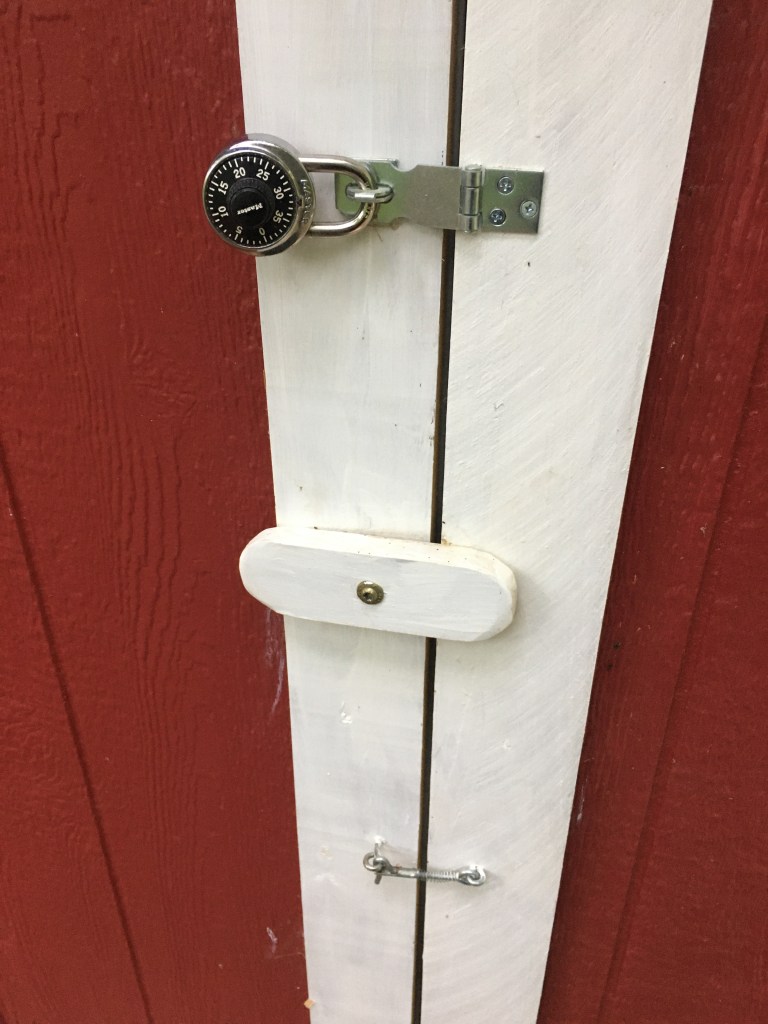
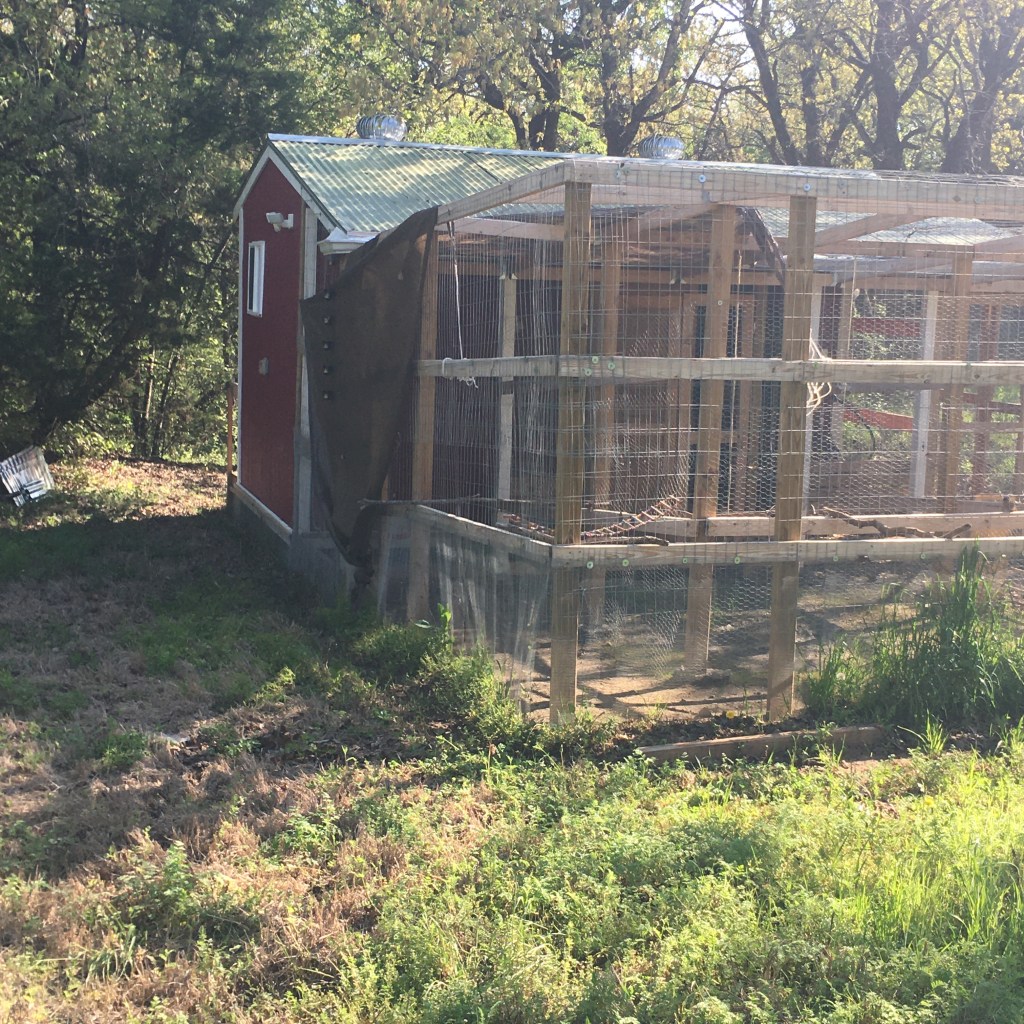
The coop size has been great, but the runs are on the small side for 12 hens. They clear out the grass in one day when I open a new run. But keeping them in chicken Fort Knox has become even more important. Someone in our town lost 22 chickens to two-legged predators. After hearing that, I changed the locks from raccoon resistant to human resistant. I also set up both cameras to be able to record for playback. The chickens don’t know and don’t care, as long as I come out and give them mealworms!

New lock 😦

Heating up

The temperatures here in Texas are rising, and it is good to know that the side breeze way in the chicken runs is actually used!

Chicken using the dust bath in the tire

They are also using the dust bath. What I didn’t realize was that the dust bath would need to be replenished frequently. Apparently they can hold quite a bit of dust in their feathers! I make the dust bath with hardwood ash, diatomaceous earth (DE), and sand/dirt from the yard.

I have also put out the foot baths that my chickens love so much, and already their feet are much cleaner! (Our rains have let up some too, so there is a little less mud.) The sunscreens went up the next day to keep the afternoon sun from shining directly on the front of the coop. I don’t think I will do the homemade AC cooler again, but as the temperatures continue to climb, I will add ice jugs to their foot baths. Spoiled chickens? Mine? Maybe.

Solar screens (brown) hung on the side and over the top. This is morning light.