First hen loss

Navi the hen has slipped this mortal coil. She has been struggling with impacted crop probably since last August. She was fine over the winter, crop heavy, but behaviorally fine, but the heat of summer caused her crop to expand until she was laying down more than walking. It came to two choices, put her down or try crop surgery. Turns out it wasn’t either/or. My eldest and I performed the crop surgery as described in Gail Damerow’s “Chicken Health Handbook”. We worked for 30 minutes before we couldn’t take the smell anymore and I couldn’t get anymore of the impacted material out. We cleaned her up and put her in the isolation ward. At first she seemed much better and was alert and more active. As time progressed, however, she was laying down again. Her crop was still full of matter, about the size of a billiard ball (this after we cleaned at least that much out). We made the decision to end her suffering. I followed Gail Damerow’s advice again this time from the book “Raising Chickens” and used the “suitable time-honored method” of dislocating her neck. It was not easy for me, but it was easy for Navi. I attempted a necropsy, enough to see that her crop was indeed still completely impacted with decaying grass and she would not have improved. My eldest joined me for the necropsy, and we even used masks infused with peppermint oil to mask the scent. It didn’t. I could not bring myself to do a complete autopsy. She was nothing but skin and bones and had been starving for a very long time. We built her a funeral pyre in the fire pit. We even added some twig boats to speed her journey. My youngest decided we needed a eulogy, so we shared some nice things about Navi the chicken, and my youngest is also working on gravestone designs. It is going to take me awhile to stop counting to 12.
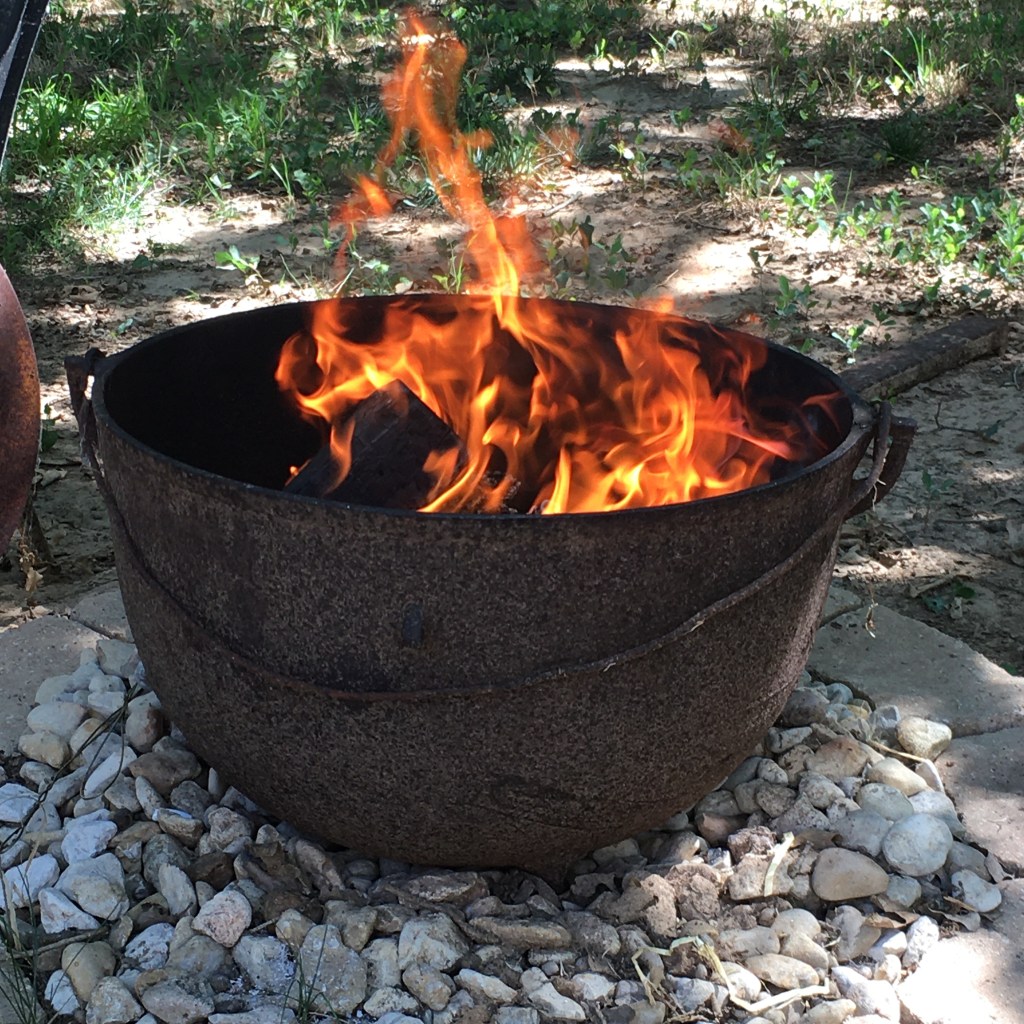
Navi’s funeral pyre

Nest box shift

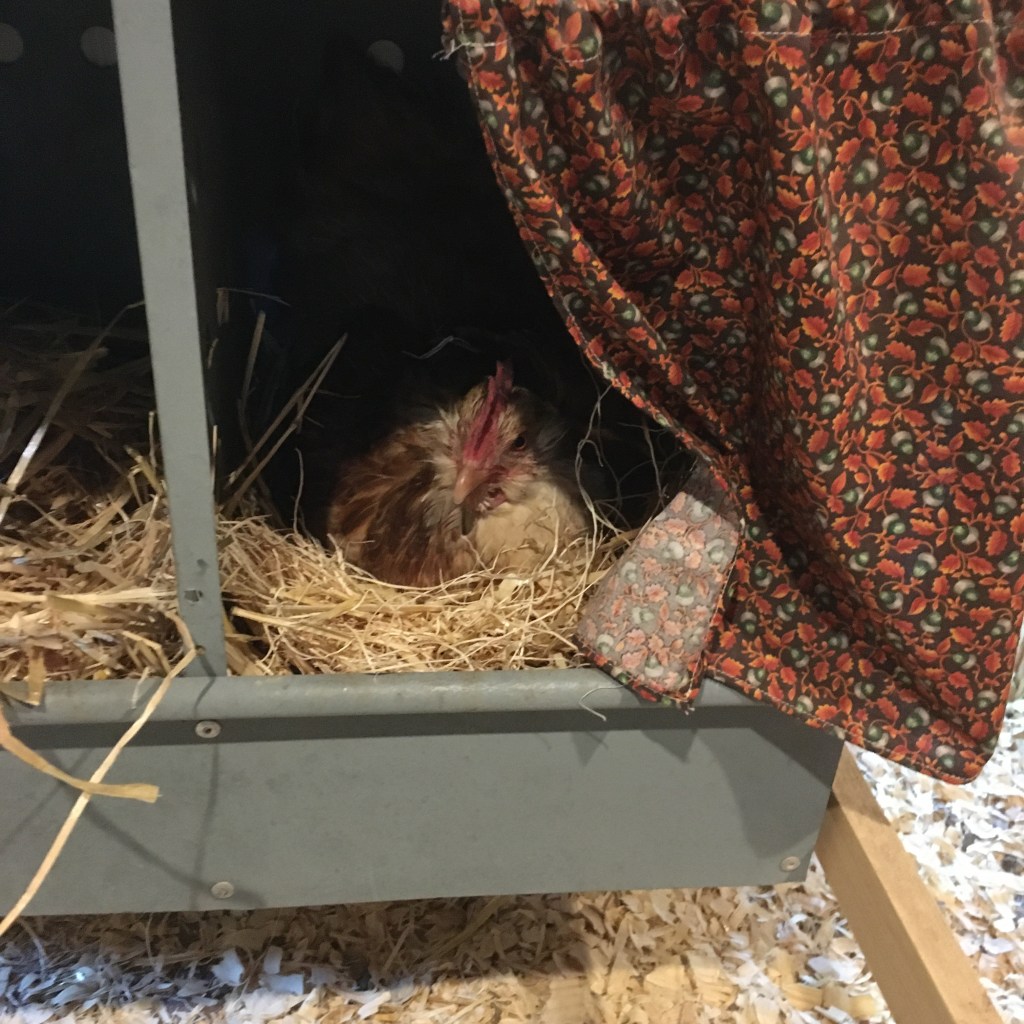
Since the snake visited, the favorite nest boxes have changed. No one is laying in the floor nest boxes, and the new favorite is the right side of the old metal nest box I refurbished. Before snake, no hens laid in that box. Ever. Now they wait their turn for it. And they make themselves fit! Egg production is still way down, or being eaten.

Molting, I hope

Faverolle with no beard or muffs

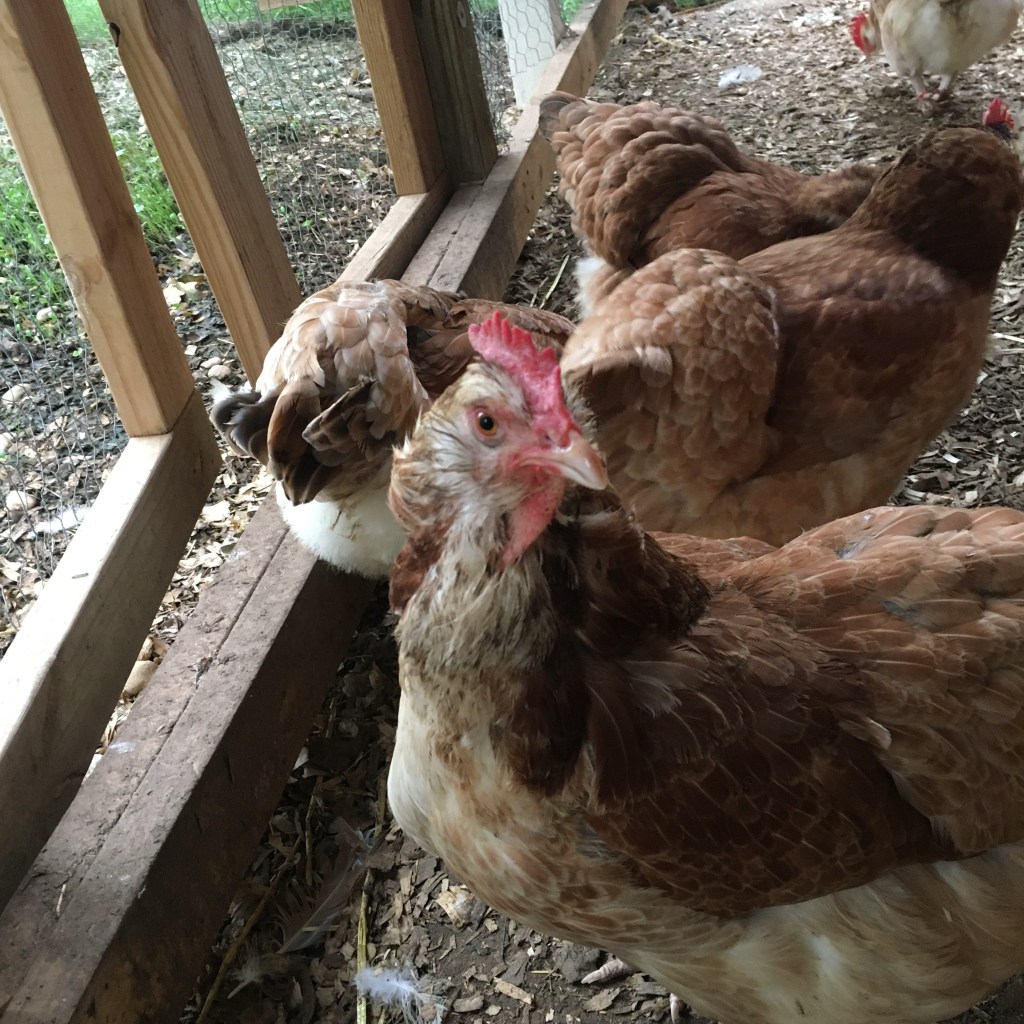
My poor hens have no beards or muffs, just red wobbly bits under their beaks. I am hoping that this is a result of spring molting and not a permanent condition. Their undersides too have bare patches. Egg production is down, which I thought was because we have had a series of broody hens (when they go broody, they stop laying, even for awhile after they stop sitting the nest). But seeing their naked necks and all the drifting feathers in the coop, perhaps the cause is molting, which also decreases egg production. Time will tell.

Hens enjoying a slice of watermelon, all beardless

Forage

I purchased some chicken forage seed to grow in the runs around the coop. It takes a little longer to grow, but I realized the rye seed I was using was coated for lawns, so uncoated seeds is a better way to go. The chickens love it.

Chickens getting into the fresh forage

The mix contains Ryegrass, Buckwheat, Forage Peas, Flax, Millet, Red Clover and Alfalfa Seed. I went to order another bag and the price had gone up, so I’m trying another manufacturer’s mix next.

In a pinch

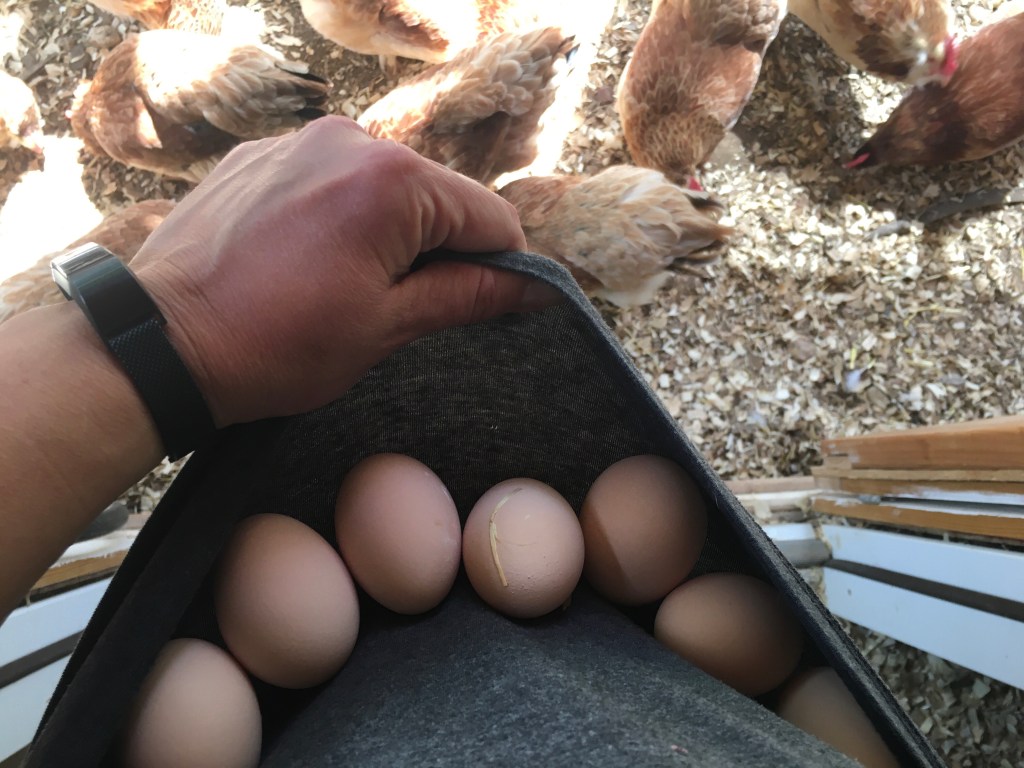
What to do when you go out to check the chicken and forget the egg apron? (Or basket, or anything for carrying eggs, really.) Fold up the bottom of your t-shirt. Of course it was a high egg production day. We cycle high and low; one day we get 7, then the next day we get 4. Then on rare days we’ll get a node and 11 hens will lay on the same day. This spring there has always been at least one broody or recovering broody that hasn’t started laying again, because we have 12 laying hens, but we have never had 12 eggs in a day.

Impromptu egg carrier (my t-shirt hem)