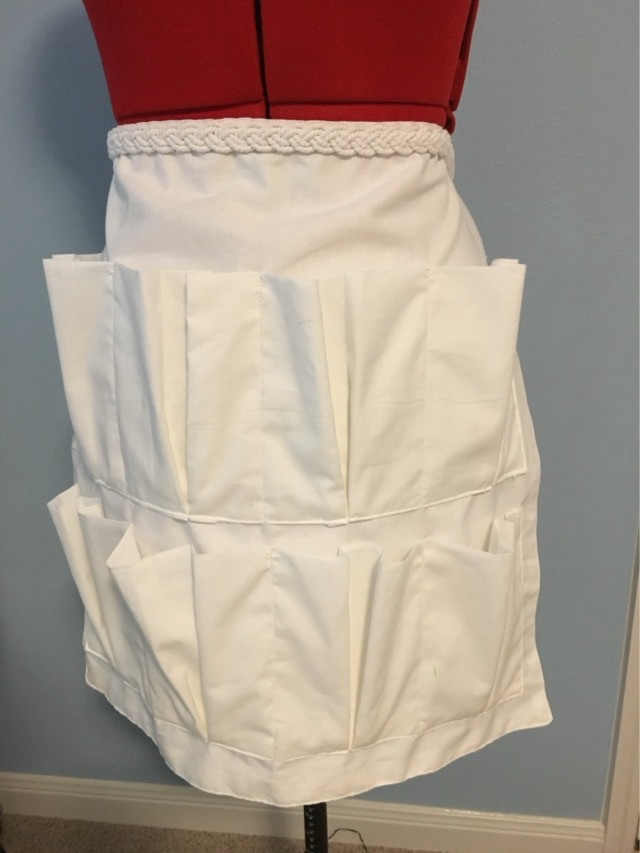
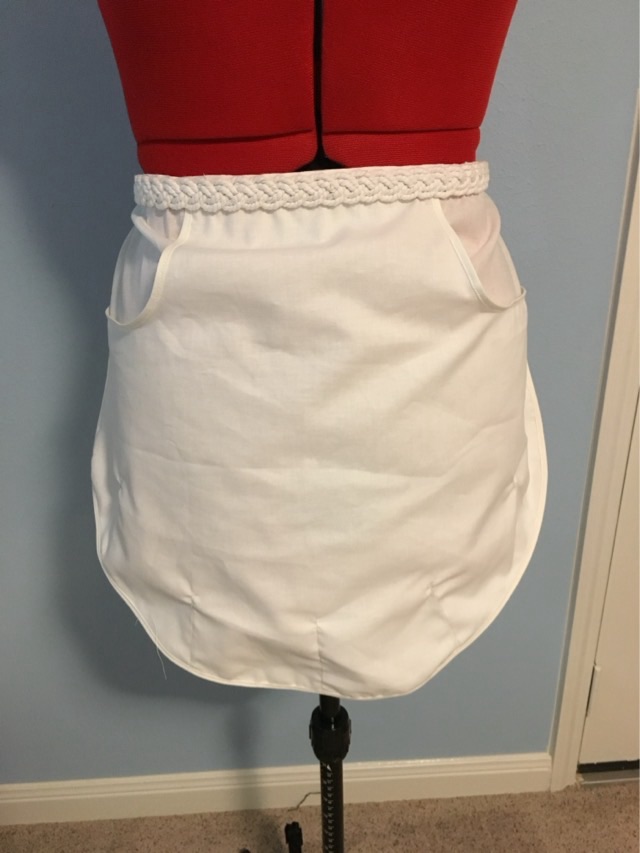
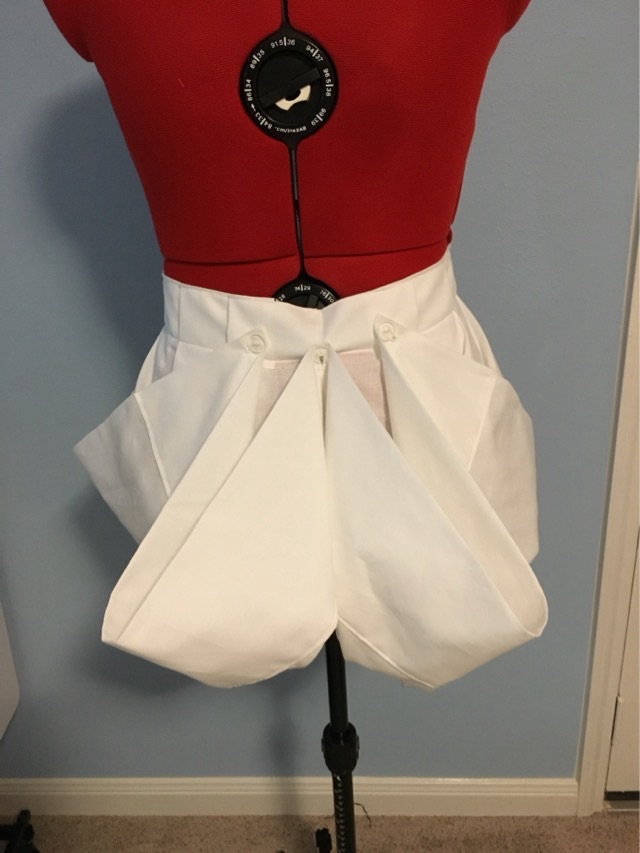
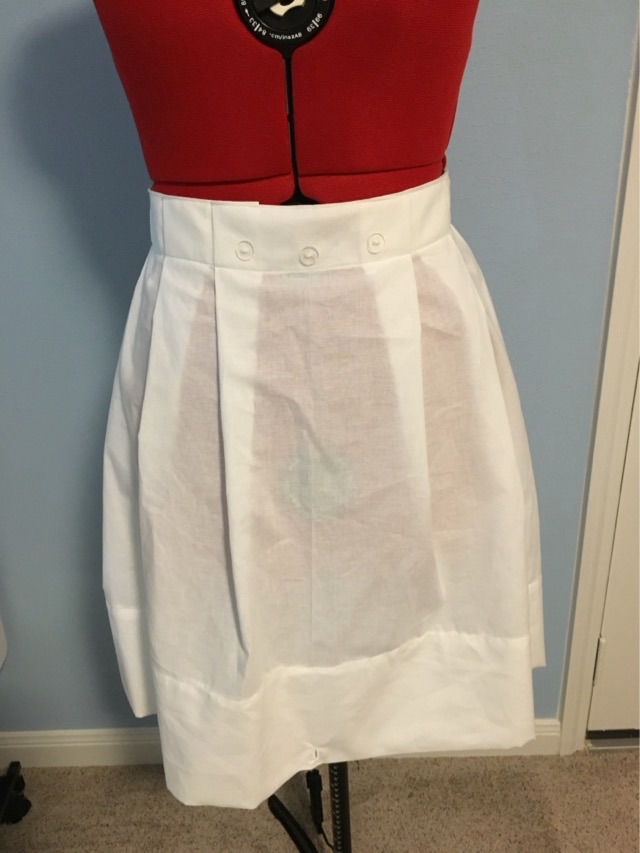
In February of 2017 I did an egg apron experiment for a friend with chickens. I made three kinds of egg apron from simple white cotton fabric that I had in my stash.
Photo description: white egg apron with woven rope tie and two rows of pleated pocketsPhoto description: round bottom apron with braided rope tie, large pocket with two hand access ports and division seams along the bottom edge to keep eggs from knocking togetherPhoto description: harvest style white apron with buttoned up large “pockets” to hold eggs or producePhoto description: same harvest style white apron unbuttoned
The experiment was interesting. The round bottom apron was hard to get the eggs out, the pleated pockets were nice, but if you leaned over too fast the eggs rolled out, and the harvest apron didn’t keep the eggs separated.
Now, with three of my own chickens and one or two eggs, I just use my pants pockets. Even when we had more chickens the aprons were more of a pain than helpful. Egg baskets are a more practical solution.
The egg hiatus has ended and I am finding eggs in the coop again.
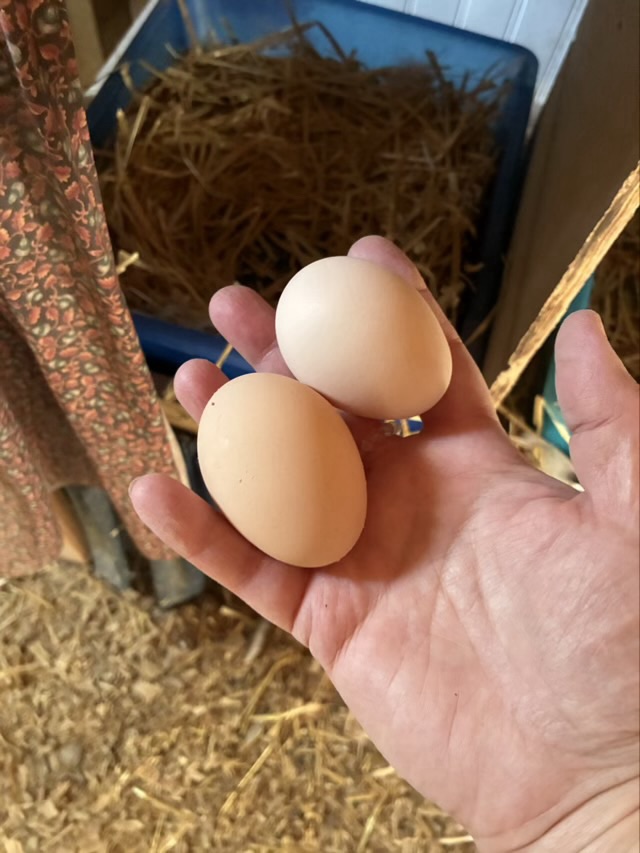
Photo description: two eggs held in my hand in front of the nesting box where I found them
One egg is suspiciously smaller and lighter than the other, and makes me think that it is perhaps a Faverolle egg. It has been one month since our Black Star hen laid eggs, but it has been 10 months since I’ve found a 54g egg. Wing Ding the Black Star chicken usually lays eggs right around 60g.
Chicken update: I still have three chickens. I had a scare the other day, one of the hens tucked herself under the supplementary coop and didn’t move when I came to give treats. When I touched her tail feathers she woke up and was rather offended at being touched.
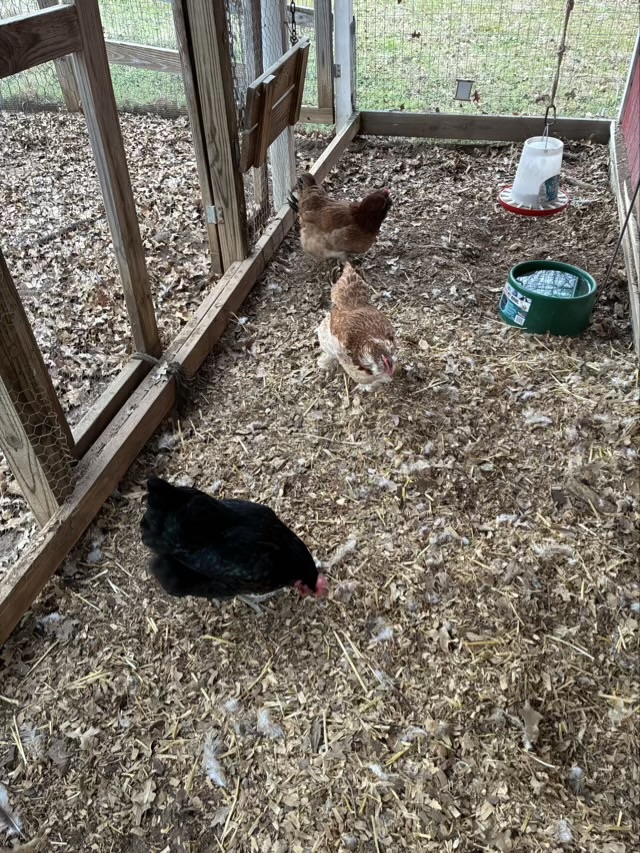
Photo description: black star hen and two Faverolle hens in the run outside the coop
I was rather startled when I found an egg in the coop. The last time Wingding the Black Star hen laid an egg was in August. My two Faverolle hens haven’t laid any eggs since April. All three hens are about six years old and well past prime laying age.
Photo description: light brown egg in my hand in the foreground and a Black Star hen and a Faverolle hen in the background
When we added two chickens to the flock and had them separated, I put a hanging feeder in with them. When I integrated the flock I kept the hanging feeder full because I wasn’t sure the new hens would be able to use the Grandpa’s Feeder my original flock used. Turns out that all the hens preferred the hanging feeder. The advantage of the “Grandpa’s Feeder” is the wild birds and rats aren’t heavy enough to activate the lever and open the food bin. The disadvantage is that bugs can still get in. When checking feed I discovered that the entire bin was full of food riddled with holes.
Photo description: chicken feed in a Grandpa’s Feeder riddled with insect holes
One of the other advertised advantages of the Grandpa’s Feeder is that the metal grid and high sides keep the chickens from wasting food because they can’t fling it out of the container. A hanging feeder has this same advantage, so I emptied out the Grandpa’s feeder and decommissioned it, since I was only feeding bugs.
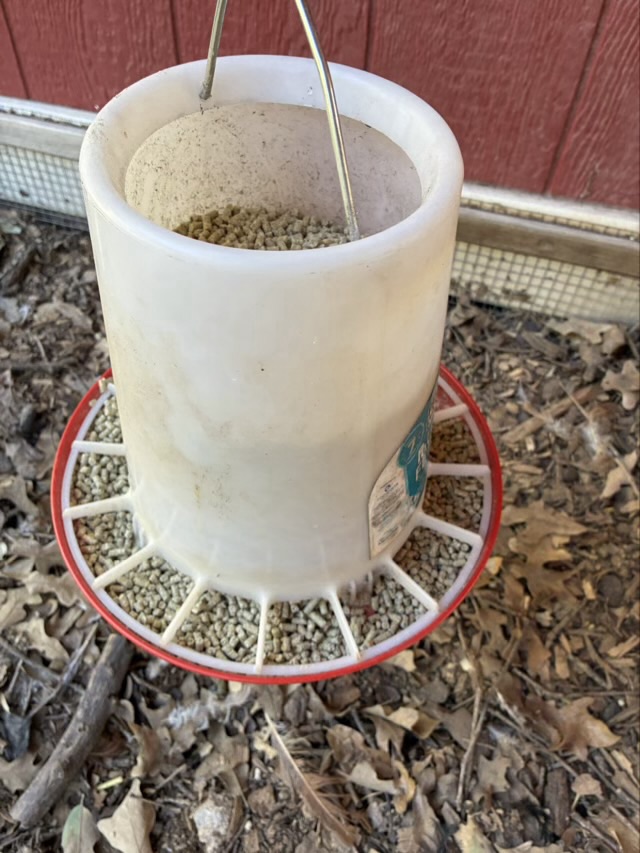
Photo description: hanging feeder filled with chicken feed
Another advantage of the hanging feeder is that I can see the food level from a distance. A disadvantage is that it is open on the top and if we get a heavy rain storm I loose a batch of feed to the wet. I’ve moved the feeder farther inside the porch area of the coop to see if that fixed the weather problem. Overall, the hens prefer the hanging feeder, and the hanging feeder is a fraction of the cost of a Grandpa’s Feeder.



 Critters and Craft