Frixion card

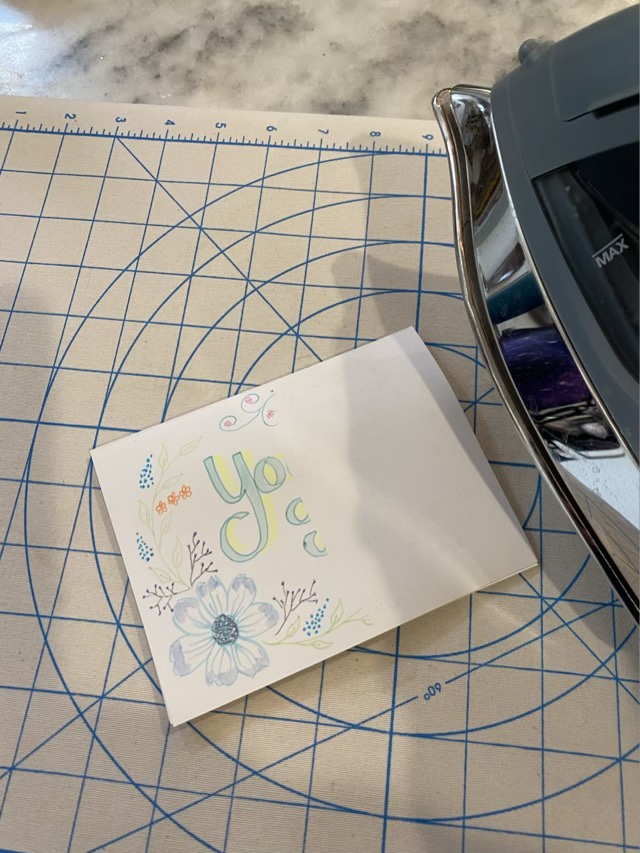
I ran an experiment with my sister. I decorated a card with Frixion pens, markers, and highlighters, then “erased” it by ironing. The way Frixion ink erases is by heat; when you use the little eraser it creates friction with the paper and generates enough heat to deactivate the ink color. Neat. The super cool science geeky part is that if you freeze the paper, the ink reactivates. I tested the card in my own freezer, then heated it again. I’m not sure how many times the ink can be cycled, but I know it is over four (that is how many times I’ve tested it previously before getting distracted). The colors fade slightly in the first cycle, but not much in subsequent activations.

Photo description: white card with floral designs, half erased, on an ironing board with the edge of the iron in view.
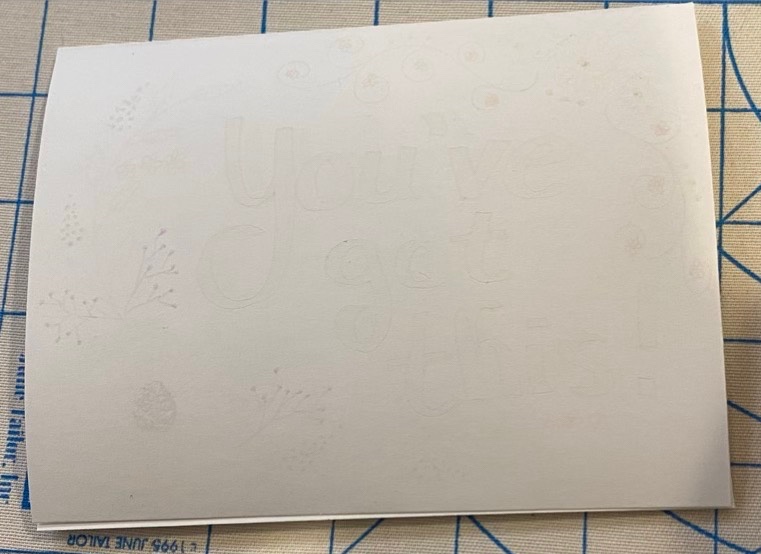
Photo description: Blank white card, with the erased design barely visible.
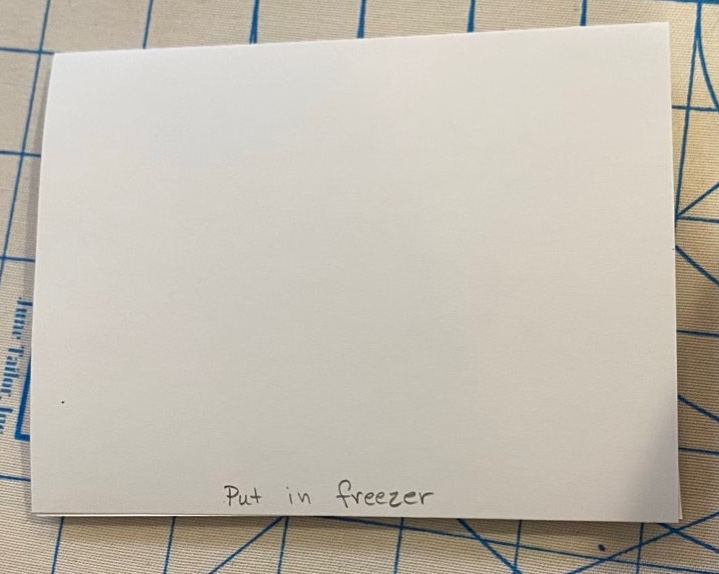
Photo description: Back of card, with “Put in freezer” written in regular ink.

Since the markings don’t erase completely (there are shadows and indents), I did a little misdirection and wrote the instructions on the back of the card. I put it in an envelope and mailed it to my sister. She reported back that it worked! I will have to wait until next summer to send another one; having the card sit in a freezing cold mail box would defeat the trick.

I probably get a bigger kick out of this than is normal for an adult.

Digital to real

One of my favorite things to do with the Adobe Fresco app is try out an art project before attempting it with traditional art media. This method worked particularly well on a recent painted rock commissioned project. I took a picture of my rock, and was able to practice different techniques in the digital cloud before committing them to the real.

Photo description: Round river rock picture with digitally created “Find joy and meaning where you can” surrounded by line art flowers. Created in Adobe Fresco with an Apple Pencil using an oil brush.
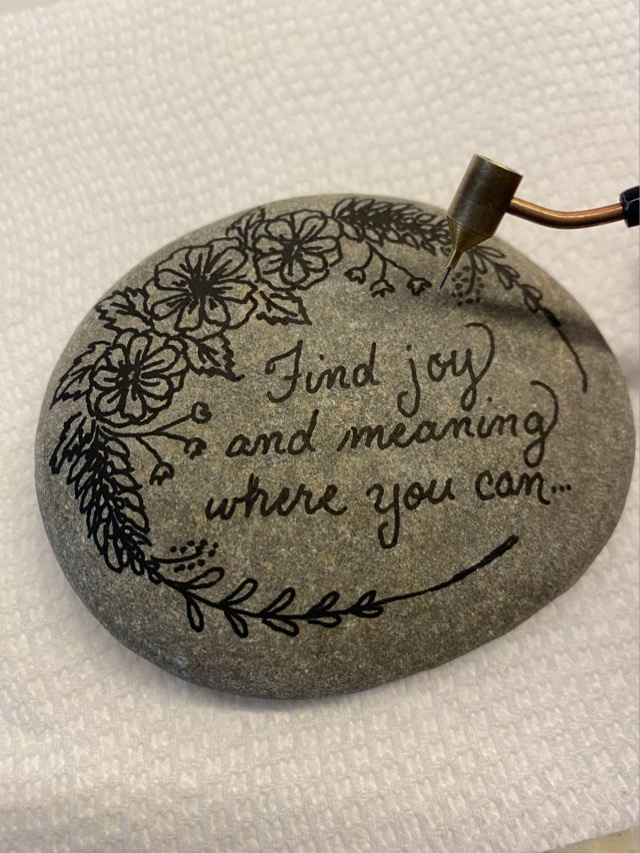
Picture description: same river rock with black ink in a similar pattern, created with a “gold pen”.

The gold pen, which has a tiny metal tube attached to small ink well, is my new favorite tool. It allows me to make fine even lines, even on rock (but it has to be a smooth rock).

Resist

Resolene is an acrylic based leather finish that can protect smooth leather. I have a very large bottle of it. What else can I use it for? Will it work as a resist for watercolor art? It should, and it does!

Preparing to use Resolene as a resist on watercolor paper

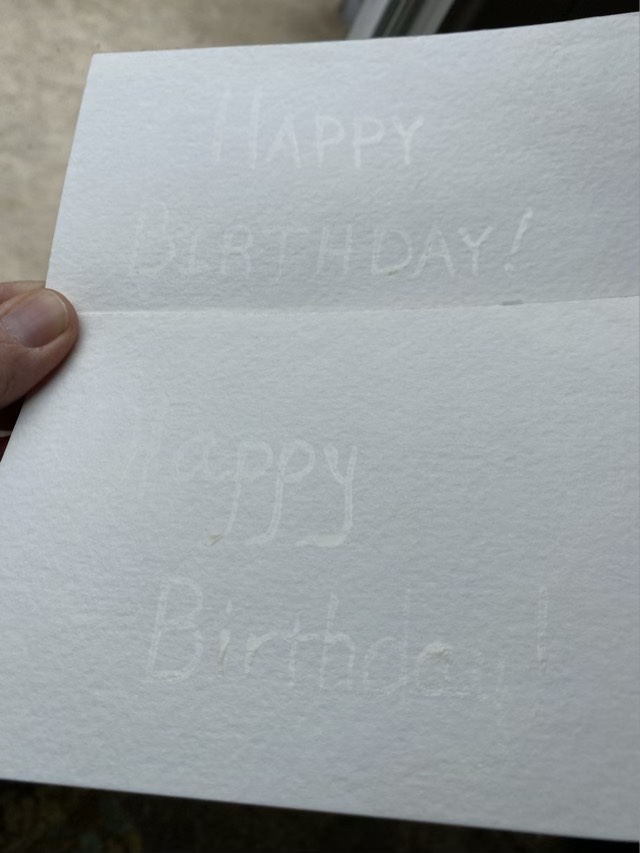
I used a small paint brush to write “Happy Birthday” on two sheets of water color paper, then used a hair dryer to dry the writing.

Resist added to paper and dried

My youngest and I then each painted watercolors over the entire paper. We wanted to try out some new pearlescent watercolors, so it was a double experiment (not recommended in scientific experiments, but encouraged in artistic endeavors.)

Watercolor paintings

I think if I use Resolene to make words again, I will make the letters a little thicker, but overall the venture was a success! The clear acrylic kept the resisted areas mostly white, so the writing is readable in the final product. Pearlescent watercolors don’t photograph well for sparkle, but they do have a nice shimmer in person.

AI art

The subject of AI art has come up in my conversations and feeds several times this month, so I thought I would investigate further and give a few bots a prompt: line art, art nouveau, black and white, tattoo, silk moth, spider web, spider, flax flower, hemp leaf, cotton bloom. I’m working on a design incorporating fiber sources and wanted to see what the bots came up with.

Midjourney Bot art on Discord
Craiyon.com
Deepai.org
Dream.ai

Each time the prompt is given the results are slightly different for all the bots. Dream.ai, Deepai.org, and Craiyon.com were easier to use because it was a single page website interface. The Midjourney bot did the finest work, but was nestled in the Discord app and relied on a message board which was bombarded with prompts. I had to continuously scroll back to find my own prompts (and probably inadvertently used all my free queries getting the feel for the format). I wouldn’t use any of the images, they all have botanical accuracy issues, and wonky bits, but that could also be my choice of prompt words. They also feel like stock art. (Hm, there is something to ponder.) However, the exercise did give me examples of what I don’t want, and as an artist, sometimes that is valuable data. Starting with a blank canvas can be daunting.

Is it art? I think it is. The human is crafting with words and a bot, rather than paper and pen. The AI is learning and adapting according to prompts and feedback, but it is humans that give the image its story (for now). Will it surpass human art? In some cases, but not all. It is certainly faster. Will artists lose their jobs? Not the good ones, although it is extremely difficult to make a living wage on just art anyway. It is the story or the package, not just the image itself that gives value. Will humans stop making art? Are you kidding? Some people can’t stop, it is a driving force to doodle and create and refine, whether or not there is monetary gain. Will there be contention? Duh. We’re human.

Ice leaves

The ONLY good thing about rain that freezes when it hits the ground is the discovery of ice leaves.

Ice leaf

I was sliding my way out to the chickens when I noticed all the leaves I stepped on looked like broken glass. Hm. Yup, I could peel the layer of ice off and get a shard of crystal leaf. Here is a short video. I would have investigated the phenomenon further, but it was raining. Raining. And freezing.