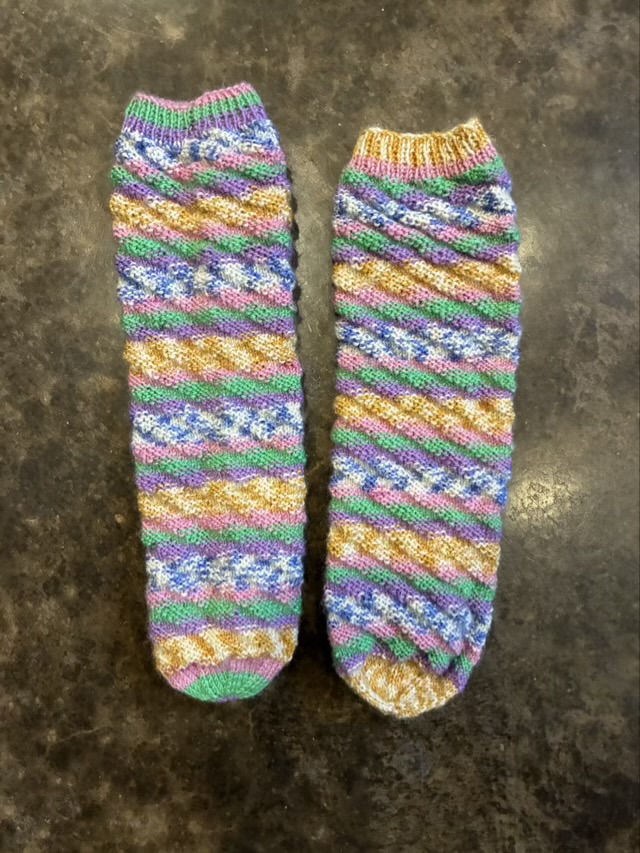
I finished the pair of spiral socks that I started in September. The special thing about spiral ribbed socks is that there is no heel, the rib expands to fit the heel without bunching at the ankle like tube socks.
Photo description: finished spiral knit socks made with Heritage Cascade printed fingering weight yarn and size 2.5 needles, 64 stitch cast on, 4×4 offset rib, knit cuff to toe
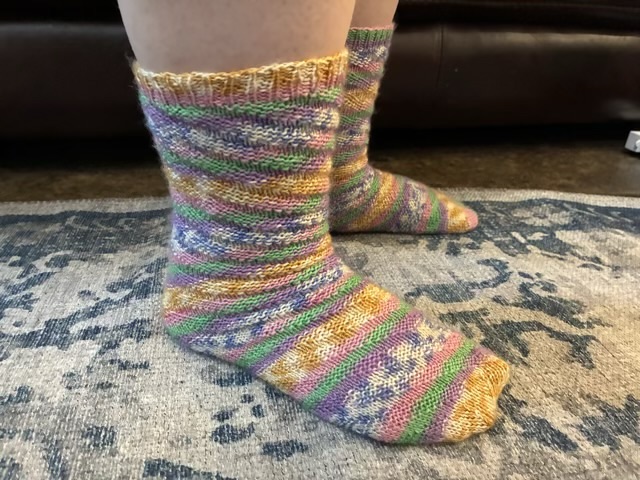
I was dubious on fit as I was making them, but after blocking they stretched out and they fit as advertised.
Photo description: spiral socks worn
My youngest struggles with sock heel placement, so these socks are much easier to get on. I will now always have a set of these socks on a pair of needles, to outfit her with friendly socks. I did check with a sock knitting machine company, with the idea to speed up production, but knitting machines can’t do the offset ribbing, so they have to be hand knit.
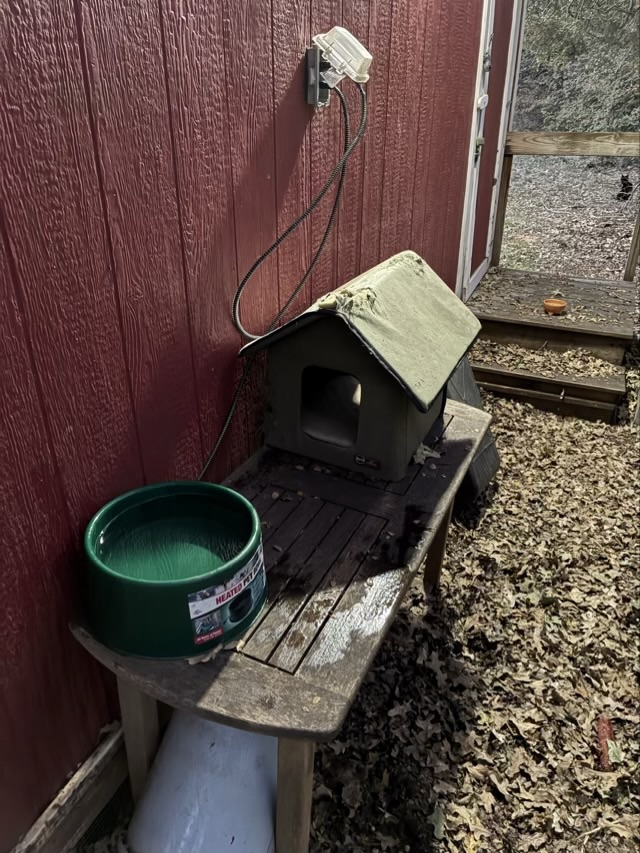
I picked up a heated cat house from a friend that no longer needed it and put it up behind the coop. We have cats that come and go from the colony next door, and as winter heads in a warm spot might be appreciated.
Photo description: heated cat house on a table with a heated water bowl
This is really a payment for services for the outside cats. They kill venomous snakes and rodents. I have personally seen a meadow cat carrying off a rat, and my husband saw one with a copperhead. The population of the colony has stabilized with just a few that return as the temps drop.
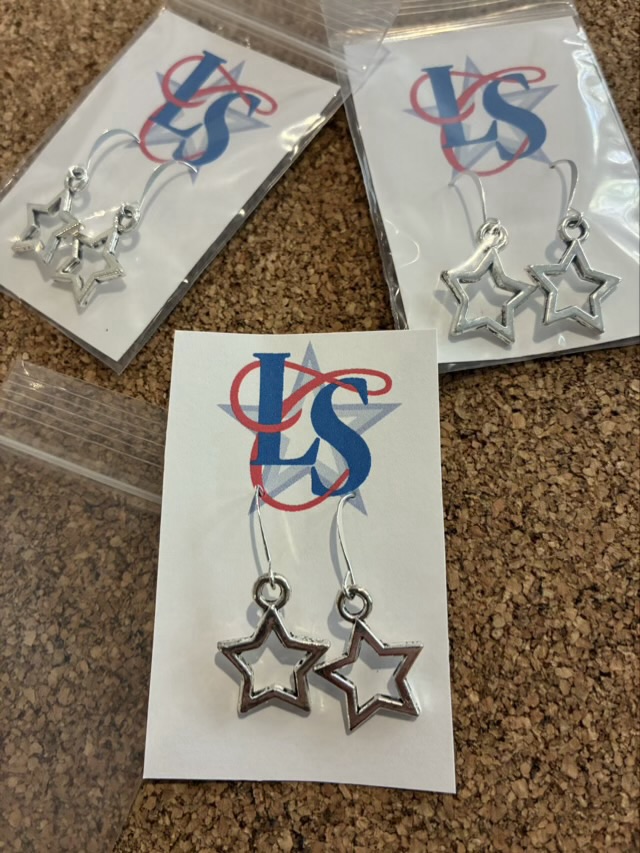
I wanted a pair of star earrings to wear to chorus events. I started looking at preassembled sets and was dismayed at materials and pricing, so I ordered parts from Fire Mountain Gems and assembled them myself. Since buying in bulk makes the individual item less expensive, I ordered enough for my whole chorus.
Photo description: antique silver plated open star charms on simple silver plated ear wires and threaded into a card with our chorus logo
I picked a simple star charm and an open loop ear wire so assembly was a just matter of using needle nose pliers to open the wire loop, put in the charm, and close the loop again. Here is a tip for opening wire loops, either on ear wires or for jump rings: twist, don’t pull. Rather than pulling the ends of the loop apart and widening the loop, if you twist them, one side forward, one side back, they are much easier to twist back closed.
Photo description: close up of a wire loop that has been twisted open
The thing that took the longest time was getting the cards with earrings into the little 2×3” bag. The sets, with shipping, cost less than $1 per pair plus time. The components are silver-plated, which is fine for costume jewelry. The assembly is simple enough that if someone does have a nickel allergy, the charm can easily be transferred to a pair of titanium or niobium ear wires instead. (Those are just considerably more expensive.)
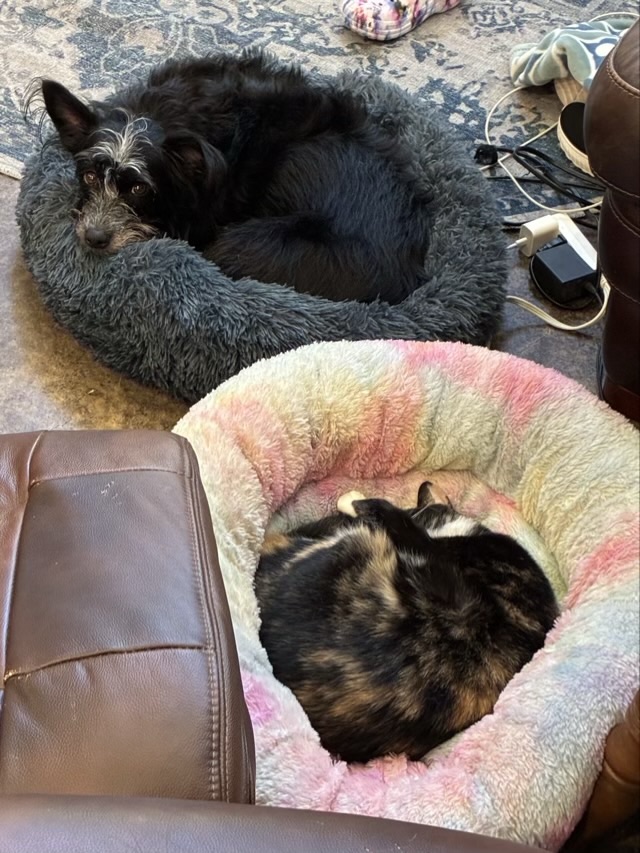
Photo description: calico cat in a pastel rainbow dog bed, small black dog in a new dark blue bed
Izzy the cat has decided that Missy’s bed is the best in the house, much to Missy’s dismay. So I bought a new round dog bed so she had a safe spot again. It isn’t quite the same as her rainbow round, but when the cat rules, you make the best of it. I was actually hoping Izzy would go to the new bed, but no, there is just something about that rainbow round.
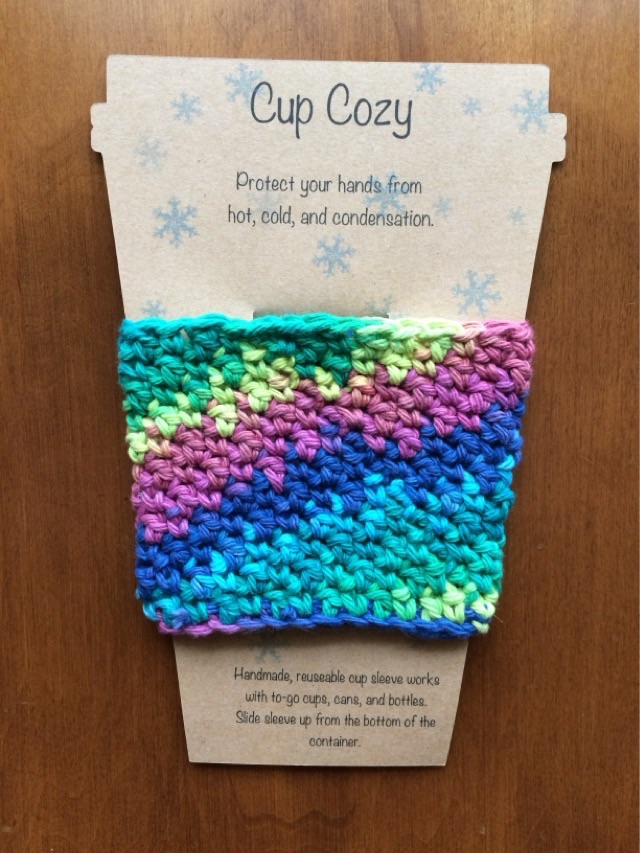
In December 2015 I was crocheting cup holders, and even went as far as designing packaging.
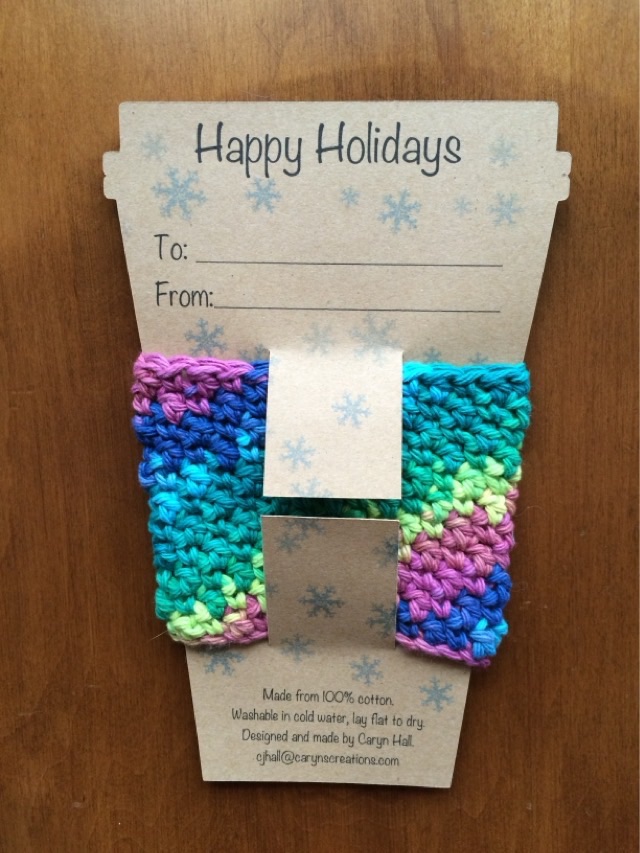
Photo description: front of a crocheted cup holder on flat paper “cup” that says “Cup Cozy” with a diagonal striped rainbow cozy (serendipitous pooling)Photo description: back of the same cup cozy with flaps to hold the crochet in placePhoto description: stacks of different colored cup cozies
I made these as teacher gifts for my kid’s teachers, which is why the back “to” and “from” are blank, so we could decide later which went to whom.
Cup Cozies are a good way to use up scrap cotton yarn.