The felt wreath sewing kit now has two cats. I didn’t deviate from the instructions on this second cat like I did for the candy cane with the first cat. I sense more deviation coming in my future, though. The thought of finishing the wreath and it looking like the picture on the kit is disquieting. It won’t ever look exactly like the picture, a head tilt difference here, a slight color variation there, but I’d like to make it mine, specifically. I have lots of scrap felt. Hm.
Photo description: in progress Bucilla felt kit with a gray cat with a red scarf, and a cream striped cat in a Santa hat
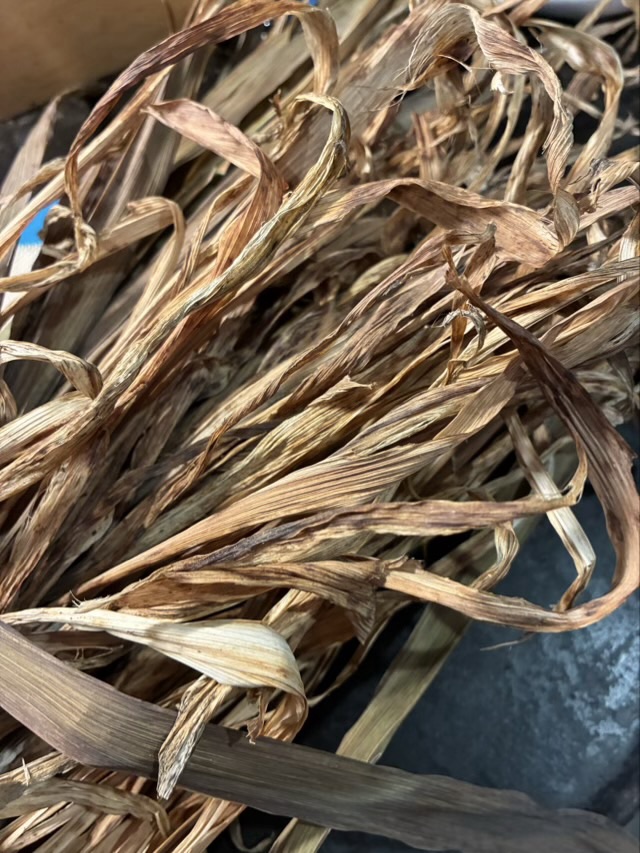
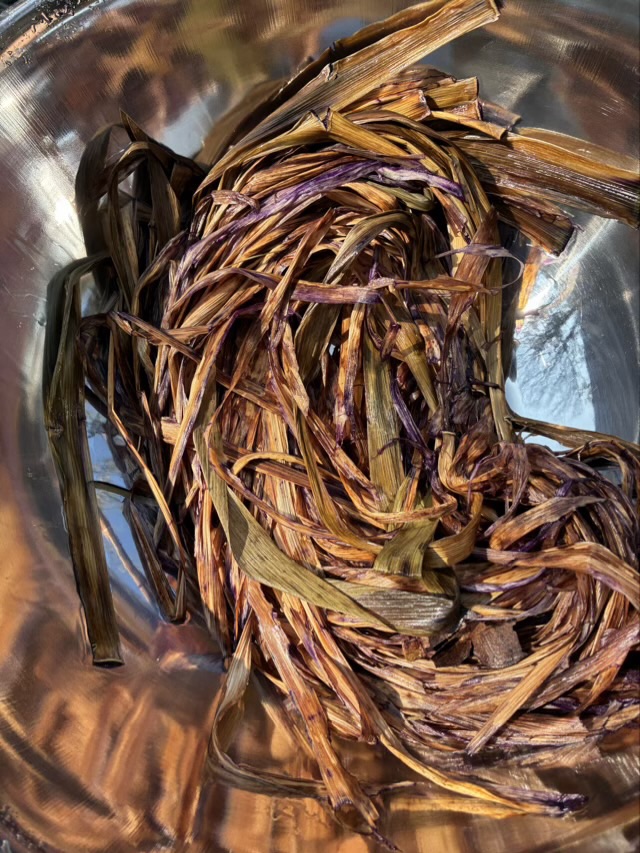
I’m not a dyer. I don’t like dye. I don’t like the accidental stains, the bleeding, the quasi-chemistry that is more art than science. But I thought I would try to dye some dried iris leaves. I pinged my wild basket group, and one person said she dyes iris leaves with regular dye meant for cotton. I bought some Rit dye for cotton and natural fibers, followed the instructions for the hot water dye, thinking that had the most chance for success. I added salt and dish soap as instructed, and about a quarter of the bottle of dye. I put in the rewetted leaves. I stirred. The dye and leaves refused to connect. I added a cup of vinegar. I stirred. I added the rest of the bottle of dye. I stirred. I checked that the temperature was staying at 140 degrees Fahrenheit on the stove. I stirred for 40 minutes. The leaves should have been absolutely black for the amount of dye that was in the bath. They were stubbornly the same original color. I drained the dye bath outside and rinsed the leaves, and rinsed, and rinsed (have I mentioned how much I detest dyeing?) and rinsed some more. There were faint purple streaks in the iris leaves, but not even close to the color I was hoping for. I thought I rinsed it enough, but when I handled the leaves, my fingers turned purple. The dye liked my skin better than the iris leaves. Arg.
Photo description: dried iris leavesPhoto description: iris leaves after rinsing, the faint bits of purple disappeared, well, didn’t disappear, it left the leaves and stained my fingers instead
I went back to my post in my basket group to report the failure. I noticed another person said they soaked iris leaf pulp in mordant before dying. When I feel less vitriolic toward dyeing, I will research mordant, and maybe look for a book on dyeing that has the actual chemistry explained. Right now I would rather stick with natural colors that don’t stain my fingers.
We’re letting Missy’s fur grow out, to see what happens.
Photo description: small black dog with white muzzle and forehead
I’m keeping the hair around her eyes trimmed, but letting the rest grow. We used to shave her down a couple times a year in the summer because Griffin the dog needed a shave for overheating reasons. Missy doesn’t seem to have a heat retention issue. Now when she runs her mane bounces.
I’ve cast on a new pair of spiral socks. This time I’m trying a 3×3 offset rib. The yarn I purchased years ago, tried to make a sweater, but frogged the whole project, so am now using the yarn for socks.
Photo description: top down spiral socks in progress using variegated blue and yellow fingering weight super wash wool and nylon yarn
I do think it is an interesting phenomenon that the spiral rib presents the garter stitch, while a straight rib shows the stockinette as predominant.
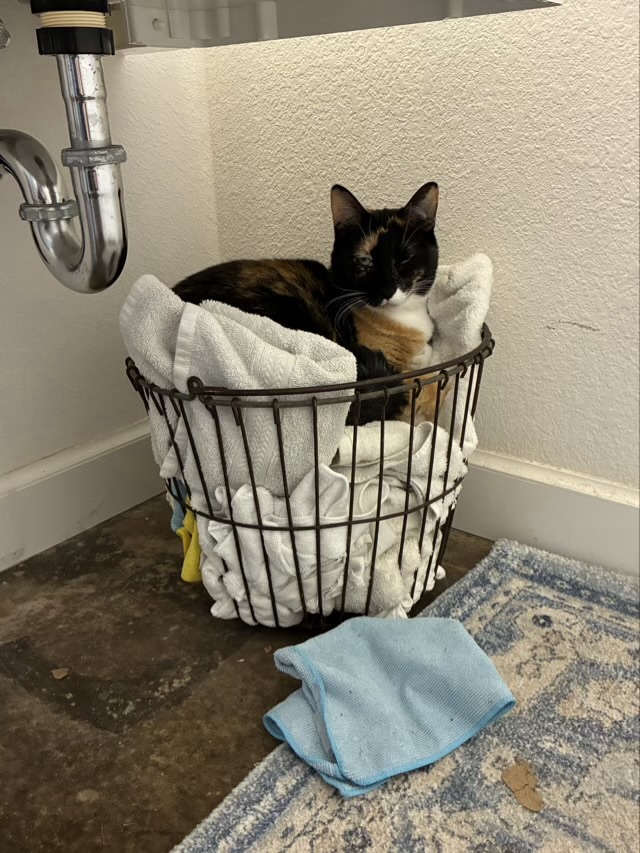
If I fits I sits, even if items need to be removed so I fits.
Photo description: Izzy the calico cat looking quite smug sitting in an antique egg basket that typically holds rags, she removed a rag so she fit better