No, sorry dude, this “can” not be your home. Or did you just get trapped? Well, you are free now and I have rehung the home/trap elsewhere, where it spins better, and will be more difficult for tree frogs to climb in.


No, sorry dude, this “can” not be your home. Or did you just get trapped? Well, you are free now and I have rehung the home/trap elsewhere, where it spins better, and will be more difficult for tree frogs to climb in.
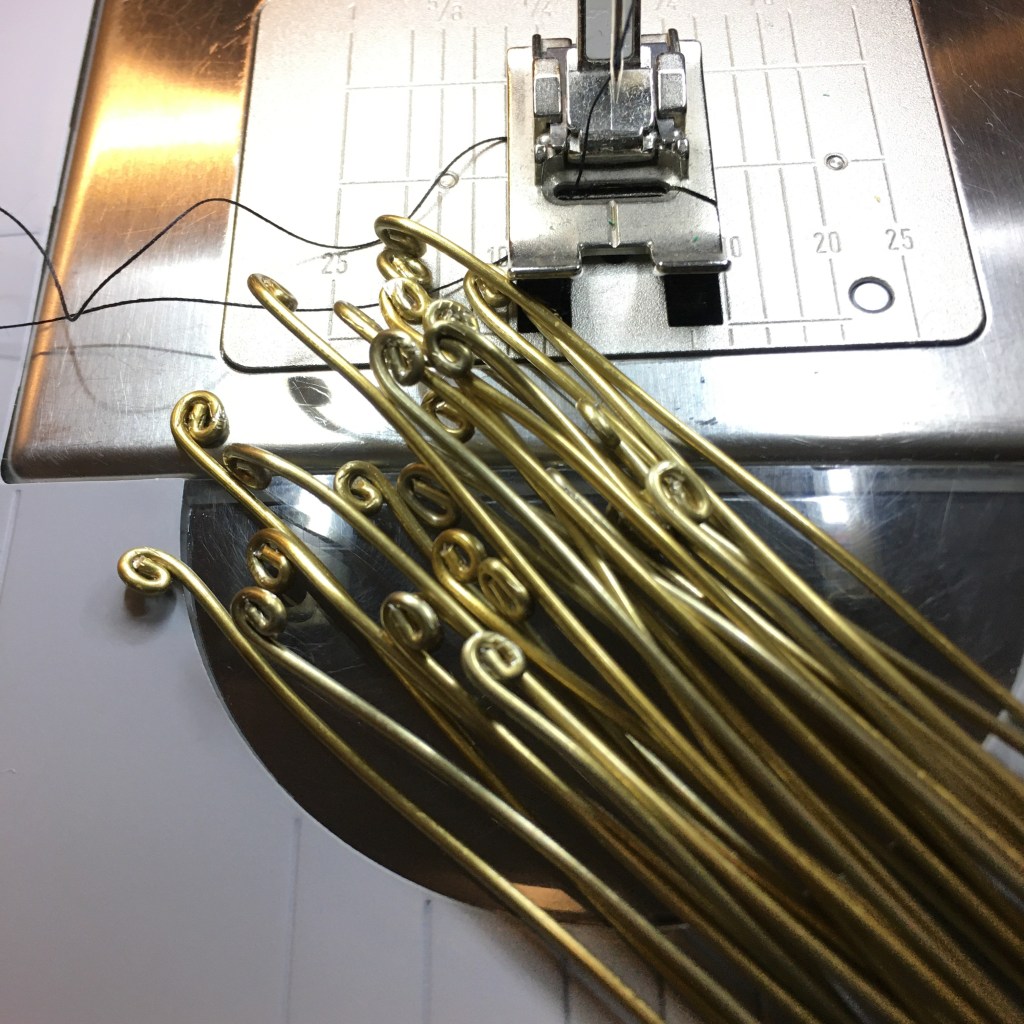
The pattern for the cotton masks I’m making calls for using twist ties. Probably because they are readily available, except in my house. But, as wire is one of my favorite media for crafting, I have a large supply of spooled wire and can “shop” in my craft room. I chose aluminum wire because it is light and bends easily, which makes it easier to conform around the bridge of the nose. I made them about 6”, then curled the ends in twice so it can’t poke through the fabric. The wire pictured above is about 18 gauge (that describes the thickness of the wire), and dead soft (that describes how easily it bends or the “hardness”). I won’t soon run out of wire; I even have a spool of electric fence wire that is aluminum and 17 gauge, and although it is a little harder, may still work. I might have to anneal it though. Hmm.

Elastic is again running low, even after I cut up all my 1” elastic. For our own masks, I’m making ties from old t-shirts. I cut 2” off of the shirt and pull it to make it curl in on itself. No sew, and more comfy than ribbon. I’ll save the elastic for the donated masks, though, since the hospitals don’t want things made of used (even if clean) clothing!
And yes, the title of this article particularly amuses me. Six months ago it would have had very different connotations and would have fit better in a piercing blog than a craft blog!
Well, I say production time, but it is really an hour or two squeezed into the day when my youngest is occupied with something that doesn’t need close supervision, like before she wakes up! But I have fabric, and now elastic, and am a decent seamstress, so I feel like this is a way to make a contribution.
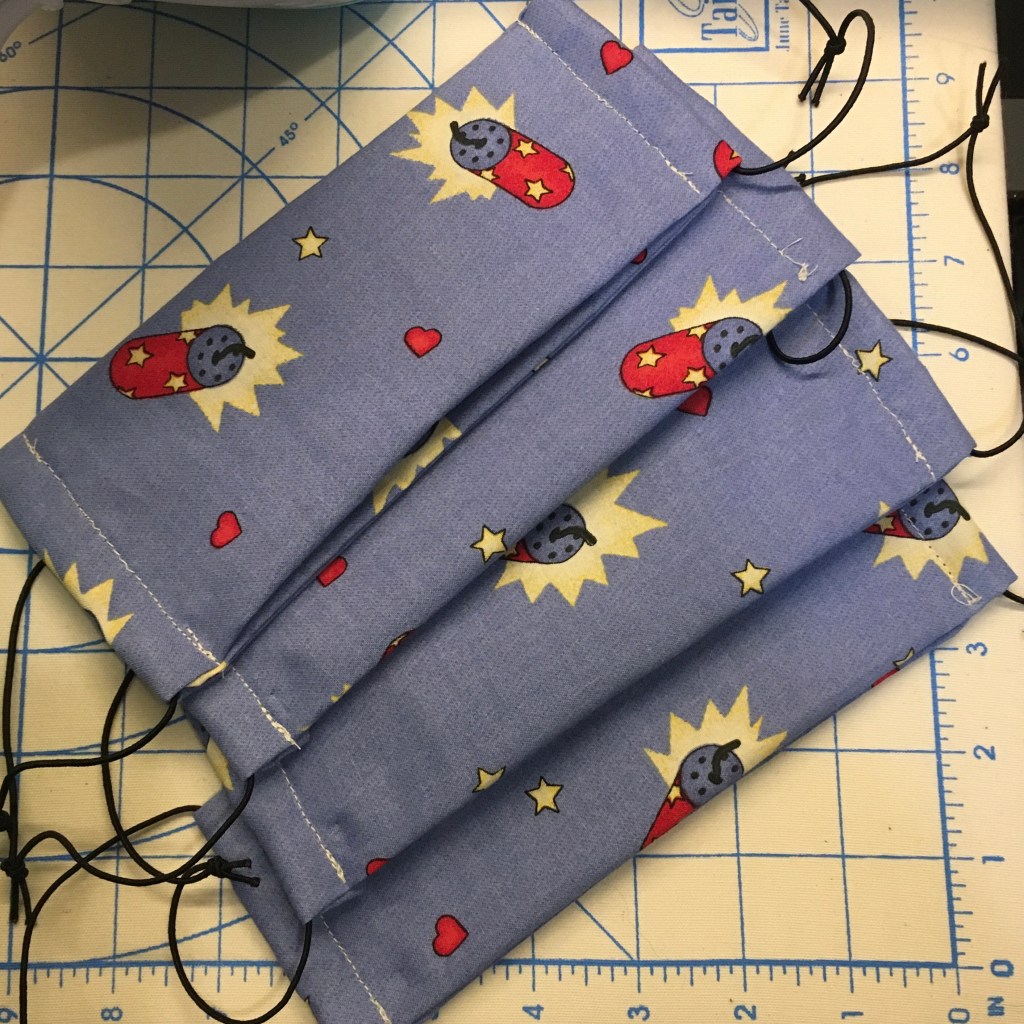
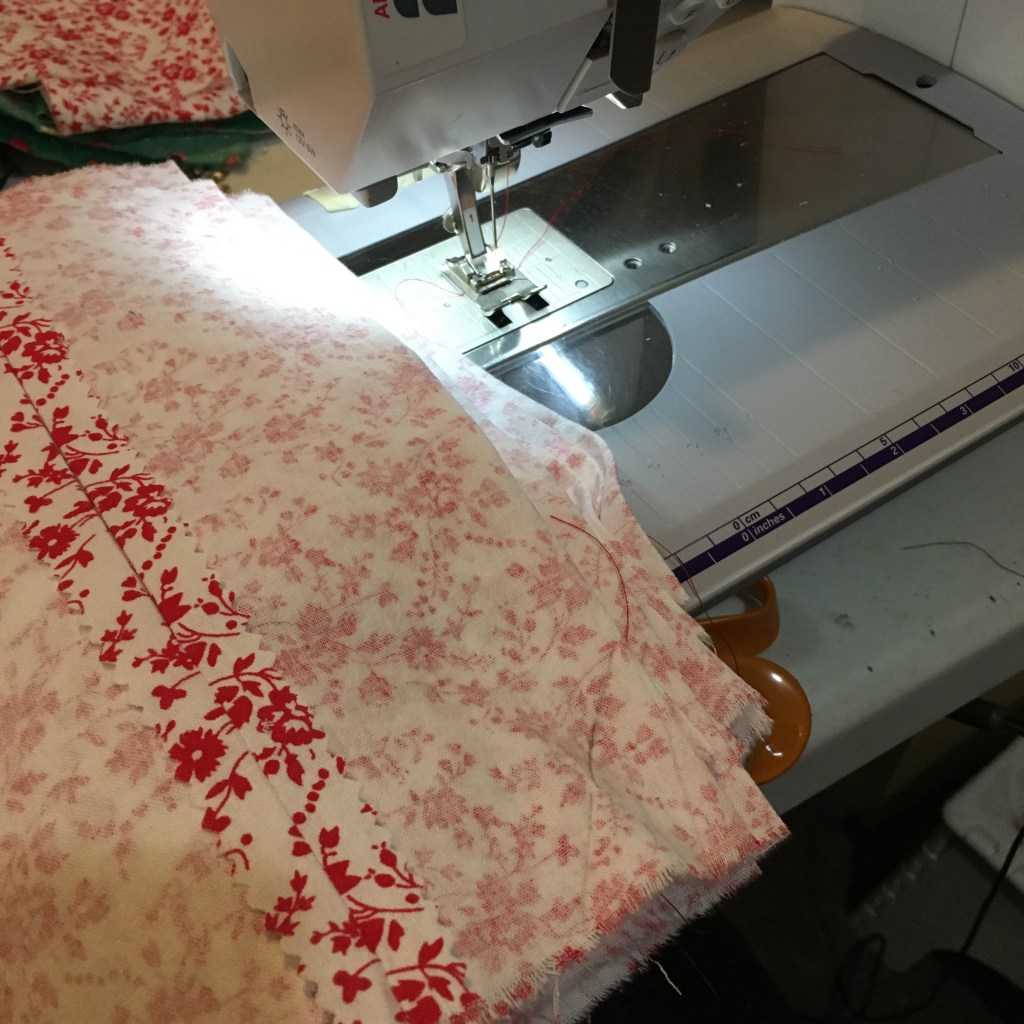
I’ve been doing a kind of assembly line for the masks. I make a stack of rectangles (good quality cotton fabric will rip in straight lines, so I rip rather than use scissors or a wheel cutter), and do one step at a time on the whole stack, rather than finish one and start on another. This reduces my mistakes, because there is less “where am I?”, and I am hoping it speeds production. It is hard in the middle of the process to appreciate the time savings, since after two hours I have a stack of pockets, but it is rewarding at the end when I have a nice stack of masks done at the same time.
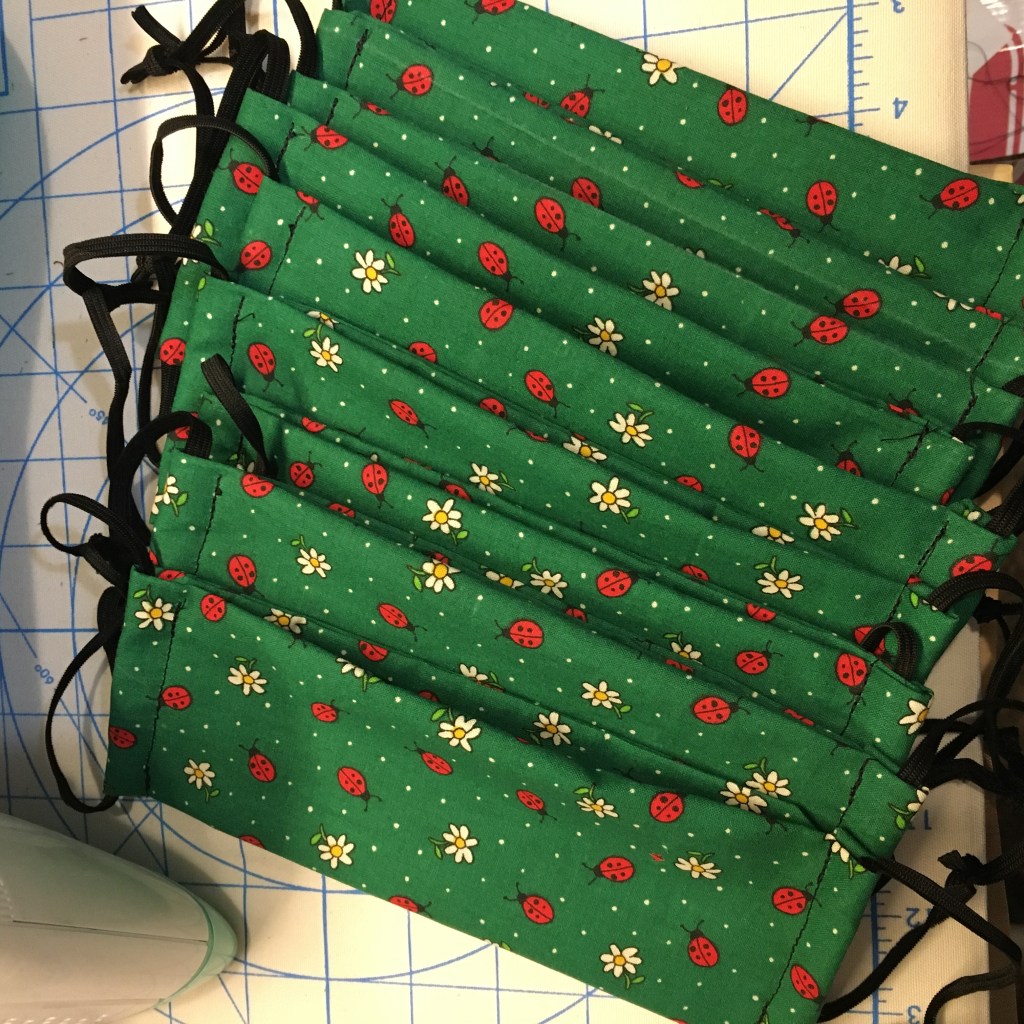
I do wash the fabric on hot first, then dry using my dryer’s sanitize setting. I also use my steamer to press the fabric twice during assembly. At the end, I put the masks in a plastic bag so the cat doesn’t sleep on them.
I handed off the first batch to my neighbor who works for our local children’s hospital!
I have read and been told that mint will take over a garden area. I have been trying to get this to happen at various houses in various garden locations for over 20 years. This house, on the side between the house and the chickens, is finally the spot. The chocolate mint is going bonkers. It has spread from its pot and is taking over the hill, which will be awesome.

I have so much I feel OK trying some fresh herb tea. I took 5-10 mint leaves, washed them, poured boiling water over them, and let it sit for about 5 minutes before take the leaves out with a spoon. It tastes good! It doesn’t have the dark color of dried leaf tea, but it smells and tastes nice especially when warm.

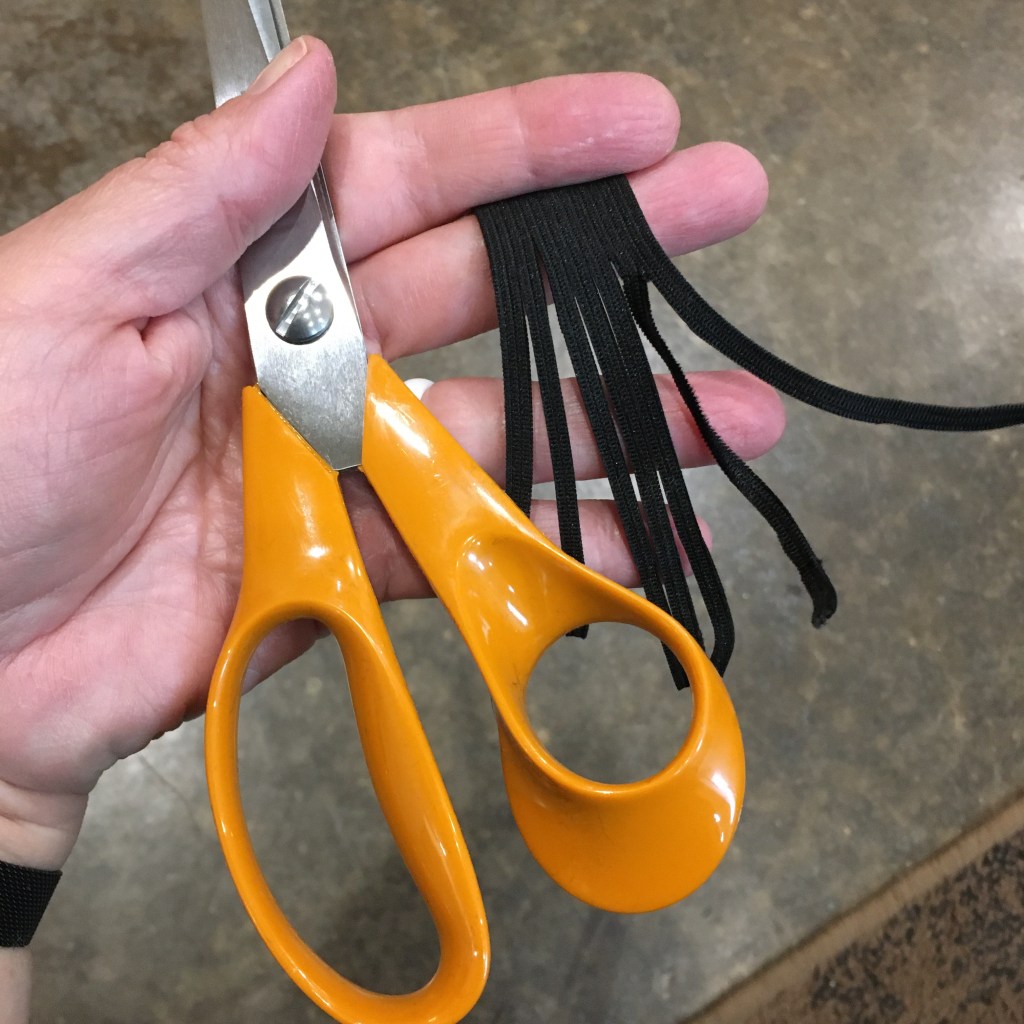
Elastic for masks is hard to come by. I’d like to use up my cotton fabric stash making masks for our local children’s hospital, but I have no 1/8” elastic. None. Nada. But I do have 1” elastic, and JoAnn’s fabric website has a useful video on how to cut wider elastic into smaller strips. So I tried it. THEY DON’T UNRAVEL. What?!? How? Well, the how will have to wait until later, I have elastic straps to make. I do seal the short ends of the elastic by melting with a flame (just a little, just to melt the fibers, not to burn). Then I use sharp scissors to cut down the channel between the elastic ridges. I do not need to seal the long edges of the elastic. As long as I cut in the valleys and don’t accidentally cut across a ridge, the new smaller strip does not unravel. I pulled on it, hard, ran it back and forth between my fingers, and all the fibers stayed in place. Wow. Neat. Ok. Onto production!