Well that went better

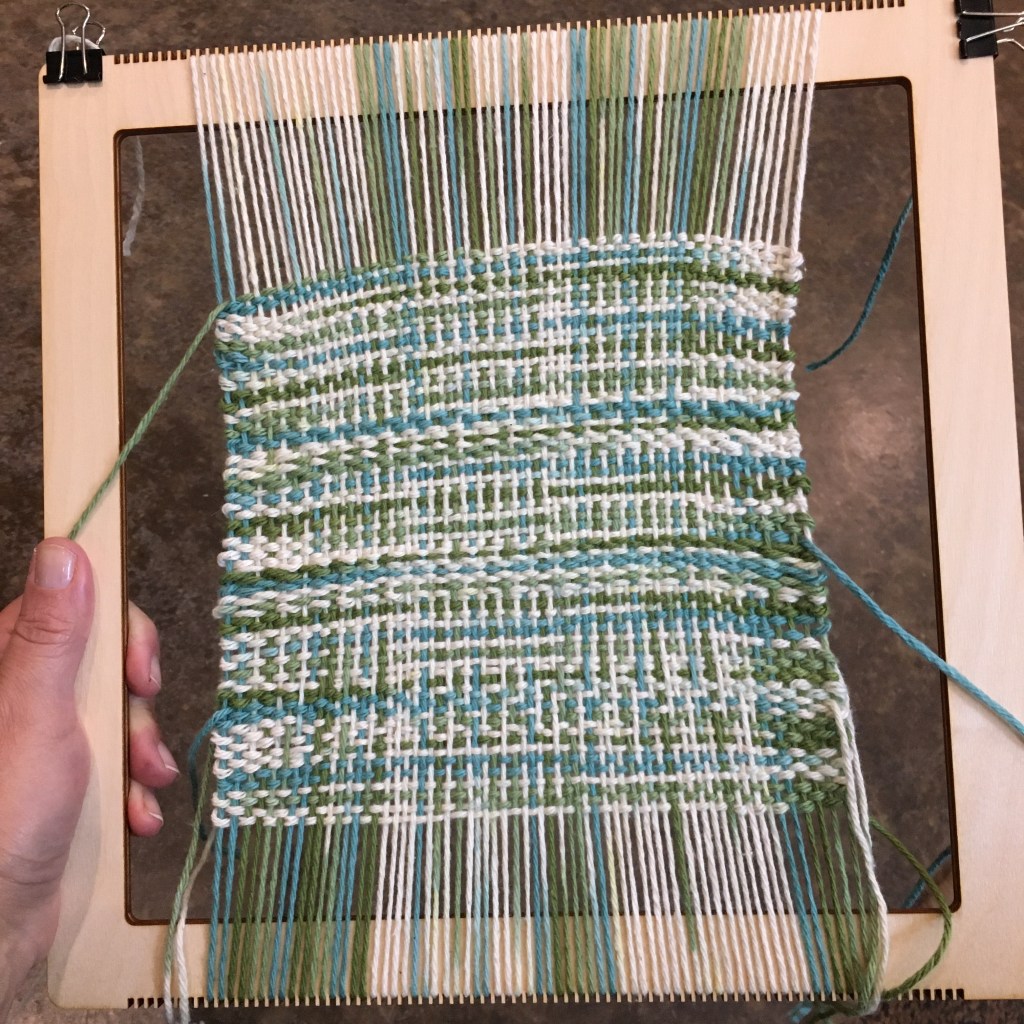
In reading more about weaving, and actually watching some videos (not in their entirety of course, I don’t have that kind of attention span), I noticed the warp yarns were further apart than my warp yarns. I grabbed a bag of variegated cotton bits and this time I tried skipping a peg between warp threads. I also used some tissue in the first two rows as spacers, and found a method for getting the sides more even by pulling the end warp thread away against the weft of each pass. I still have a little hour glass shape, but the tension across the whole piece is much, much better.

4 epi rather than 8 epi warp

With the wider warp, which I think would be 4 ends per inch (epi), I was able to pack down the weft (back and forth passes of yarn) to cover the warp (up and down) yarn. I get stripes instead of the interesting color play, but the finished fabric is so much softer and thicker. It was easy to pull the warp threads through the piece for the fringeless method of finishing, and easy to weave in the ends. (I actually enjoy weaving in the ends, but it is basically sewing, and I like needle work.) The colors are interesting; it is obvious that I’m working from leftover bits of yarn, but my youngest thinks the pink and rainbow is awesome. So there we go.

Finished worsted weight cotton washcloth 4 epi

Egg thief?

Western Rat Snake trying to eat an egg

Well, attempted egg thievery. I went out to check the chickens around noon and found a 4 foot long Western Rat Snake in a nest trying to eat an egg. I ran back to the house to get my phone, turned on the video, with light, and she (?) still didn’t care I was there. The egg was too big, though. I called for my eldest to bring the snake grabber (yes, I went into the house for my phone and not the grabber), and we gently removed the snake from the nest and relocated it outside the coop.

Relocated Western Rat Snake

I think the snake slithered in the coop door during the day. I was afraid of squishing bits with the grabber and dropped it a couple times and it didn’t seem to have a bolt hole. But that may be another factor in our decreased egg collection. Although, honestly, a few eggs is a good salary for something that keeps rats and mice away. This guy will need to grow a bit before it can eat the eggs. Maybe it was stealing the 44g eggs and couldn’t take the 46g.

Another go

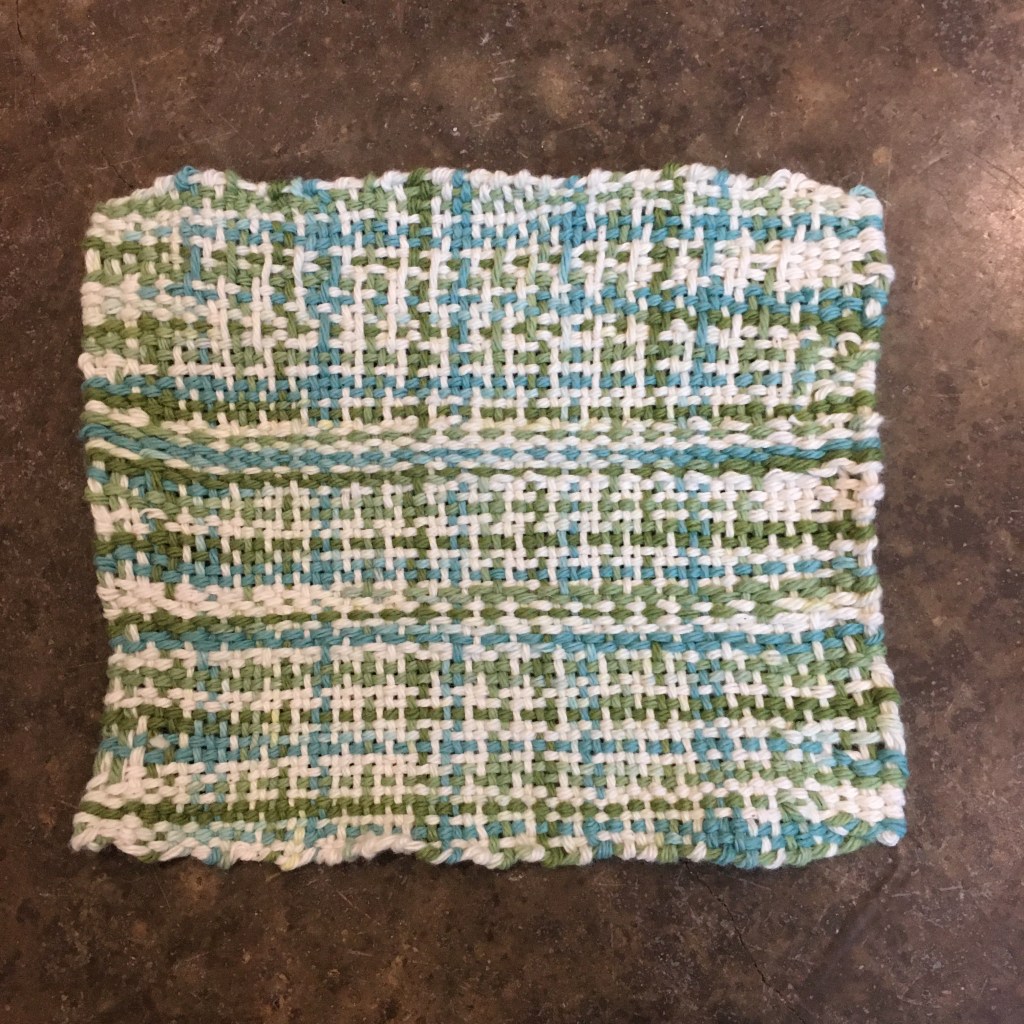
I had some more of the variegated cotton yarn, so I attempted another weaving with my mini loom. I am not particularly fond of variegated yarn for crochet or knitting (I’ve had this cone of cotton for probably over 10 years), but I quite like the effect using it for the warp and weft of weaving.

Trying a smaller weaving project

I gave myself more room on the loom this time, going for a smaller washcloth. I’m still having trouble with tension, but it is getting better. I tried some areas of linen weave, but I don’t quite have my head wrapped around the technique yet. More practice is required. It was easier to pull the weft through the work for the fringeless method to finish off the washcloth, so working smaller was a good choice.

Finished cotton wash cloth

I still have the loose edges issue, but it is better. I think I have some more variegated yarn around here somewhere…

Garden sack experiment

I filled up the chicken feed bucket and had an empty feed sack. I had some dirt left over from the strawberry planting project. I had some carrots that were getting leggy in the fridge. I’ve seen some posts on planting potatoes in sacks. Why not? I’ll try planting carrot tops.

Carrot tops planted in a feed sack

I folded the top of the feed sack down to the base, to form a double walled container. I cut some drainage holes in the bottom of the sack and filled it with dirt. I cut the top inch or so off the carrots and planted them in the soil with just the tops showing, then gave them a good water. In the photo, behind the feed sack, you can see I’m doing a similar experiment with green onions. My basil is doing well (right side of photo), and I even have some watermelon sprouts (left side).

Molting, I hope

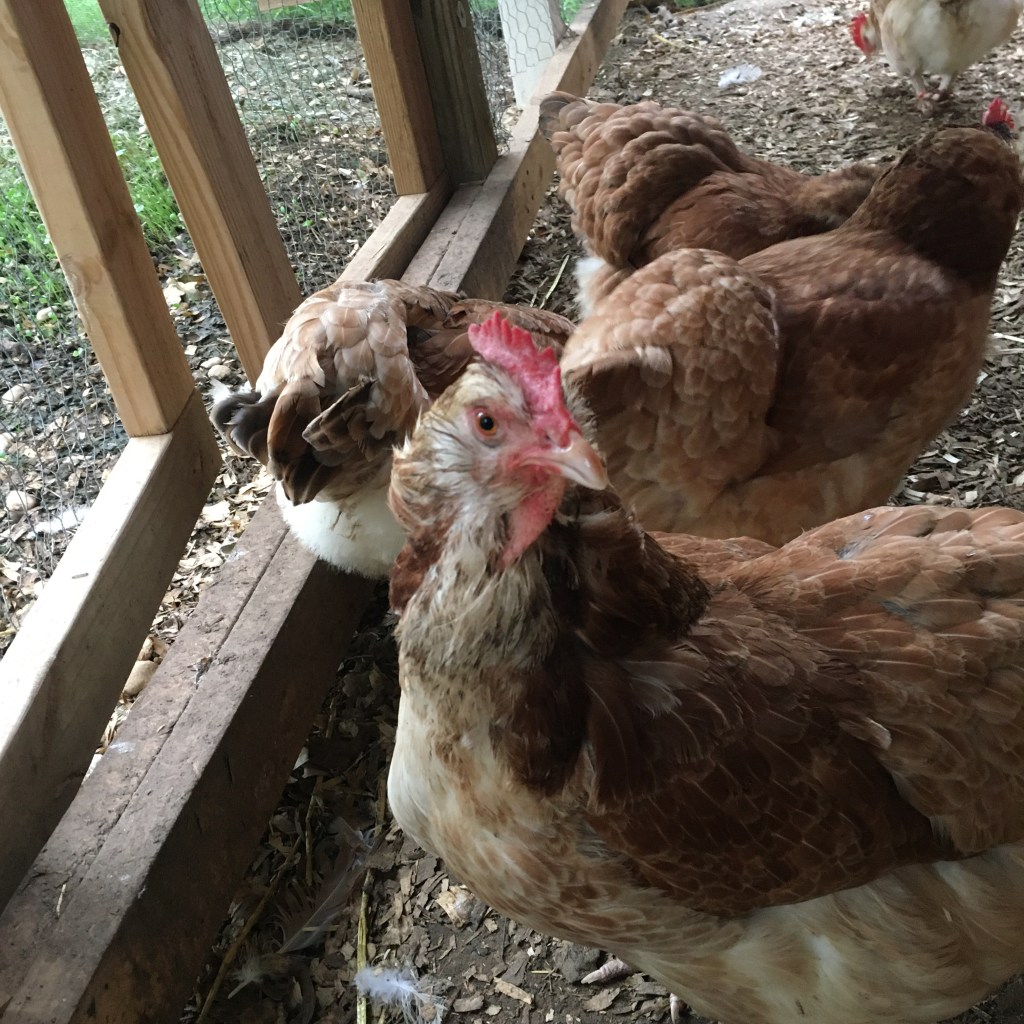
Faverolle with no beard or muffs

My poor hens have no beards or muffs, just red wobbly bits under their beaks. I am hoping that this is a result of spring molting and not a permanent condition. Their undersides too have bare patches. Egg production is down, which I thought was because we have had a series of broody hens (when they go broody, they stop laying, even for awhile after they stop sitting the nest). But seeing their naked necks and all the drifting feathers in the coop, perhaps the cause is molting, which also decreases egg production. Time will tell.

Hens enjoying a slice of watermelon, all beardless