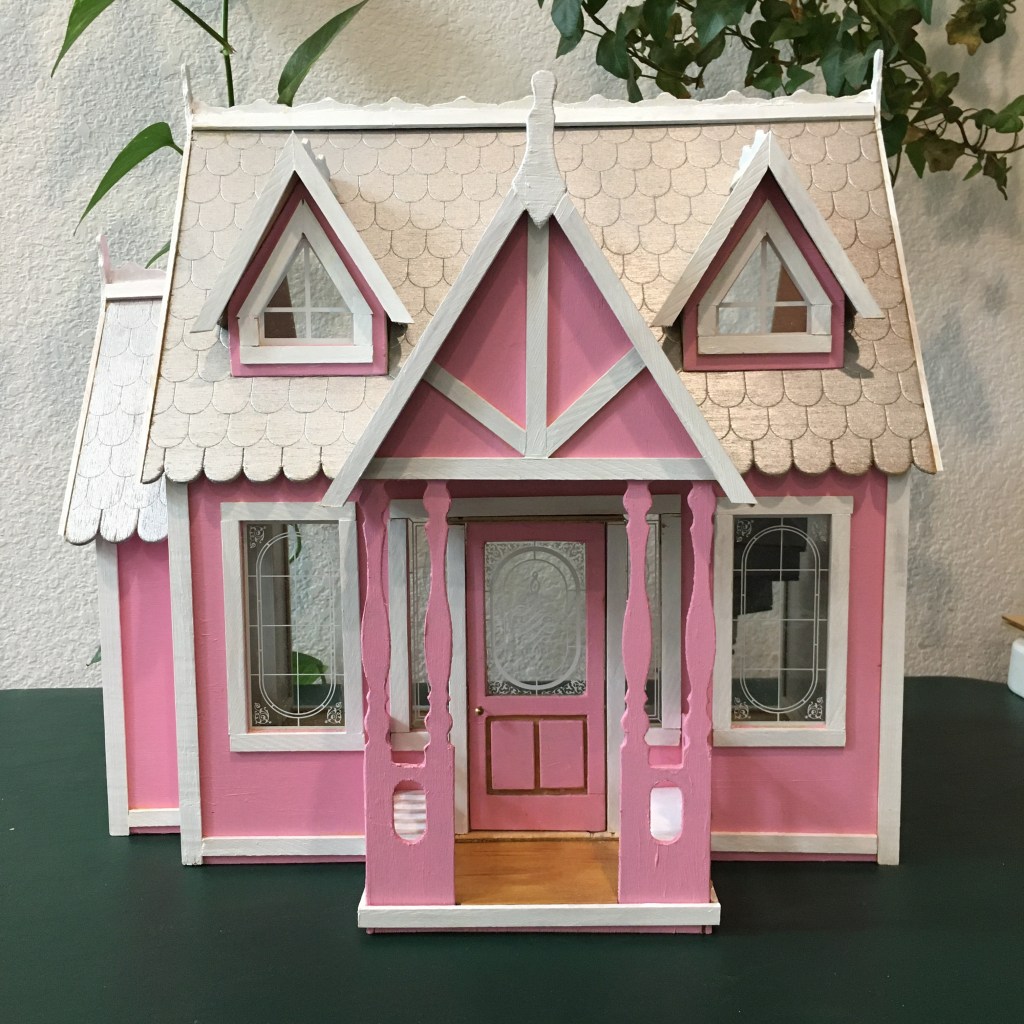
Done! It took me a week gluing and waiting, gluing and waiting, but the doll house is complete and my youngest is happy that she can play in it now without worrying about wet glue or paint.
Dura-craft Ashley doll house frontInside
By the way, artist’s acrylics do a pretty good job as caulk for doll houses, since the consistency is nice and thick. It is very difficult to get a crisp joint on that tiny trim. Touch up paint was definitely my friend.
Most of the house is painted with acrylics. The roof and stairs were spray painted metallic silver. The pink was mixed by hand, and I tried for a lighter shade inside than outside (note, a little red goes a LONG way). The wall paper on the ground floor room was designed in Photoshop, printed on office paper, and decoupaged to the walls. The whole thing looks much better in photographs. I’m not a huge fan of the press board construction. Time will tell for the durability.
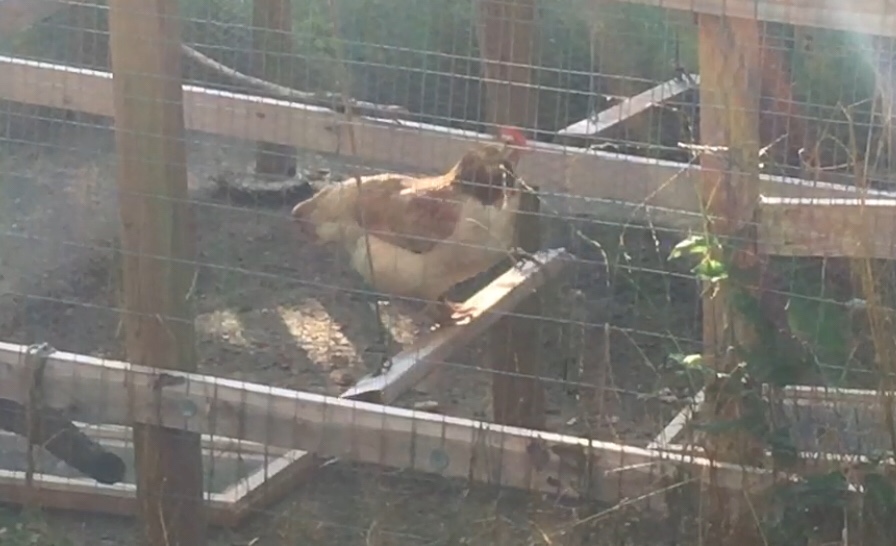
Because it is amusing to watch, here is a video of one of my hens on a swing. They regularly get up on the swings, but I rarely can get a video because as soon as they see me they run over to demand mealworms.
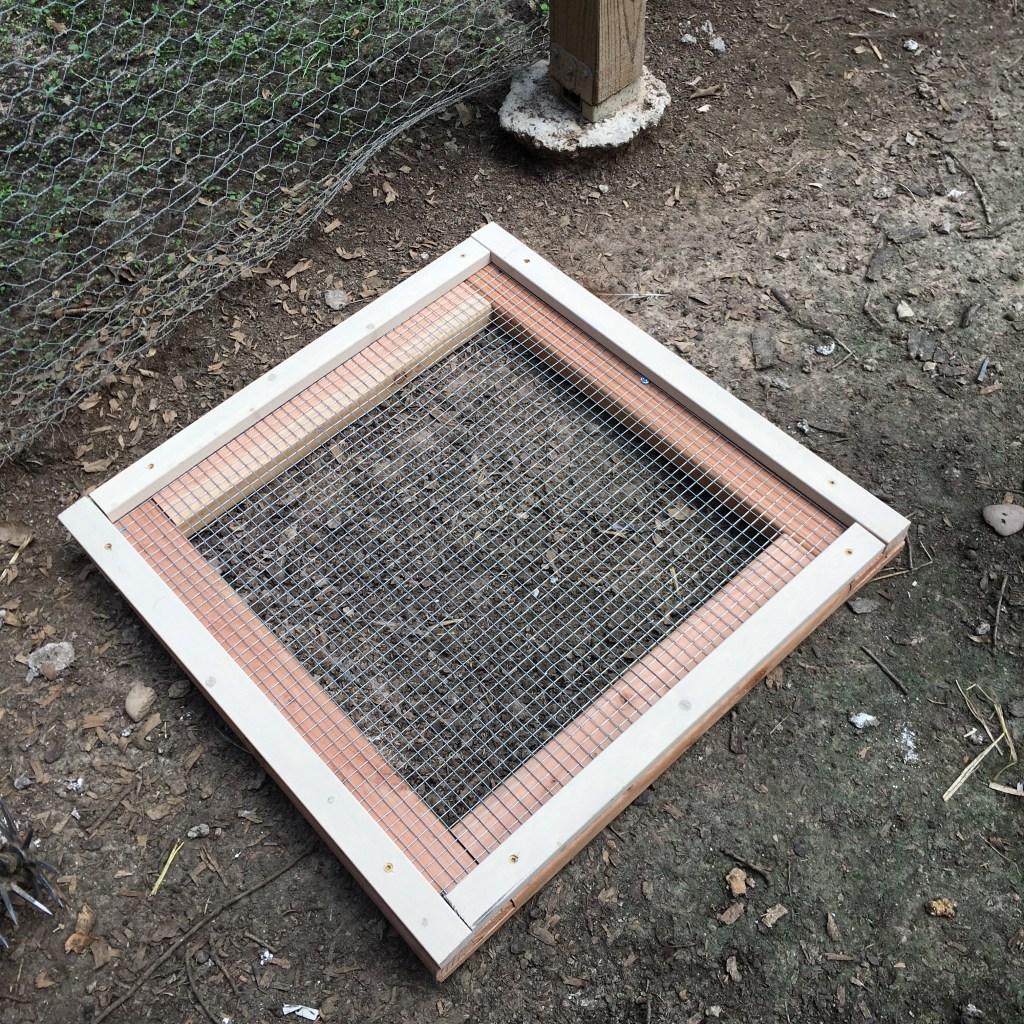
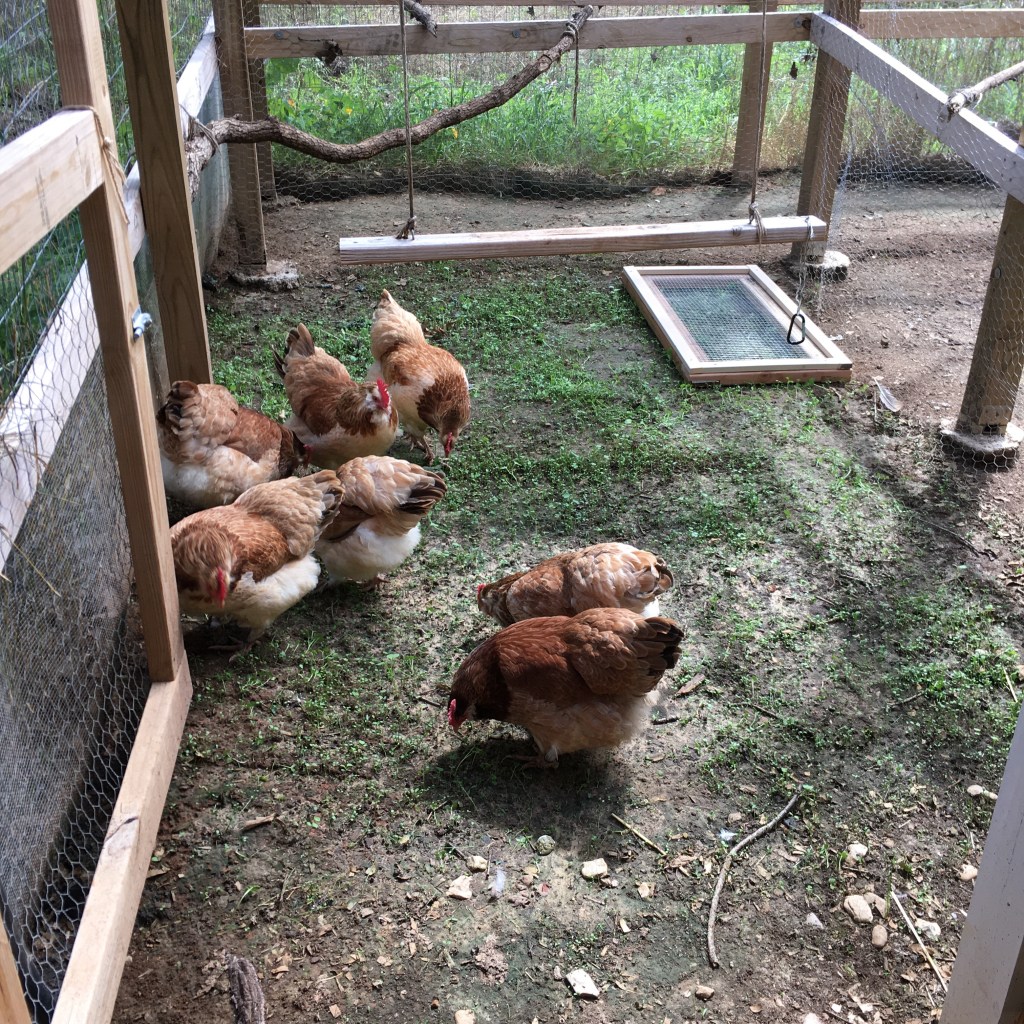
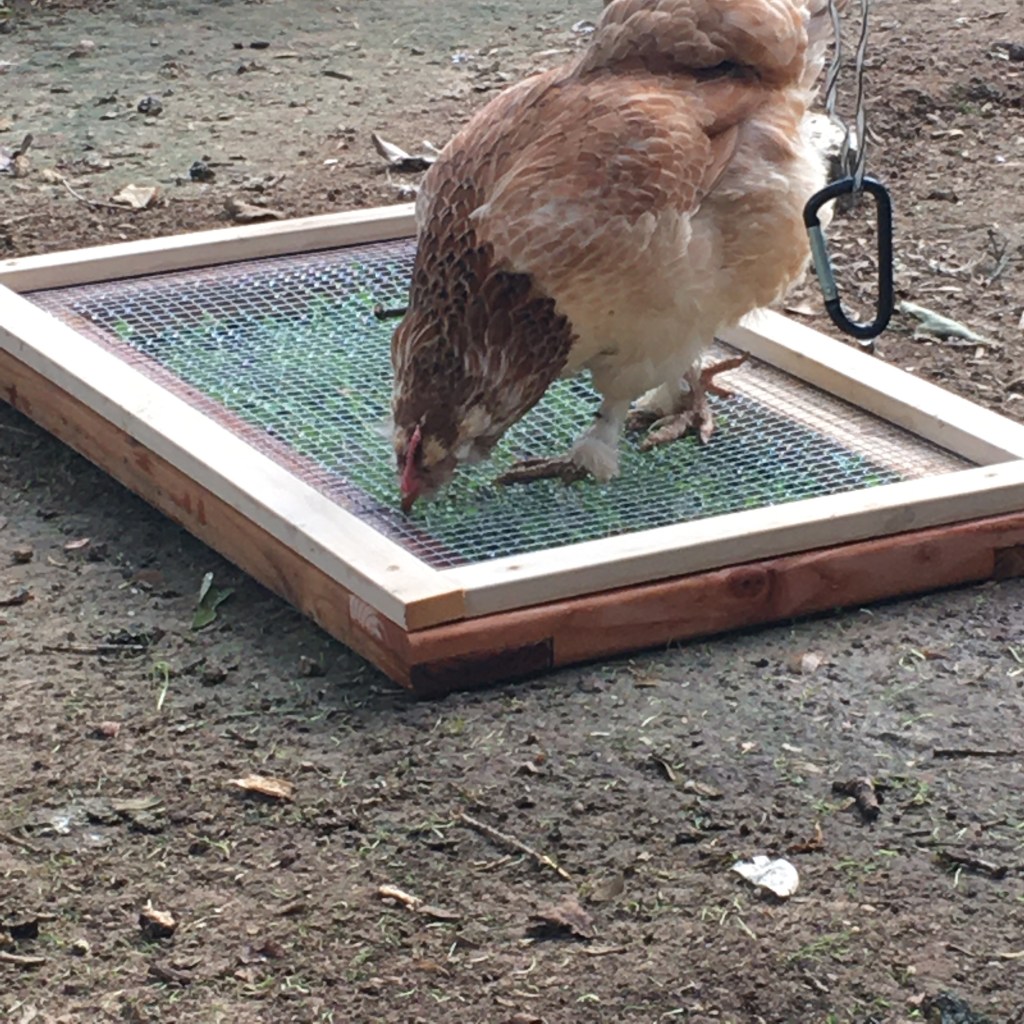
I finally broke down and made some chicken salad bars. These are basically just hardware cloth in a wood frame designed to let the plants grow through the frame, but keep the chickens from scratching up the roots. I used scrap lumber: 2x4s for the base, and 1x2s for the top (to protect the chickens from sharp wire edges). I made a square and a rectangle because that maximized my wood scraps. The hardware cloth is 1/2” squares.
Rectangular frame set over growing sproutsSquare frame set over seedsChickens removing excess sprouts
My hope is that the chickens will have a more steady access to fresh greens, rather than spending a week growing sprouts in a run, and the hens consume the lot in a day and a half.
My cotton fabric stash is gone, transformed into masks and donated to a local children’s hospital and given to friends. I had to break down and buy fabric (gasp!). Good quilting fabric is expensive, by the way. Although I liked the pattern I used for the donated masks (they were relatively easy to make, stored nicely, and had filter pockets), they were bulky with the pleats and after washing were a bunched up mess because the wire was sewn in. So I started mixing and matching patterns to see if I can come up with something better. Looming on the horizon is the potential for my kids to go back to school with masks. I need something easy to wear and wash.
Mixed pattern mask with tie sleeves
One of the top features I like in a mask is tie sleeves, so that it is easy to trade out kinds of ties. This is important for us as we move forward because ear loops work for one kid, but not the other. And if the ear loops start to irritate, we can switch to a different strap method. Here is a quick video on using a U shaped wire to thread the ties. In the mask above, I used this basic pattern, but extended the sides to give room to make the sleeves (thanks Mom for that idea!). I also printed two more copies of the pattern and made overlapping mouth and cheek sections to allow a filter to be slipped into the mask. I like this filter pocket better because the cotton is between the filter material and the mouth of the wearer. The idea for this came from this pattern.
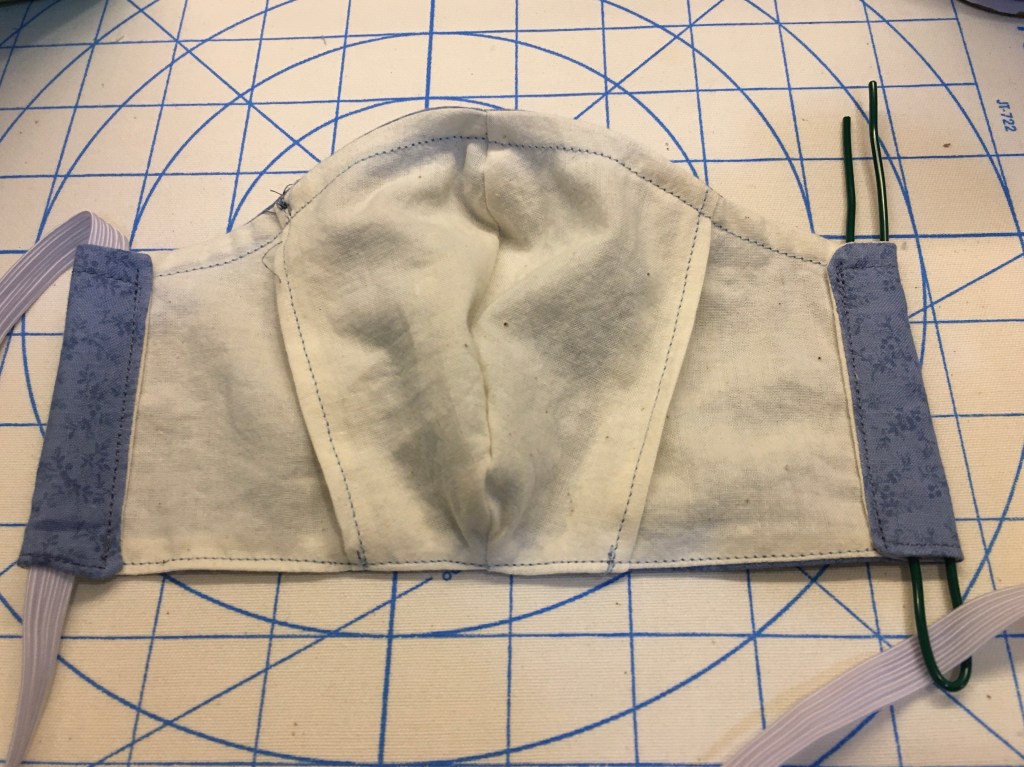
Removable wire pocket
The other thing my masks need is a removable wire, so I can take the wire out before I wash the mask. As it turns out, by making the inner layer with three pieces, then sewing along the edge (wider at the top to accommodate the wire), it forms a pocket with two access slits. It takes a little wiggling to get the wire in and under the cheek sections, but once in it stays put. Getting the wire out isn’t terribly hard either, just fiddly. A wire slightly longer than the mouth section with the ends curled works well.
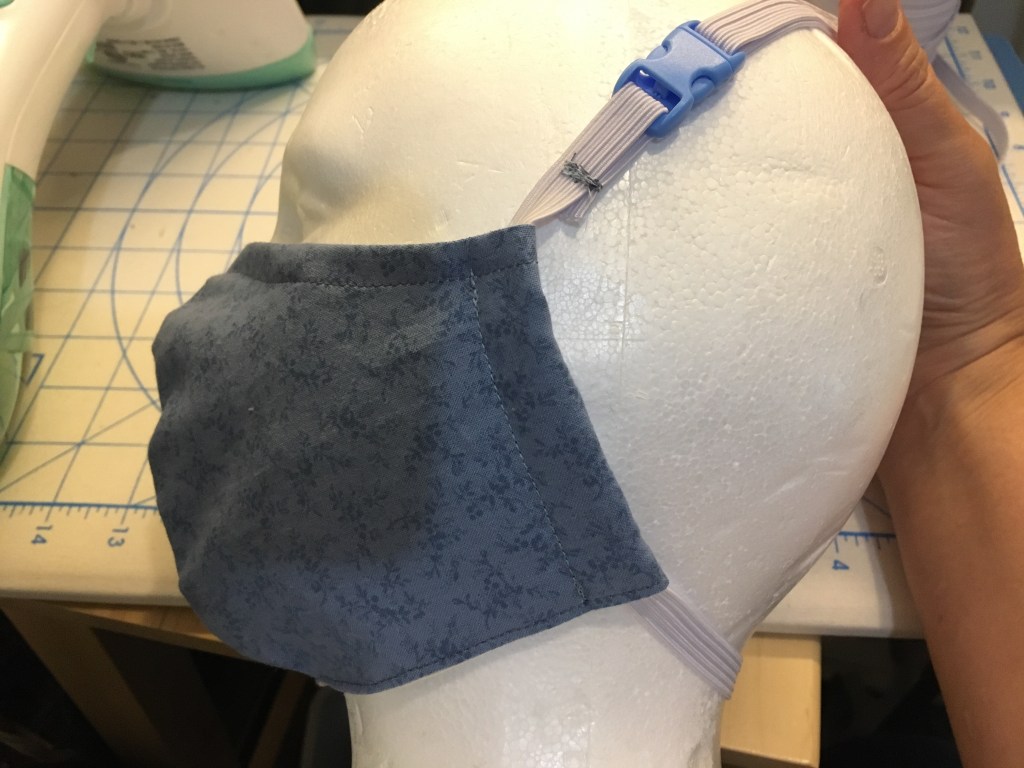
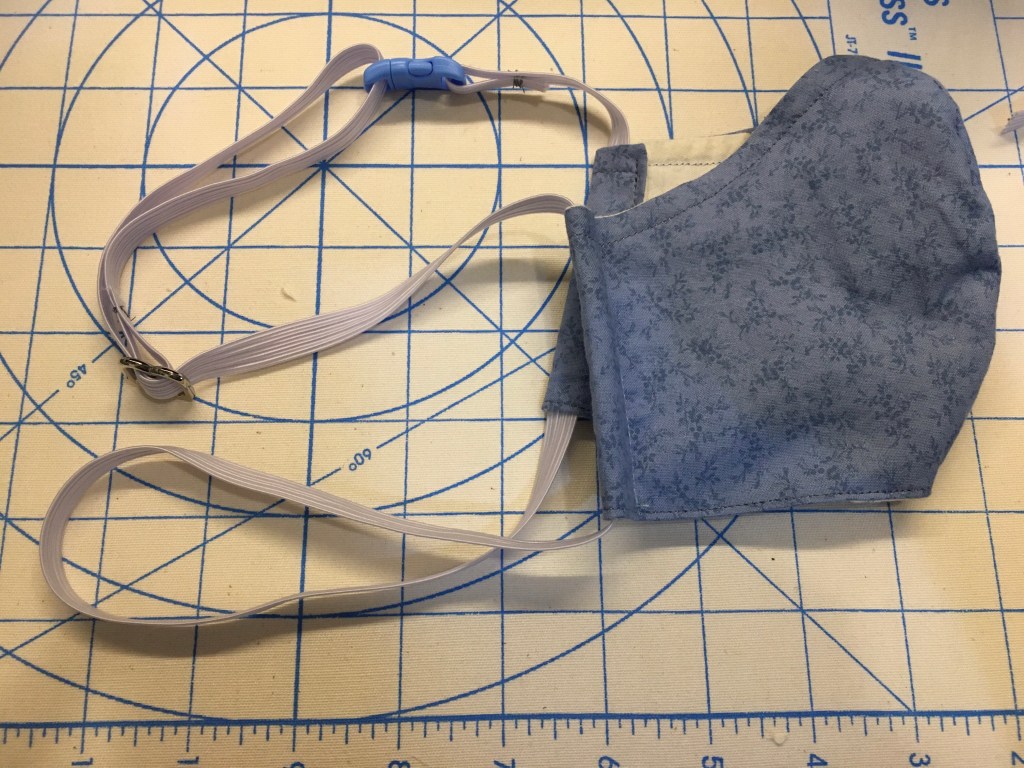
Alternate strap method3/8” elastic with buckle and figure 8 slide
The final thing we are testing is an alternate strap method to ties or ear loops. My youngest wears glasses and hearing aids, so ear loops are out. Tying straps behind the head is also fiddly. So we are trying 3/8” elastic in a loop. The loop is adjustable with the use of a figure 8 slide, and clips together with a buckle (although once at the right size, the elastic has enough stretch to just pull it into place).
No, I don’t think masks can guarantee not catching a virus, but they do a great job reminding me not to touch my face!
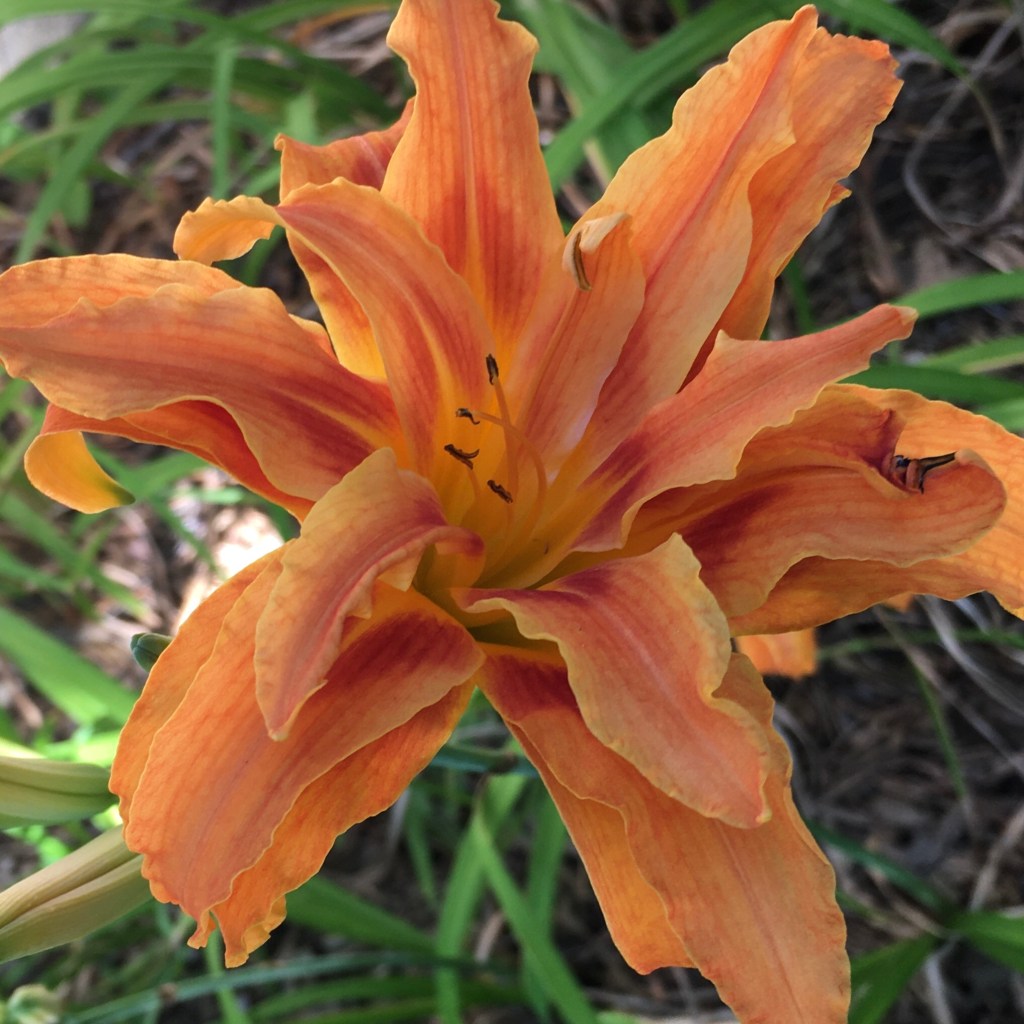
The day lilies are blooming in my front yard. I love when I find the right spot to plant and the flora flourishes. These are particularly fancy with their triple petal layers.