Night time medicines

So I’ve read over and over that the best time to treat chickens is when they are asleep on their roosts. Not my chickens, until now.

Previously going into the coop at night meant the hens would be awake and would start moving around on their roost. They seemed to never sleep. This is what happened the first time I tried giving leg treatment for scaly leg mites at night as well. We had to keep track of who was treated by looking to see if their legs were shiny with the VetRx oil!

VetRx oil that we just used to treat dry legs on hens at night

Three days later we treated again. Same time, but I had moved the roost a little further from the wall to give room to get around, and we used a blue light instead of red. (We have a flashlight that has white, red, and blue options.) The night was also much colder. I’m not sure the light made the difference, but the hens did not have an escape party this time. They stayed in their place on the roost as I rubbed their feet and legs with the oil. We will continue to apply every three days until the skin on their legs no longer looks dry. This method is so much easier than chasing them around during the day!
Weaving in ends

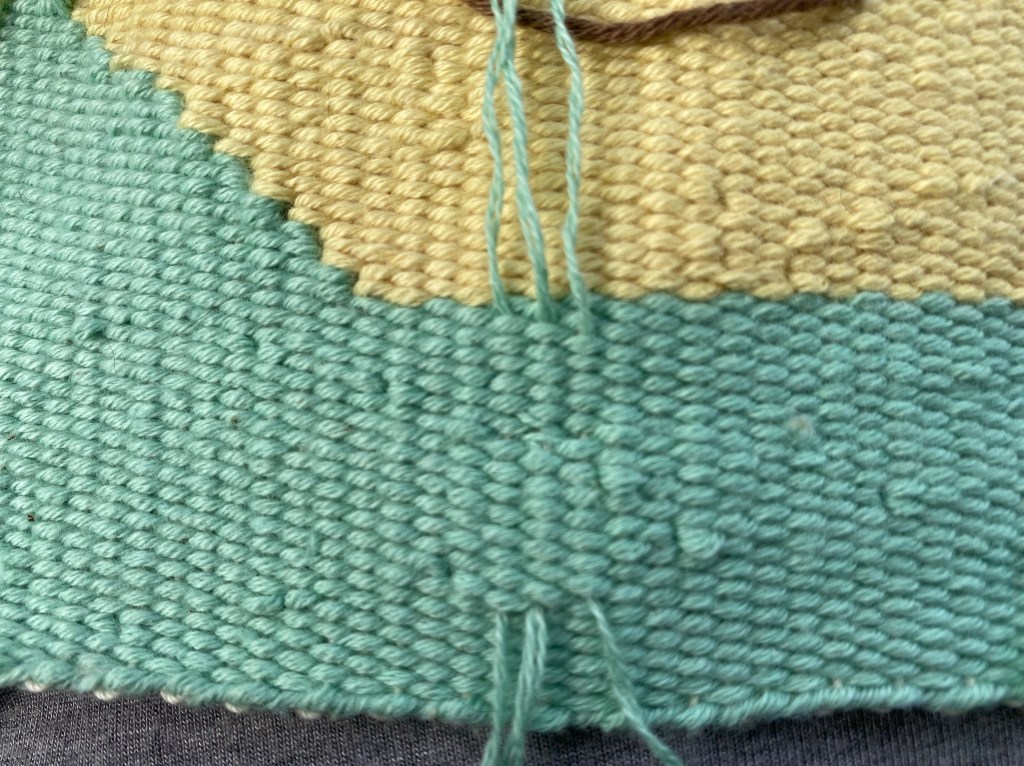
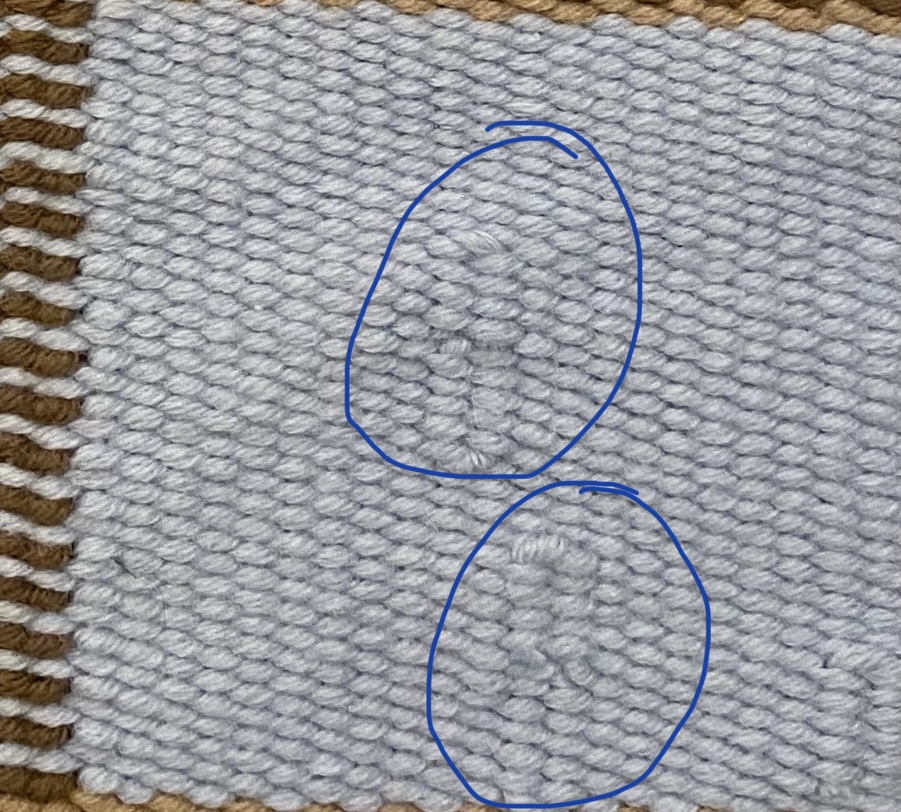
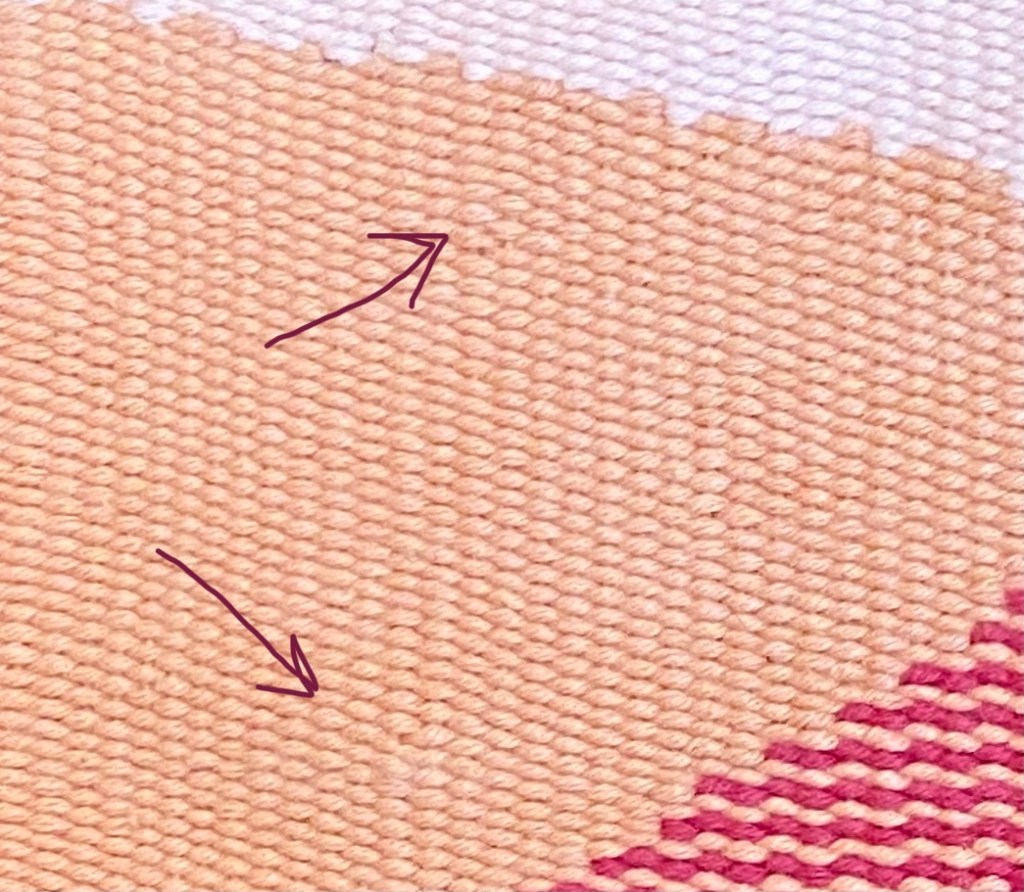
I’ve been experimenting with dealing with the ends of the yarn when weaving. I tried my standard way that I use for knitting and crochet, which involves running the end through the work and back again, which leaves visible traces. Then I tried splitting the yarn and weaving in sections, which gives a much nicer finish.

Back of cotton weaving with ends woven down and back, which makes a visible standing oval
Back of a cotton weaving with ends split and woven in, with arrows pointing to where the work was done
Back of cotton weaving with split and woven ends, before trimming

Yes, splitting the ends and weaving in the sections triples the times I thread a needle, but I think the end result is worth it.

Aw

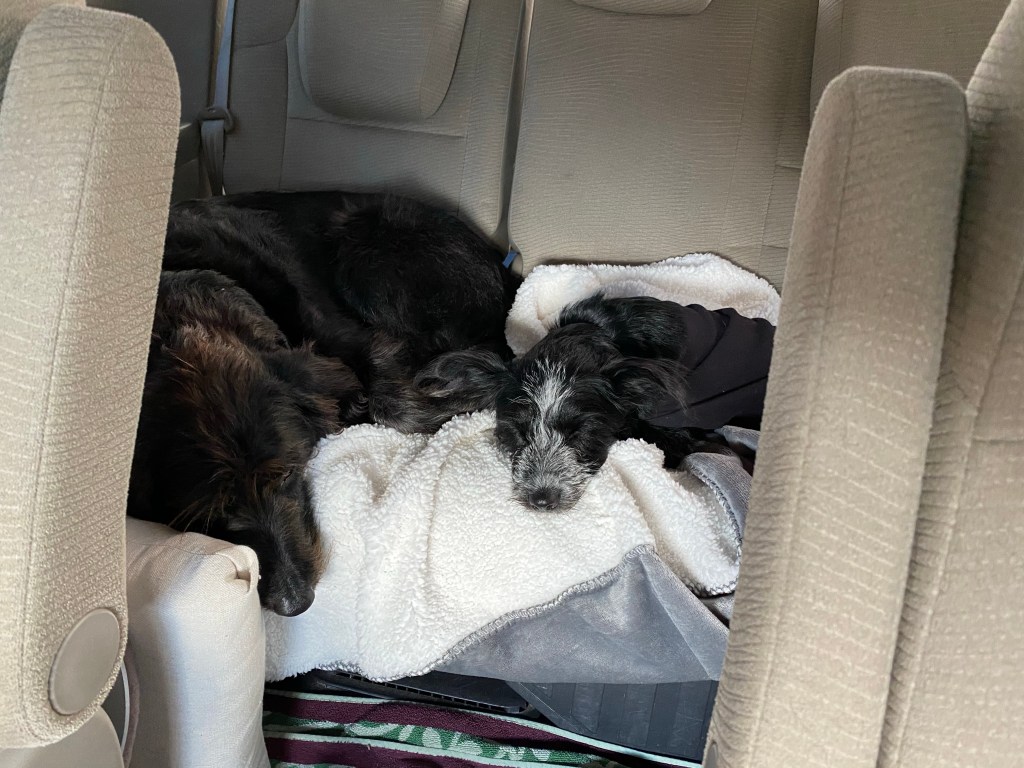
Griffin and Missy napping in the car

Griffin actually let the puppy lay next to him in the car. She has truly won him over!

Woven washcloth

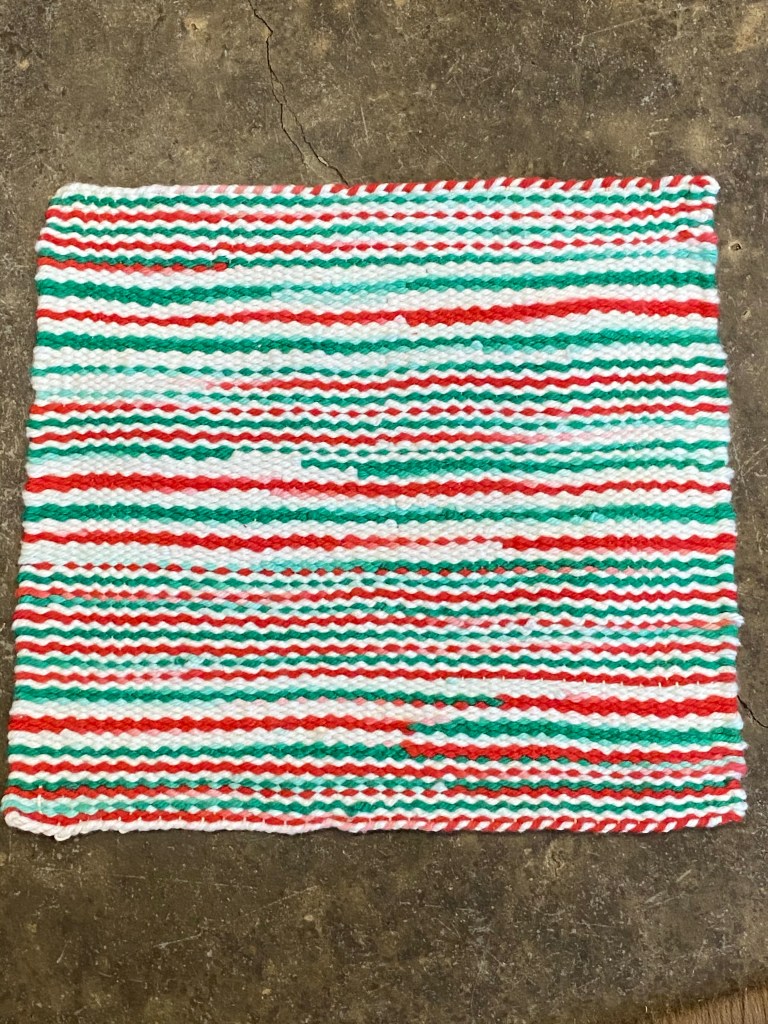
Washcloth woven with variegated yarn

So I’m learning. I blocked (got it wet, laid it flat to dry) my variegated yarn washcloth, and although the pattern of the yarn was interesting, my edges are definitely wonky. The sides are a little better where I used the meet and separate method described in Rebecca Mezoff’s book, and it also changed the variegation pattern, which is neat. (The three sections where the lines are thicker are done with two bundles of yarn, rather than taking one bundle all the way across.)

What I liked: the way the meet and separate weaving method made thicker lines.

What I learned: adding a twined pass at the bottom helps space the warp threads. I added another twined pass at the top for balance.

Grubs

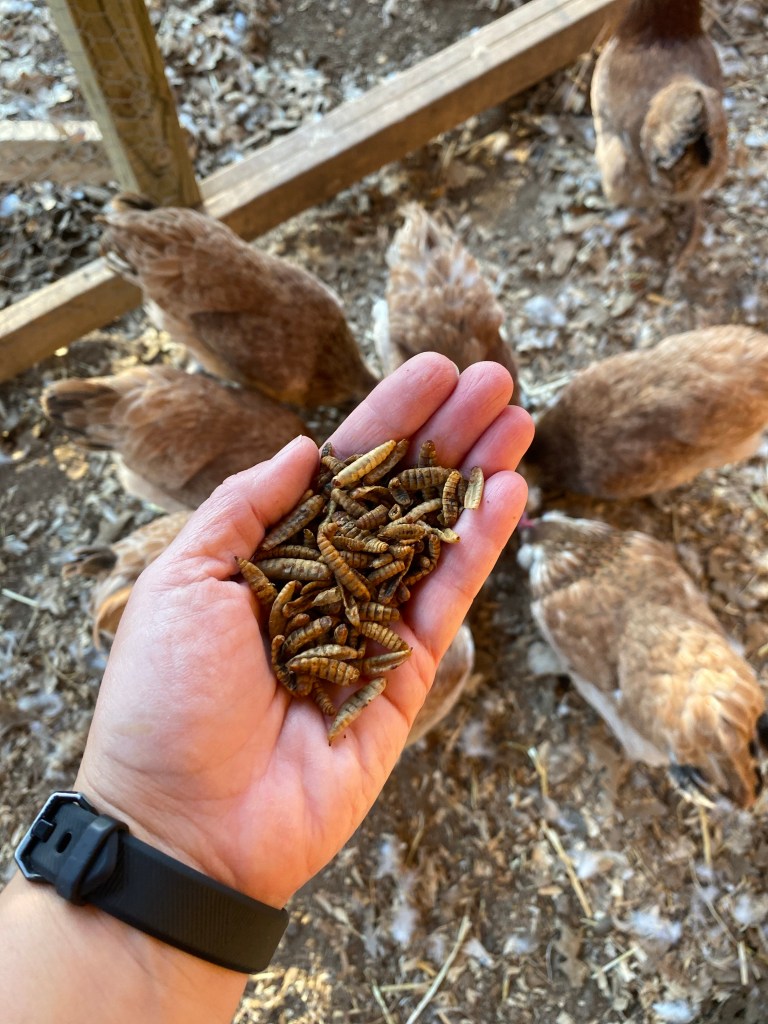
These are the oven dried grubs of the black soldier fly. They have more calcium than dried meal worms, so I switched when I noticed the hens’ eggs were getting thin (back when they were still laying, long, long ago). At first I mixed the grubs and mealworms, then slowly moved to all grubs. Most of the hens didn’t care, but I had two that gave me the stink eye for withholding the mealworms. Happily, after about two weeks, even the recalcitrant birds were chowing down.

Handful of dried grubs

No, I will not be attempting to raise these grubs. Flies drive me bonkers.

I have a hypothesis on the eggless condition of my hens. They have a large spacious coop, and although all the food is outside, they like to hang out inside frequently. I have windows in the coop, but they are north and west facing and don’t let in a huge amount of light. The chicken books says the hens need 12 hours of light to stimulate egg production. I don’t believe in keeping the light at 14-16 hours year round, but maybe I should install a timer in the coop so it is at least light in there when the sun is up.