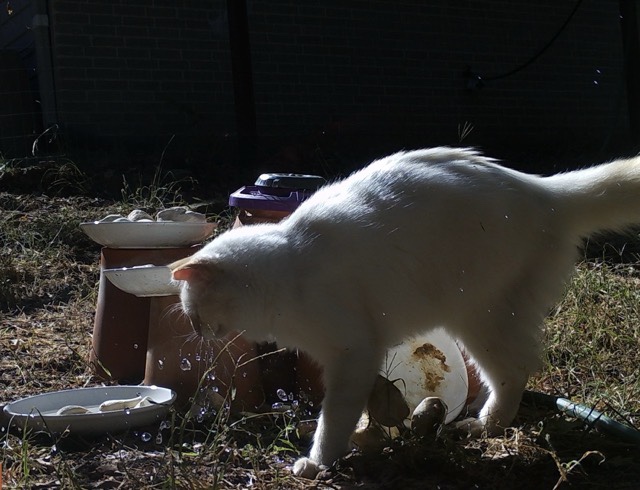
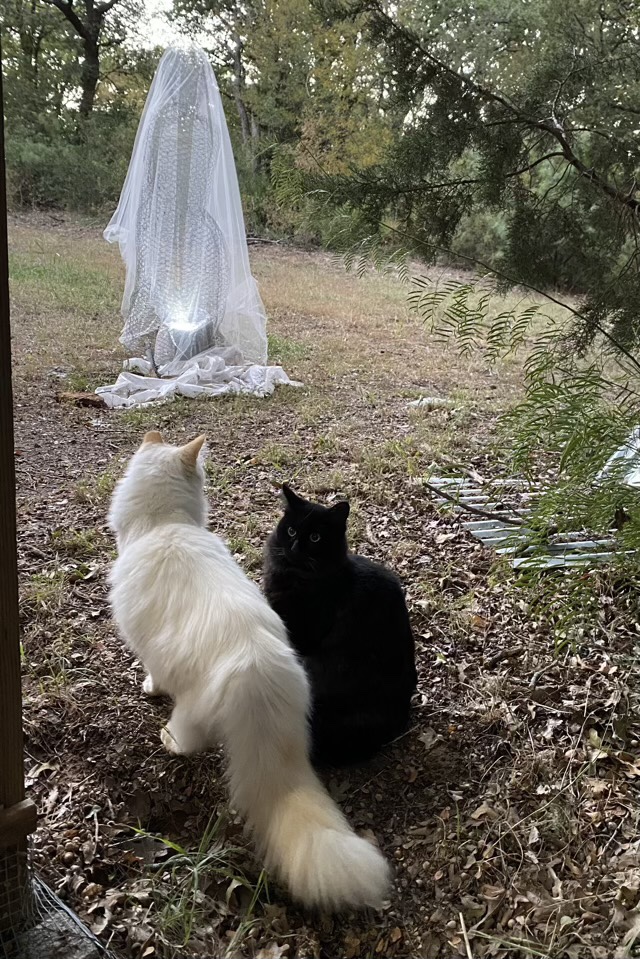
Mr Tom, my neighbor’s cat that likes to hang out in my meadow, also like to stand on the fountain bowls to get a drink. The trail cam caught the image when he tipped over the bowl.
Mr Tom precariously getting a drink of waterThe moment it came crashing down
The trail cam even caught the droplets of water suspended in the air.
I do need to rework the fountain, make it more purposeful and less ramshackle. I’m not sure if that means gluing the bowls to the stands, or doing something completely different. Hm.
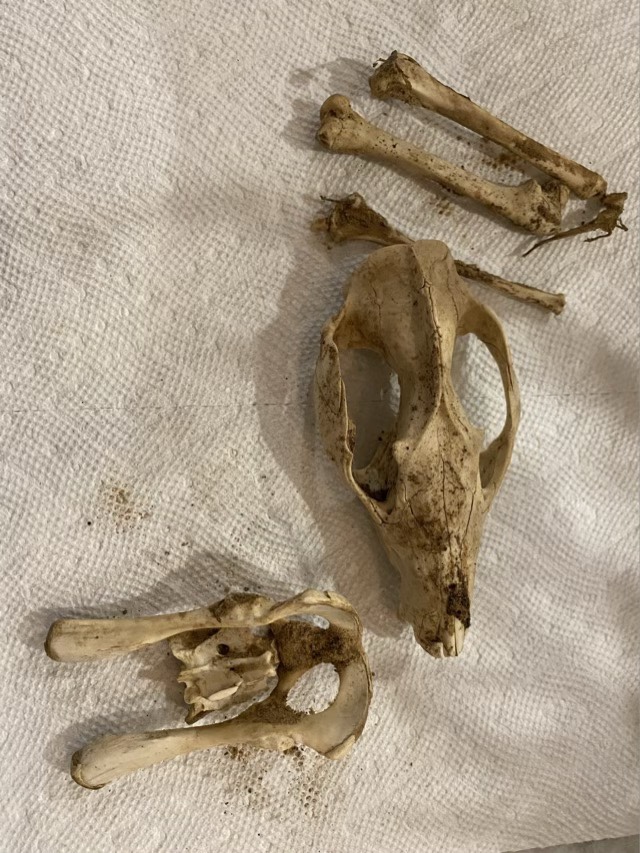
My eldest was following a cat through the back woods and found a collection of possum bones. This is the most complete skeleton that has been found on our property, there was even a vertebrae! The pelvis is a new find as well.
Possum bones
My eldest washed the bones, then soaked them in a 50:50 solution of 3% hydrogen peroxide and water for about 10 hours. When they are dry, the plan is to use them for a color wheel for a school project. Definitely my kid.
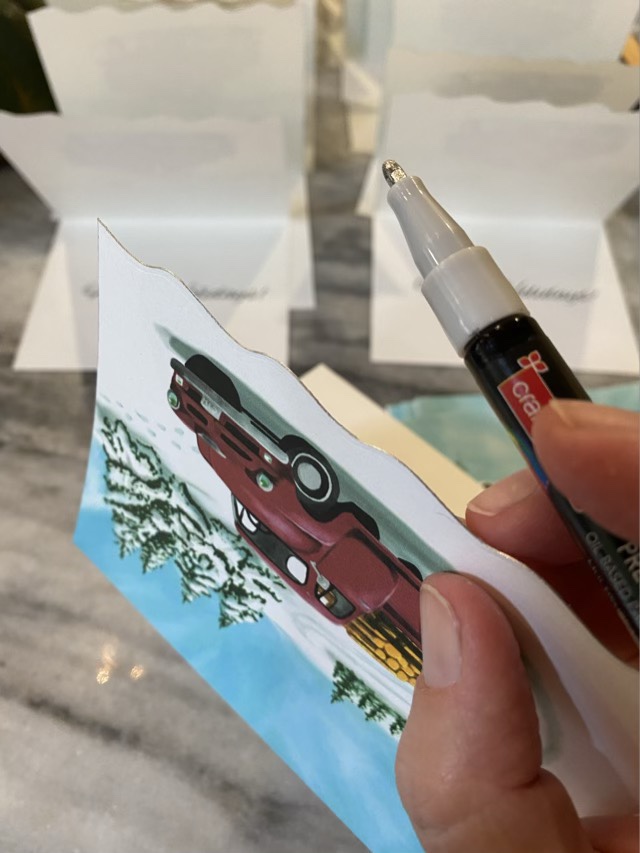
To add a little pizzazz to my greeting card, I ran an oil-based silver marker down the edge of the card stock to gild it. It gives a little definition to the edge, and a flash of sparkle. It worked well, though one pen only covers the front three edges of about 12 cards. This collection was a custom order, but I did a few extra and uploaded them to my Etsy site.
Gilding a greeting card with oil-based silver marker
The term “desire path” is new to me. Merriam-Webster defines it as:
an unplanned route or path (such as one worn into a grassy surface by repeated foot traffic) that is used by pedestrians in preference to or in the absence of a designated alternative (such as a paved pathway)
I went down a whole rabbit hole of architecture choices both embracing desire paths (paving the chosen routes in an attractive manner), and rejecting desire paths (deliberate right angles and tempting grassy stretches with nasty little signs).
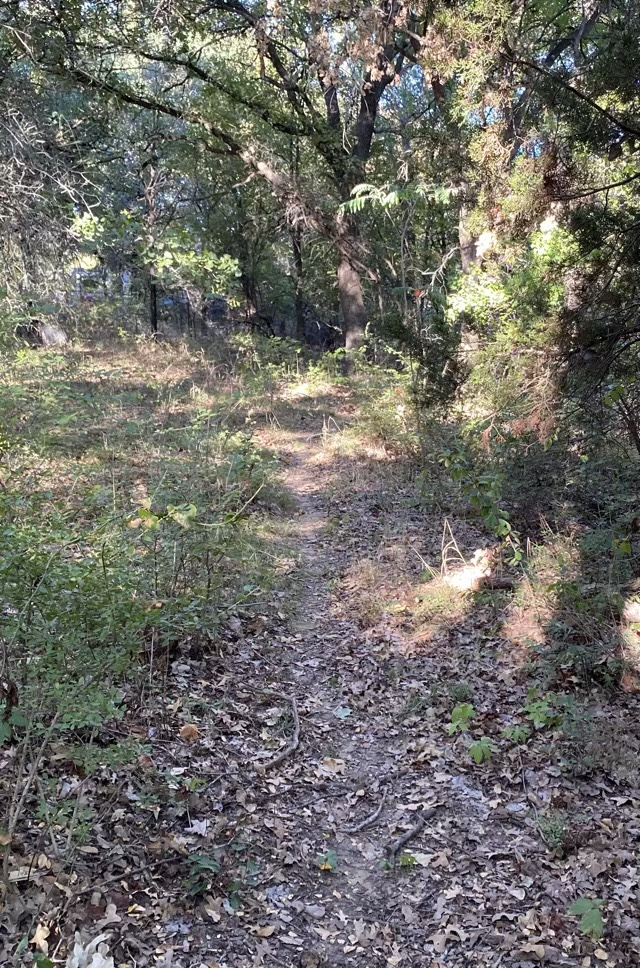
I have ventured back into my woods after my achilles tendon tear a year ago. My paths are mostly traversable especially where the critters have kept up use. They need a good trim, but I was surprised how well I could negotiate the way. The path pictured below didn’t start as a critter desire path, but was forged with the sweep of a motorized trimmer five years ago. The critters like it though.