Sizing

I find knitting and crochet patterns for clothing items very frustrating. There is the whole sizing issue – just making more rows or making the pattern “bigger” does not mean it will fit right when you’re done. Putting hours and hours into a project and then have it not be a useful item is defeating. I’m working on a circle vest, because I like vests, and they are generally easier to fit than items with sleeves. Up until this point I have followed the pattern by LazyTCrochet, checking fit as I went. I used the largest version XL, and added the “Plus size” extensions, which are a joke.
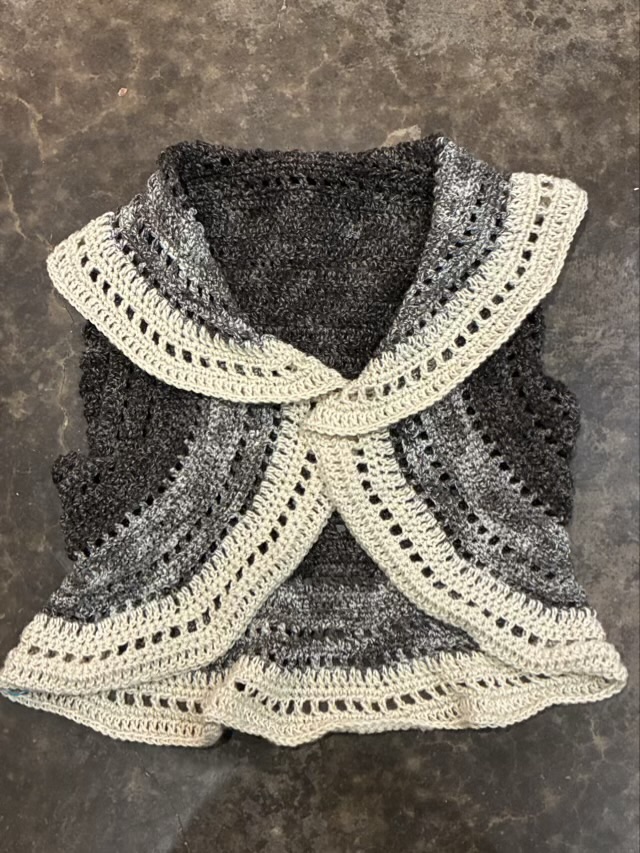
Photo description: circle vest crocheted with hand spun Jacob’s and Teeswater wool with color variation, NOT my pattern

Fitting for multiple body sizes is hard. Most designers add rows and call it “good.” Frankly, there are more body types than XS-5XL (this particular pattern went from S-XL). Arm circumference, bust size, height, arm length, waist size, shoulder to hip, are all so individual. I could flail and complain about pattern designers, but I think it is the crafter’s duty to know their body and learn how to make adjustments to fit. For me, patterns are starting places, they just have to be. For this vest, I’m going to add more rows in the same style as the rest of the vest, not only to balance colors, but to get more coverage. I did purchase this pattern, but it wasn’t expensive (warning sign), but I won’t be purchasing from the designer again.
Wild bird roll call

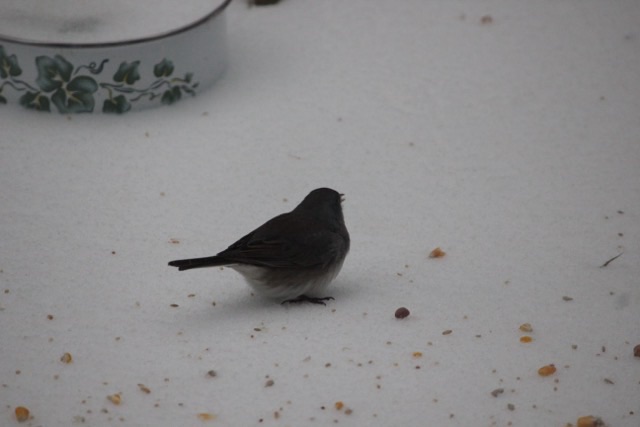
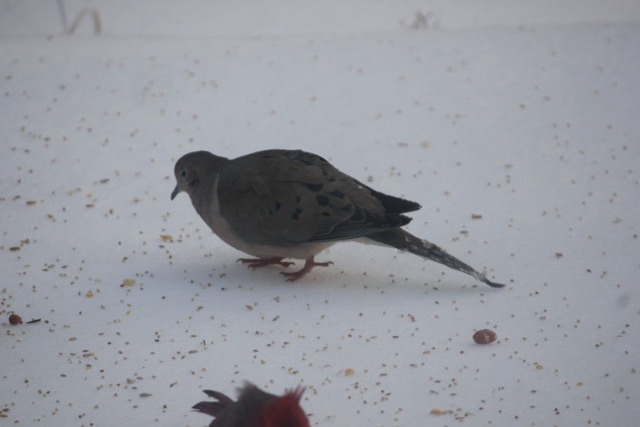
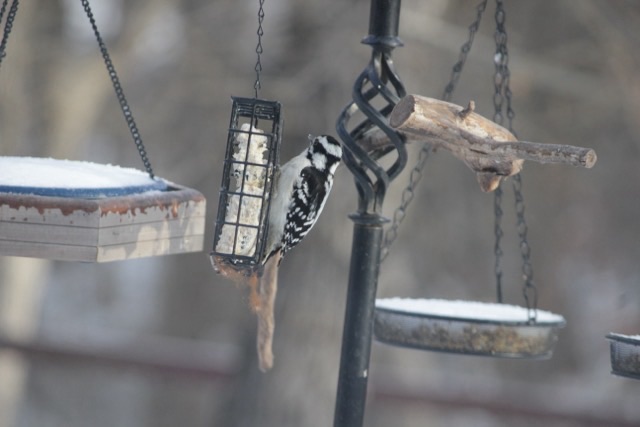
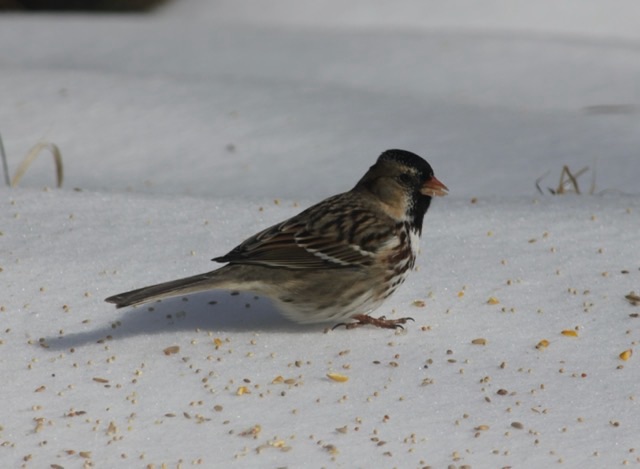
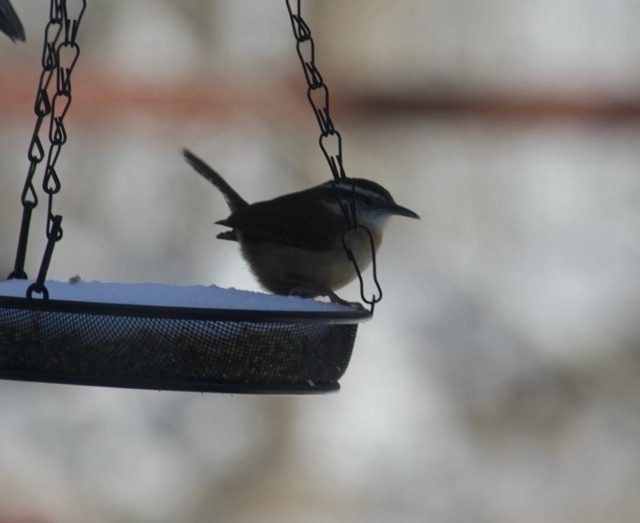
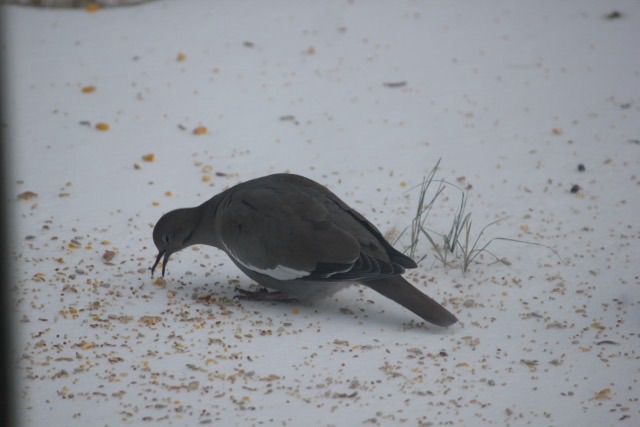
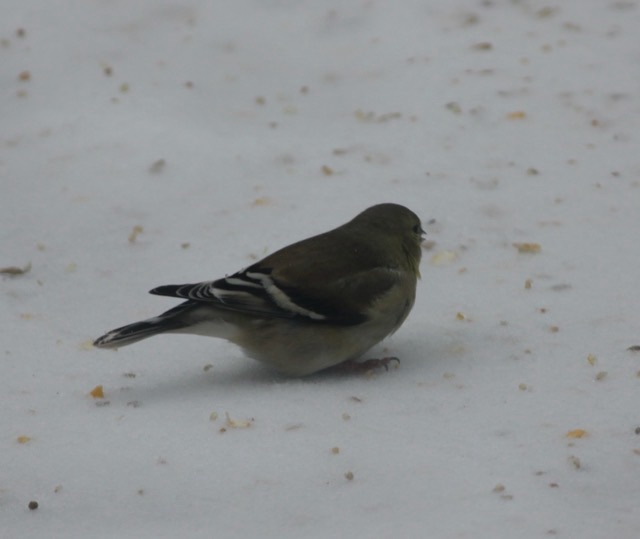
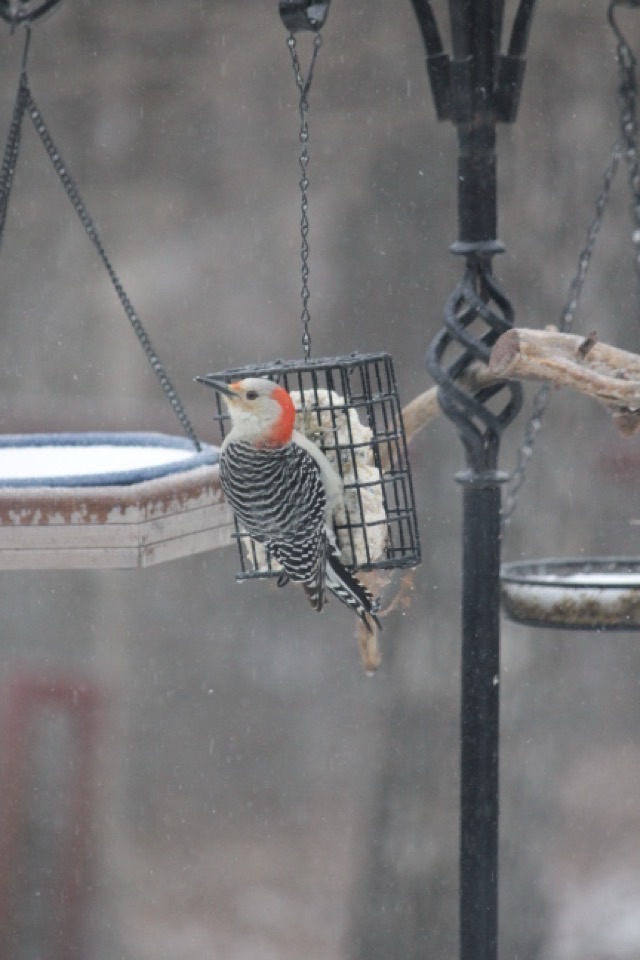
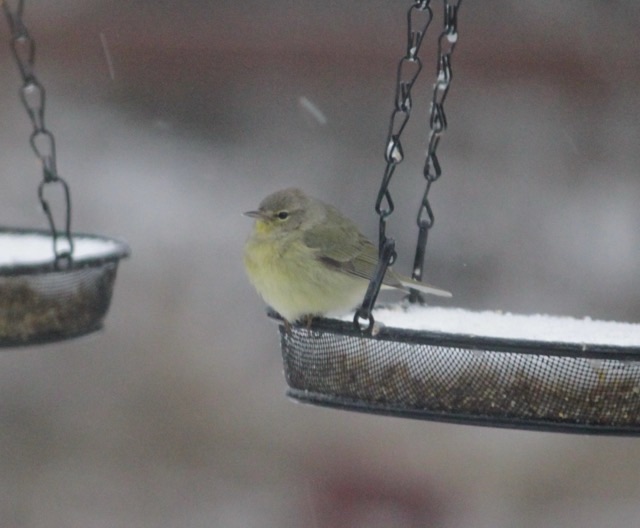
As we sat iced in and watched the birds eat seeds, I took pictures. I managed to get shots of most of the menagerie. The iNaturalist app helped me with identification.

Photo description: red-bellied woodpecker hanging on a suet feeder
Photo description: orange-crowned warbler sitting on a snow covered seed tray
Photo description: dark eyed junco eating seeds on the ice
Photo description: mourning dove eating seeds on the ice
Photo description: female downy woodpecker on a suet feeder
Photo description: Harris’ sparrow eating seeds on the ice
Photo description: Carolina wren sitting in a seed tray
Photo description: white winged dove eating seeds on the ice
Photo description: American Goldfinch in its winter colors eating seeds

I did not get photos of the titmouse, or the blue jay, or the crows. The jays and crows kept their distance, but the titmouse were all over the feeder, so there wasn’t really a reason they did not make the roll.

Snow in Stereo

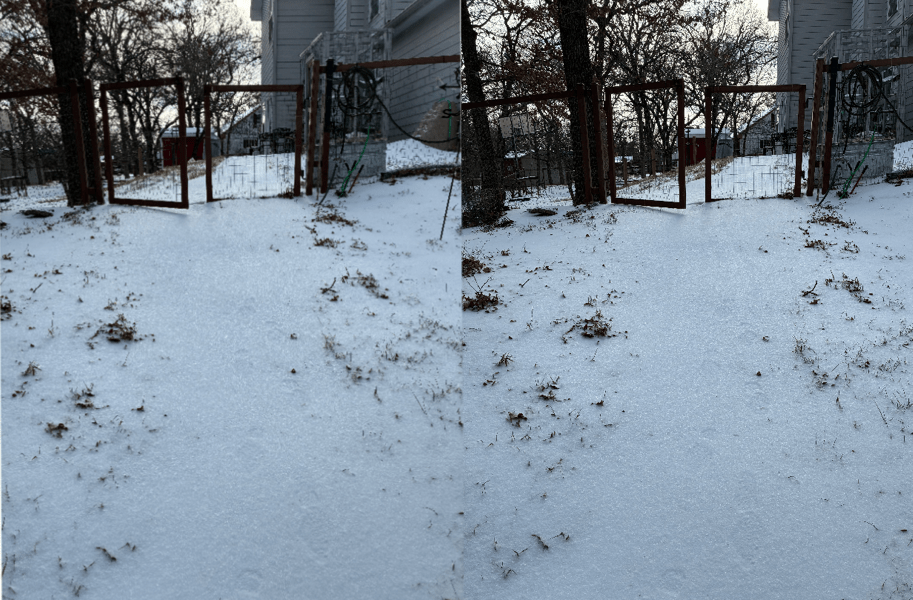
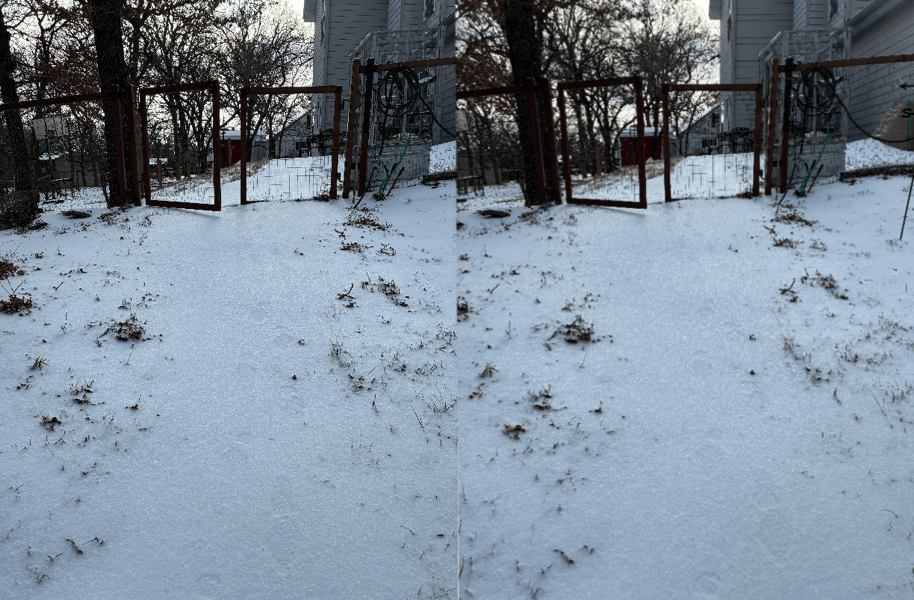
I did stop to take a pair of pictures of foot steps in the snow while I was out checking on the chickens (they are fine, cold, but fine). These are the stereoscopic photos, in parallel view and cross view (which I still can’t see).

Photo description: stereoscopic parallel view of a snowy path leading up to an open gate
Photo description: stereoscopic cross view of a snowy path leading up to an open gate

These don’t have the depth I’ve achieved in other photos. The vast stretch of white probably doesn’t help. The photo really gets interesting in the top third. Hm.

Piebald Dark Eyed Junco

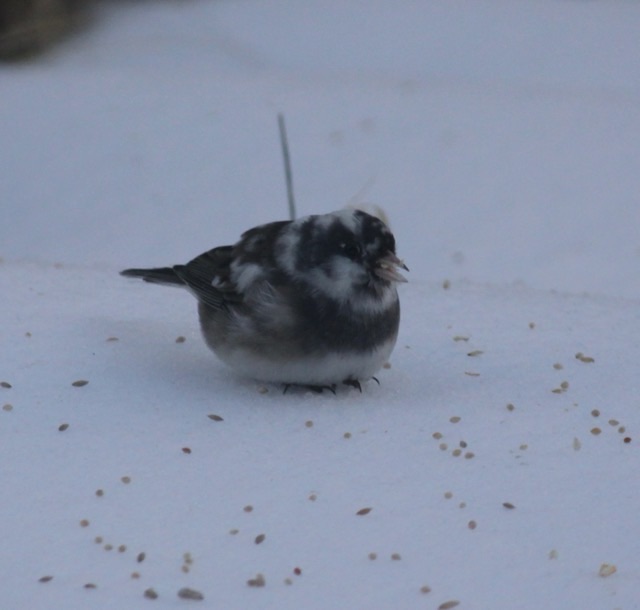
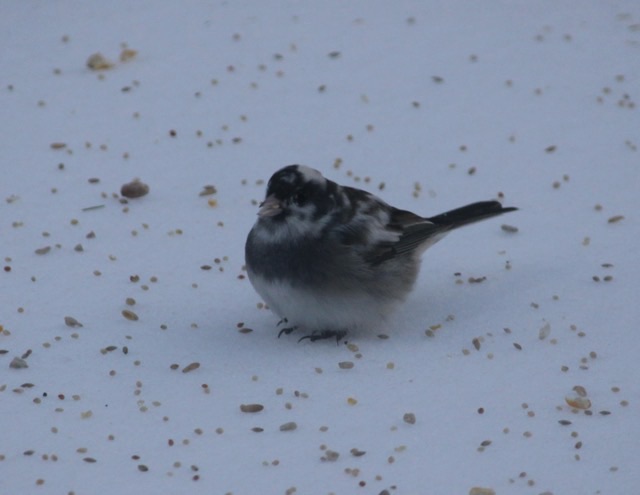
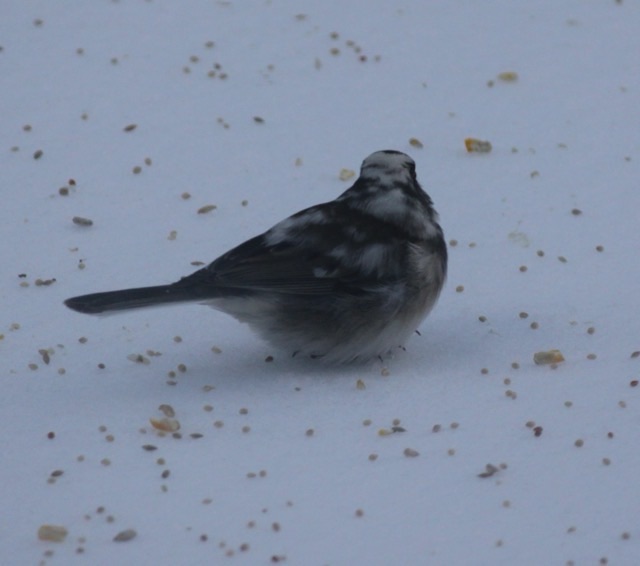
One of the entertainments during the cold lockdown was watching the birds on the back porch. I threw seeds out onto the snow (haha, “snow”, it was solid ice), and we watched from our kitchen table. I saw one unusually colored bird and snapped some photos. SamBiology on iNaturalist figures it is a piebald dark eyed junco. Neat.

Photo description: piebald dark eyed junco front view
Photo description: piebald dark eyed junco side view
Photo description: piebald dark eyed junco back view

Piebald: having irregular patches of black and white.

“Piebaldism is a genetic condition caused by the improper migration of melanocytes during development. As a result, birds develop irregular, unpigmented (white) patches on their feathers or skin, while the rest of their body retains its normal pigmentation.” – Nature’s Way Birds

Spinning dog hair

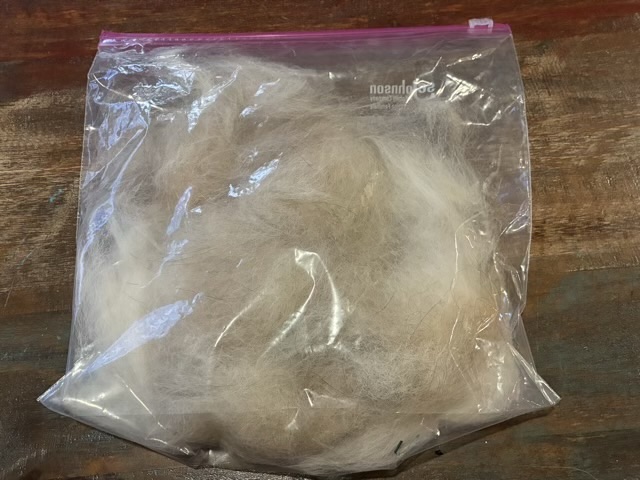
My friend brought me a bag of dog hair! For a spinner, this is an exciting thing, especially when the dog has an undercoat.

Photo description: white and fawn colored dog hair in a gallon plastic bag
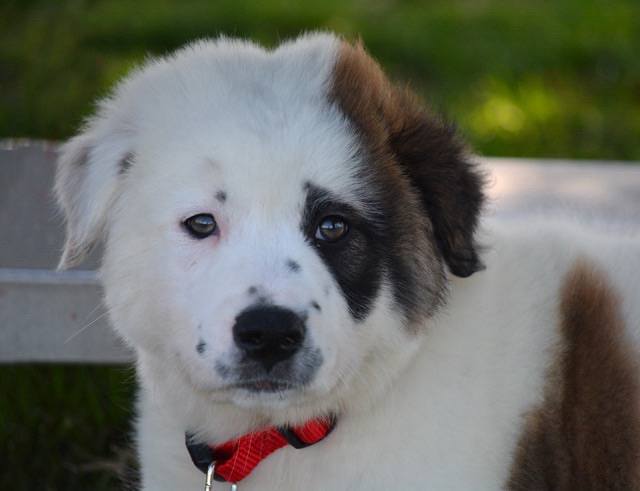
Photo description: Baxter as a puppy. He is 30% Great Pyrenees, 30% Cattle Dog, 20% Boxer, and 20% Belgian Malinois according to a DNA test.

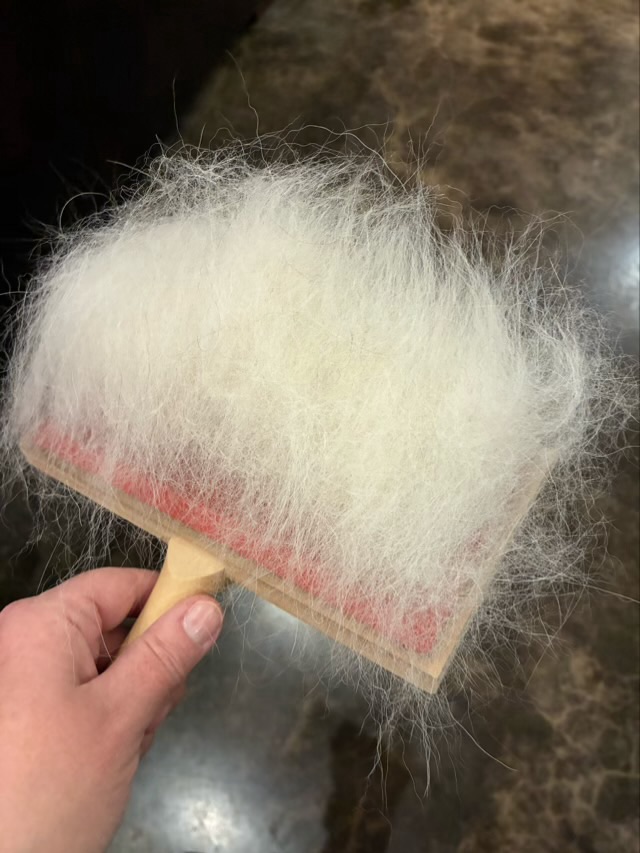
I chose to separate out the white and fawn colored hair, because it didn’t seem right to blend it when Baxter the dog is spotted. The hair was clean with only a slight doggy smell, so I did not wash it. I did card it with a fine toothed set of carders.

Photo description: the white portion of dog hair loaded on one carder
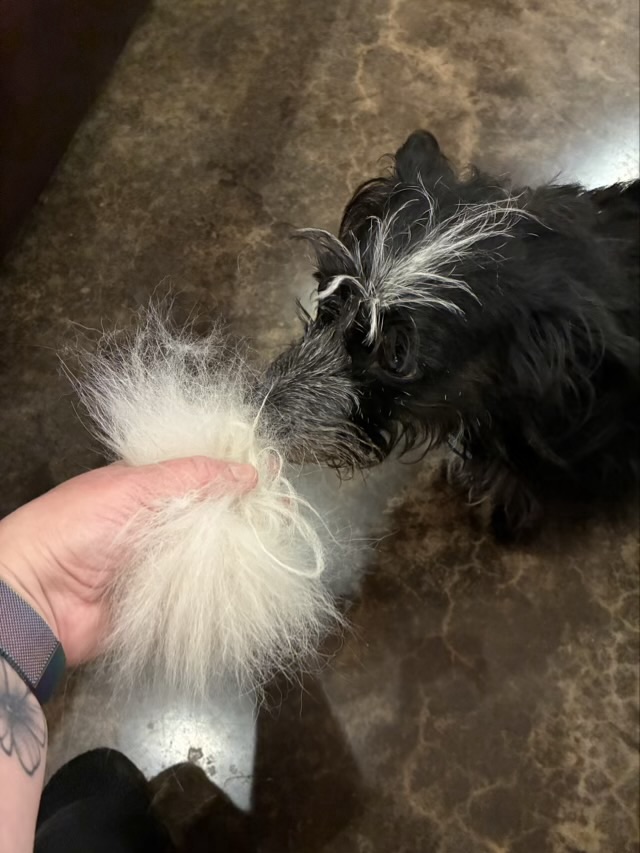
Photo description: Missy the dog is very interested in the smell of the carded fiber. (Her hair smooth and is very, very difficult to spin.)

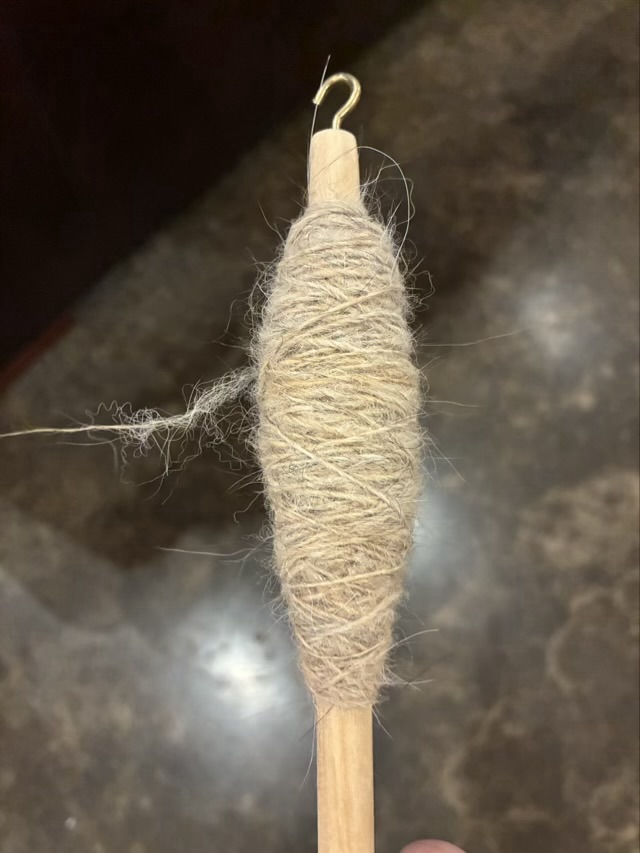
I chose to spin Baxter’s fur with a spindle shaft without a whorl, so I could have absolute control over the twist. It was a moderately difficult spin, not as easy as Samoyed, but still spin able.

Photo description: single spun dog hair on a shaft with cup hook

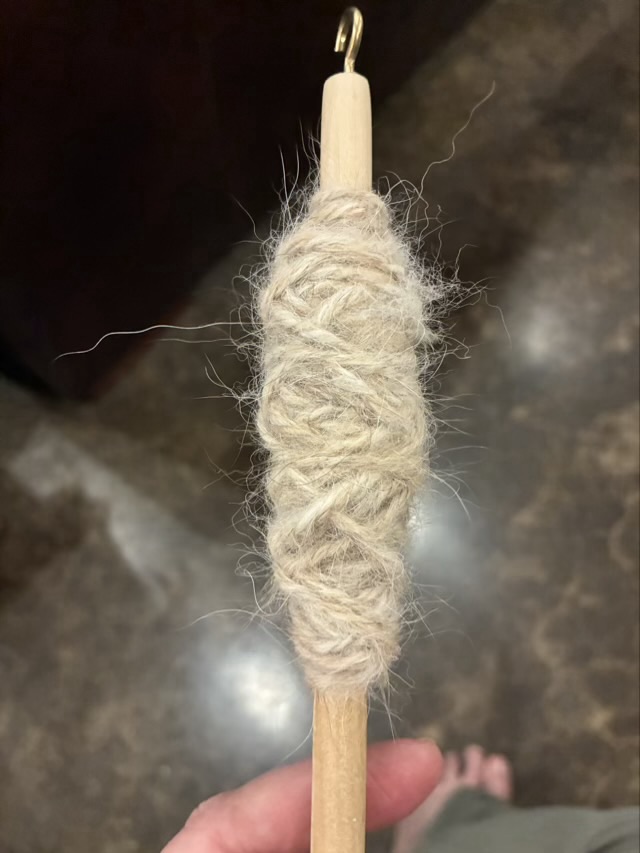
I chain plied the singles to make a three ply yarn. I like chain plying potentially delicate singles because if I do get a break, I can ply it together relatively easily.

Photo description: three ply yarn on a spindle shaft wrapped in a crisscross style

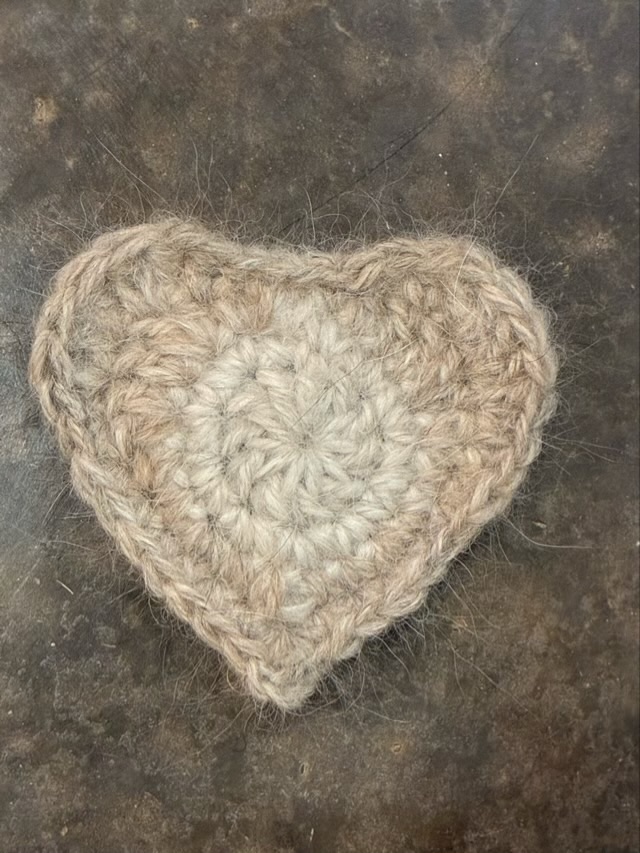
Because Baxter is a beloved pet, I decided to make a small keepsake with this yarn. I crocheted the white yarn in a circle, then used the fawn colored yarn to crochet a heart shape.

Photo description: heart crocheted from two colors of hand spun 100% dog hair

I believe scent is an important link in memories, so I did not block or wash the heart, but instead placed it in a plastic bag to preserve the scent so it will be a comfort when my friend pulls it out in the future.