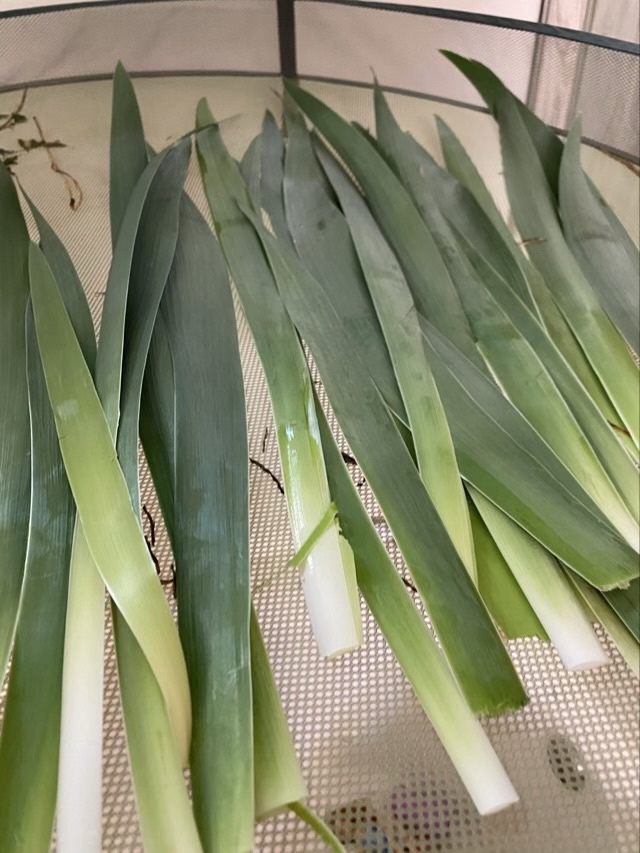
In April I gathered some iris leaves and let them dry inside on a drying rack.
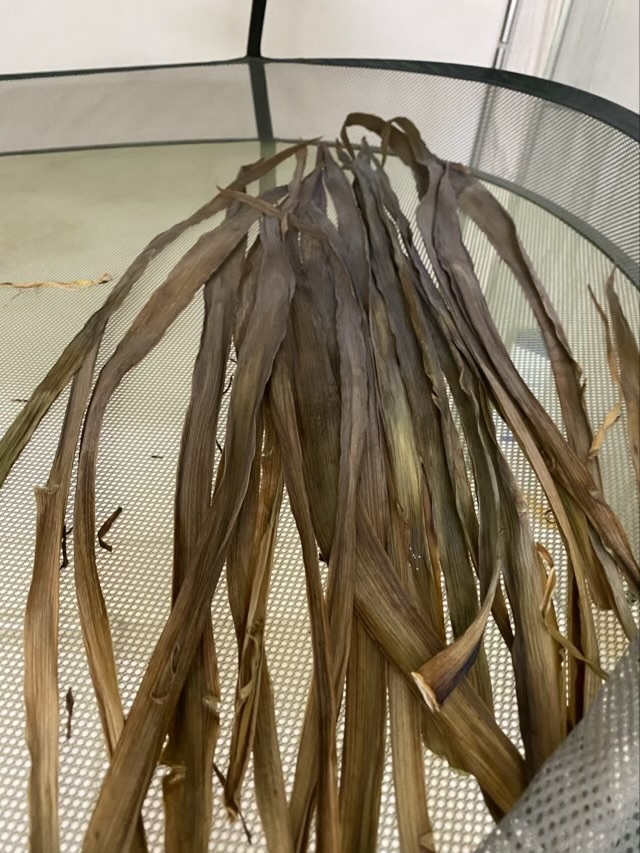
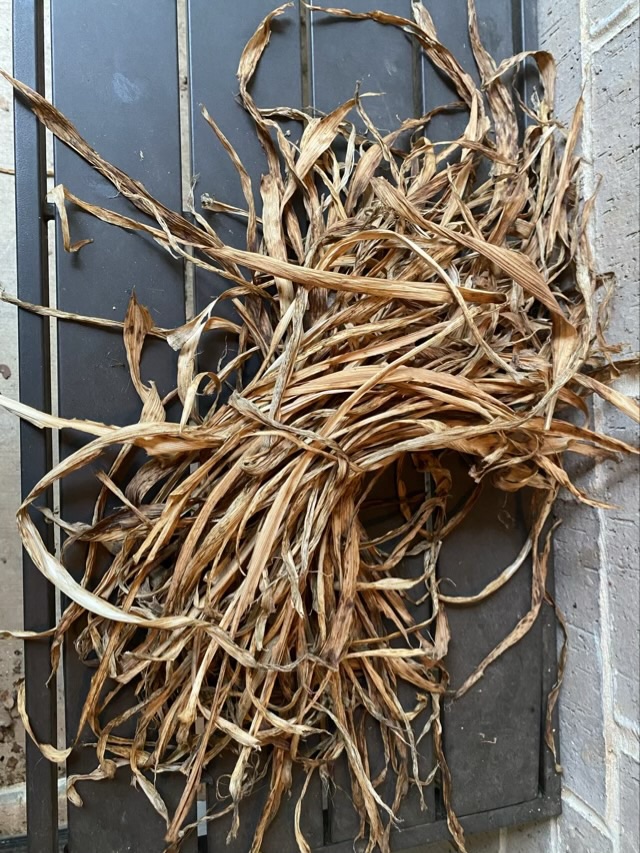
Photo description: freshly picked iris leaves on a mesh drying rack Photo description: same iris leaves after five monthsPhoto description: dried iris leaves gathered from outside in September
I was surprised at the color difference between iris leaves dried inside, and those left to dry outside. The inside leaves are so much darker, but the color is more uniform. The outside dried leaves are more golden, but with streaks of black. What isn’t surprising is the grasshopper bites on the leaves left outside on the plant. There isn’t much grasshopper activity in April, but as the summer rolls through, and most of the other greenery turns brown, the grasshoppers go after the iris.
The next step is to see if there are any differences in how the leaves weave up.
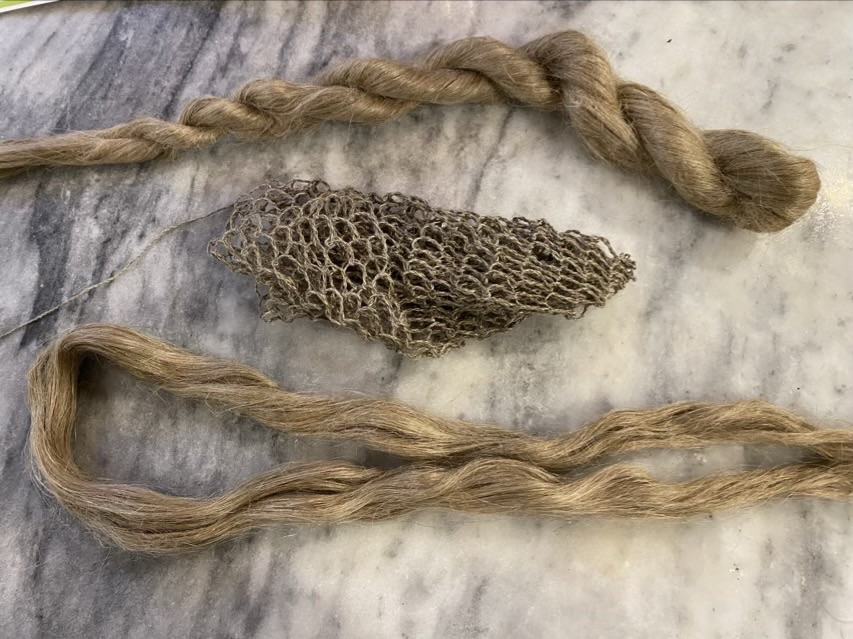
I started a twined loop-and-twist bag from a flax kit from Sally Pointer, historical educator. With the flax strick from the kit, I drew the fibers from the middle, which created horrible tangles of tow flax at the ends. (Tow flax is shorter lengths of flax, line flax can have strands over three feet.) When I ran out of long line flax, I attempted to continue with combed tow flax, which is doable, but I really like twining with long line flax, so I ordered another strick from a local company. I was smarter with this bundle of flax fibers, and actually read the flax passages in “the Practical Spinner’s Guide” book series. I separated out a section of the new flax, and put the rest aside.
Photo description: flax strick (top), twined loop-and-twist bag in progress (middle), smaller section of long line flax untwisted (bottom)
There are several methods of dressing flax to reduce tangles when spinning or twining, I chose to tie a ribbon around and drape the section over my shoulder. I sit on a high backed chair when I twine, so I can keep tension on the fibers by leaning back.
Photo description: section of flax tied with a ribbon to keep the fibers neater
I’d like the bag to be big enough to hold a pound of wool or so. The expansion capabilities of the loop-and-twist bag are quite extraordinary.
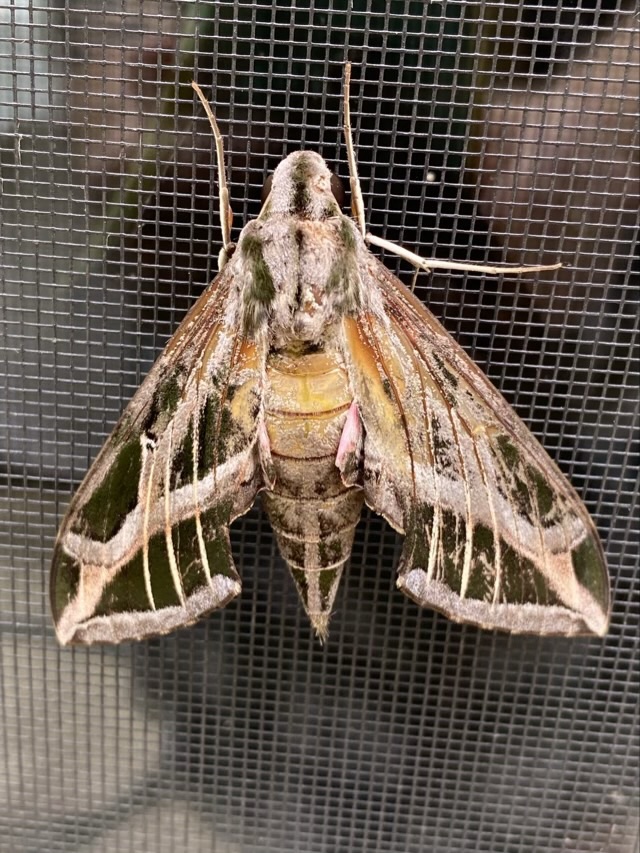
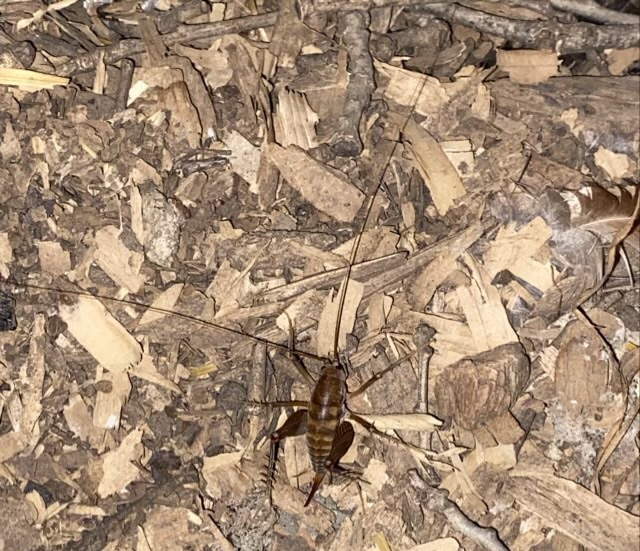
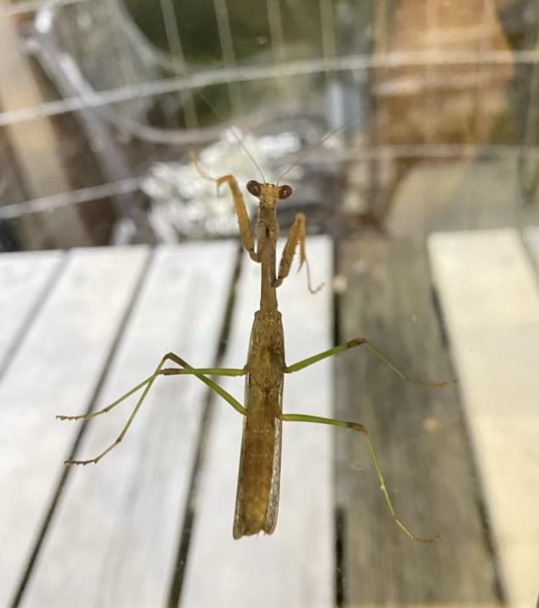
This fall is giving us the opportunity to observe some rather large insects.
Photo description: Vine Sphinx Moth looking a little ragged hanging out on a window screenPhoto description: camel cricket living its best life in the chicken coop at night, the length of its antenna is impressive at 5-6 times its body length, photo taken with flashPhoto description: Carolina Mantis clinging to a glass window, as seen from inside
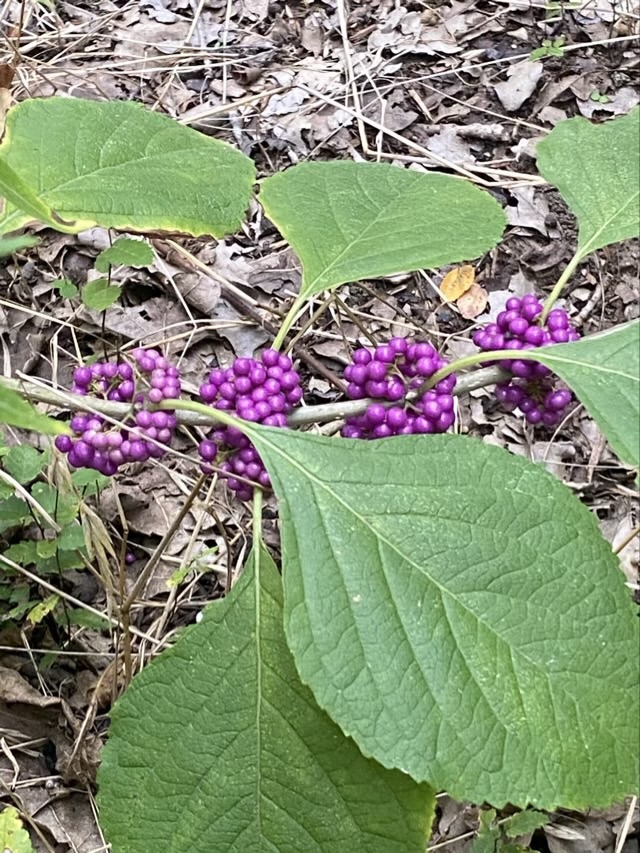
We planted an American Beautyberry last year, and this year it produced fruit!
Photo description: American Beautyberry with clusters of purple berries around the stem and broad serrated green leaves
The berries are edible, and are mildly sweet without much other flavor. I’ve heard they can be used to make jelly, but I imagine it is more for the color than the flavor.
This particular bush lives in a raised glower bed on a more shaded corner of the house. American Beautyberry is known for being shade loving.
I told y’all that I loved that picture of Thor on the Old Man of the North chair. I love it so much I made it a profile picture, and the app gave Thor a thought bubble that said “Share a song”. Now the picture is perfect: music and a cat.
Photo description: gray tabby with a thought bubble that says “Share a song”
Even though the Old Man’s face is obscured, the “wind” swirls still make it aesthetically pleasing.



 Critters and Craft