Convex double walled basket

I’ve made my second double walled basket, this time on my own. I had most of the tools necessary, except clothes pins. I was rather shocked that I didn’t have any clothes pins squirreled away. (I have them now.)

Photo description: soaking a round reed basket mid-weave, I like the way the spokes spiral

I wanted to make a larger basket, so added in more stakes, but the base was curving up too fast, so I switched to weaving from the inside, letting the spokes flair out, and it gave me a lovely convex curve on the sides of the basket.

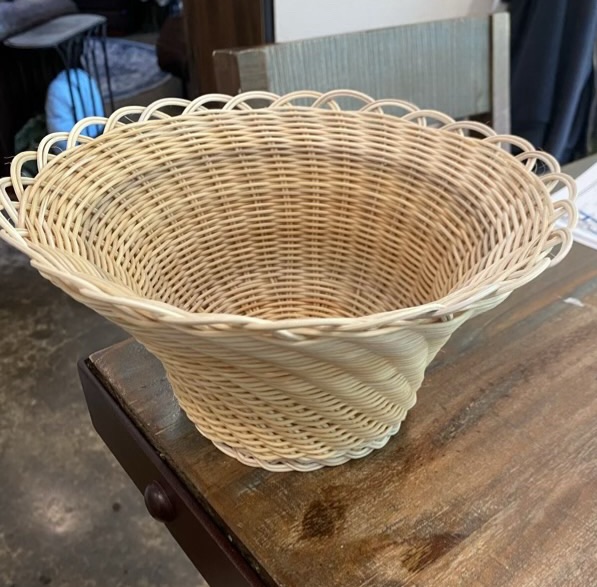
Photo description: weaving the outer wall close to the inner wall
Photo description: finished basket made of #2 round reed (rattan palm)

This time around I followed the curve of the reed on the outer wall, rather than adhering to the grooves of the inner wall, which resulted in a spiral effect on the outside that I quite like. These baskets take me a full day to make, and once I start I don’t want to stop, so I have to plan my time carefully.
Throwback Thursday: crocheted basket

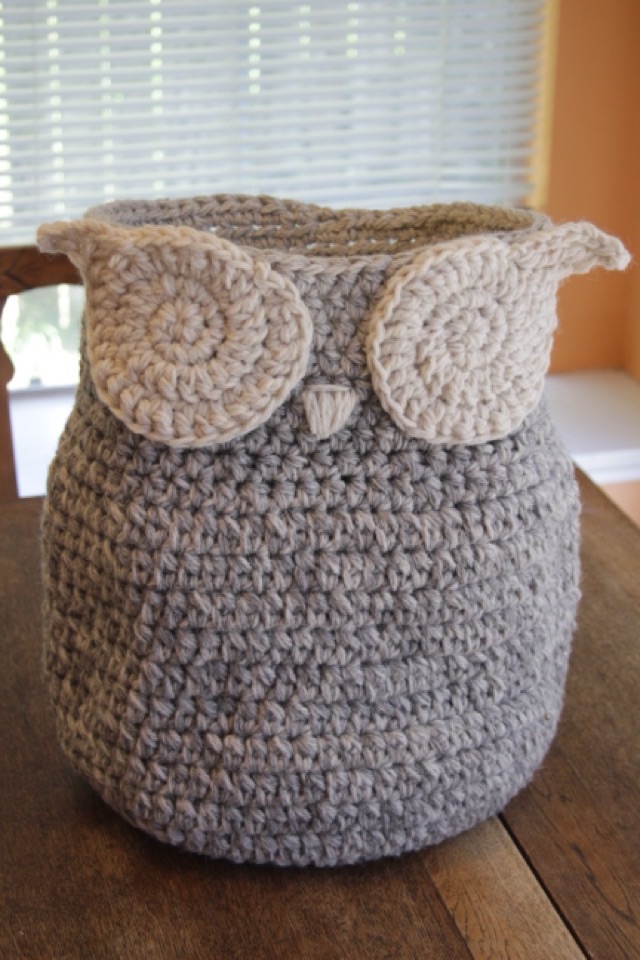
In May of 2014 I crocheted a rather large owl basket for my Mom.

Photo description: gray and white crocheted basket with owl eyes sitting on a table

It stands up well when it is filled with towels. I like the spiral eyes as a choice. I believe I used a wool yarn that I had in my stash at the time.

Small twined bag

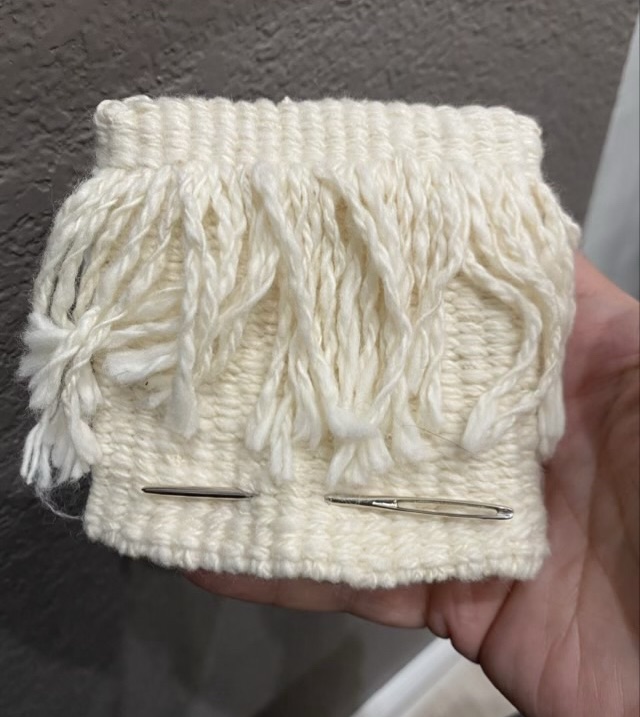
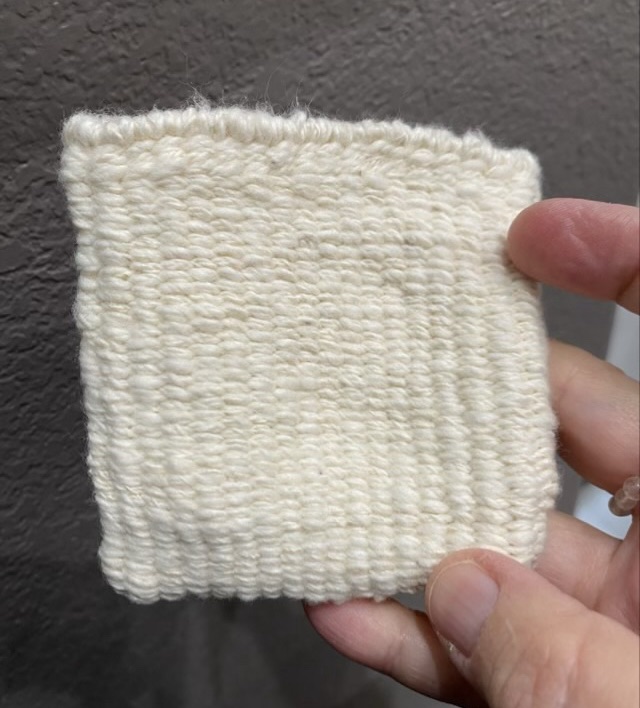
For my North Carolina grown cotton fiber page I had enough hand spun crepe yarn to twine a small pouch. I used a square of sanded eighth inch plywood as my form and twined until I was about square. To finish the bottom, I ran the warp threads up the opposite side of the bag.

Photo description: half the warp threads woven back through about seven rows of twined weaving with the bag wrong side out
Photo description: all the warp threads woven in and the needle used shown
Photo description: pouch right side out after trimming the warp threads

After I wove in all the warp threads, I realized a probably should have knotted them, then wove them in. Since this bag will only be on display in a book, it won’t see heavy use, but it is something I need to remember for next time I twine a bag. The picture of the pouch looks skewed because there is a bias twist in the fabric. I noticed when I started twining that I was actually untwisting the ply, so I switched my twine direction, which reinforced the ply, but gave it extra twist energy. It should even out after blocking.

Reed coaster

I was so excited about learning to weave baskets that I bought a pound of #2 round reed made from rattan palm. As I prepped stakes and weavers from the coiled bundle, I had shorter lengths left over. My weaver friend told me how to make coasters, so I saved the “waste” reed and used it as the stakes for a small weaving.

Photo description: coaster woven from #2 round reed
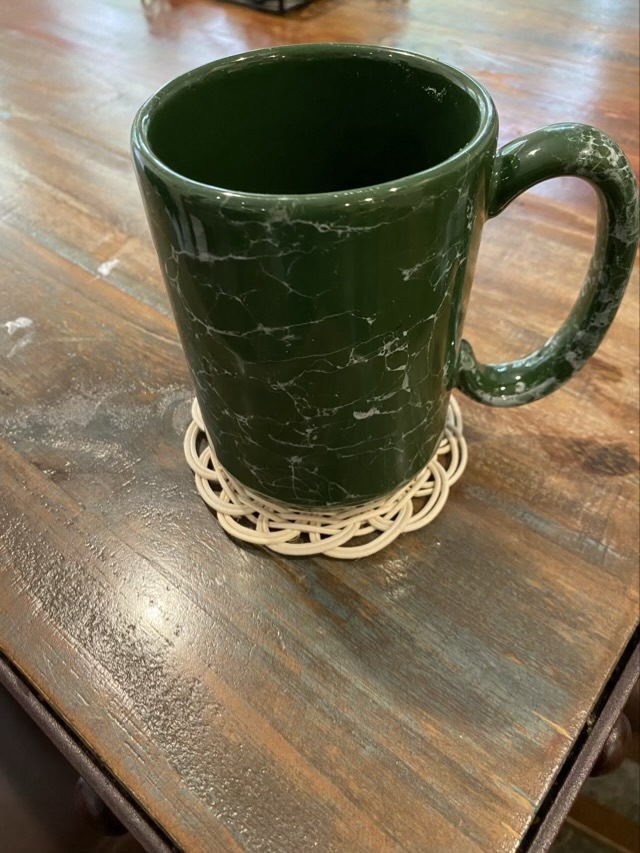
Photo description: coaster in use, with a coffee cup sitting on top

These coasters use shorter lengths of reed for the stakes or spokes, and one long weaver that weaves around the middle. It starts the same was as a double walled basket, but stays flat. They don’t take as long to weave as a full basket, and they seem to make excellent little mats for coffee or tea.

A series of weights

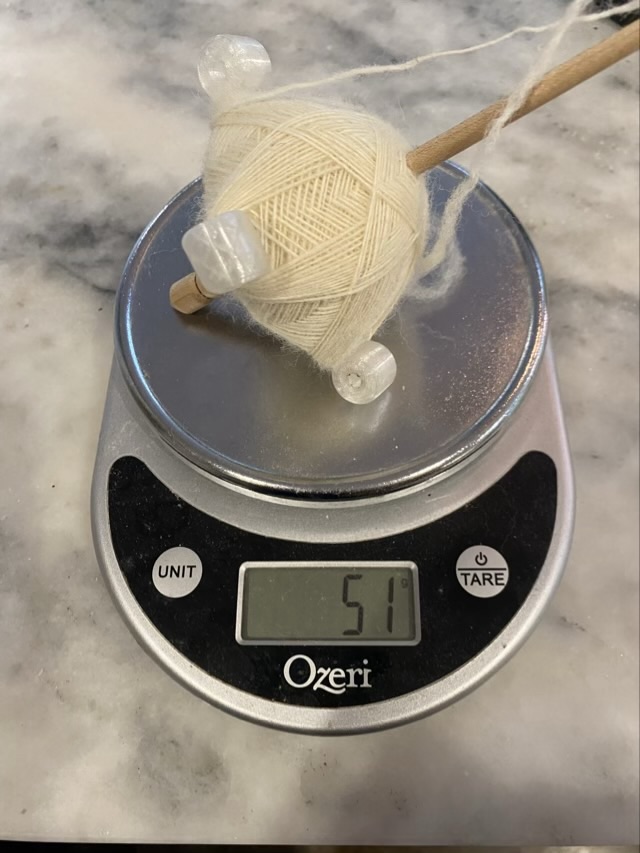
I’m spinning Southdown wool on a 3D printed Turkish style spindle. I decided to weigh my yarn turtles so I can match them (as much as possible) to make plying easier. I started with the weight of the spindle and the single spun yarn.

Photo description: Ozeri digital scale reading 51 grams with a spindle full of yarn on the plate

Then I removed the yarn and weighed the spindle for reference.

Photo description: Ozeri digital scale reading 23 grams with a broken down Turkish style spindle

Then I weighed the yarn turtle.

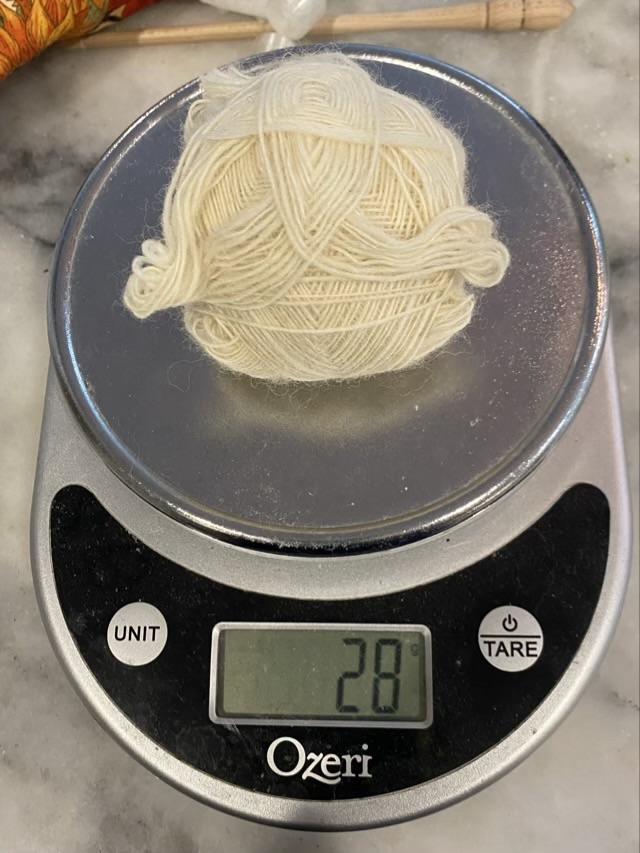
Photo description: Ozeri digital scale reading 28 grams with a ball of yarn on the plate

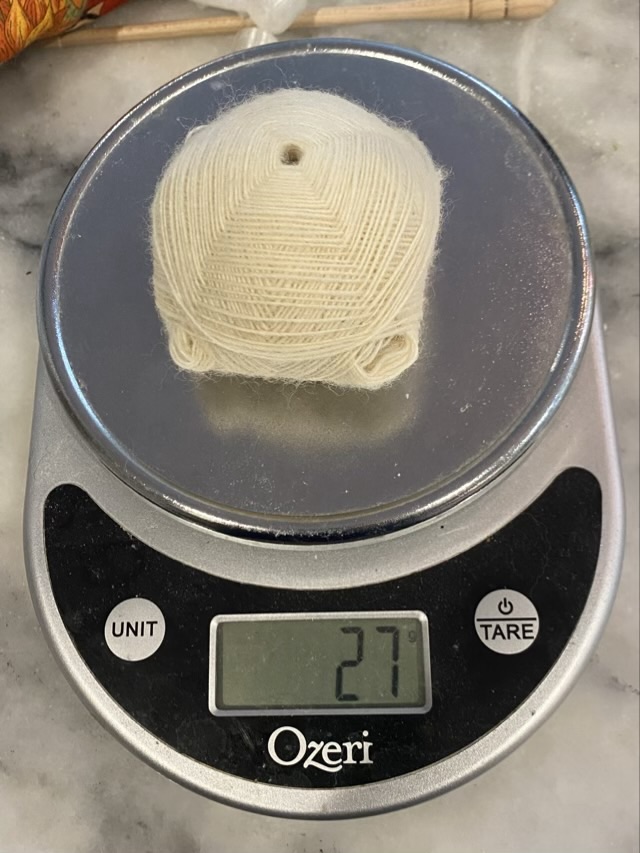
I forgot that if you stop winding part way through a layer on a yarn turtle, the layer peels up. It really needs a full wrap to stay neatly in place while in storage, so I removed the unruly layer, used it to start a new turtle, and weighed again.

Photo description: Ozeri digital scale reading 27 grams with a turtle of yarn on the plate

I have about 113 grams of Southdown roving, so I should get four turtles, if I track it carefully. It will take me awhile, I’m spinning during my walks, so only spin a bit at a time.