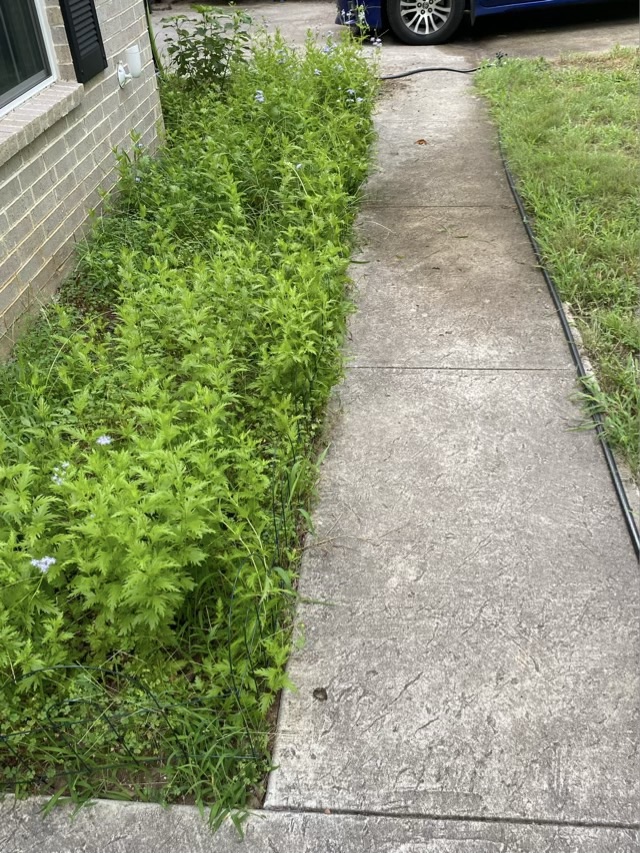
I absolutely love our Gregg’s Mist flower in the front flower bed. We walk out the front door and there are almost always butterflies flitting about, but the plants were starting to encroach onto the sidewalk.
Photo description: Gregg’s mist flower in the flower bed on the left, almost taking up half the side walk in places, Sophie the cat sniffing the grass
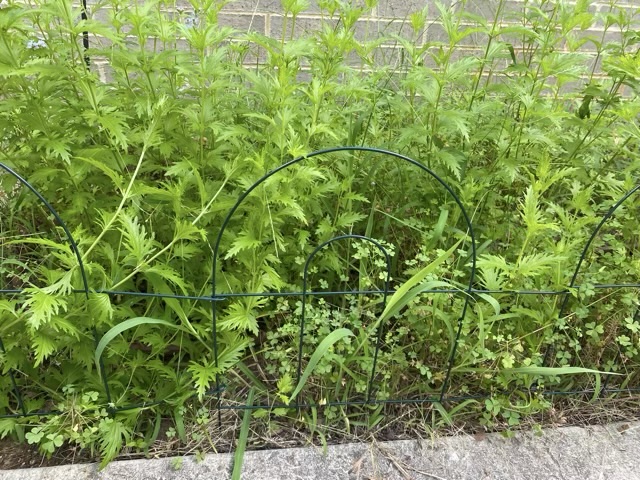
I didn’t want to trim the plants back because the healthiest growth was near the sidewalk, so I found some green wire push-in fence and installed it along the sidewalk. What a difference!
Photo description: Sidewalk clear and Gregg’s mist flower containedPhoto description: Gregg’s mist flower and oxalis (and some stubborn grass) behind an almost invisible wire fence
I like that the fence is inconspicuous. I really like that as the plants continue to grow, I can just tuck them back inside the fence and not have to cut them.
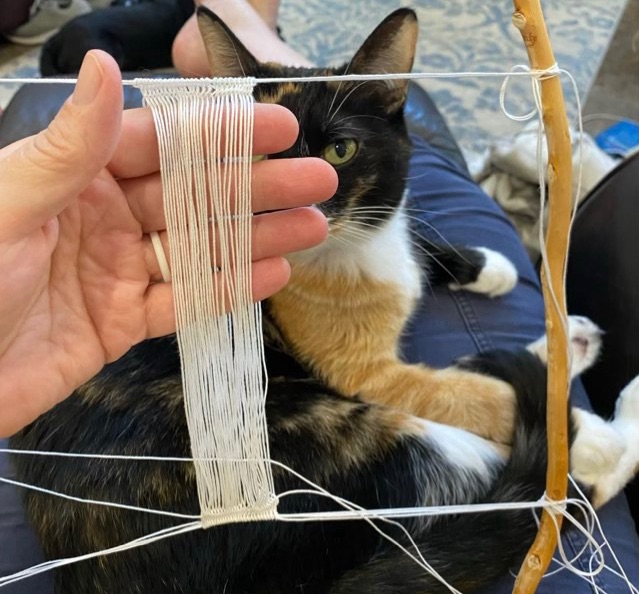
I’ve been wanting to attempt making sprang fabric for awhile now. I even made a small sprang loom from a trimmed elm branch. Sprang is a type of weaving where all the threads are warp threads (vertical), with no weft (horizontal). The threads are twisted around each other and the fabric is worked from the top or bottom simultaneously (what is done with threads at the top happens in opposite to the threads at the bottom). AI tells me that sprang dates back to the bronze age, although it seems like the summary was gleaned from Wikipedia, which at least gives me a list of references that confirm this art is ancient.
I had some #10 crochet cotton next to my chair (crochet is probably my youngest craft), so decided to use that after watching a video from Sally Pointer, who is an accomplished heritage educator.
Photo description: starting to weave sprang, I was warned that sprang holds special fascination for cats, and Izzy the cat was quite enthralled with the many stringsPhoto description: sprang in progress with the loom on the floor and several rows completed
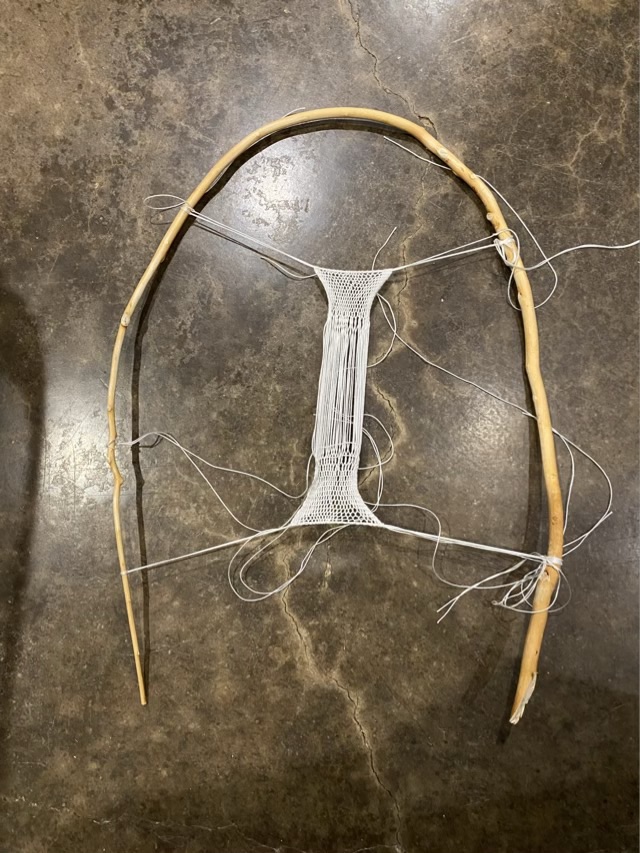
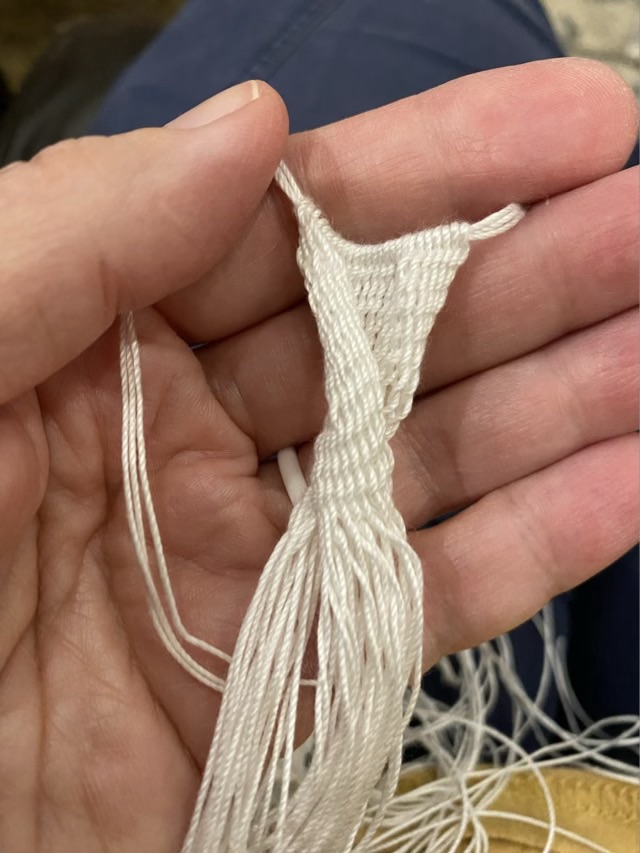
I achieved several rows without too much panic, but then the fabric started to make a hard bias twist that made it difficult to sort where the threads needed to go. I gave up and removed it from the loom, took a picture, and consulted a Sprang group on FB.
Photo description: partially woven sprang made from cotton thread, removed from the loom to show the twist
I was assured that twisting is what sprang does, and to try wool which blocks very well. While scanning the group posts, I also noticed that some weavers secure the edges to the loom periodically, which would also help manage the twist. I was told that narrow bands are particularly susceptible, and another way to manage the phenomenon is to switch twist direction, which is a more advanced technique. I have my marching orders.
In June of 2007 I did a wood and epoxy coaster study for Father’s Day.
Photo description: wood coaster with recessed center filled with symmetrically placed fishing lure, hooks, weights, and swivels covered in clear two part expoxyPhoto description: back side of coaster showing three round carved wooden “feet” and the words “CJH 2007 Coaster Study #1”Photo description: wood coaster with offset rectangle carved out and filled with a slice of polymer clay in shades of blue and gray of a jumping fish, drawn fly hook on a line, all covered in a thick layer of clear two part epoxyPhoto description: back side of the coaster with three oblong “feet” carved in the wood and the words “CJH 2007 Coaster Study #2”
I used a hand held router setup with my rotary tool to carve the recesses and feet on each coaster.
My Dad sent me a picture of the fish coaster, 17 years later, and the coaster has held up well living in a display case. Interestingly, the blue “feather” I drew on the hook has faded.
Photo description: 17 year old wood and epoxy coaster
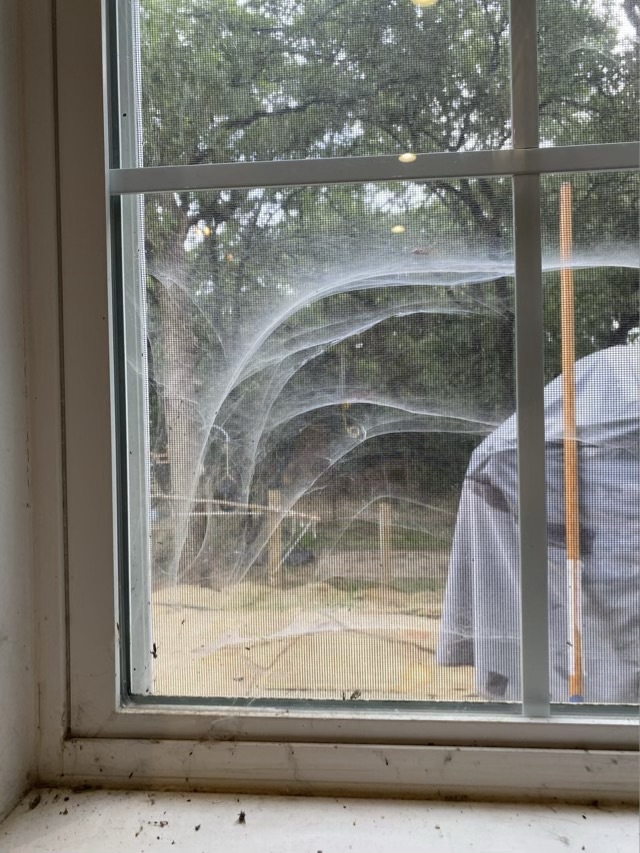
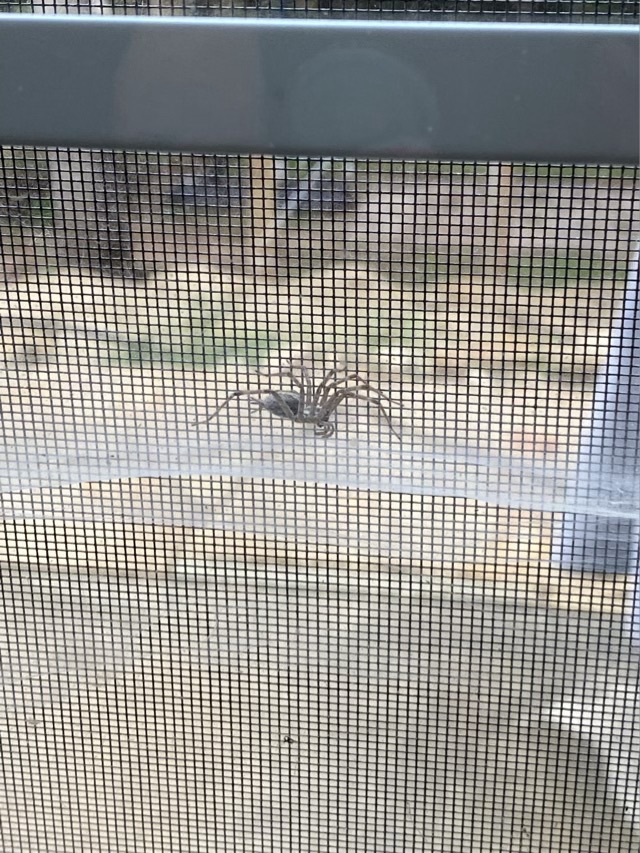
A grass spider setup camp in our window, between the glass and the screen. It must have been catching enough to survive because it grew, and as it grew built several tunnel webs, which gave us a neat view of the structure.
Photo description: grass spider tunnel webs in the window, house spider webs in the inside cornerPhoto description: the grass spider architect
We did free the spider and clean the window after taking pictures. I wasn’t sure big enough prey could now get caught in its web.




 Critters and Craft