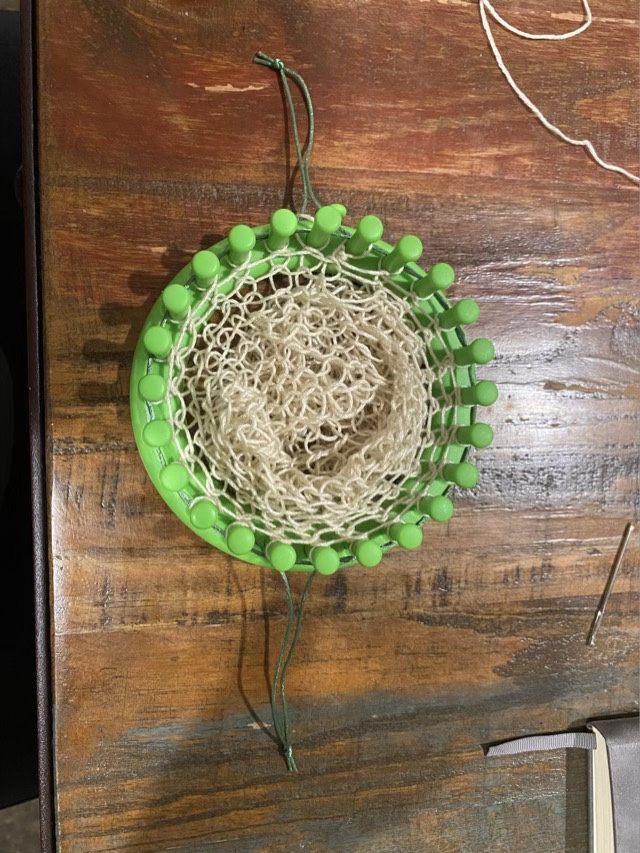
I have found a use for my knitting looms: string bags. I had some acrylic Luster Sheen yarn by Coats and Clark in my stash, and I probably inherited it since the price tag is from Woolworth for $1.49! It is strong and thin, which is great for string bags. I follow the included instructions to start knitting. These looms recommend a twisted stitch, which also works better for bags as they retain their spacing better. After the first pass, I run the tail through the first round to close off the bag. The end won’t completely close until the fifth round or so, but it is easiest to find the loops after that first yarn over. I then continue to knit until I have about 12 inches of fabric, pulled straight. To finish the bag, I run two lengths of satin cord through the last round to make drawstrings.
Photo description: Small round plastic knitting loom with string bag attached and satin cord hooked through each loop on the pegs.Photo description: Same loom shown from the top, with two knotted loops coming off opposite sides of the bag.Photo description: Finished empty string bag with drawstrings closed sitting on a table.Photo description: String bag filled with four large apples, showing how the twisted loop structure stretches.
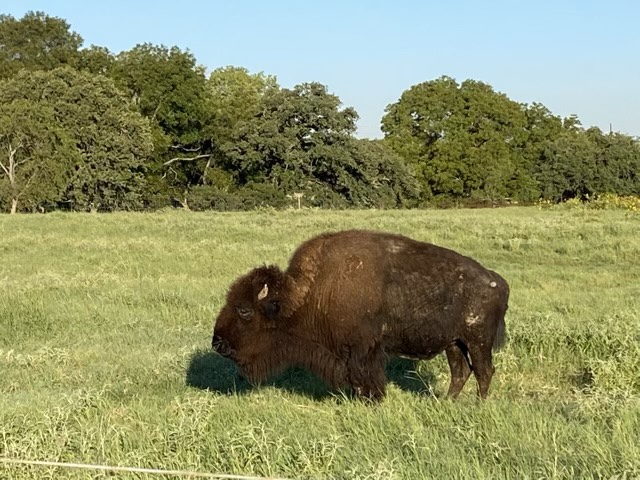
Happy National Bison Day! As an absolutely shameless plug, here is a link to the Buffalo Wool Company, and their list of ranchers and conservators to help you support the growing bison population and local economies!
Photo description: American Bison in a green pasture with a line of green trees in the background and blue skies. Photo taken by me last year at Fossil Rim Wildlife Center
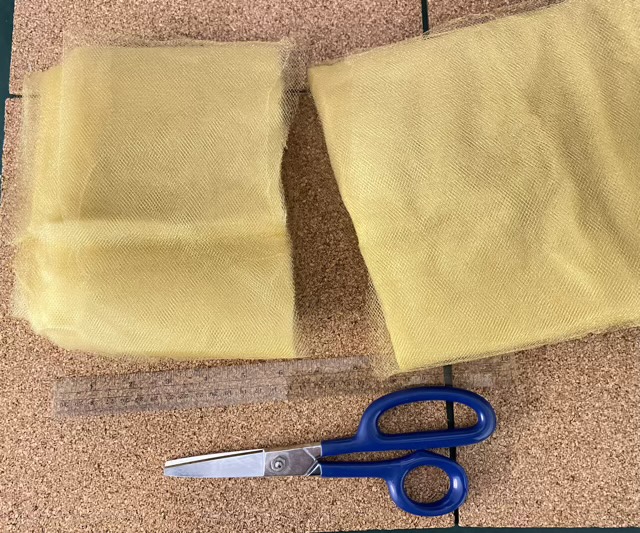
I have been experimenting with nylon tulle fabric (fine mesh fabric, usually in the bridal section). My sewing machine cleaning instructions include using this kind of fabric to gently clean screw threads. If it can handle that kind of work, scrubbing dishes without scratching should be a breeze. I ordered 15 yards, and chose the gold color. I tried cutting narrow strips, but found that sections about 6-7” inches wide worked well to crochet bulky scrubbies. I used leather shears to cut off a section of the bolt. (I’ve since found out that tulle comes in 6” widths in the ribbon section, so we’re going to store that info away for later.)
Photo description: Gold colored nylon tulle fabric folded in bolt form, with 7” cut off one end with leather shears, ruler in front for scale.
The cut strip was double layered, because that is the way fabric is laid in a bolt. To make the material manageable, I wound it nostepinne style on a dowel.
Photo description: Two balls made by wrapping nylon tulle strips around a dowel at a 45 degree angle.
I tried various methods to make the scrubbies, but came back to the basic crochet half-double stitch round. For my skill set, that is the neatest (as in tidy and well formed).
Photo description: Stack of 9 circular crocheted scrubbies, sitting on a table.
To make these, I use a size M hook and start with a magic circle, crochet 8 Half-Double Crochet (hdc) stitches, pull the end tight and slip stitch (sl st) into the first hdc. The second row starts with two chain (ch) stitches, then has two hdc in each hdc from row 1. I crochet the end in as I go. Sl st to beginning the of the row. The last row (yup, just three rounds) starts with 2ch, then 1hdc in the previous hdc, 2hdc in the next, repeat around. Cut material, pull through last stitch, join to first stitch and weave in the end. Easy peasy and fast.
We are finally cooling down here in Texas. We actually had a freeze warning in October, which seemed unusual. I did a few additional things this year in addition to shutting down sprinklers and disconnecting hoses. Basil turns black if the temperatures drop below 40 degrees. In past years I’ve tented the raised bed with plastic, with minimum success. This year I actually gathered my remaining basil and brought it inside to dry.
Photo description: A bundle of fresh basil hung on a utility rack to dry.
I also cleaned out the cat bench and put in new straw. I don’t think any of the neighborhood cats use it, but just in case, it has fresh bedding and a handful of dried lavender to deter bugs. I made this bench with the insulated compartment several years ago.
Photo description: Open hope chest style bench made from 2x4s with two compartments, one lined with styrofoam and additional wood for insulation. Both sections are lined with straw.
Although it would be nice to crochet a custom lining for each round basket I find, sometimes I just fold an old towel in half and toss it over. This works great for Izzy, but for seven-month-old Thor, it is too tempting.
Photo description: Gray tabby behind an upturned round basket with a towel spilled out.
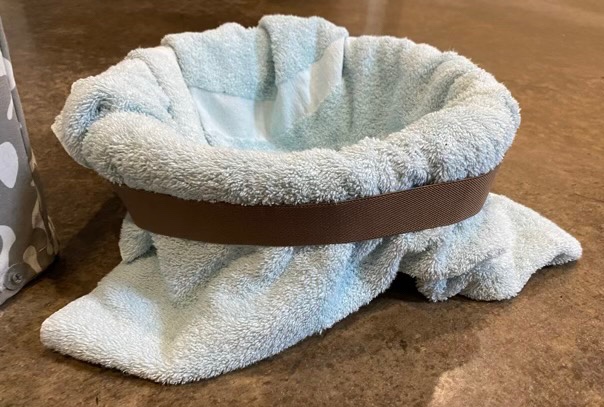
To keep the towel in place and not subject to kitten wiles, I sewed together the ends of a piece of wide elastic to make a stretchy band that goes around the towel and basket.
Photo description: Same basket, same towel, but with a two inch elastic strap around the circumference, holding the towel in the basket.
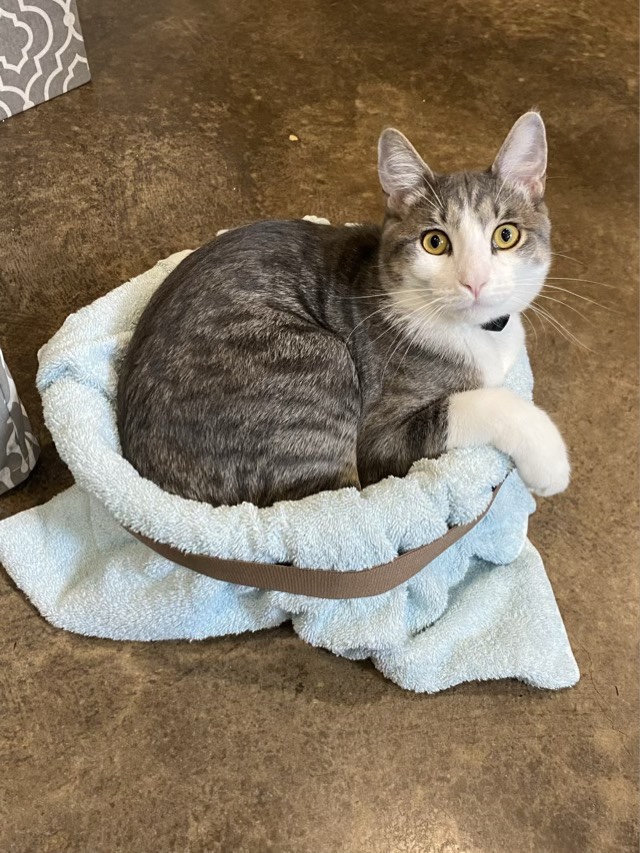
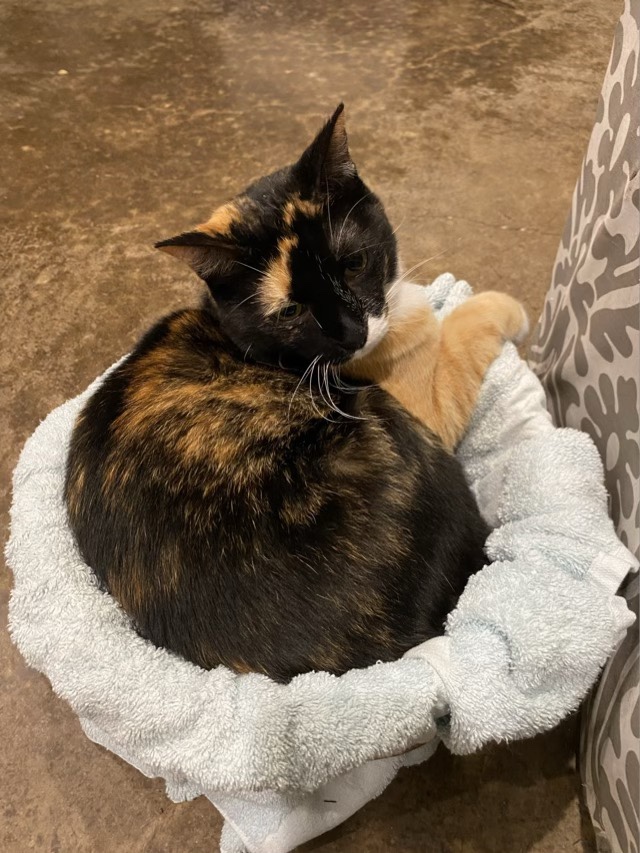
The securing of the towel meets with both cat’s approval.
Photo description: Gray tabby cat filling up the towel lined basket, looking at the cameraPhoto description: Calico cat sitting in the same basket, later.
In my opinion the basket is a little small, but the cats like it cozy. Yes, they are about the same size now, and Thor is still growing.






 Critters and Craft