Microwaves

Did you know that microwaves and wifi use a similar radio frequency? I do now. The way our house is set up, the microwave faces the point of entry for our internet connection, which is where the router lives. Not always, but enough to be irritating, when we run the microwave, the wifi glitches. Moving either is not an option. The router has a dual channel at 5Ghz, and we still experience interference (this is in response to articles like this one that suggesting moving or upgrading.) I have been experimenting with options for awhile. A cookie sheet put in front of the microwave isn’t very effective, by the way. We had the idea of using a fireplace curtain as a kind of Faraday cage, or really a wall. It is an awkward space, so a trip to the hardware store was in order to source parts for a rod, since a traditional rod for fireplaces wouldn’t work. I found pretty copper bell pipe clamps!
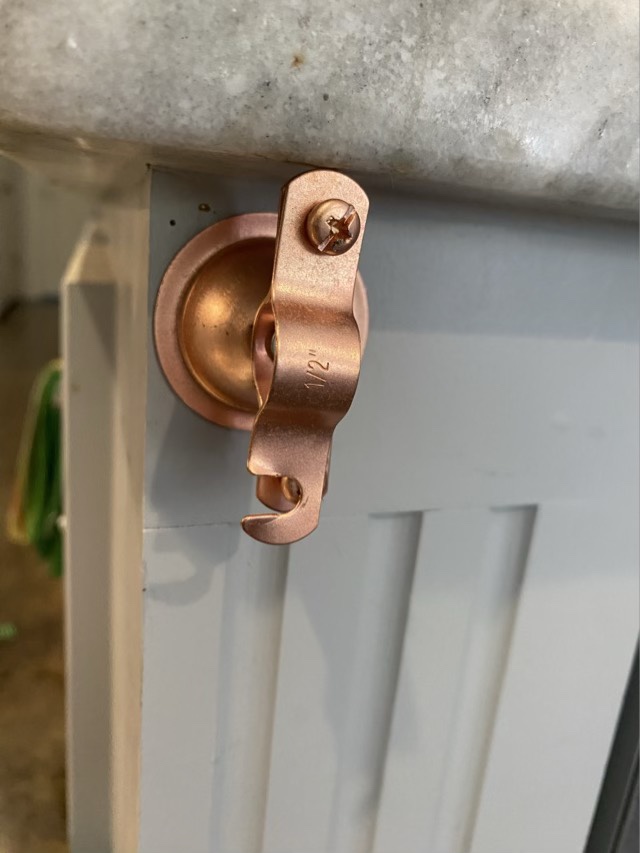
Photo description: Copper bell pipe clamp mounted to the underside of the countertop

I also found steel rod. Unfortunately the smallest pipe clamp was 1/2” and the rod is 5/16”. Rubber spacers to the rescue.
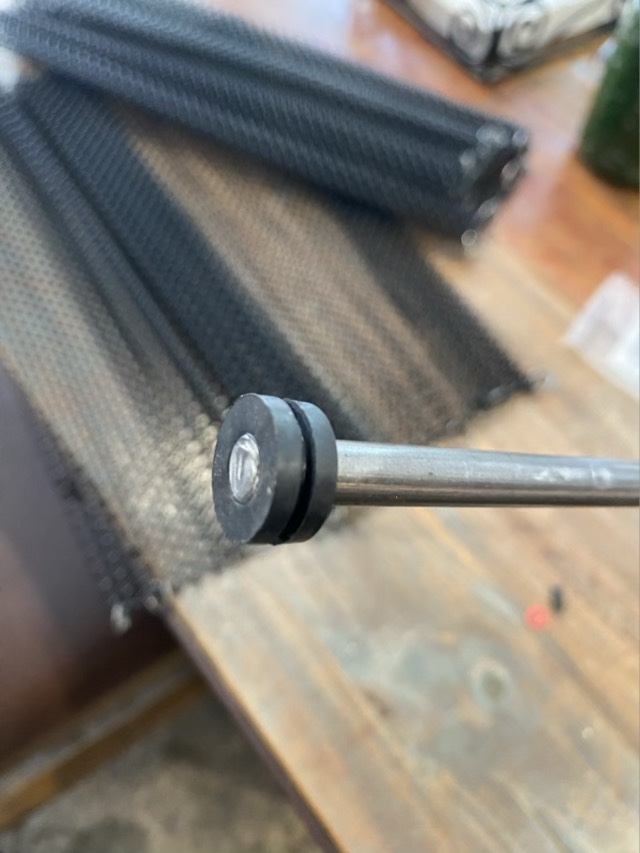
Photo description: In the foreground, a rubber ring wedged onto the end of a steel rod.

I started with just one curtain, since it would fit nicely to the side of the microwave when not in use. I tested, but at home alone in the morning, I couldn’t replicate the conditions (TV worked fine, even live streaming).
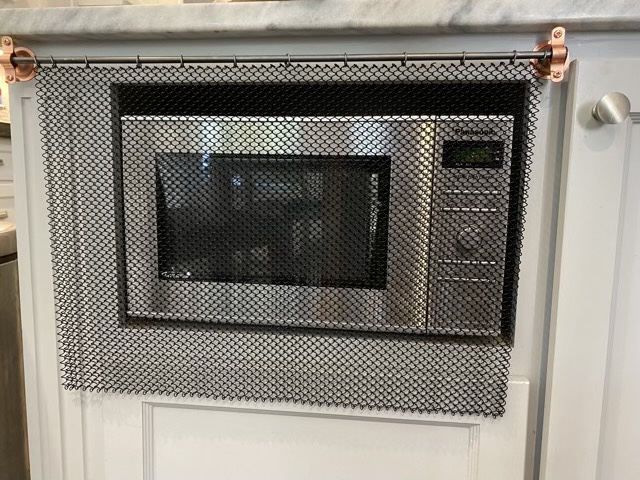
Photo description: fireplace curtain mounted in front of our microwave in a dedicated alcove built in to the base cupboards.

When it was evening, and everyone was drawing bandwidth and the football game was on the main screen, I did another test. Bingo. No loss of signal for the game. However, my youngest still reported her iPad and hearing aids, which connect with Bluetooth, glitched. I installed the second curtain, which makes the setup more bulky, but effectively makes the mesh holes smaller since they aren’t fully open. That did the trick.

Photo description: Two fireplace curtains mounted on the same rod.

Wool nests

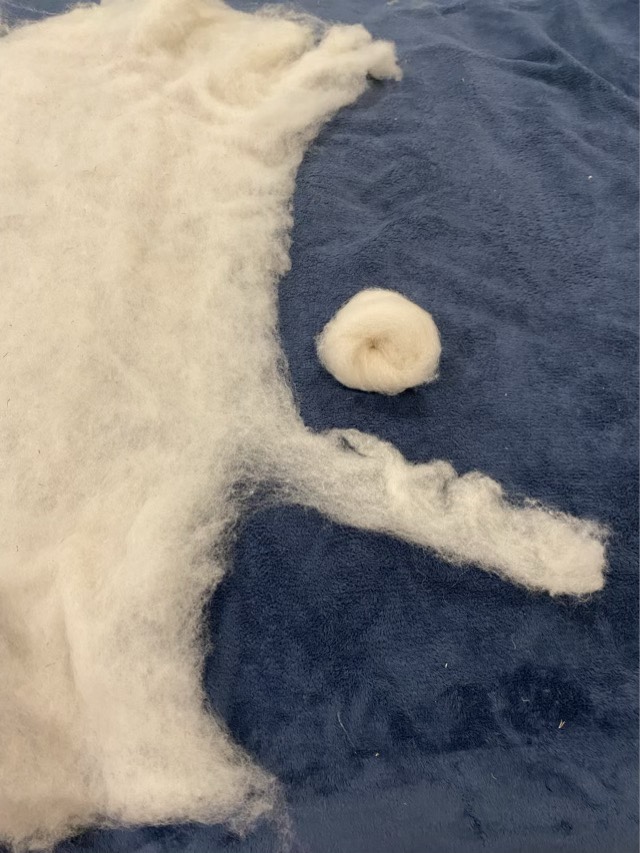
I have some Baize Shetland wool that came as large batts. I’ve been tearing off strips to spin, but decided that it was inefficient to unroll the batts every time, so separated all of the batts into strips and wound them into loose “nests”.

Photo description: Separating a strip of near white Shetland wool from a batt, showing the approximately two inch strip coming away from the main batt, with a hand wrapped nest above.

To wrap the nest, I loosely wrap the wool strip around four fingers, then tuck the end in the middle. The nests stay together, and are easy to grab when it is time to spin.

Photo description: Eleven visible wool nests in a pile.

Corriedale page

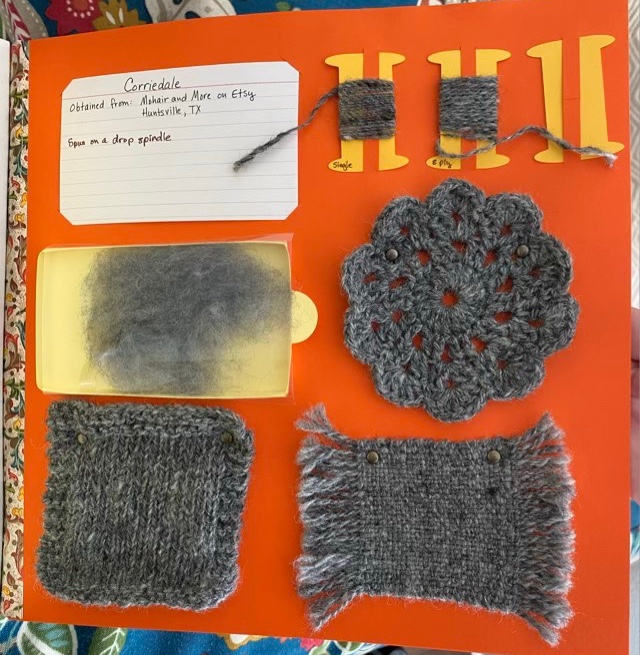
I did a fiber sample page for the Corriedale wool I’ve been using for teaching spinning. The woven sample is my best yet; I started the weaving with a pass of twined weft away from the edge of the loom. My weaving then stayed more even and consistent to the end, where I did another twined pass. The twining keeps the weaving in place better too, so I didn’t need to make knots. If I were making a piece that would see more action than laying in a book, I would secure the fringe better, either with more twined passes, or knotted or sewn fringe.

Photo description: clockwise from top left: 3×5 card with “Corriedale obtained from Mohair & More on Etsy, Huntsville, TX, spun on a drop spindle”; single ply on a paper bobbin; two ply on a paper bobbin; crocheted lace round; woven sample with two salvages; knitted sample with garter stitch edge; sample of un-spun fiber

Corriedale is very nice to spin, has a nice feel, but isn’t the softest. The blended dark and light fibers make it easier to see the twist, which is why I like it for learning.

It bloomed!

Our Texas sage bush bloomed! This is supposed to be a sign of coming rain, but it has not panned out. I’m pleased to see blooms, though. This little bush has seen some trauma; it originally lived in the flower beds by the house, but that was too much water and its roots were wet. Not a happy plant. When a freeze came through and we thought we lost it, we moved it to the meadow, just in case. We were quite surprised when the following spring it sprouted leaves. That was two or three years ago; this is the first time it has bloomed since the transplant.

Photo description: light purple blooms on a Texas Sage (Leucophyllum frutescens) with trees and the chicken coop in the background.