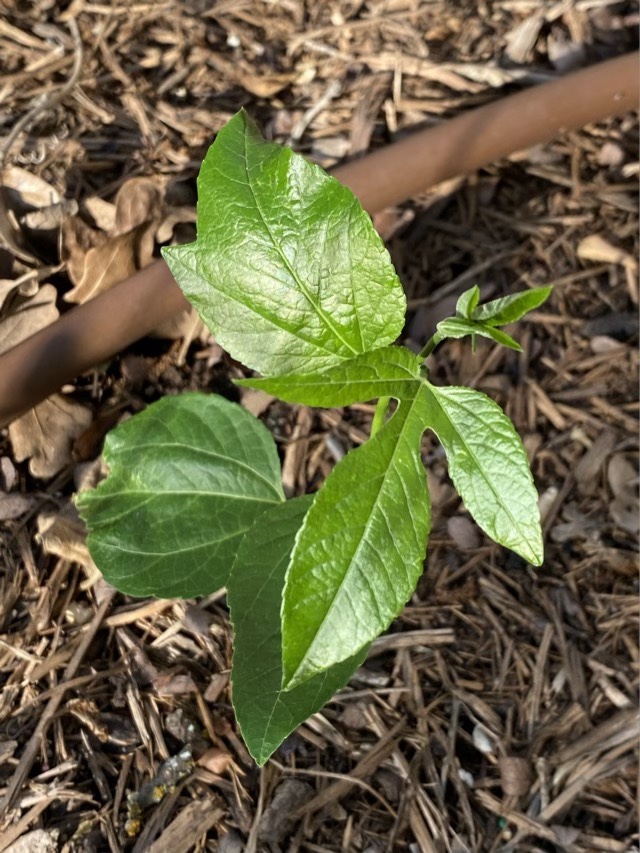
Of the three passion vines we planted last year, it seemed only one survived the winter’s freeze. Then I noticed a leaf. It wasn’t the same kind of leaf as the surviving passion vine, but it looked vaguely familiar. As we have had many plant volunteers turn out quite well, I am leaving (leafing, haha) this one to see what happens. A few leaves later, and it looks like it may be a passionflower. The three-lobed leaf looks like the other variety we planted, just about two feet from either of the original planting locations. Either one of the seeds took, or the roots are spreaders. I’ll take it!
Passionflower leaves
A few days after I took this photo, I noticed that a tendril had extended at the top of the plant. Another encouraging clue!
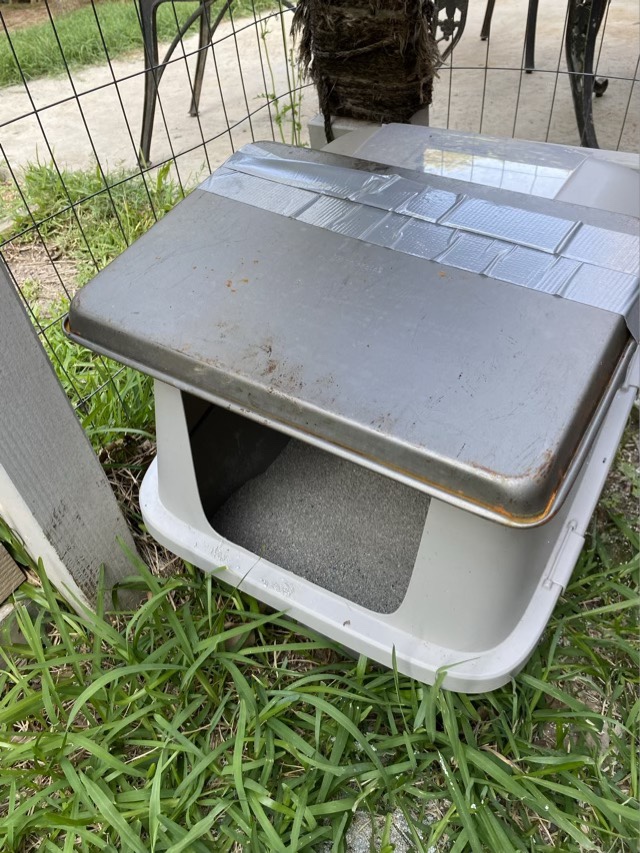
Izzy the cat’s favorite litter box is the one in the catio. I’ll admit, we didn’t discover this for years; poor kitty had to do her business inside until we finally placed a box outside. Then the rain came. Scoopable litter is really gross when it gets soaked in rainwater. Even though there is a cover on the box, the lid design is not good for outdoor use. As this is the biggest litter box I’ve found, I decided to fortify it to keep the rain out. On other blogs, they will show you cute little huts they built with coordinating paint and curtains. Here, you get the duct tape version. With an old baking sheet.
Outside litter box protected from rain with an old baking sheet
If you don’t want it to move, use duct tape. This is not an elegant looking solution, but it did the job. During our biggest rain storm this year, the litter stayed dry (at least from the rain).
I was digging through my yarn stash and found yet another inherited unfinished object (UFO). This one I found in my husband’s paternal grandmother’s basement, along with the yarn.
Unfinished doll sweater
Not sure why the project was abandoned with only one sleeve left. A bit of trial and error led me to US size 6 knitting needles, and I could feel the seam in the other sleeve, so knew it was knitted flat then sewn up. I counted the visible stitches and added two for the seam. I knitted the sleeve from the top down, ending with a few rows of ribbing.
Very fuzzy inside
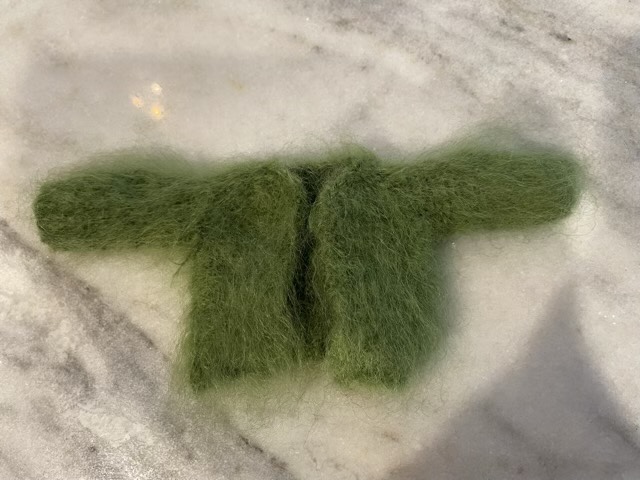
There was more mystery about the little cardigan; the inside was very, very fuzzy. Was it brushed? What was going on? Some insight occurred when I knit the sleeve. The yarn had a long halo (fibers that stick out from the spun yarn), and when knitting the garter stitch, those long fibers hung out on the purl side of the garment because of the mechanics of forming the stitches. So the inside was significantly more fuzzy than the outside. Some time rumbling about the bottom of several yarn stashes probably helped the condition as well. After finishing the missing sleeve and blocking the cardigan, I decided the fuzzy must be embraced. I turned the sweater inside out and gave it a brush to raise and align the fibers. It is so fuzzy, the inside out seams don’t even show.
Finished sweater, inside out, blocked, and brushed
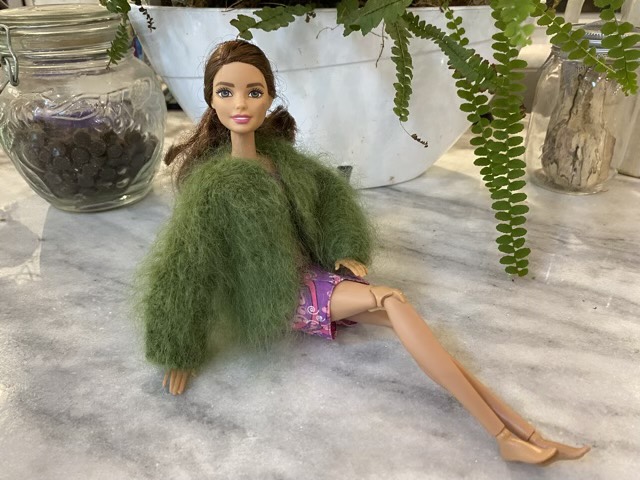
The cardigan has a very mossy look. There was just enough yarn to complete the sleeve and sew up the seams; I trimmed about 3” of waste once the ends were woven in.
I have a melon baller, but I don’t usually use it because it leaves quite a bit of waste. The balls of melon are pretty in the fruit salad, but all the left over bits bothered me.
Cantaloupe scooped out with a melon baller
I was thinking of it wrong. It isn’t waste, it is more left for the chickens! With that in mind, I scooped out the cantaloupe and watermelon happily knowing the hens would clean out the rinds later.





 Critters and Craft