Undermined

I’ve been checking on our largest aspire melon daily. The Neem, Castille soap, and peppermint spray seemed to work to keep the caterpillars off, and the spots on the rind that were nibbled healed up. The color turned yellow and then I was checking to see if it slipped from the vine. I put a secondary cage made of welded wire fence up around the melon to keep the dog off it. Then I checked the bottom and found the gaping hole. Hm. I wasn’t very careful to spray the bottom, as it was pressed up against the mesh sling.
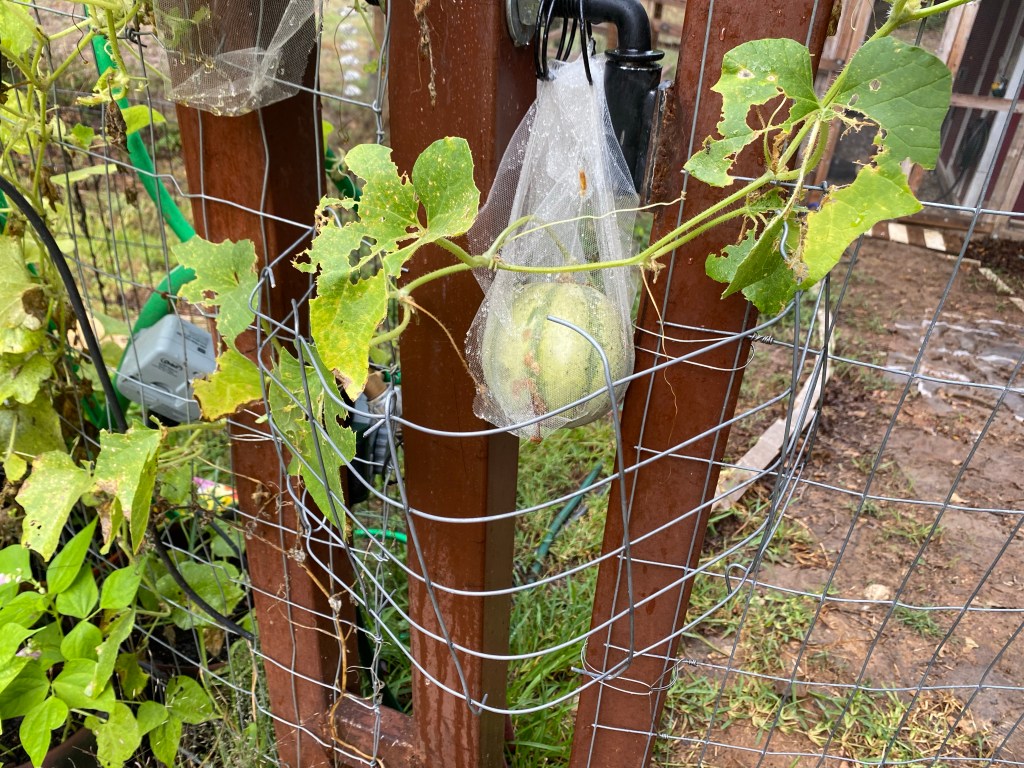
Temporary cage erected around the melon
Bottom of the nearly ripe melon showing the hole

I detached the melon from the vine and rinsed it well in the sink (rather easy to rinse with a hole that goes all the way in). I cut it open and did not find any critters, so I cleaned it up and cut away the rind and questionable bits. It tastes nice, not as nice as the smaller melon that fully ripened on the vine, but better than a store-bought cantaloupe. So there we go. There are still two more melons developing, so we’ll see who gets to those first.

Inside of the invaded melon
Sliced aspire melon (about 13 ounces)

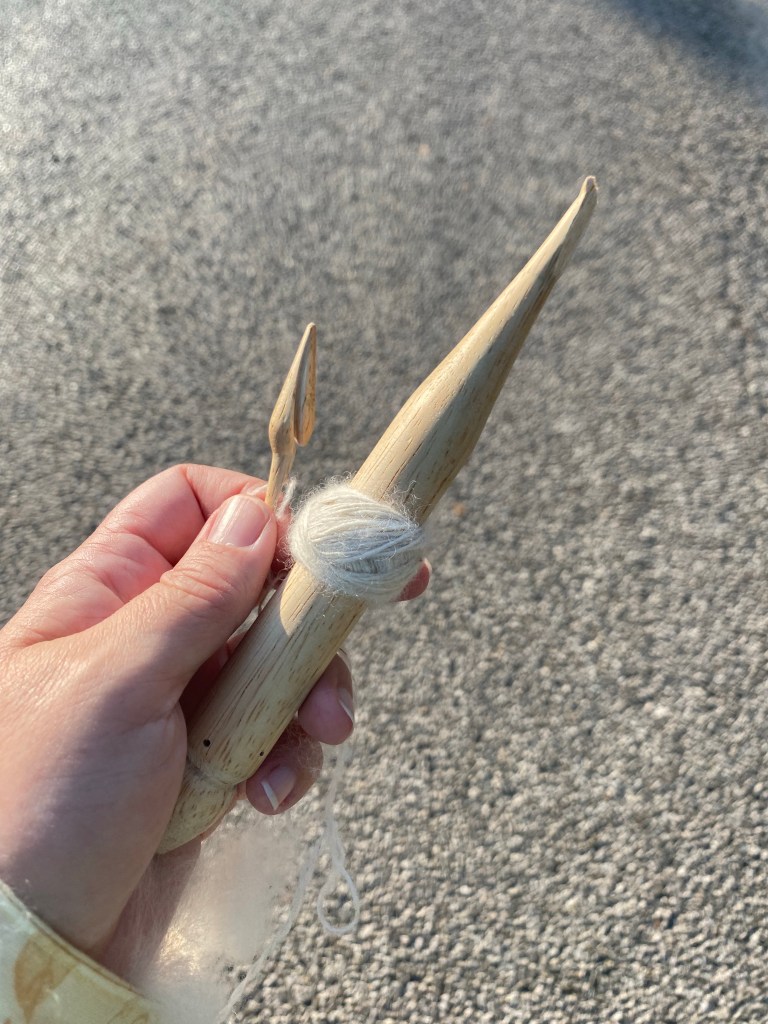
Frankenstein spindle

Well it happened. I dropped my favorite spindle (again) and the head cracked and came completely off this time. All this near the beginning of a walk. I tried spinning from the other end, but the yarn wasn’t aligned right. I tried just turning the spindle with my fingers, but the yarn produced was much, much thinner. So I tucked it all in my bag and went home.

Head came completely off the spindle this time

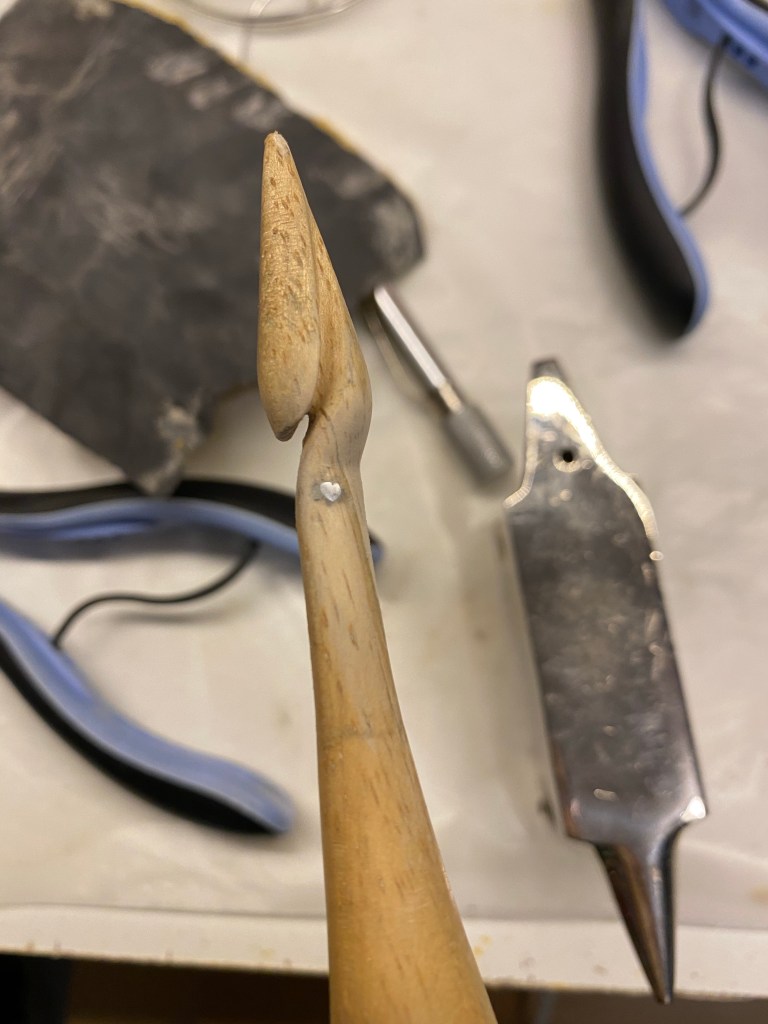
I glued then clamped the head back onto the spindle, but since that didn’t hold the last two times, this time I drilled a small hole and hand riveted the two pieces together as well. It took some experiment; the brass wire was too hard, but aluminum filled the hole nicely with some hammering. I sanded the rivet smooth so the edges wouldn’t catch on my yarn.

Rivet made from aluminum wire to provide mechanical strength to the broken spindle head

It looks like a Frankenstein spindle now, with its metal rivets on the neck, but it is holding. I’ve dropped it three times since repairing (not on purpose) and the head has held. I do now carry a spare spindle in the bottom of my bag, just in case.

Chicken coop updates

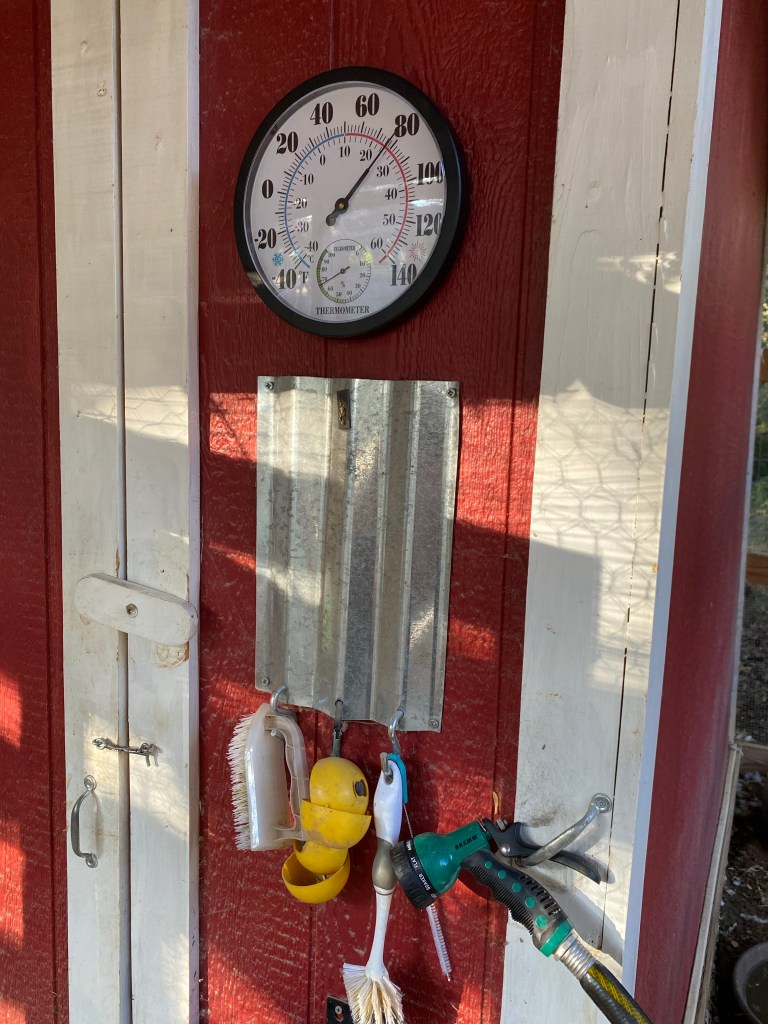
I finally installed the new thermometer and hygrometer in the coop. It took about a minute to pound the nail into the siding, but the gauge has been sitting on the counter inside for weeks. At least it is now up.

As long as I was checking things off the list, I also put up my Texas Farm Bureau warning sign. A warning sign for my chickens, to protect me if someone else makes stupid decisions on my property. The law recently changed here to include fowl with horses and cows and goats. So I put up my sign.

Warning sign that farm animal activities can be dangerous

Craft fair

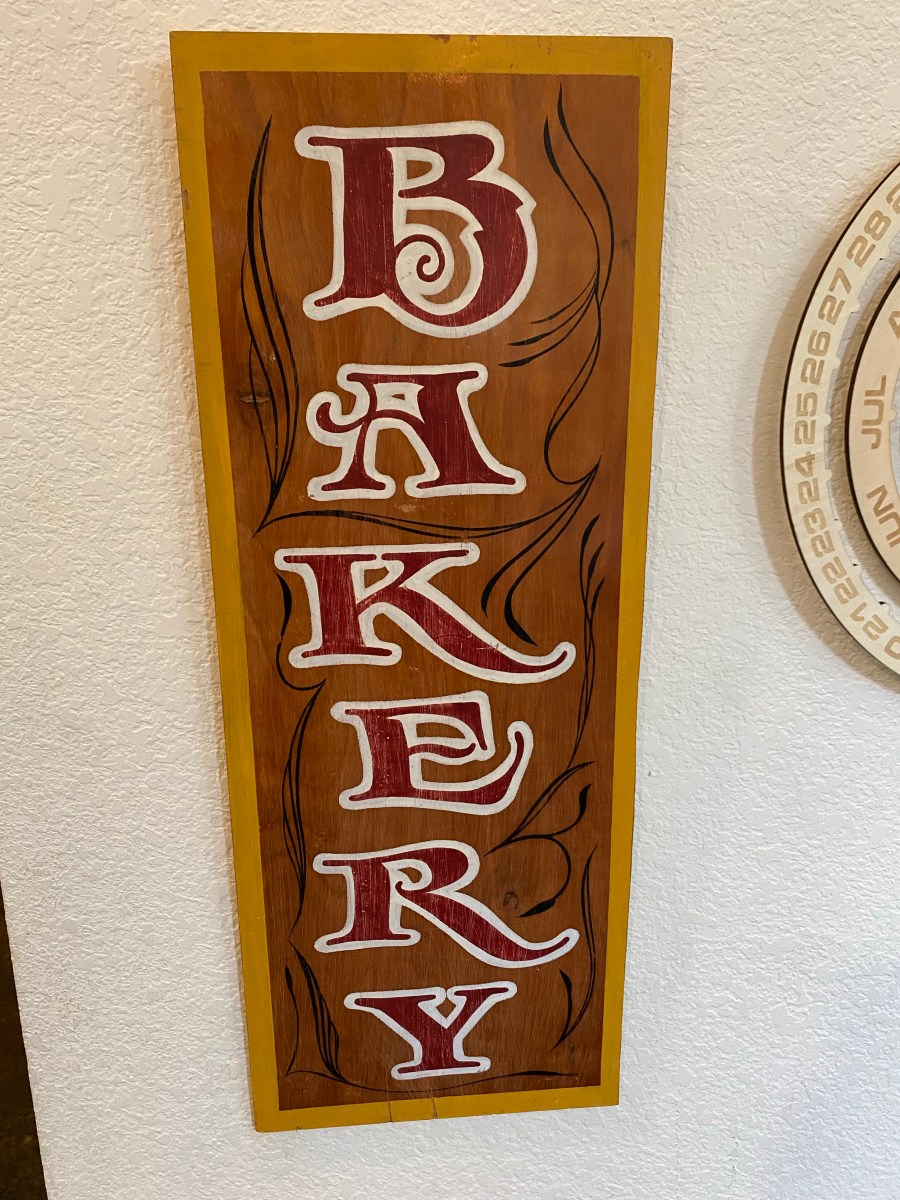
You would think I haven’t been able to go to a craft fair in years… oh wait. The high school theater group put on a craft fair and I did my part to support the theater and the craftspeople that set up their booths (and also scouted out what I might set up for next year). My favorite find? A hand-painted bakery sign! Yup. Hand-painted. Not stenciled, not cut vinyl, not printed, not laser burned. Hand-painted by someone who has been pin-striping and lettering for over 20 years. I have the utmost respect for good pin-stripe artists! The artist gave me $2 off because the hook on the back fell off, which was a solid deal. When I got it home, rather than put another sawtooth hanger in the soft wood, I took my rotary tool and a small router bit and cut a channel in the bottom of the wood block. It works perfectly with the monkey hooks I like to use in dry wall.

Channel cut in the bottom of the wood block on the back of the sign to accommodate the monkey hook (yeah, there is an extra hole in the wall. Oops.)
Prized craft fair sign, hand-painted by a professional

Wooden cane

I made this wooden cane as another prop for the play my eldest is working on. The character that needs the cane is an old woman whose husband was a wood cutter. What better than a cut branch then? I wandered through the back woods and found a suitable dead limb on a cedar tree, with a side branch at a good angle for the handle. I cut it off, removed all the twigs, then used my oscillating drum sander to remove the outer layer. I left it a little long so they could cut it down to fit the actor. After I had the rough shape, I hand sanded first with 100 grit to get everything smooth and shaped the way I wanted, then worked down in grit to 120, 220, then 400. To finish, I put on two coats of 50/50 tung oil and mineral spirits, then seven coats of pure tung oil. A final polish with 0000 steel wool put on a slight sheen. The cracks were left as is, as it gives some character to the piece and the story is a slightly scary one. Despite the cracks, the wood is solid.

Wooden walking stick made from a dead cedar limb