Aging paper just a little

My eldest needs a journal as a prop for a play. The play is set in the 1920s and we didn’t want bright white crisp paper in the leather bound journal (I’ll get to the assembly of the journal in another post). I searched the internet and only came up with tea and coffee stains (and one that recommended burying the paper in the ground for two weeks). I needed eighteen sheets of paper aged; and the paper won’t hold up to handling when wet (we tried the tea method, no go). We also tried using a flame to slightly singe the paper, which was also time consuming with spotty (literally) results. I remembered a science experiment with invisible ink made from lemon juice. Could that work to slightly brown the paper? Yes, yes it can.
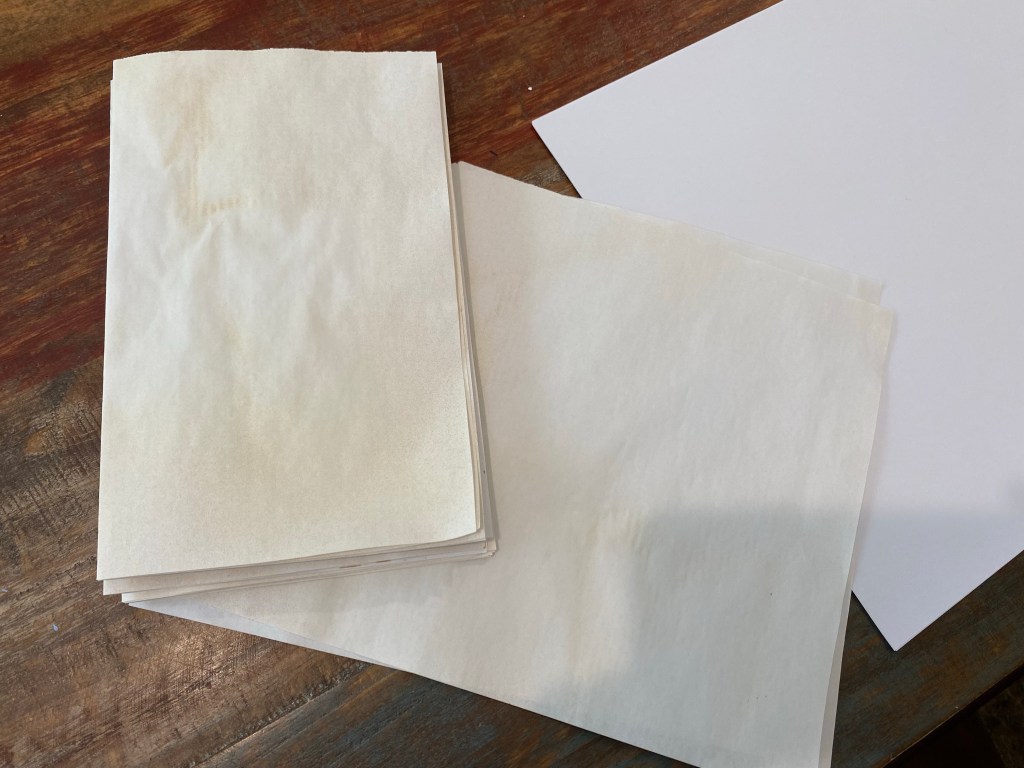
Aged paper folded into signatures (left) versus original paper (far right)

The method I found that worked best was to heat the oven to 350 degrees F, put a large cookie sheet in the oven, lay one piece of paper on the cookie sheet and mist it with a 50/50 mixture of lemon juice and water, and leave it in the oven for 3 minutes. I then flipped the paper over, misted again, and baked for 3 more minutes. An eye cleaner spray bottle works great for mist. The technique also wrinkles up the paper, so I needed to give the sheets a quick iron to get it to lay a little more flat. The results were exactly as I hoped! Now to finish the cover so I can assemble the journal.
Ant farm

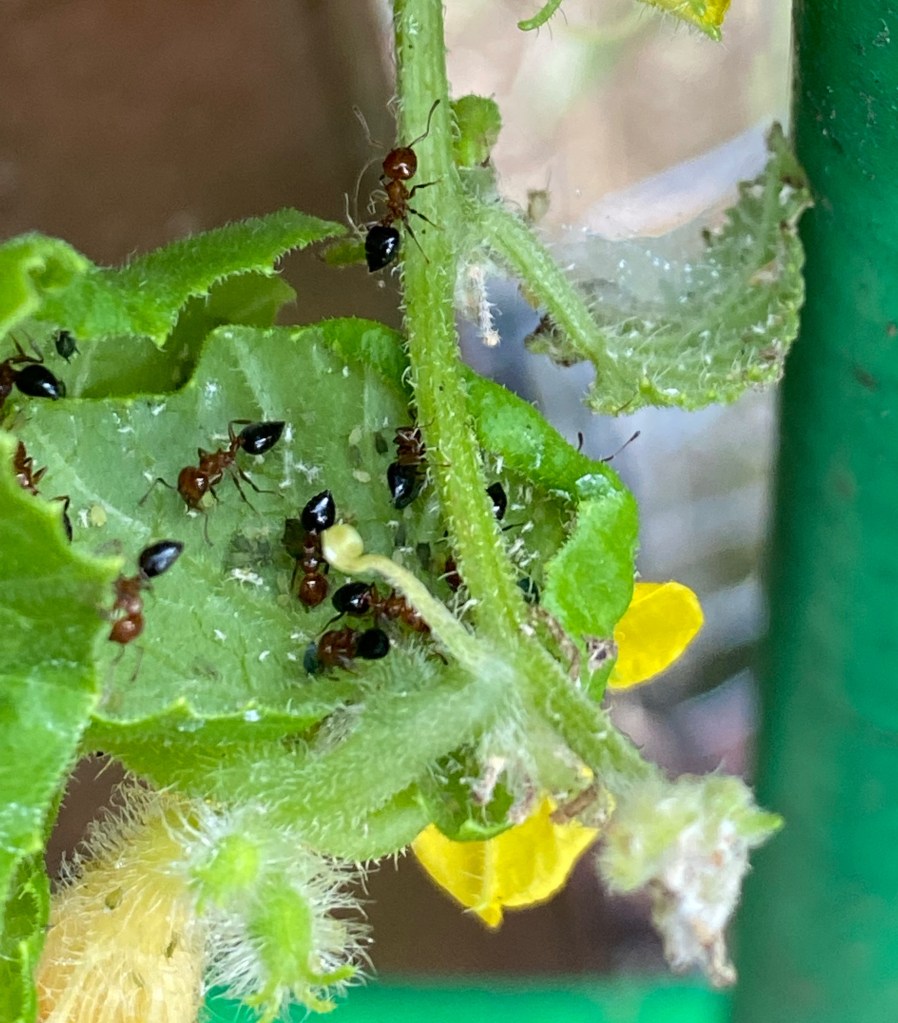
No, we didn’t add one of those clear boxes full of ants to our household menagerie, but I did find the ants themselves farming aphids on my melon vines! I have heard of this symbiotic relationship between ants and aphids but have never knowingly witnessed it. The aphids produce honeydew, which the ants eat. The ants protect and herd or move the aphids to the juiciest parts of the plant, then stroke the aphids to “milk” them to produce honeydew. This is information from searching the net. Most of the articles were enthusiastic but not very scientific, and give the same information I just gave you. The end point of all the articles was how to treat the garden plants to make them not good for ant farming. The result is probably from my chosen search terms “ants and aphids”. Ah, add “symbiotic” and you at least get to a Brittanica article eventually.

Ants tending aphids on a melon vine

Jar candle hack

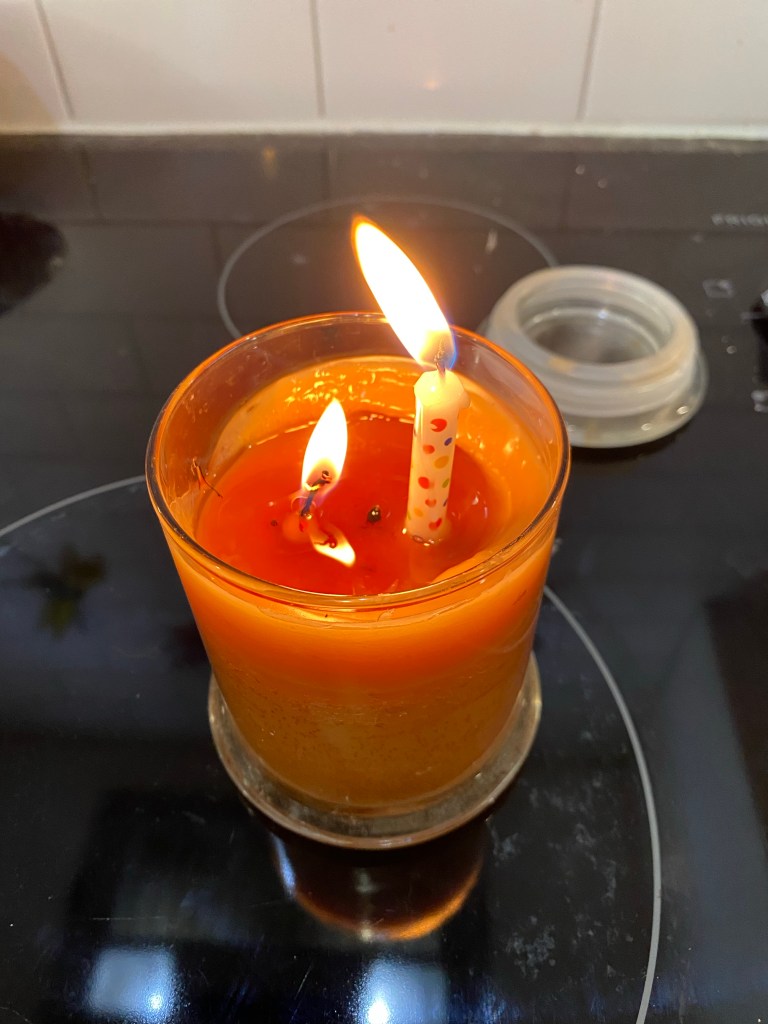
I don’t let my jar candle burn for very long; mostly just long enough to seal the end of cut ribbons. Because the wax doesn’t have a chance to volatilize much, the wicks get lower and lower. I tried running the molten wax along the edge to get it away from the wick, but that just made deep holes around the wicks. Then I had an experiment that needed flame for a little longer and the melted wax enveloped the wick and put out the flame! Oops. So to fix it, I buried birthday candles down into the soft wax. Not only did I have flame again, but the wick from the birthday candle could draw wax from the jar candle when it was low enough. Two new wicks rather than throwing out the candle! And quicker than melting the wax and re-pouring the candle.

Birthday candles buried in the melted wax of a jar candle to replace the wicks that were too short

Happy Crossvine

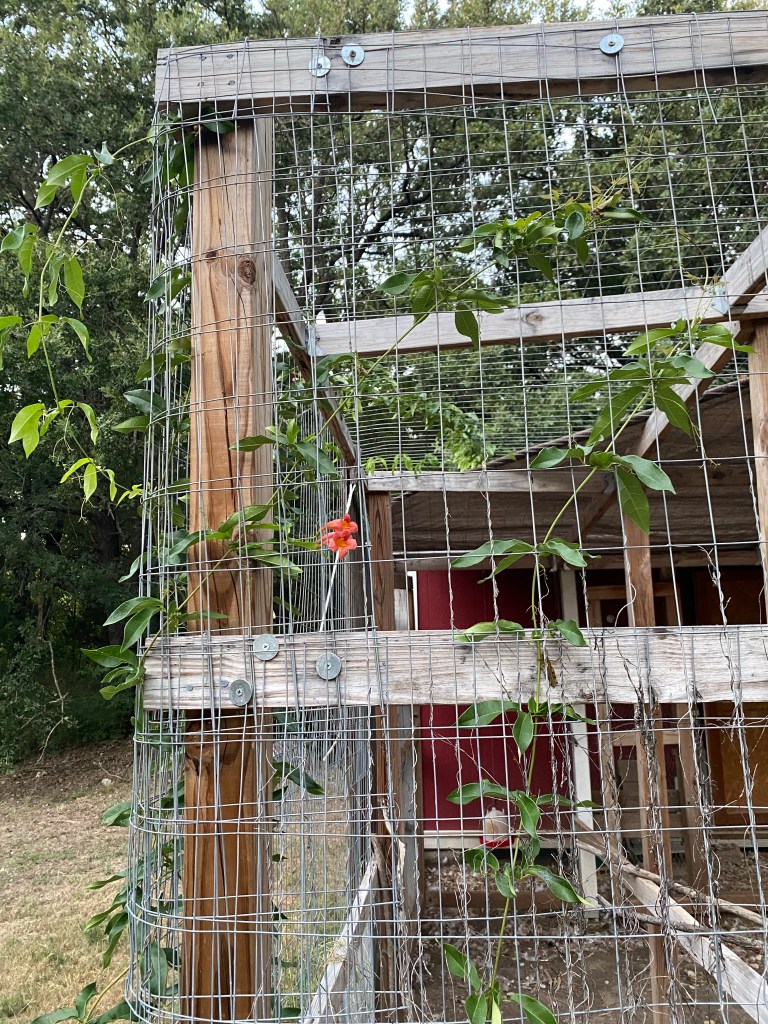
The cross vine I planted near the coop runs is happy! It has vines climbing up on two sides of the run, and has bloomed (small orange spots in the photo). The hope is that it fills in the corner to provide shade for the chicken run and since it is in full sun (one of the few places on our property that has full sun), we hope when it is established the bloom profusion will be spectacular. There are other cross vines in the area that have an amazing display of blooms multiple times per year.

Cross vine climbing the outside of the the chicken run

Just keep spinning, spinning

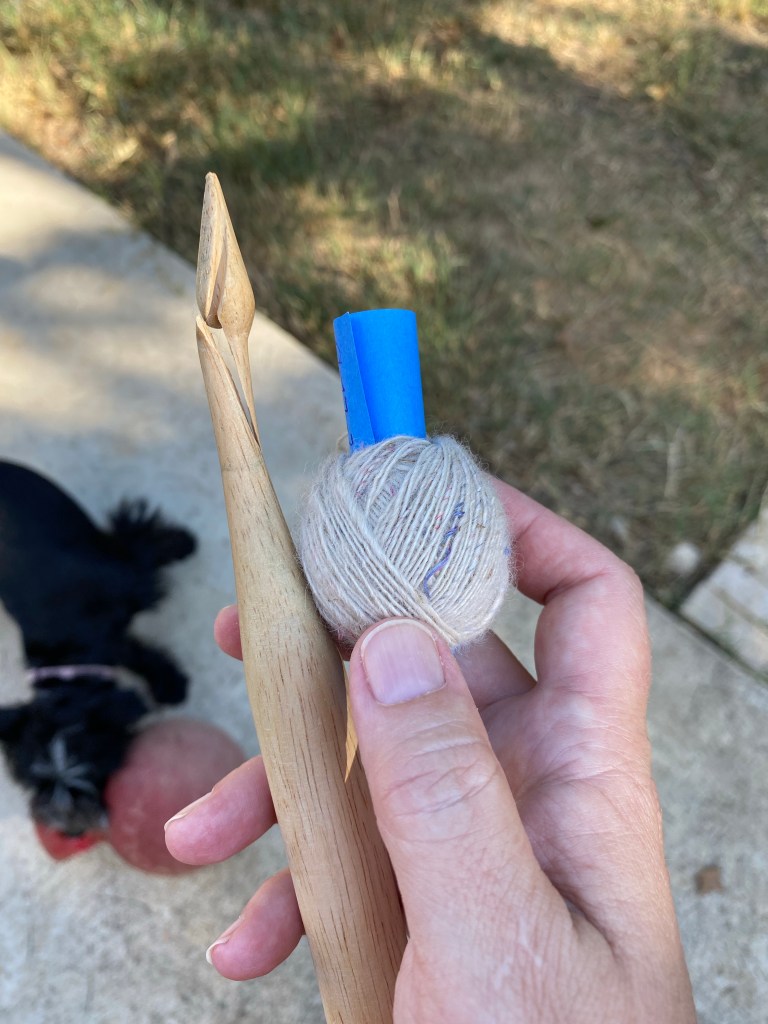
I dropped my spindle and it broke again, in the middle of a walk. Luckily it cracked and didn’t completely snap off, so I was able to wrap the yarn around the neck and finish spinning the roving I had in my bag. After I came home and removed the ball of spun yarn, I put some wood glue in the crack and clamped it up tight.

Cracked spindle and spun singles ball

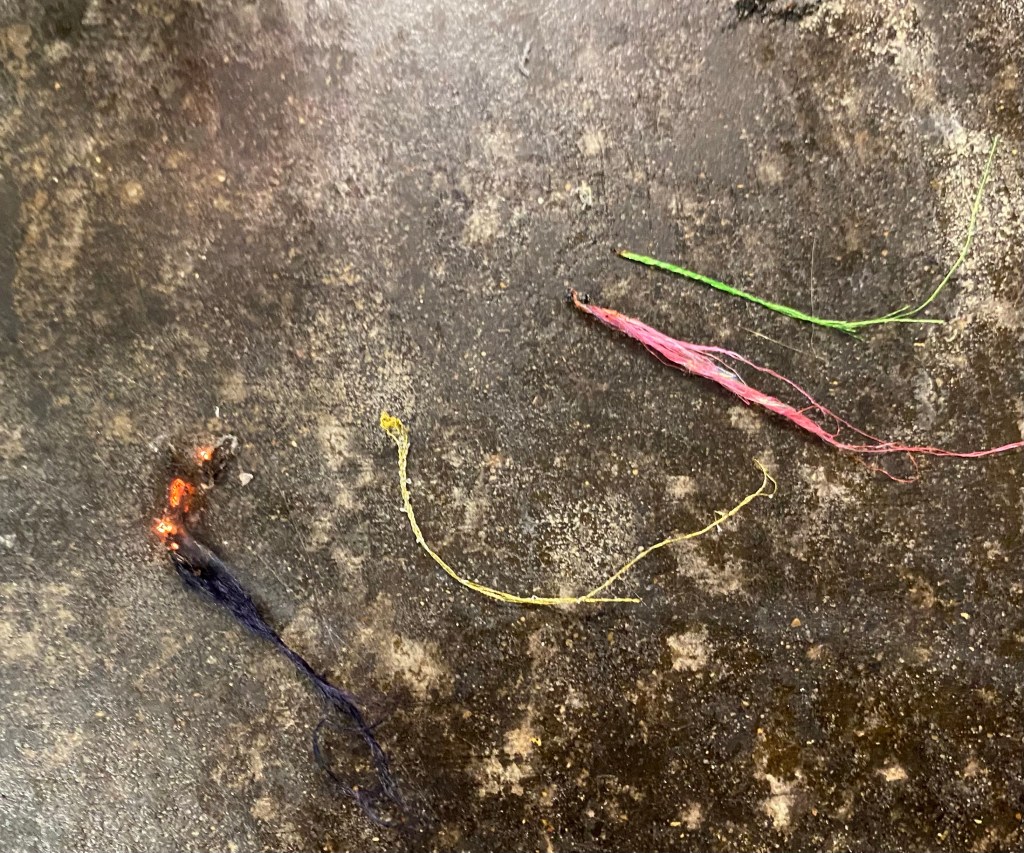
This ball of yarn is another go with adding bits of color to alpaca fleece. When I was carding the fibers for the rolags, I found something suspicious. In the bag of “100% silk” sari thread waste were strands of metallic gold. Hm. Probably not silk. So I did a burn test on four different colors. I was surprised that two of the colors (pink and neon green) were actually silk despite the vast difference in texture. When I burned them I got the characteristic balls of ash that crushed easily. (My sense of smell is terrible, so I need to rely on other physical signs.) The metallic gold, not shockingly, just melted in the candle flame. Then I tested some black fibers that burned even when removed from the flame (silk does not) and produced fine gray ash with no ball. This may be rayon (here is a good article on the burn test). If you do a burn test yourself, use tweezers to hold the twisted fibers to the flame. The black fibers flared and burned faster than I could say “ouch”. (I did use tweezers, but the ferocity of the burn was surprising.) So I will have to say the yarn I am making uses mixed fiber waste.

Results of burn test from top to bottom: green silk, pink silk, metallic plastic, black maybe rayon and the embers are still burning

I love my concrete countertops.