Random knit pointed scarf

The Frabjous Fibers hand-dyed Blue Faced Leichester (BFL) and silk yarn I spun up in June has finally been applied to a project! I decided to do a random knit lace scarf, but with pointed ends rather than square.

“Balsam” colored BFL/silk random knit scarf

The random knit used a combination of increases (yarn over) and decreases (knit or purl two together) spaced with one to five knits or purls (depending on which side was toward me). The goal is to keep the same number of increases as decreases across the row. To do the shaping I added a stitch on each side of the knit rows only, then to narrow the end, I decreased on each side of the purl rows only. To keep the edges neat, I slipped the first stitch of each row.

I tried writing this all up in a standard knit pattern, but it then looks so much more complicated than it actually is. I will say that when knitting the technique using a block able yarn (such as wool or cotton) is key. It doesn’t look like much until I get it wet and pin it out flat on my netting and PVC drying rack.
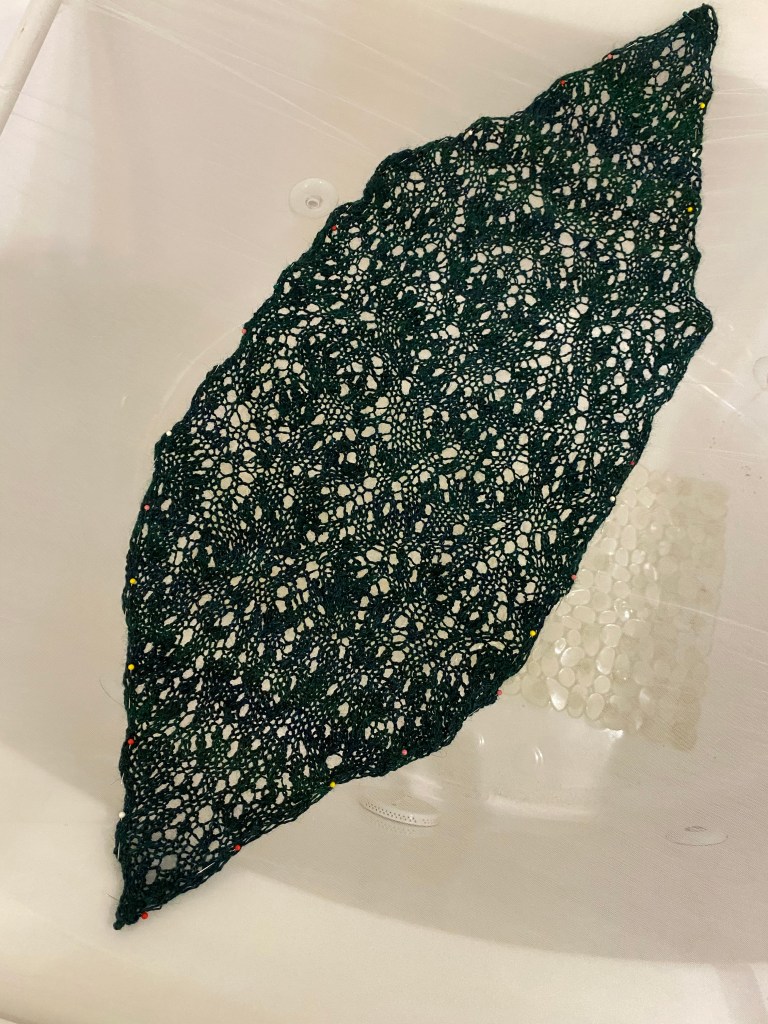
Scarf pinned to nylon netting to dry

Missed one

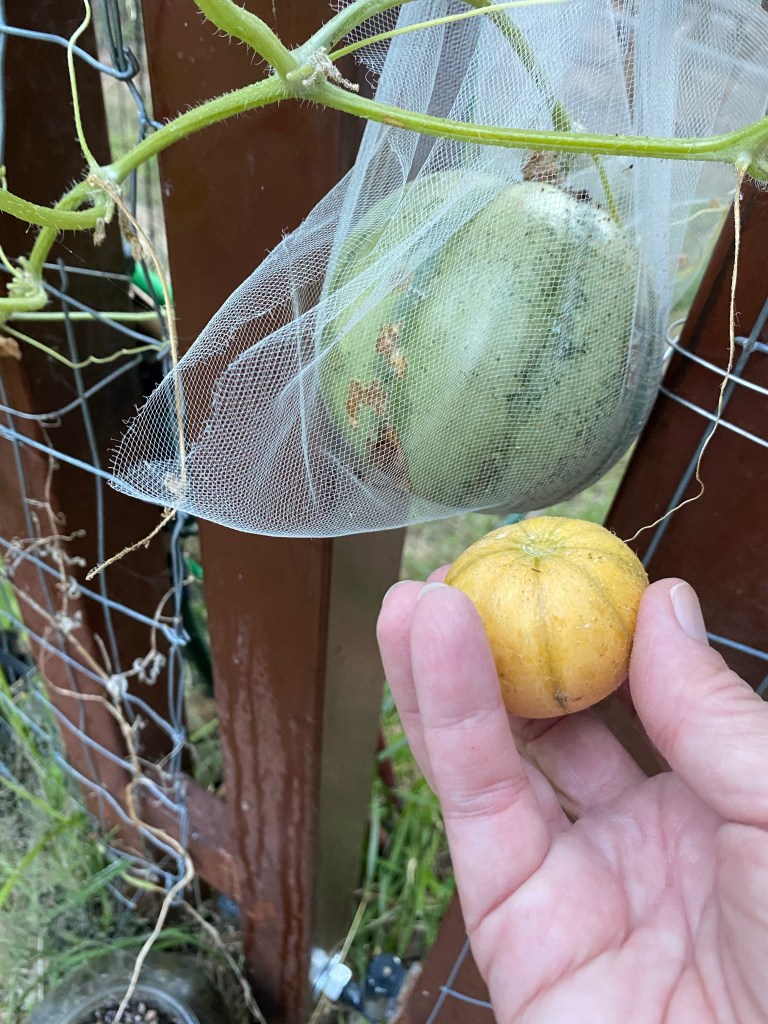
Tiny ripe melon compared to melon still on the vine

I spotted a flash of round yellow on the ground near my garden. It seems that I missed slinging one of the developing melons, it grew too heavy for the vine, dropped to the ground, and ripened there. The neem spray did the job to keep the bugs away, and although it was small, it smelled and tasted like melon. Still waiting on the “large” melon to ripen!

Plying bits of color

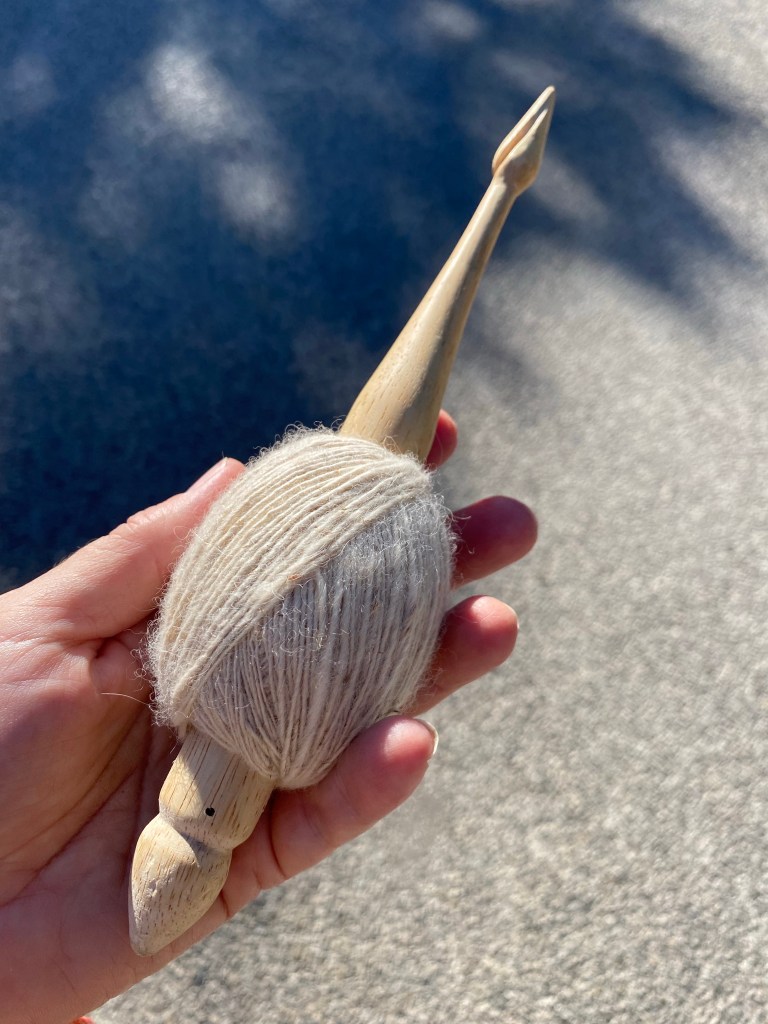
Spun single cob of cream alpaca

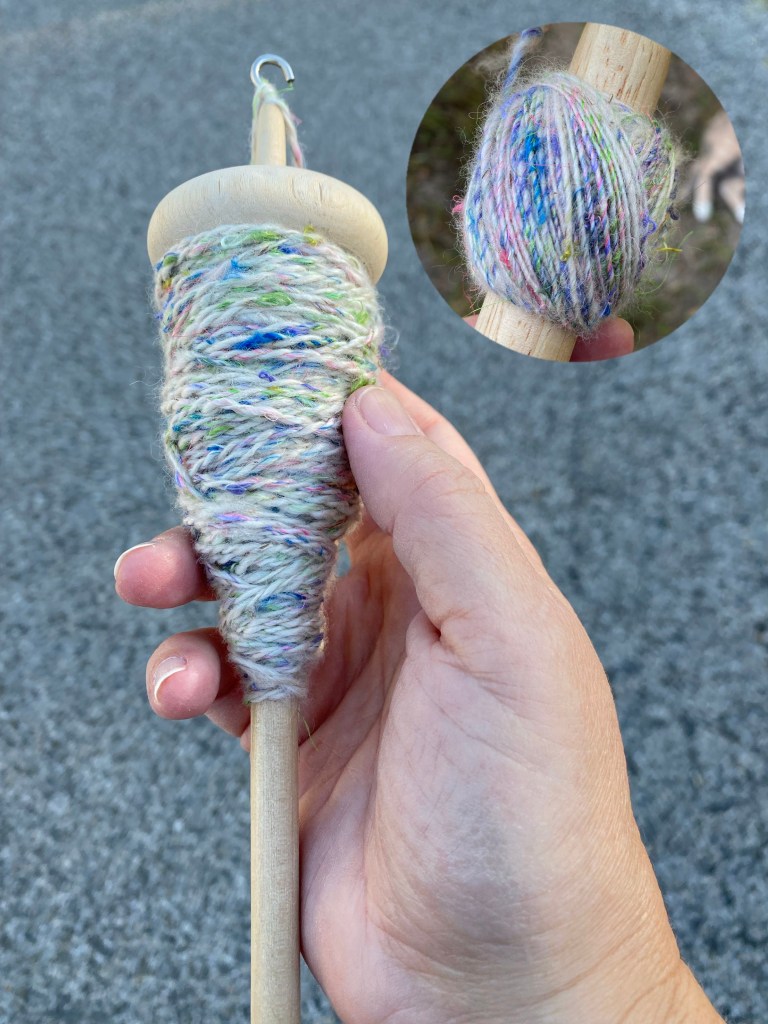
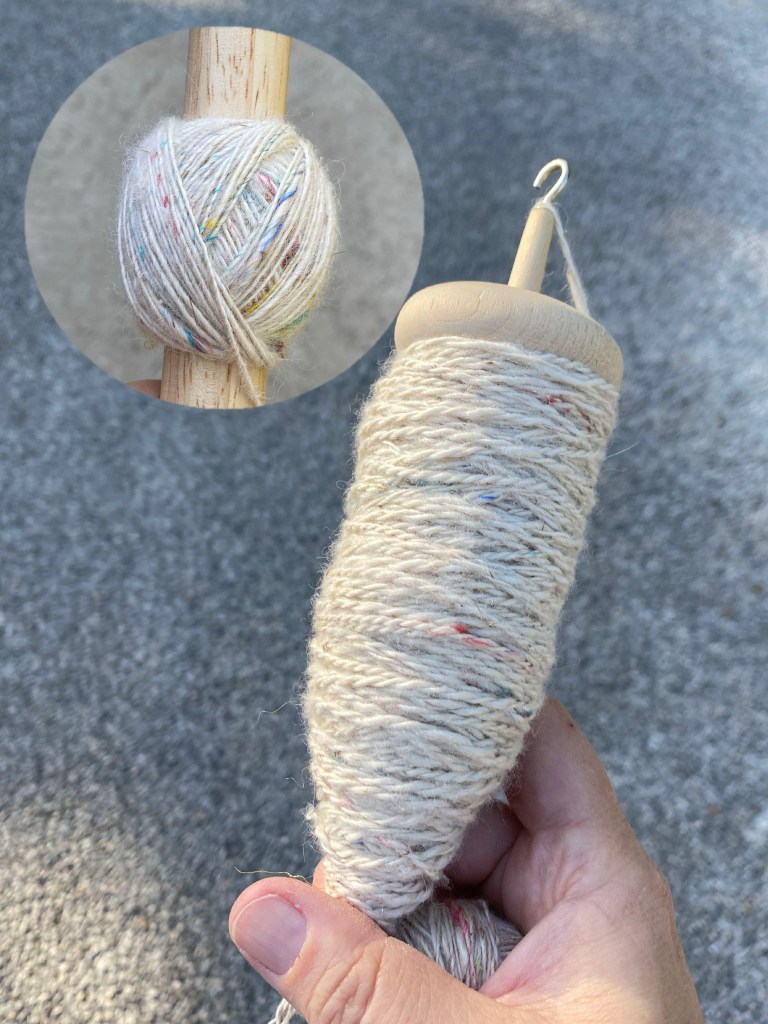
I spun up some pure alpaca to ply with the balls of alpaca and sari silk, to see what that did to the color density. Rather than make three small balls and try to match the yardage, I spun up 9 rolags into a single ball, then plied the colored singles with the uncolored into one cob.

Singles with the most color plied with uncolored alpaca
Singles with the least color plied with uncolored alpaca
Singles with a little more color plied with uncolored alpaca

Diluting the color with the uncolored ply had the most impact on the single with the most color. I like the yarn with just touches of color, and reducing the percentage of color makes it even better for me.

I had a bit more of the uncolored than the colored, which was perfect. Rather than scrap the extra bit of white, I doubled it up and plied to the end. No waste at all, which is definitely a plus for making a two ply.

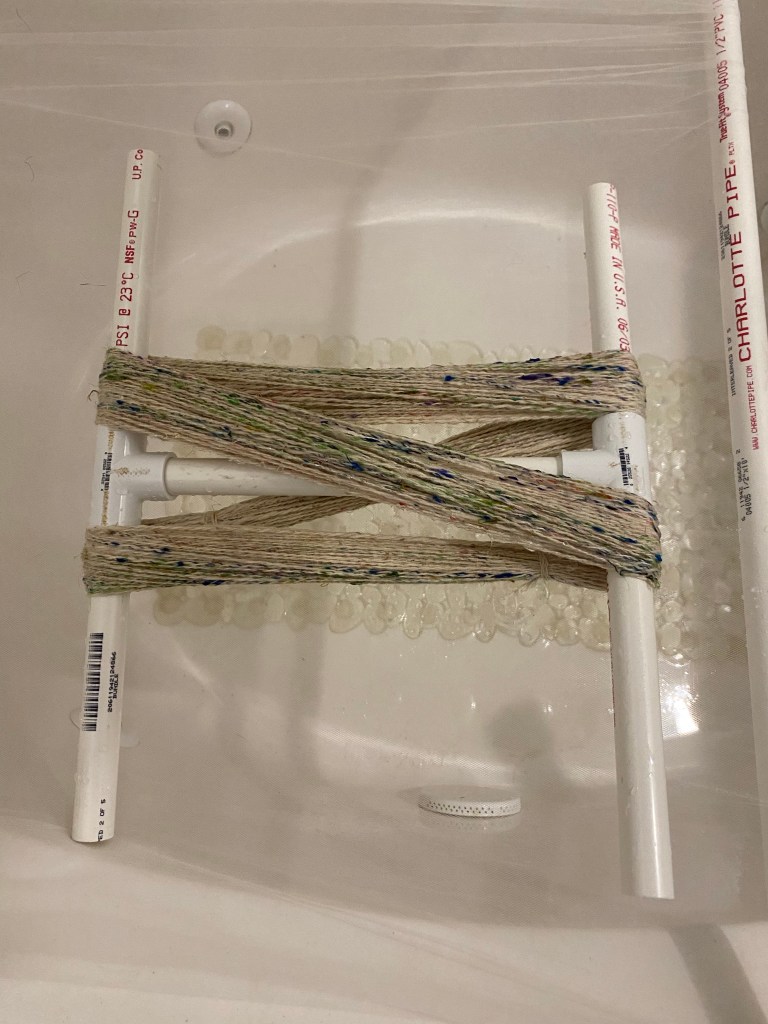
Rinsed yarn on a PVC niddy noddy

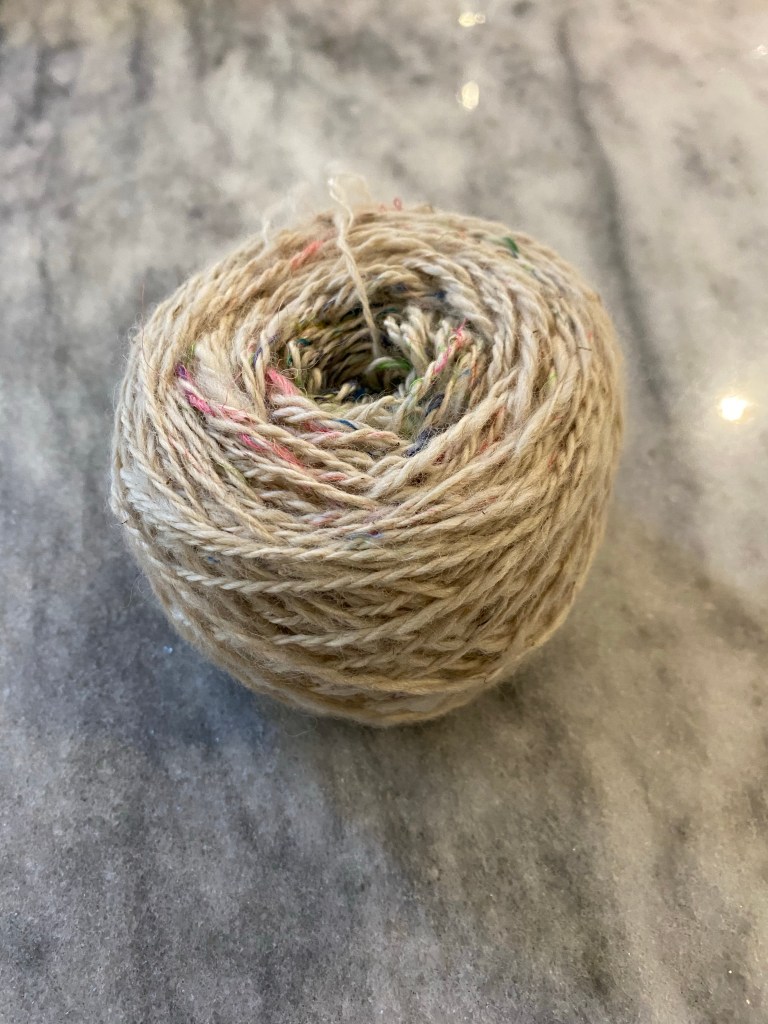
I wound up the plied yarn on my PVC niddy noddy and gave it a rinse to set the twist. I ended up with about 117 yards of two ply alpaca and mixed fiber sari waste yarn. It took five walks to spin and ply this yarn. (It is a good thing that it is the spinning and the process that makes me happy.)

Plied yarn wound into a yarn cake

Music hack

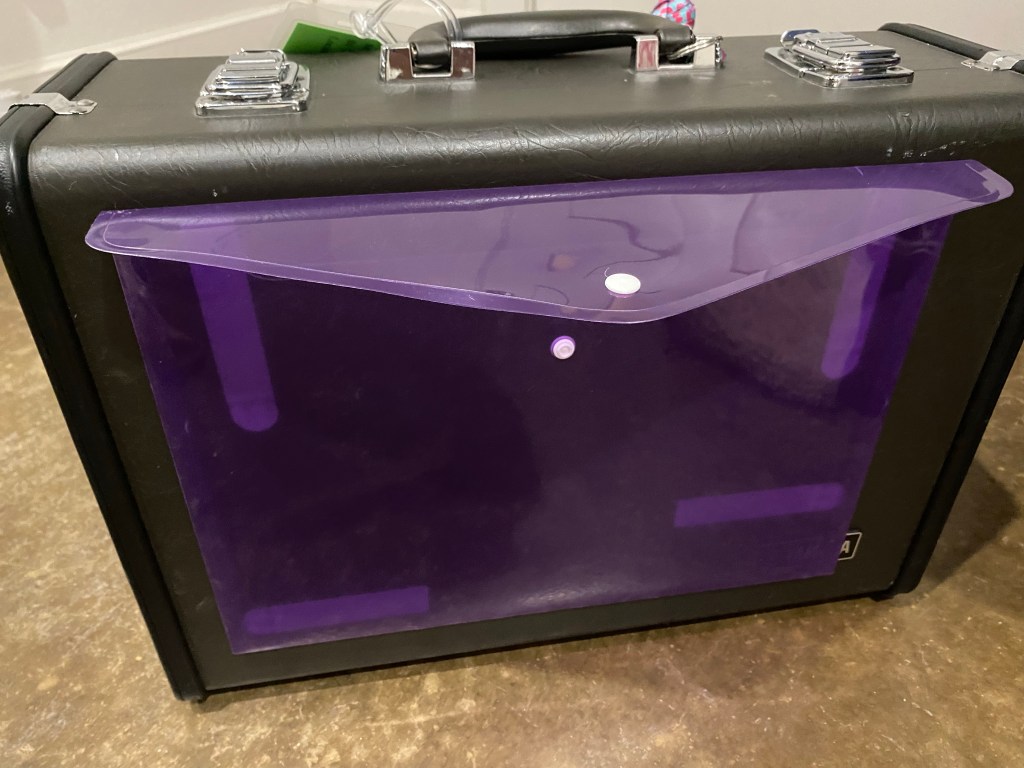
We needed another modification to my youngest’s coronet case. She was carrying around her lesson book because it wouldn’t fit in the case. So we used command strips to attach a plastic pouch to the outside. Now the music stays with the instrument, but if we need to remove the pouch, the command strips should allow it to come off cleanly.

Plastic pouch attached to a coronet case with command strips

Weaving help

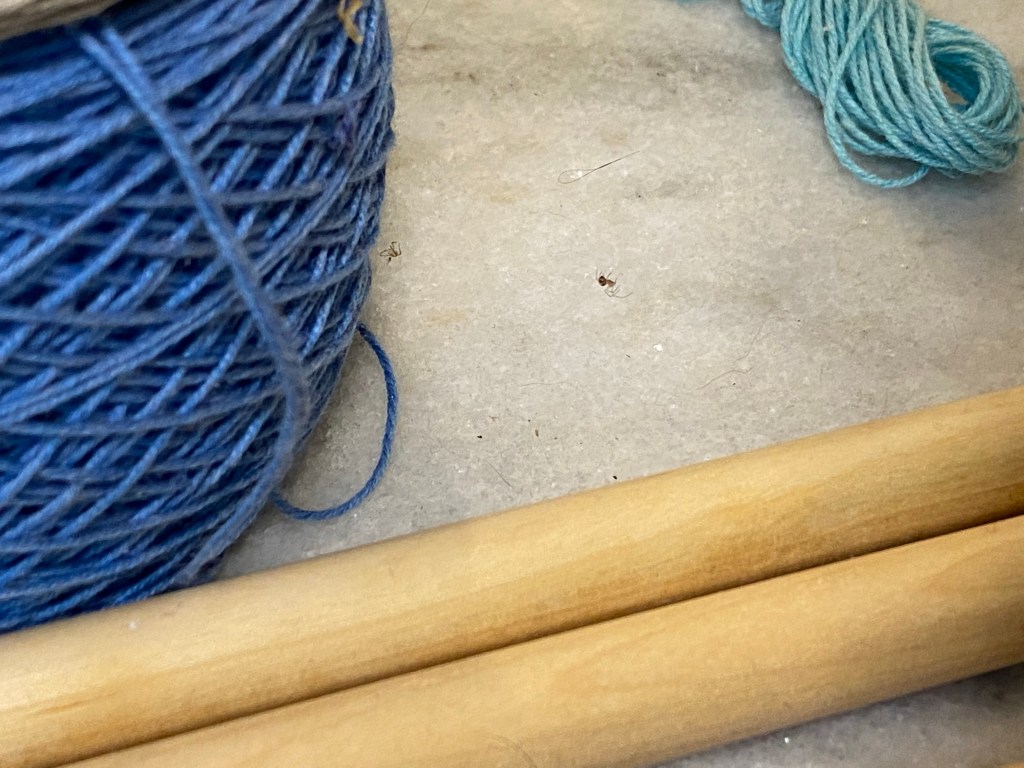
I am working on the weaving, really. Bits here and bits there, but apparently this little spider thought I needed more assistance, or maybe a model of an efficient productive weaver, as she set up shop right behind my loom. Saucy.

Tiny spider set up behind my loom