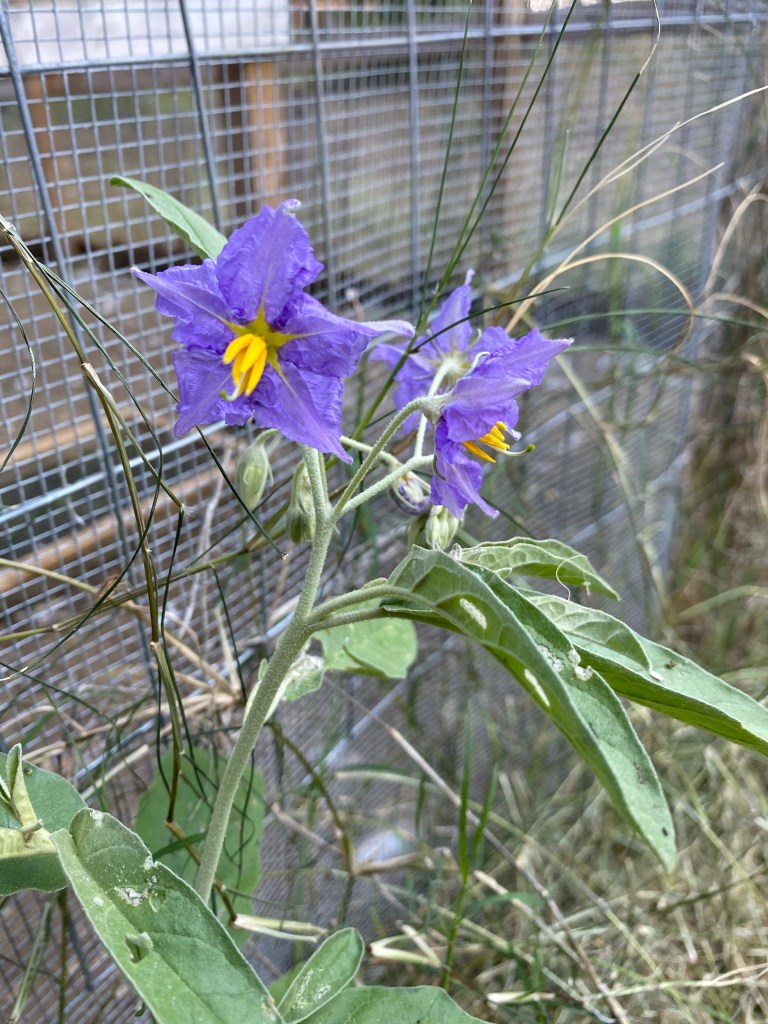
While walking around the outside of the coop and runs, I saw a pretty plant with purple buds. I plugged the picture into iNaturalist and received an ID: nightshade. Specifically silver-leafed nightshade. When I went back out to pull it away from the coop, the distinctive purple flowers had bloomed. Definitely a nightshade. Rather than risk the chickens having a nibble, I removed the plant.
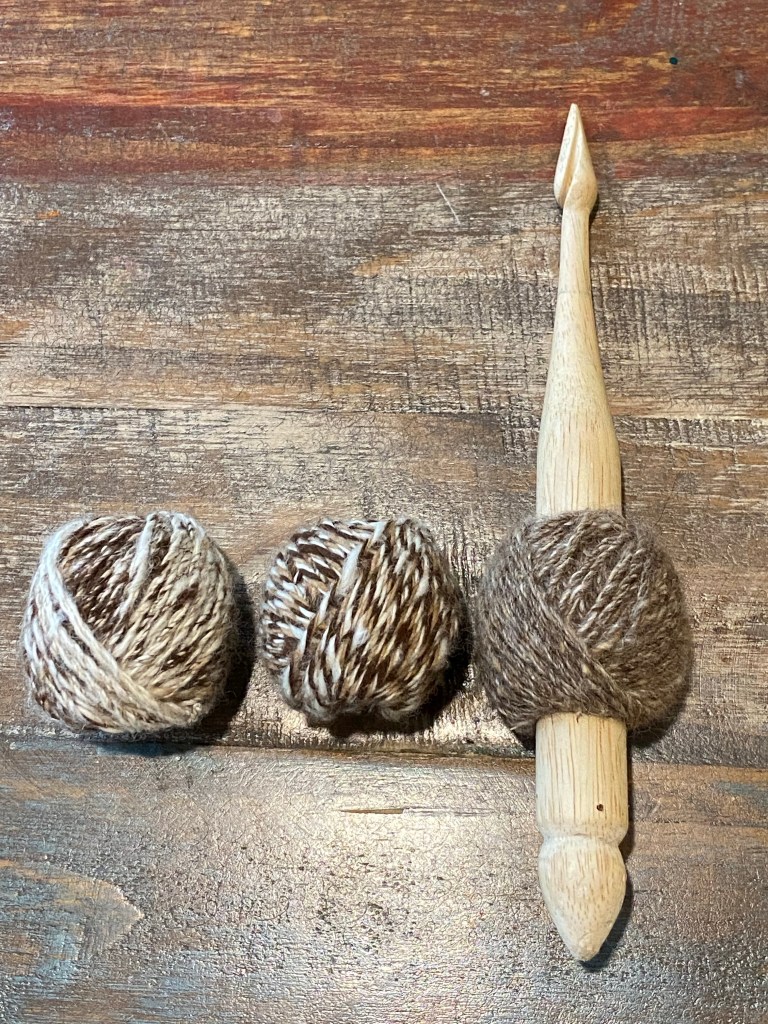
I now have three preparations of three colors of alpaca and silk. One with the colors carded separately, then rolled together into a rolag before spinning and cable plying; one carded and spun separately, then plied together; and one carded together to blend the fibers then spun and cable plied.
From left to right: marled, plied, and blended alpaca silk yarn
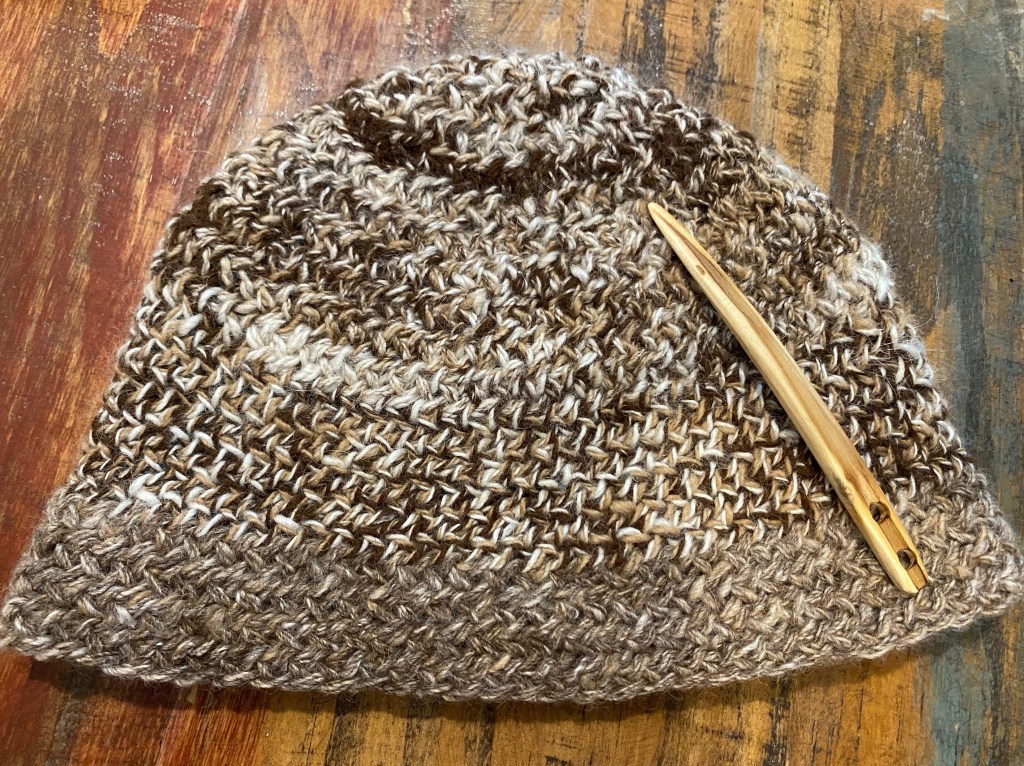
I had such small samples of the three different blend techniques, I decided to combine them into a single project.
From top down: marled, plied, blended. Nål is osage orange
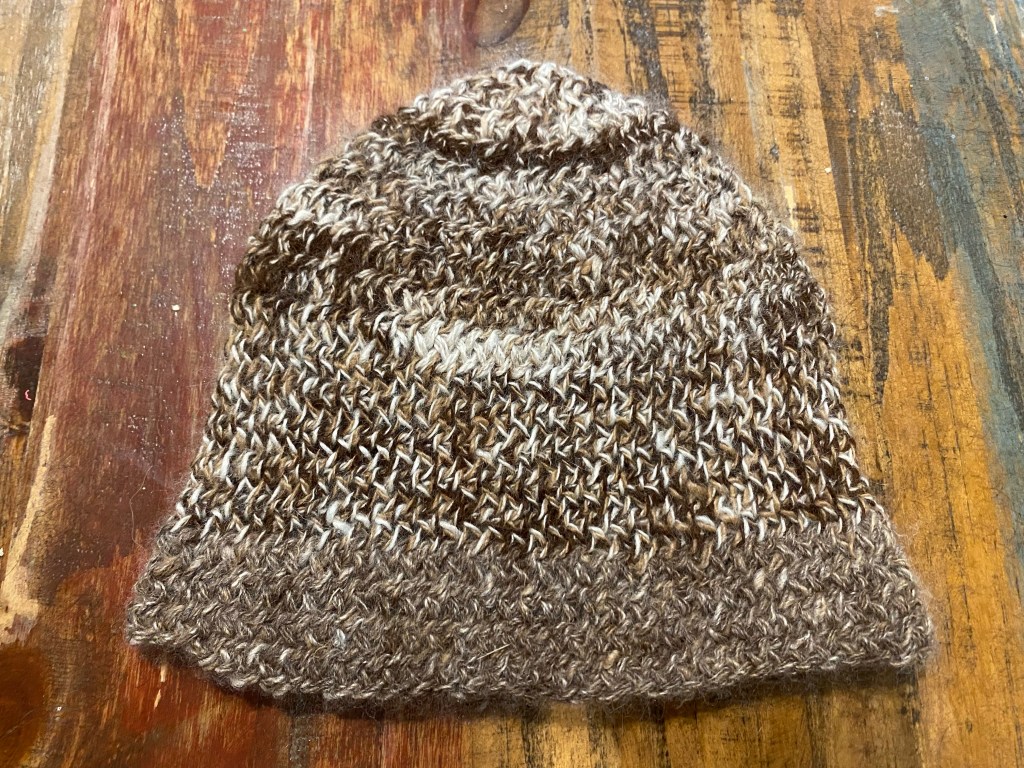
I think the effect of each yarn is interesting. The marled yarn has more variation, which resulted in some spots of darker and lighter color. The three ply is counter clockwise and unwinds somewhat for this stitch (which is my new favorite stitch: Dalarna from Sweden, Hansen’s Notation (U) O/U O:UO F1). The blended actually came out more uniform than I predicted. The intent was for this to be a hat, but I miscalculated and didn’t make it big enough. Since it is an experimental piece anyway, I also tried fulling it a bit by taking it back and forth from hot water to cold water. It did pull in some and became definitely too small for a hat.
Lightly fulled
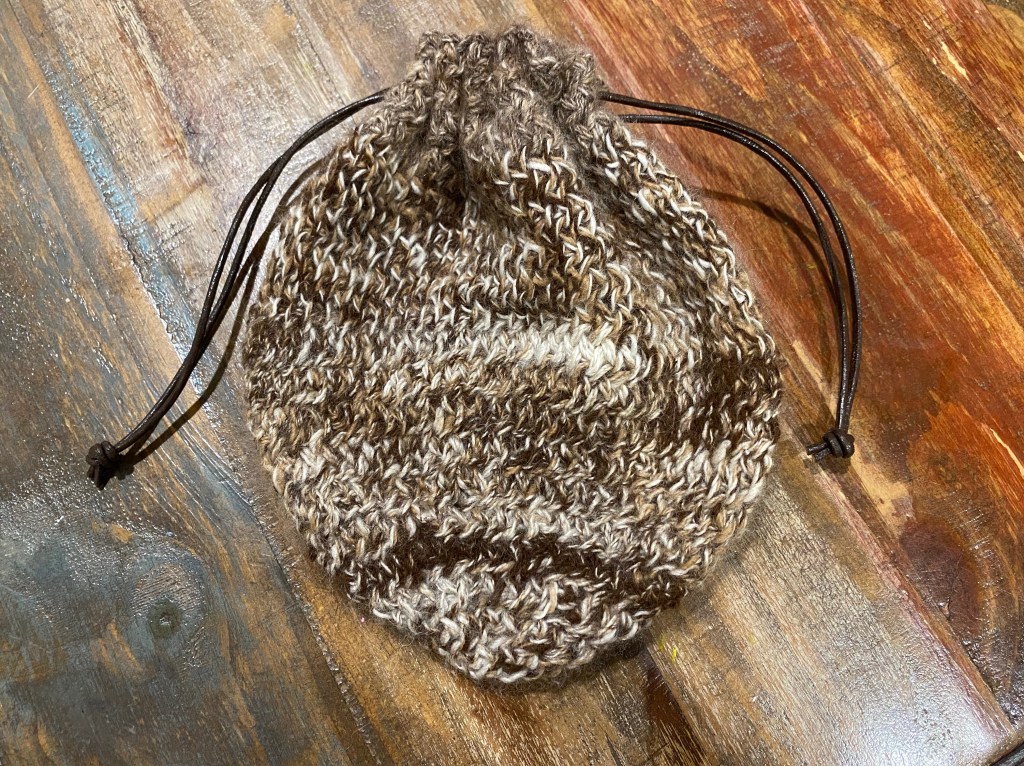
So I took two pieces of leather lace and made it into a bag by weaving the leather through the edge. Problem solved.
Nålbound bag with leather lace
The finished fabric is very soft, but dense. It has a very nice drape, but not much elasticity, so I think the alpaca silk blend may work better as a scarf or shawl. I’ll have to test that idea!
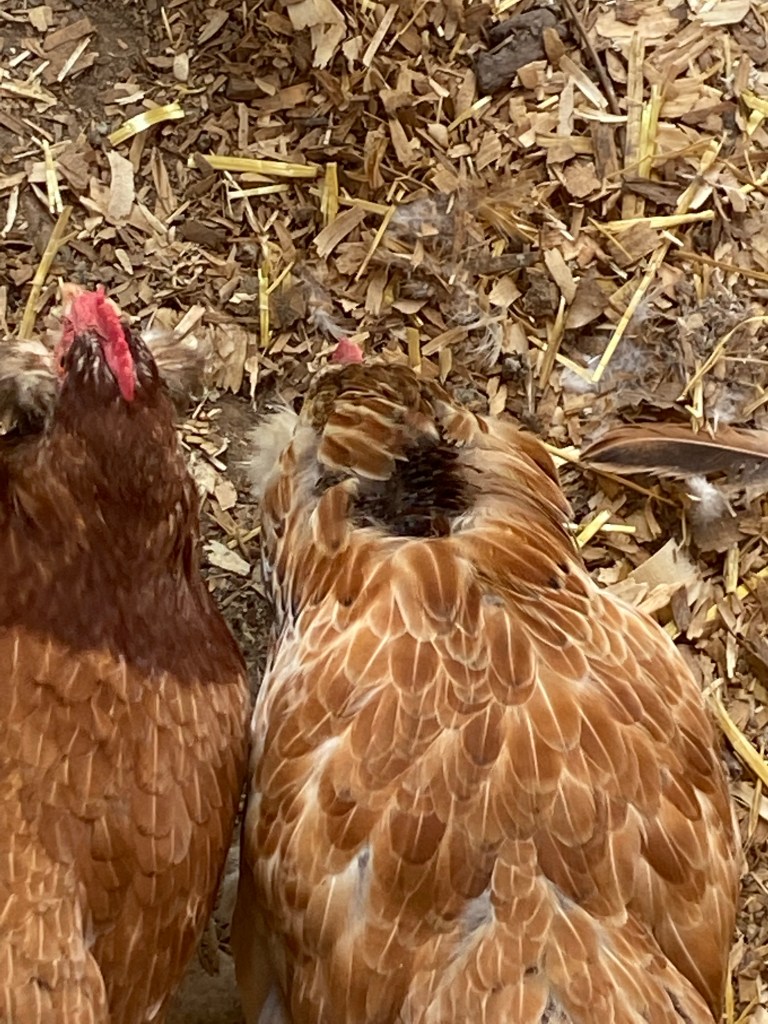
Jade the hen gave me a bit of a start; the back of her neck looked like she had a giant hole. Upon further investigation in the dark recesses, there are new feathers sprouting, so no damage seems to have occurred, just a profound molting event. Interesting.
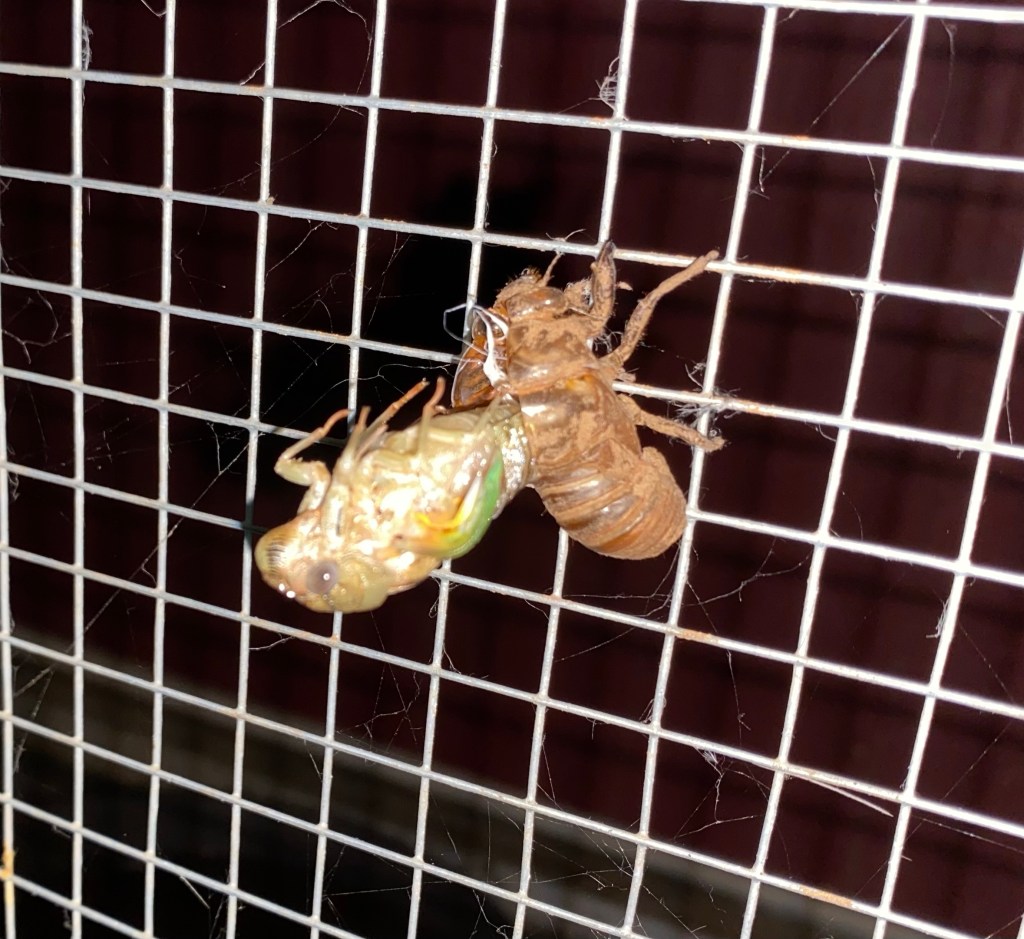
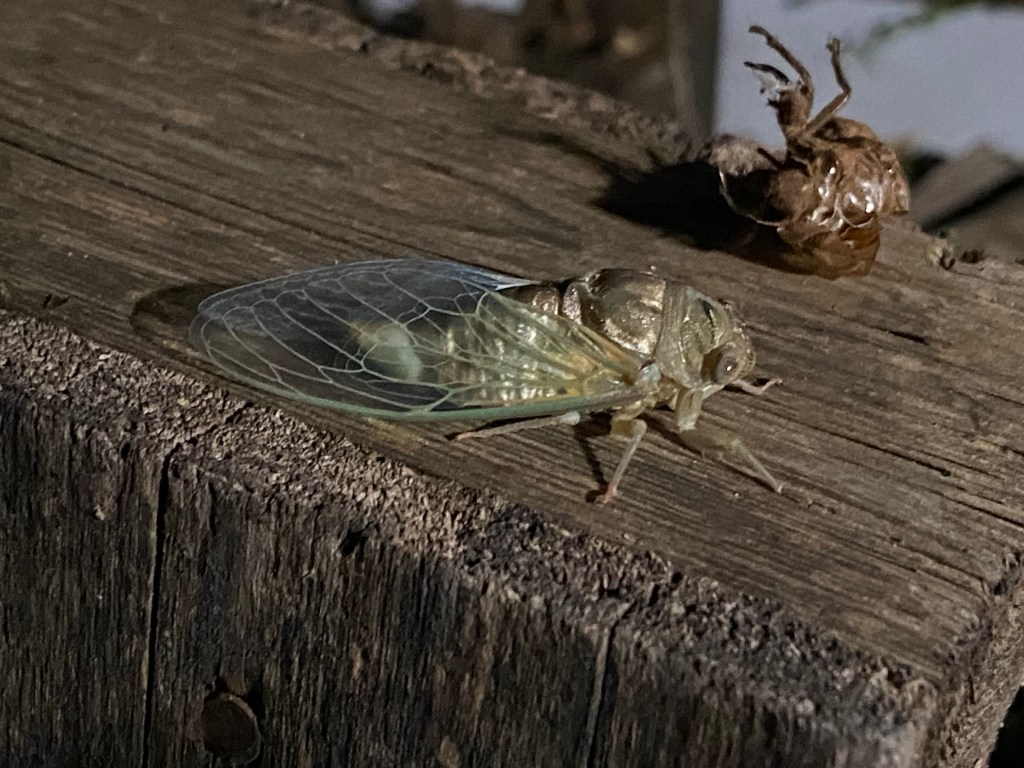
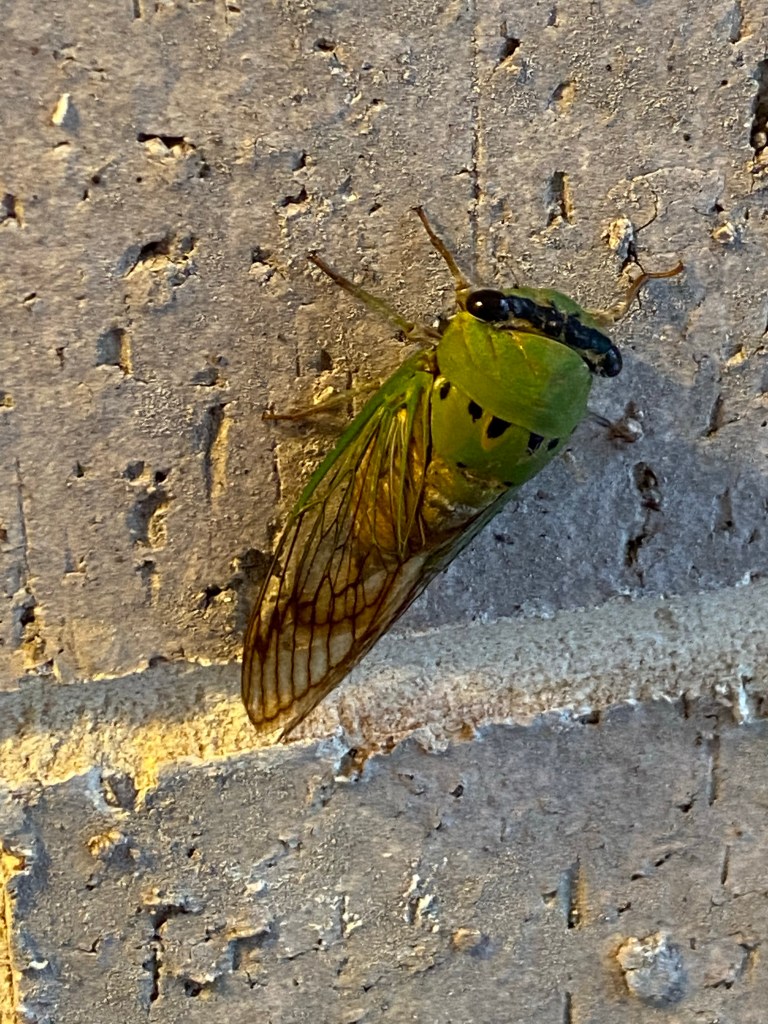
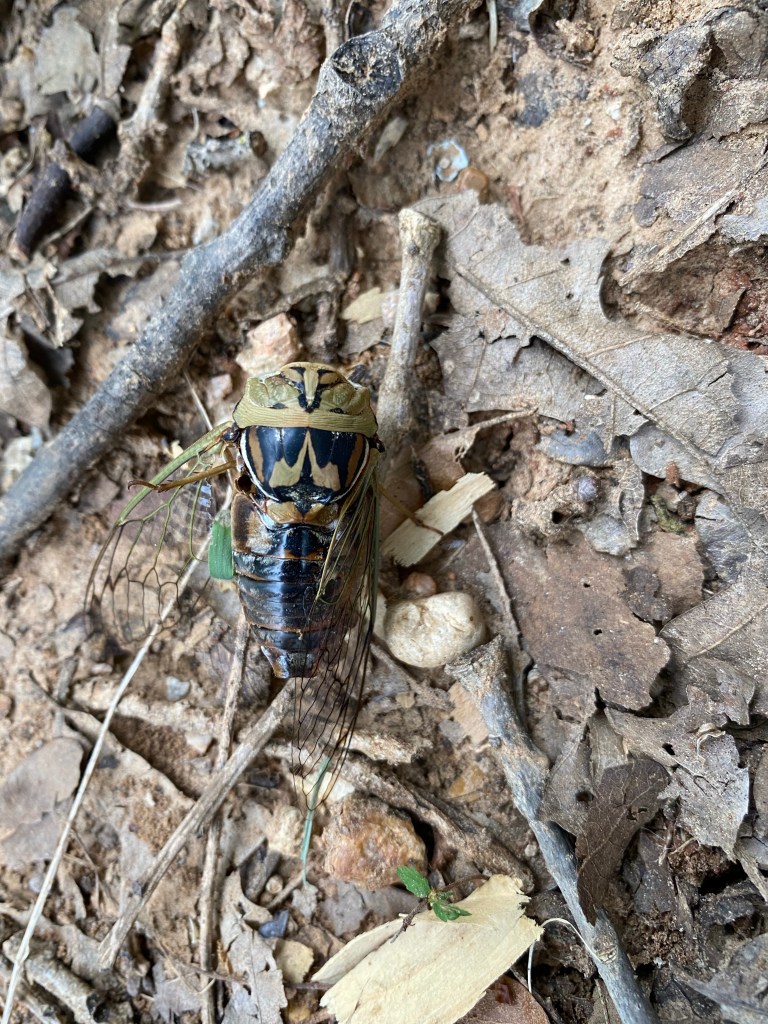
I have found cicada shells before, and seen adult cicadas, both living and dead, but haven’t witnessed a cicada emerging from their final molt. I have now, in spades. Every evening when I go to close the people doors on the coop, there is at least one cicada crawling out of its nymph form. I have to be careful not to crunch one in the door, and have had to relocate a couple so I could safely batten the hatches. Here are some of the pictures (not of the same individual).
The back of the cicada nymph has cracked and the adult is starting to emergeAdult almost free of the shellNewly emerged adult out of the shell (I had to move this one because it started the process in a door frame)Living adult cicada on the brick of the houseDeceased cicada in the leaf litter Empty cicada nymph shell
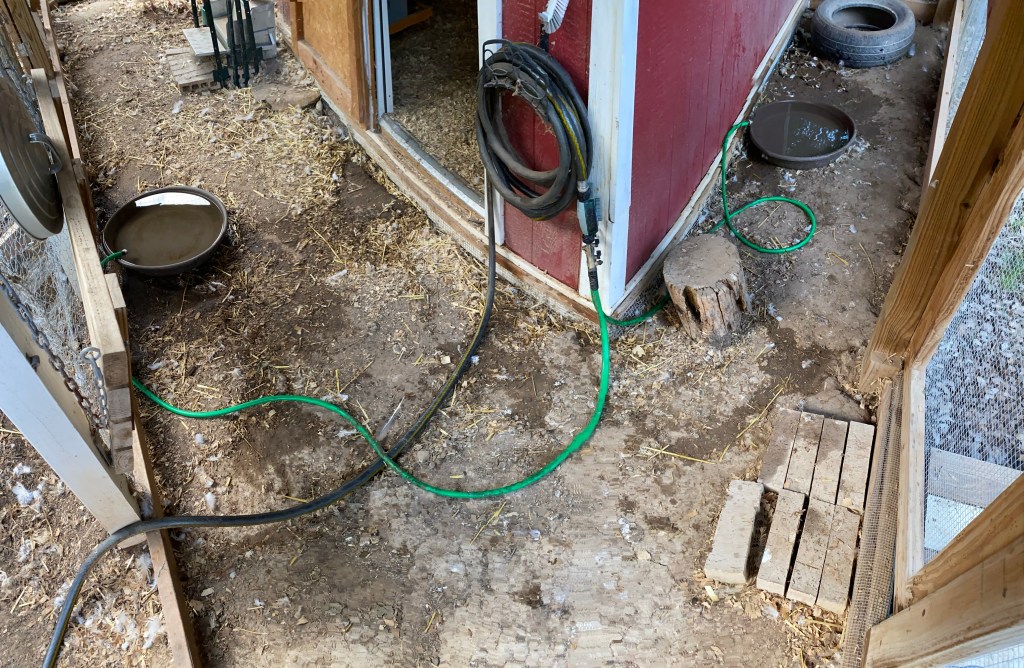
We took another quick weekend trip and before we left I set up the chicken’s run to make sure they had ample water. I have five water stations (probably overkill, but it makes me feel better). One hanging water dispenser inside the coop with fresh water, one hanging outside with apple cider vinegar added (this is their favorite for drinking), a dog bowl full (which in the winter gets plugged in to guard against freeze), and two foot baths. My hens love their foot baths, especially when temperatures soar above 95. The water in these gets rather disgusting after nine hens have soaked their feet in it. On a usual day I dump and refill these once or twice a day. Since I can’t do that from another city, I set up a water timer with a diverter to run hoses to both trays and flush out the water in the middle of the night. It worked quite well! Not as well as dumping and rinsing, but good enough for a couple days away. The trays are marketed as plant coasters, to keep water from outside pots from staining the floor. They are just the right height for chickens to step in, and big enough for two to stand together. I also add a few drops of oregano oil, which seems to help with scaly leg mites.



 Critters and Craft