Our meadow is bursting with Indian Blanket flowers, hurray! I love these colors and that they are doing so well, as some of the other wild flowers have put on a poor showing in competing with the grass.


Our meadow is bursting with Indian Blanket flowers, hurray! I love these colors and that they are doing so well, as some of the other wild flowers have put on a poor showing in competing with the grass.
Oh for crying in the mud. Sometimes, when following instructions and the product is just not coming out right, it is worth it to step back, walk away, and come back to it another day. That happened to me with the 8-strand plait bread. For my last loaf I abandoned the idea of eight strands and went with four. I tried again, this time armed first with eight strands of paracord. When step 6 says to repeat steps 2-5, but you repeat 1-5, things are bound to get wonky. With paracord (or any other rope), you can undo and try again much easier than with dough. After a few attempts, then some more practice, I was ready to give it a go in dough.

For my next attempt I think I need to stretch the strands out more at the beginning and as I go to get a longer, thinner loaf (more crust, yum!) I’m still following Paul Hollywood’s recipe.
I was sitting inside when the cats and dogs all perked up and were very interested in something outside. I left them all locked up and went to investigate. In the backyard I heard a couple thunks and a rattle, and then the rain spout suddenly started chattering at me!
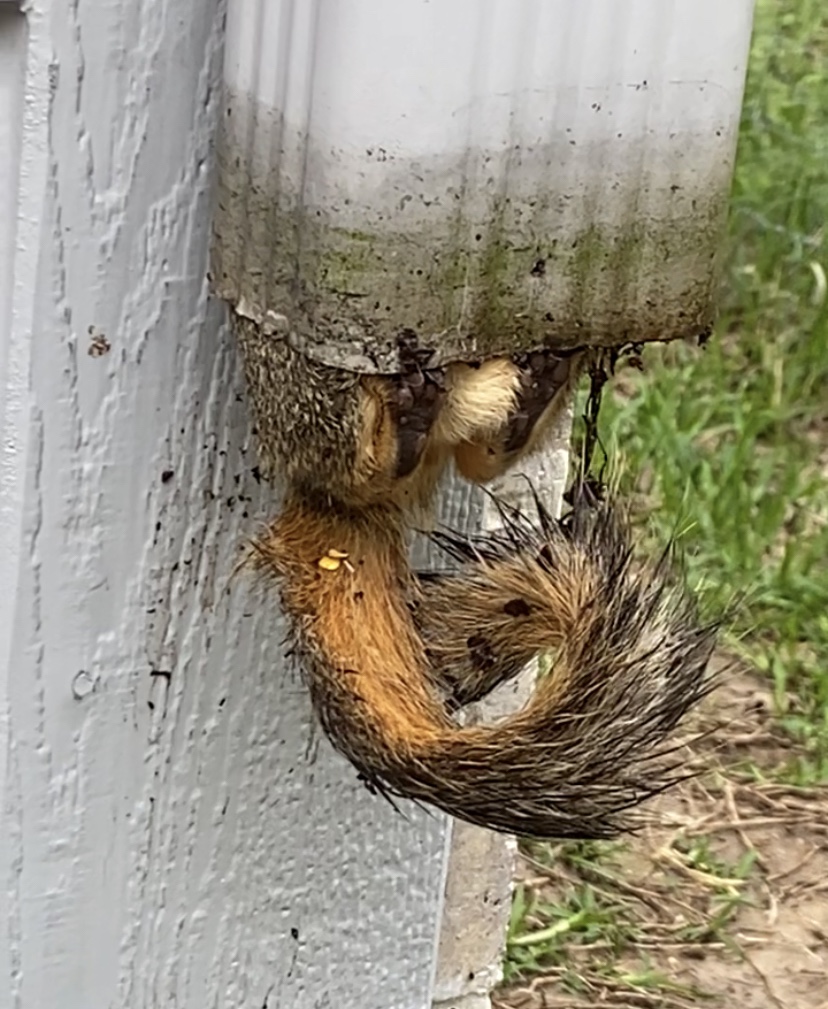
Silly squirrel. Looking for the corn that wasn’t in the feeder (oops) and he slipped down the rain gutter. The problem is that I have a rain diverter on that particular stretch of gutter and it was plugged with leaves as well (which explains why my rain barrel is empty despite all our rain.) Here’s the video. Spoiler: the squirrel makes it out! As a bonus, the leaves are now cleaned out of my diverter.
I saw instructions for random lace awhile ago. Loved it, wanted to try it, picked up needles and yarn to start it, then remembered how much I hated decrease stitches. Getting the needles in is tight, it is fiddly, it takes longer than a simple knit stitch, and I often drop the stitch instead of decreasing. I abandoned the project, going so far as to throw the printed version into the recycle bin.
Then I found the Prym needles (this totally sounds like an advertisement, but I am not getting kick back, I genuinely appreciate this product). The little nub on the end of the needle gives me just enough advantage to tackle the decreases with less frustration. It probably also helps that I am using a fingering weight merino wool yarn (small diameter) with larger than recommended needles (US size 8), so the stitches are not super tight and difficult to manipulate. Plus, since it is a random pattern, if it is too hard to make a decrease, I don’t! Rather than struggle and swear, I knit the stitch (or purl if I’m on the back side) and put the decrease in where it is easier.
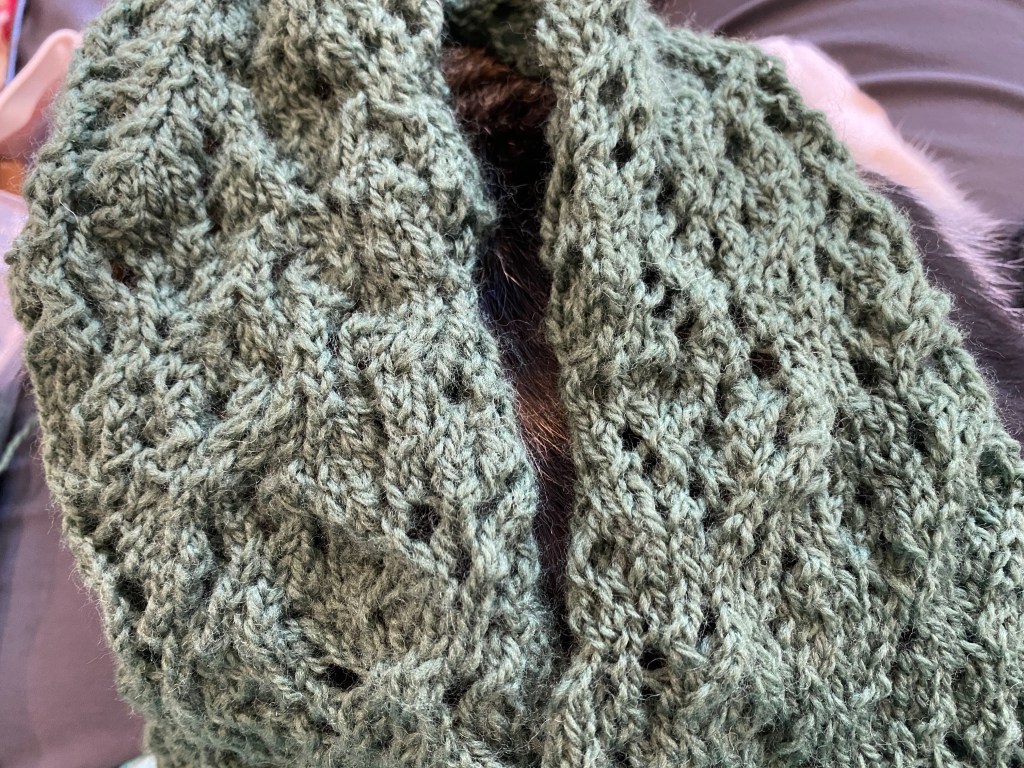
Now here is the magic part. When knitting random lace, the fabric is interesting, but more like crumpled paper. When it is blocked, it completely changes to a light airy organic lace!
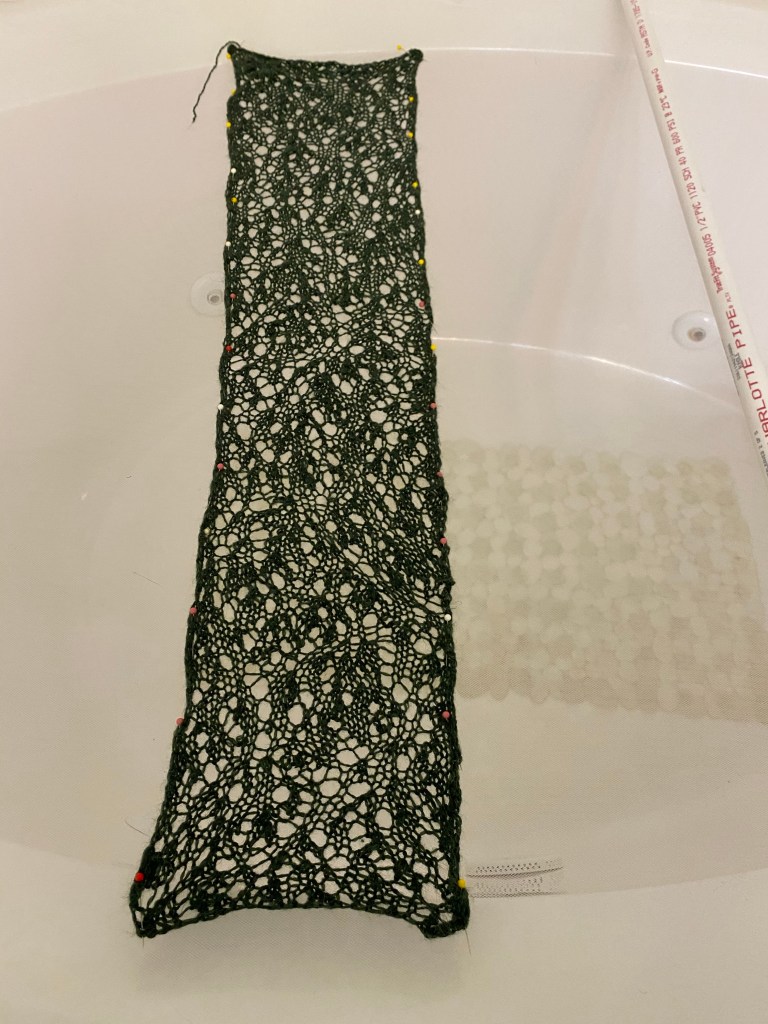
I blocked my sample by getting it wet, squeezing out most of the water (never wringing), and pinning it to nylon netting stretched over a PVC frame. Oh how it opened up! And when it was dry, it maintained it’s shape.
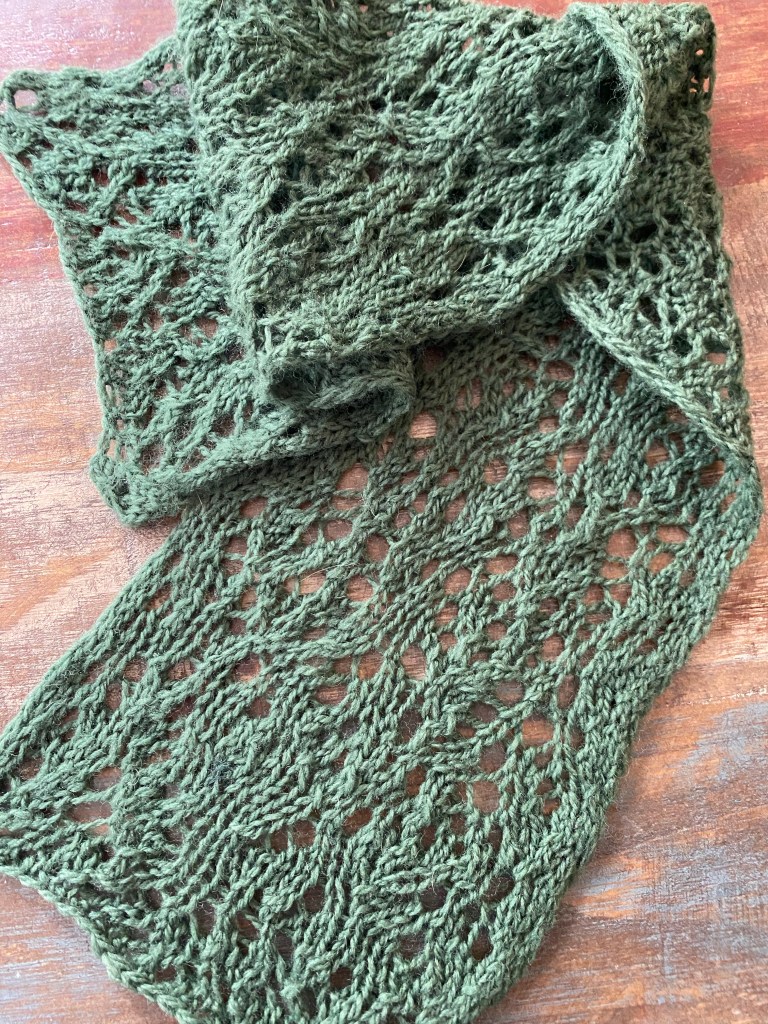
Structured lace patterns are lovely, but I always miss a stitch in the instructions (usually by getting distracted, imagine that). I can see that imperfection like a lightning bolt at night, but only after it is too far to go back (I know some will, but if I have to rip out half a project I will never pick it up again). I am pleasantly surprised that when gazing at this type of lace I see the surprise structure; the swoop here, the cluster of bubbles there; rather than seeing imperfections, I see order in the chaos.

I tried taking a picture of the morning mist as my eldest drove the school run. In situations where I can’t ask the driver to pull over so I can compose a shot, I tend to aim, hope, and take as many frames as I can. The brilliance of digital is that I can then go back and delete anything not worth saving. Sometimes everything in a sequence gets dumped. But never have I seen a ghostly skull in the sky. I had to scroll back, a what? Not a cloud formation, not a ray of light. What is in my photo? I won’t keep you in suspense, this is not that kind of blog. It turns out the “skull” is the reflection of the back of my camera in the car window, with its evenly sized and spaced dual lenses. Still creepy.
 Critters and Craft