… a three leaf clover? Ah well. Finding Sophie posing in the clover is lucky enough!
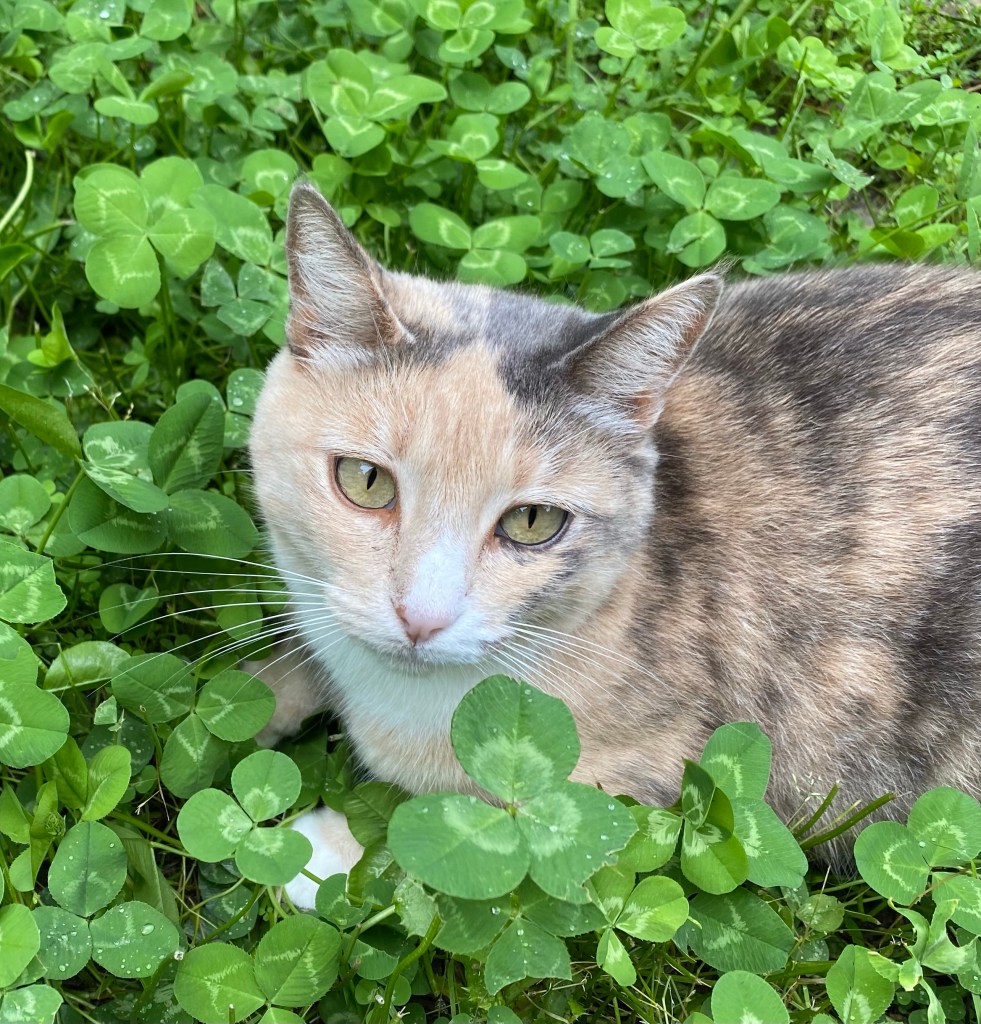

… a three leaf clover? Ah well. Finding Sophie posing in the clover is lucky enough!
I had a small bag of little skeins of cotton in a variety of colors. The bright hues and soft cotton seemed a good match for a baby blanket. I found an intriguing pattern for a waffle stitch blanket that starts in the middle, which is ideal for an item made of odds and ends, as when the yarn is done, so is the project. I also wanted stripes (which frankly made my project more complicated for yardage calculations, but the color interaction in this stitch was worth it). The reason the stripes increased the difficulty is that I needed enough yarn of one color to make it all the way around. Not a problem at the beginning, but quite the conundrum nearing the edge. I ended up weighing the last few skeins and putting them in order from lightest to heaviest to make it more likely to have enough.
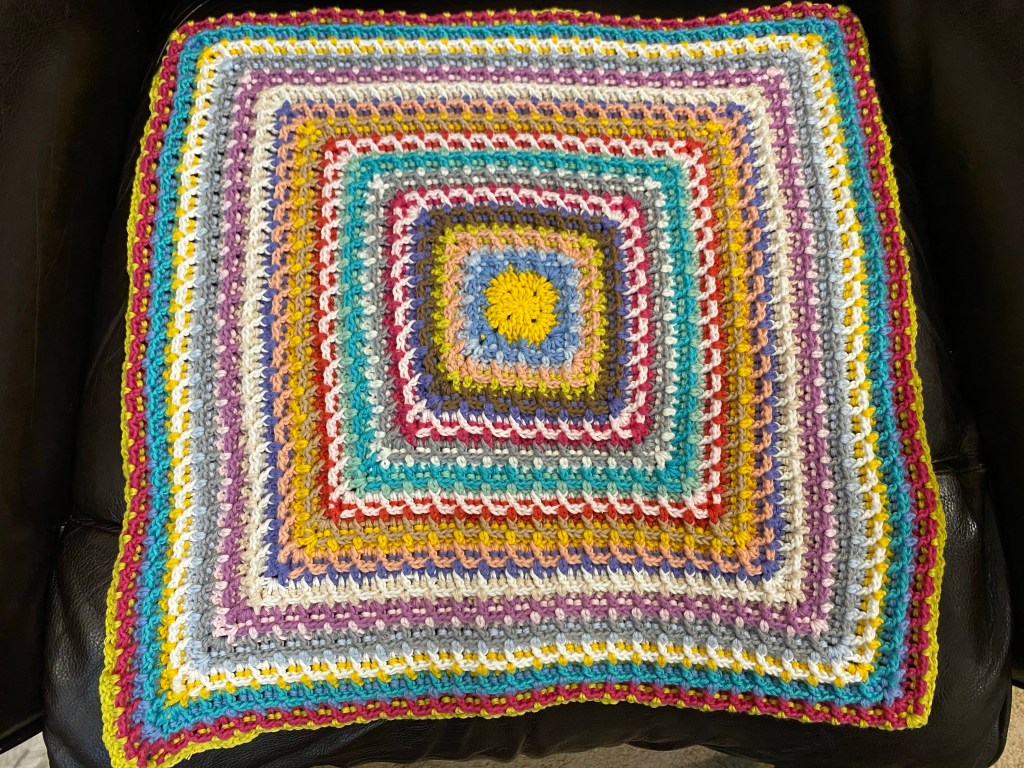
The instructions had me turn the work at the end, which to me seems to defeat the purpose of crocheting in the round. I do really like the two-row repeat, which makes it a very easy pattern to memorize, and the simple row pattern makes it easier to recognize where the stitches need to go. This idea works fine working only from the front, with no turns. To illustrate, I put together a chart (I like charts better anyway). I made this one in Adobe Fresco, but I think if I needed to make one with any more rows, I would work on a desktop in Illustrator so I could align the rows more precisely.

I’m still a student of colors and how they interact (and probably always will be), and the fascinating thing about the build of this blanket was the way the the colors looked pastel crammed together in the bag, but became quite bright the way I ordered them in the blanket. I made a hat in double crochet stitch (American notation) from the bits and bobs left over from the odds and ends of the blanket and the overall color feel is quite different.

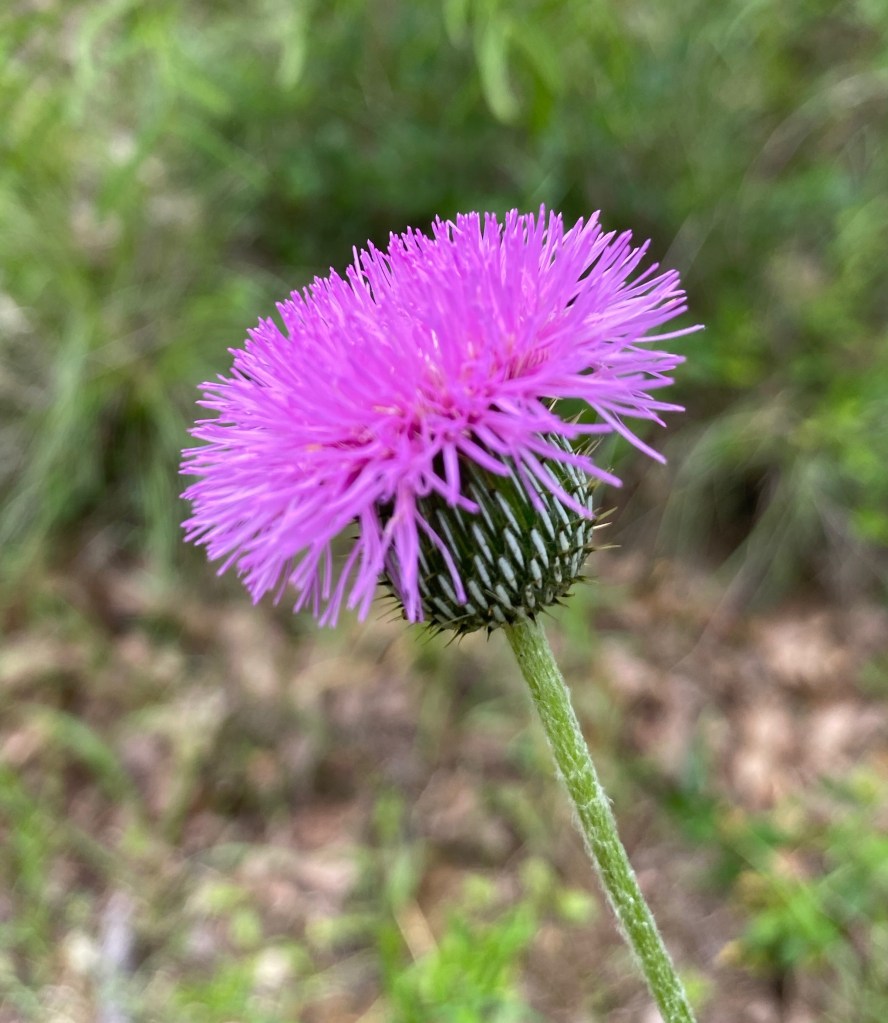
I quite like thistles. I like the symmetry and aesthetics of the blooms, as well as the nice complementary color scheme. I’m not so found of walking through prickly vegetation or wrenching the thorny stems and leaves from the lawn, but on the edge of a meadow with the forest background, they are quite lovely. I particularly like the curly leafed thistle because the foliage is slightly silvery. The thistle pictured, though, is probably a Texas thistle. Also still pleasing and since it is growing out on the edge away from walk ways, it can continue it’s lovely prickly existence. Here is an interesting post about native and invasive thistles in Texas.
There was a little honey bee crawling around in our back yard. I was concerned for his safety (I think it may be a drone, large eyes and no stinger), so I moved it outside the fenced area and away from the dog’s feet (and noses). I did offer him some sugar water, but he wasn’t interested. Good luck finding what you are looking for little bee!

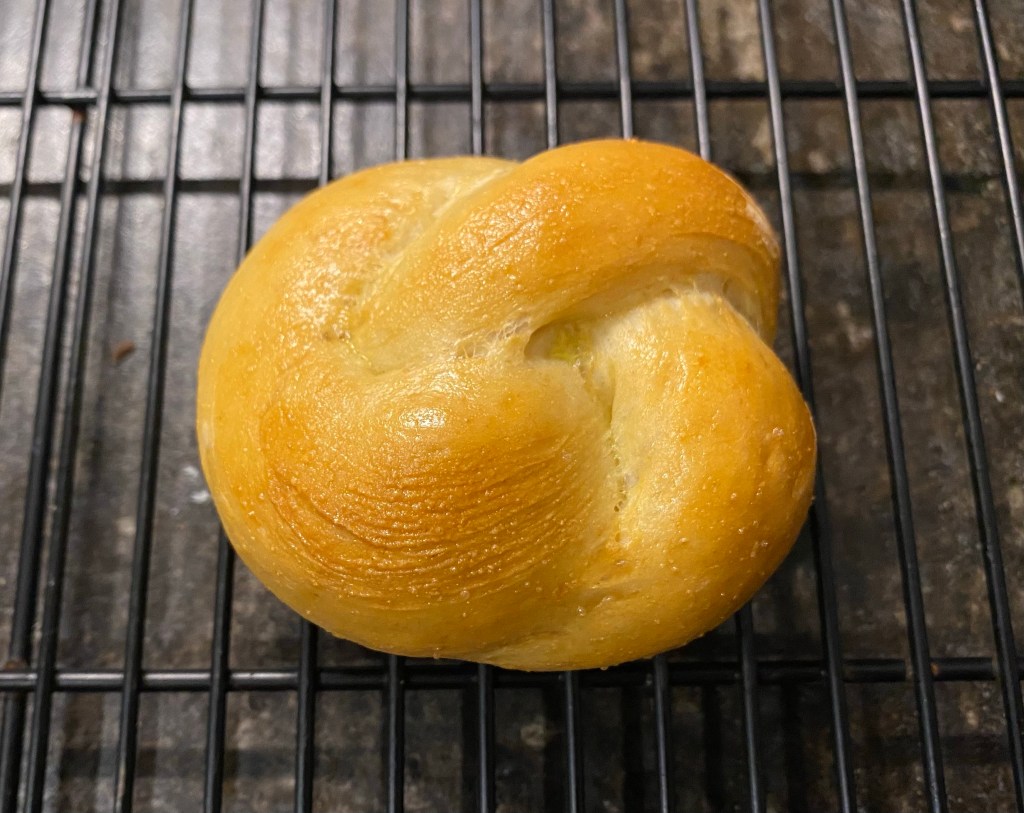
I tried knot rolls this time, using the same simple bread recipe that Paul Hollywood uses for his eight strand plaited loaf. They tasted really good; chewy crust with a soft center! The knot was a simple overhand knot with the end tucked in. However my sizes were all over place, so I’m giving you a picture of the best roll, both before and after baking. Know though, that this was not typical. I’m not trying to prove myself; it’s a knotty problem to share but also to keep it real, so I will try to rise to the occasion in words, but not provide photographic proof. (I’m on a roll with these puns! And I’m done now.)

 Critters and Craft