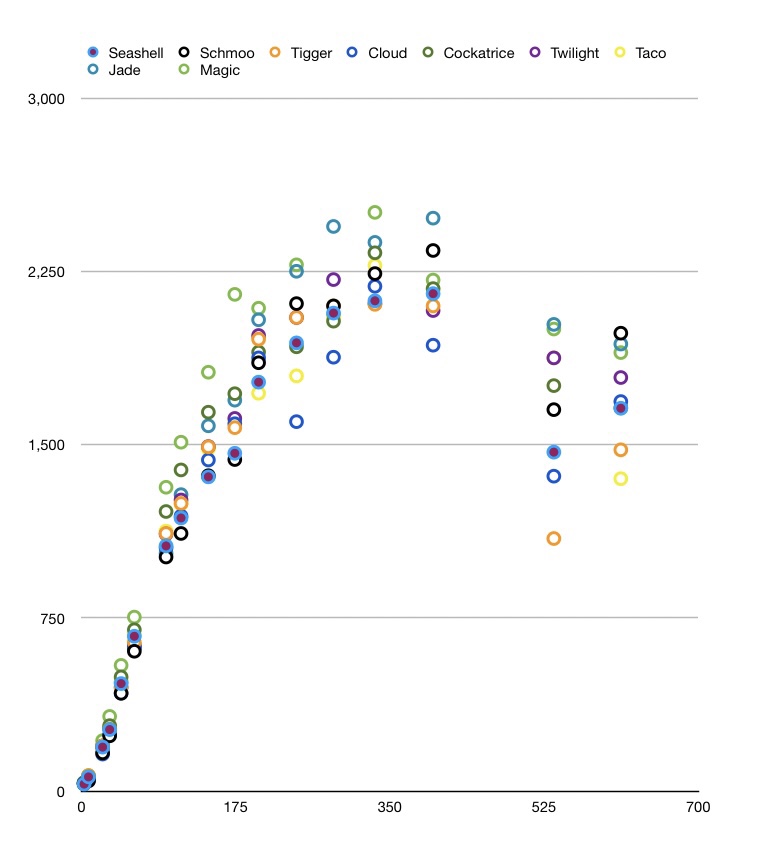
My eldest helped me with another chicken check. We really should be doing these monthly. I read that feathers growing back in is painful and have been trying to minimize contact. We treated everyone for scaly leg mites with a essential oil ointment. Most of the chicken feet looked OK, but a few had definite lifted scales. Some have gained weight, some have lost. Taco and Tigger were the lightest and they both have the lifted scales on their feet and legs. Gail Damerow, in her chicken health book, recommends slathering the legs in petroleum jelly for a week. Taco is our hardest catch, so we’ll do what we can.
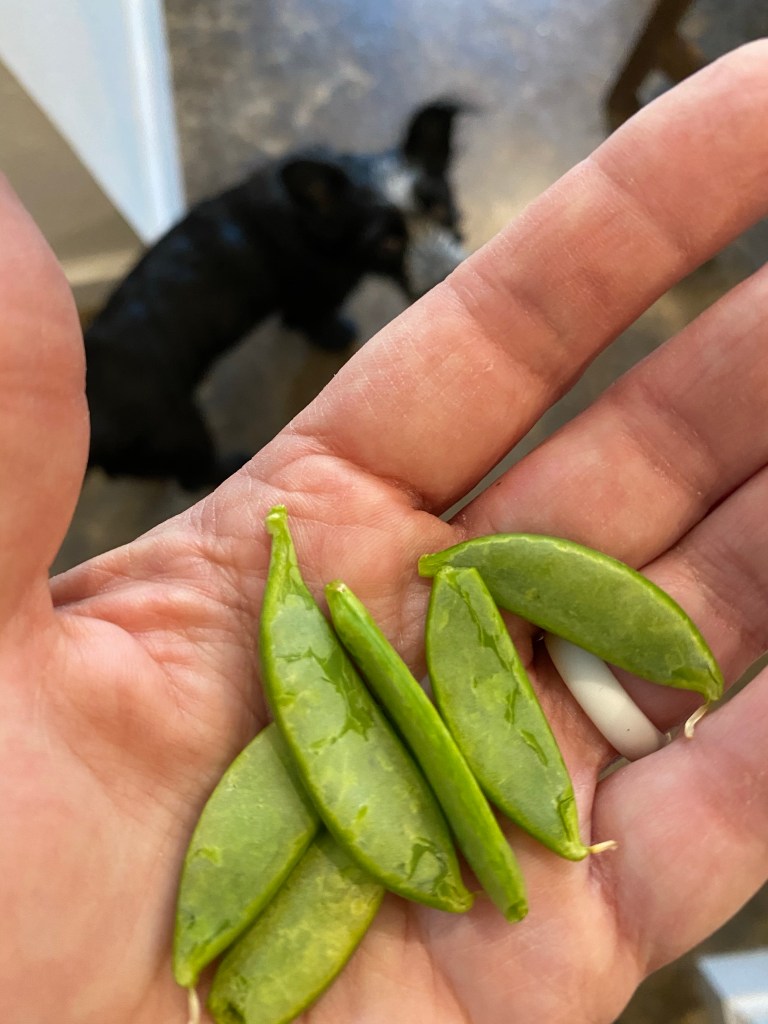
The freeze marred the snap peas, so I harvested them even though they were small. They tasted OK. Yes, this is the full harvest. But it is better than nought!
I have learned a new skill! Hurray! I have probably been watching too much Forged in Fire; I had a desire to learn to set a pin in wood, which they don’t actually show how on the screen. Turns out, it is not that difficult. Getting the holes set evenly is another matter!
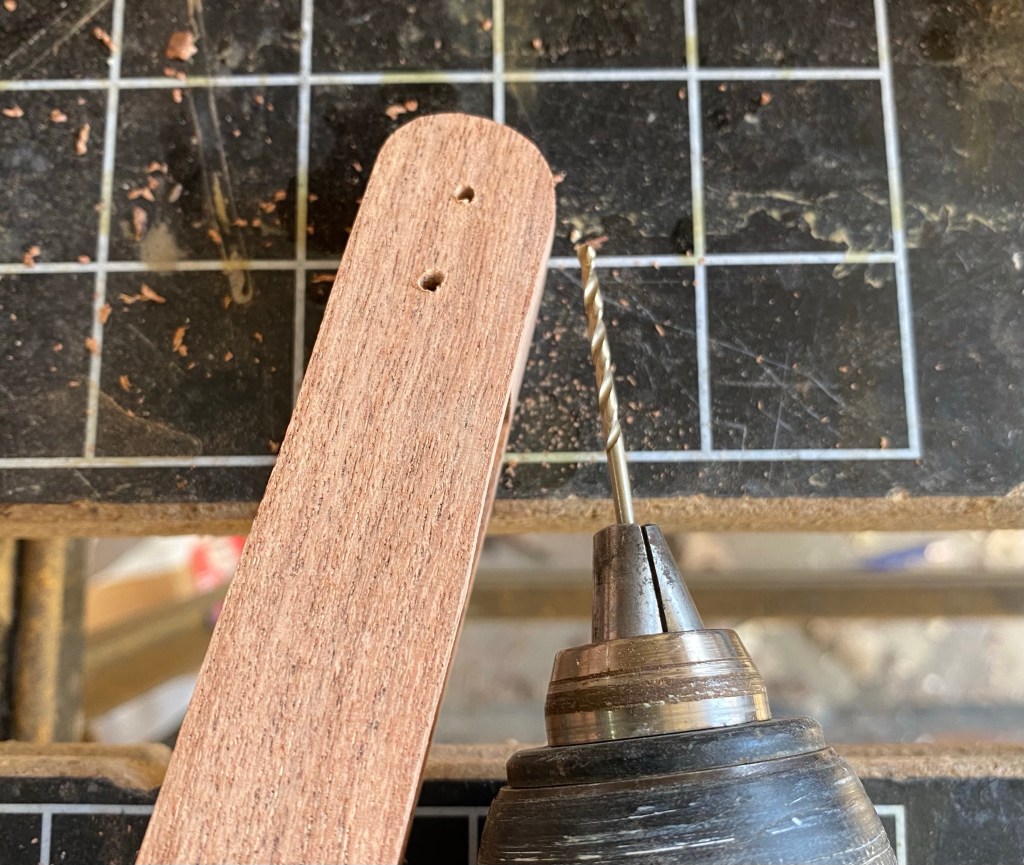
Drilling holes
First, I drilled holes the size of my brass wire. My drill bit was the exact size, so I had to ream it out some to get the wire through. When drilling, support the back of the piece with scrap wood. By drilling into the scrap wood, you reduce the chance of blowing out the back of the hole (that is experience talking!)
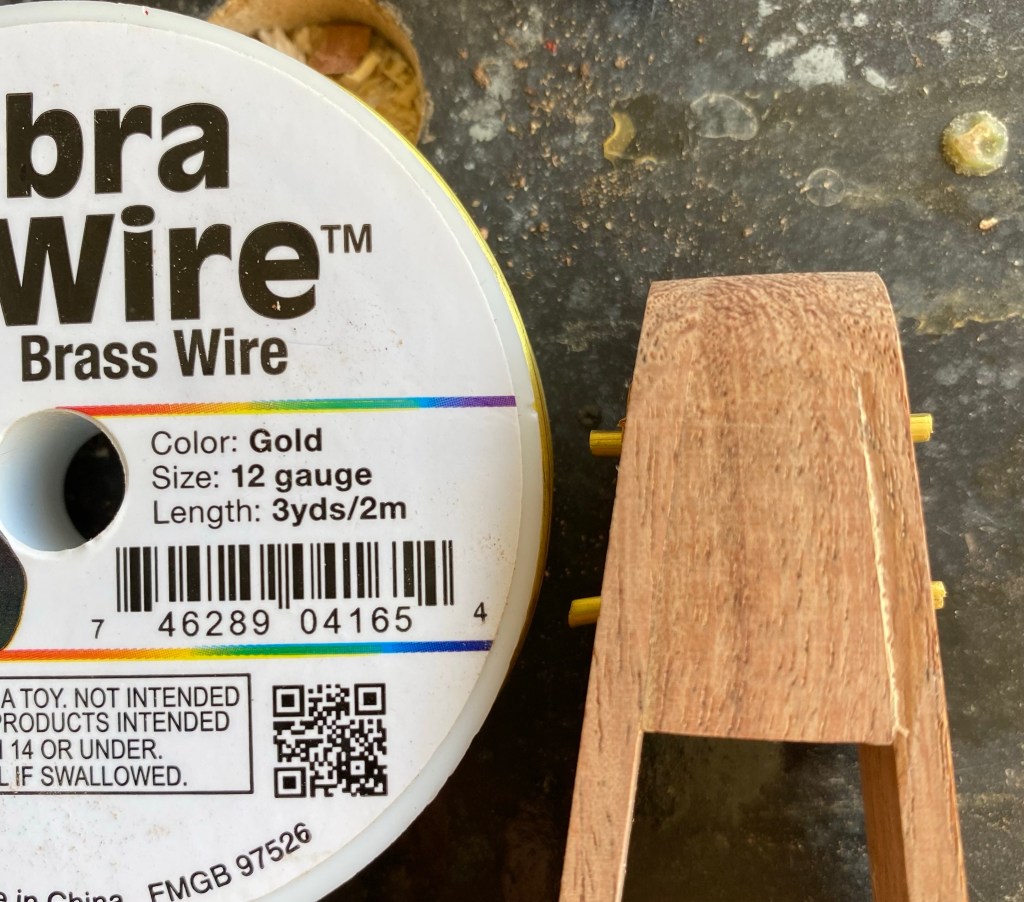
Wire inserted through the holes and trimmed 1/8” inch on each side
I cut my wire flush and to about 1/4” longer than the width, so that when fully inserted, the wire sticks 1/8” out each side. The fit of the wire should be snug; I used a hammer to drive it through.
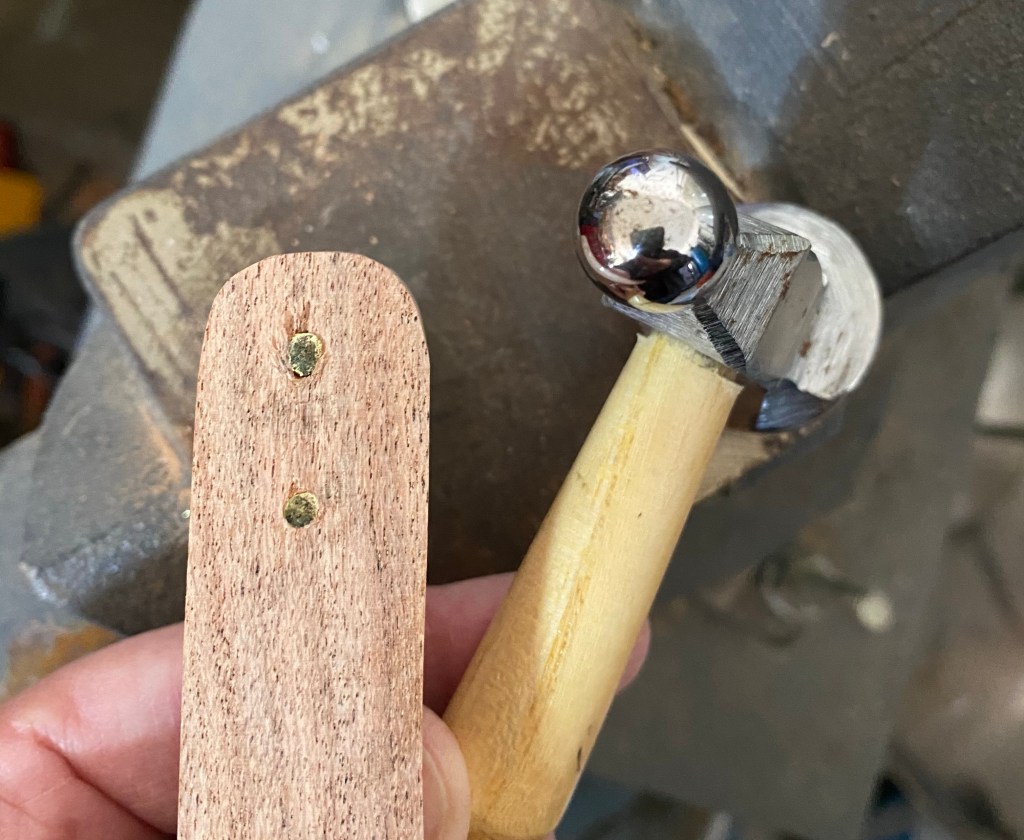
Flattening out the ends of the wire with a ball peen hammer
I took the work over to the vice, because it has a small anvil area. I used a ball peen hammer to mushroom over the ends of the wire. By hammering a few times, then flipping it over, I was able to flatten out both ends of the wire. I hammered around the edge of the wire (mostly, still practicing), rather than straight in the middle. This pushes the metal outward to round the end and wedge it into the wood.
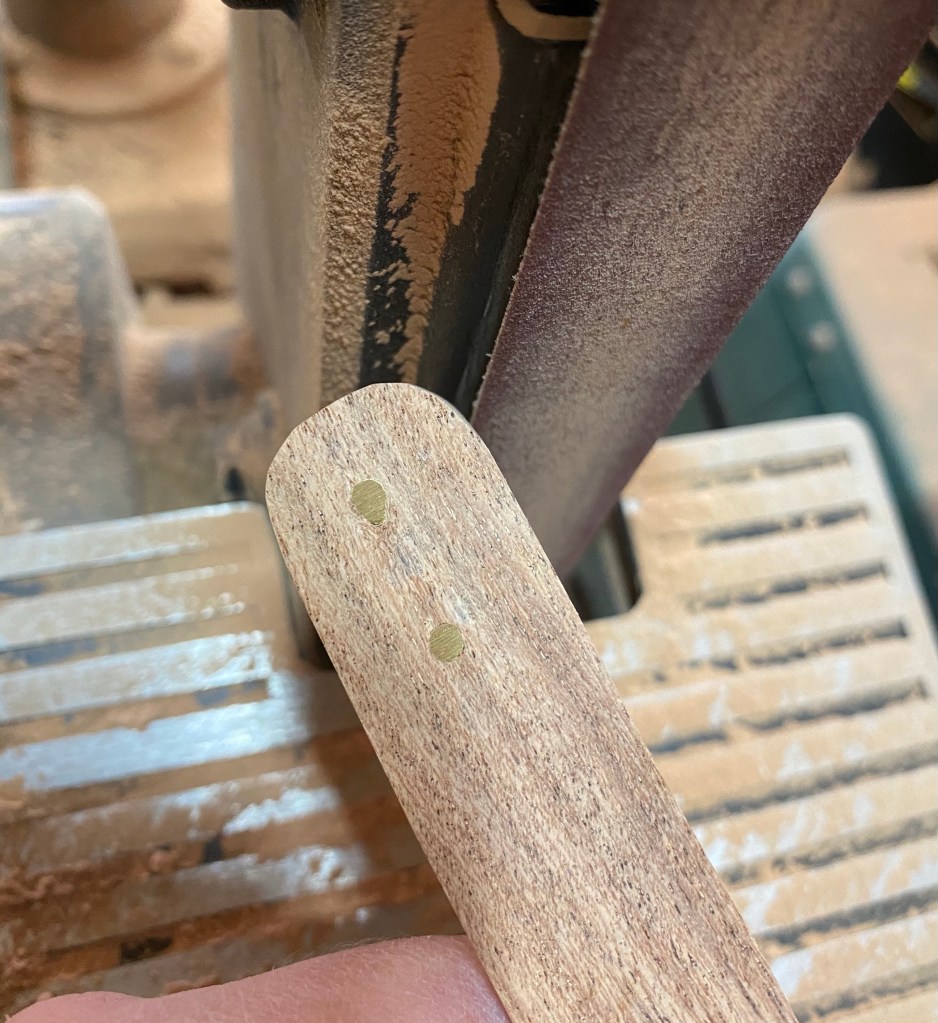
Sanding the pins smooth with a band sander
To finish, I sanded off the top of the pin so the top was smooth. The resulting brass circle is larger the than the initial hole, and fills the hole completely, so I’m fairly confident it will hold. Fun! Now what else can I pin…
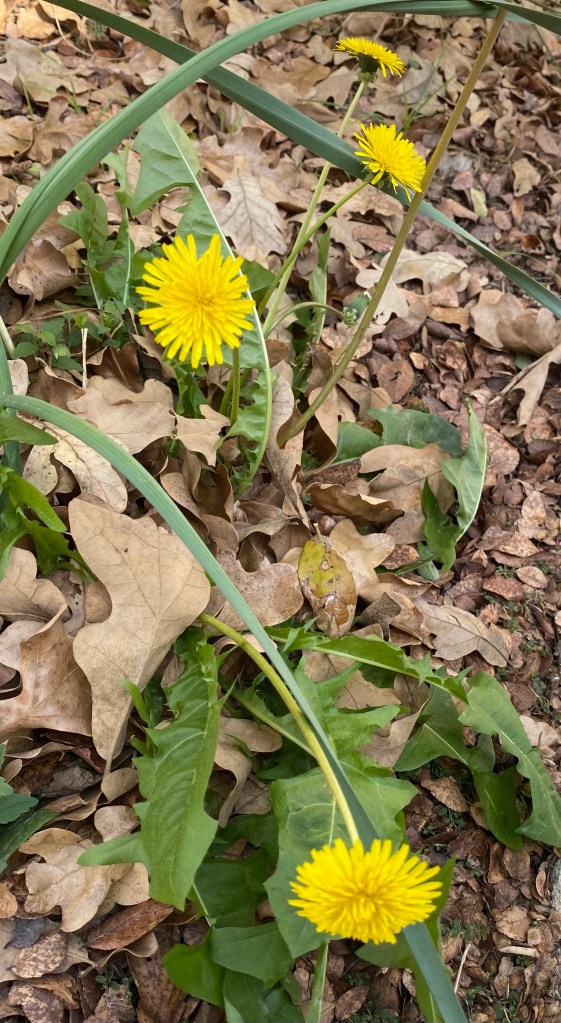
I’m not sure if I’ve never seen dandelions blooming in December, or if I’m just looking for more 2020 weirdness. This is a common dandelion; it turns out there are other varieties as well, but for me, this is what I mean when I say dandelion. And no, I don’t pull them.
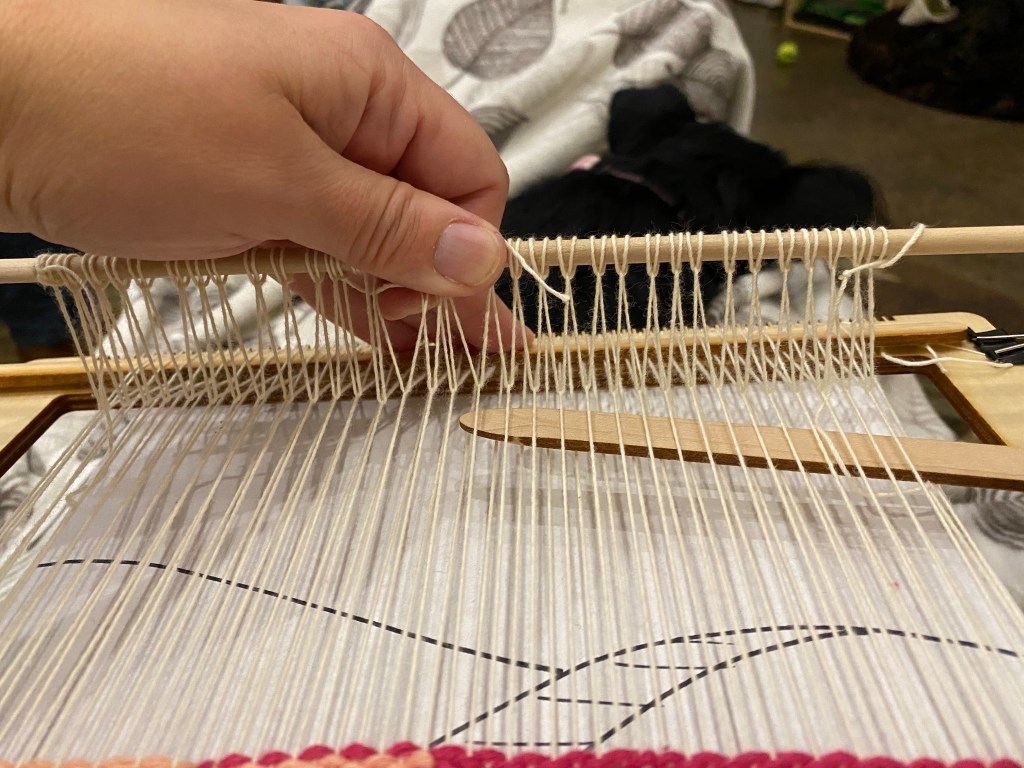
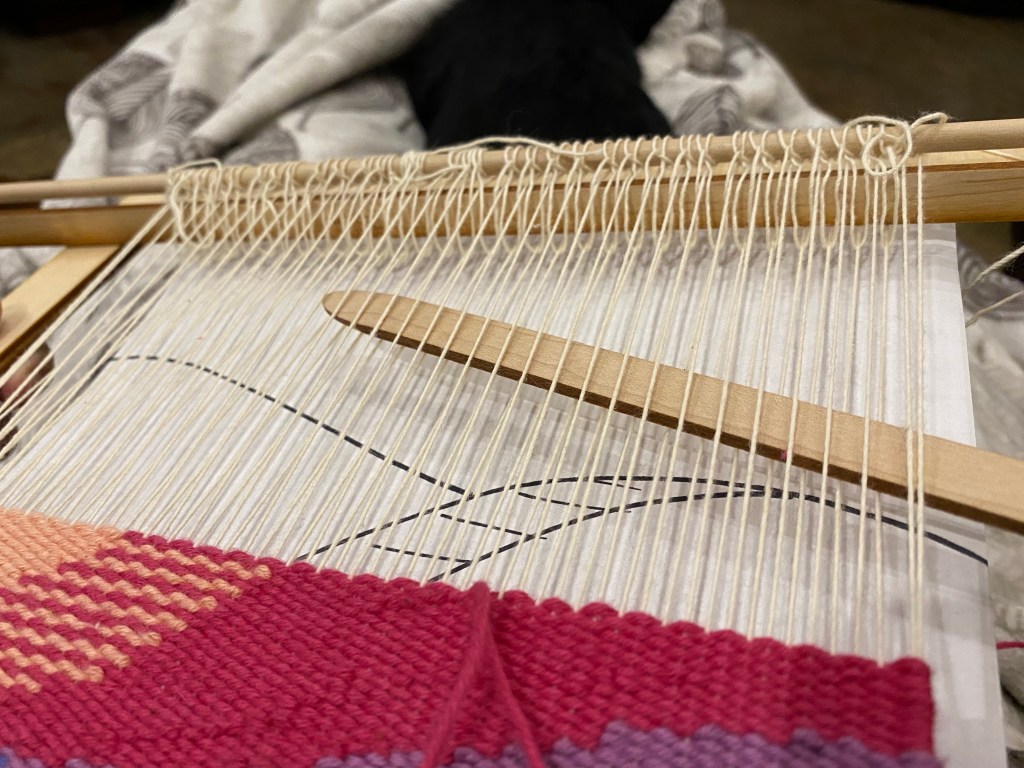
A heddle is something in weaving that holds threads of the warp to make it faster to weave. Rather than picking over and under each warp thread with the weft, heddles can be arranged to lift (or lower) alternate warp threads so the weft yarn can pass through (the tunnel created is called a shed). Heddles come in many forms, but I learned how to do a continuous string heddle when I was reading about back strap looms. I decided to try one with my frame loom.
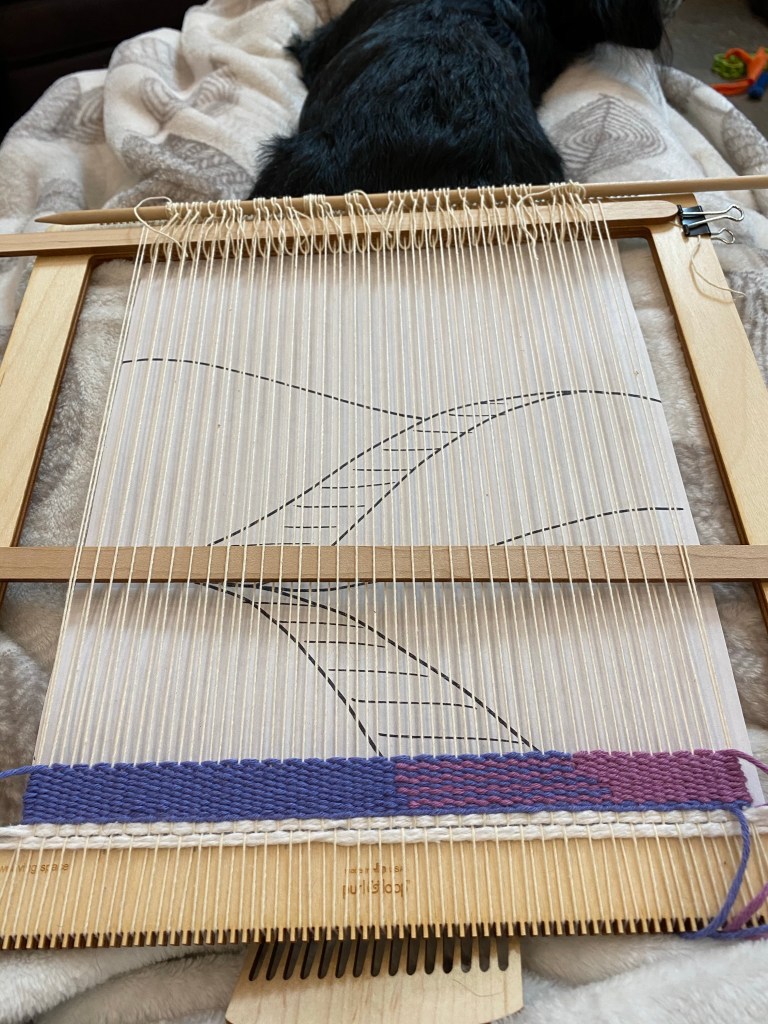
Frame loom with continuous string heddle at the top, and a cartoon (pattern) attached behind
I used the same thread as my warp (I’m still working away at the found ball in my inherited stash), and used a slip knot to start, then looped the thread around every other warp thread, securing each loop with two half hitches. I used one of my pick up sticks for the alternate threads. It took awhile to secure all the loops, but now that it is set up, it is much easier to switch sheds. Weavers call the drawing used as a guide a “cartoon”. My cartoon is helping guide my curve work.
Opening a shed with a continuous string heddle, then using a pick up stick to hold the shed openShed kept open with a pick up stick to make space for the warp threadOpposite warp threads lifted with a second pick up stick


 Critters and Craft