This toy is a beast

12-year-old Fisher-Price Sooth and Glow Seahorse

My youngest has had a glowing seahorse as a bedtime buddy for over 12 years. This thing is a beast! It has survived fire and flood and moving. I’ve washed the cover (separately from the electronics), replaced batteries, and since she is so attached to it, had a second as backup, which has also lasted 12 years. Until I dropped it on the floor before bed and the music stopped. She got the spare, and I went to work with the screw driver set.
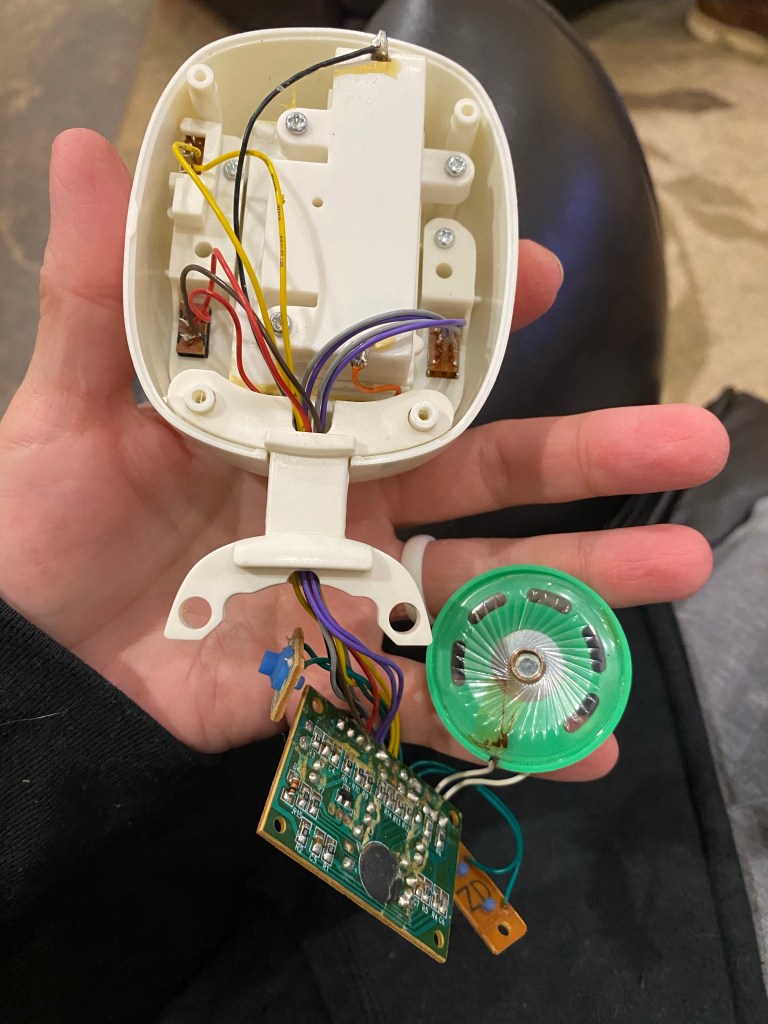
Seahorse toy guts, speaker on the right

Turns out the speaker had a part that was knocked out of alignment. The small metal ring in the center was misaligned, and I was able to shift it back into place. It worked again. I had that thing down to its wires (which were all still tightly soldered) and was able to put the batteries in and hear the music. Tough little thing. Then, when writing this article, I discovered Fisher-Price still sells them. Only now they also come in pink. Yes, I ordered one. Yes, I now have back ups for my back ups.

Night time medicines

So I’ve read over and over that the best time to treat chickens is when they are asleep on their roosts. Not my chickens, until now.

Previously going into the coop at night meant the hens would be awake and would start moving around on their roost. They seemed to never sleep. This is what happened the first time I tried giving leg treatment for scaly leg mites at night as well. We had to keep track of who was treated by looking to see if their legs were shiny with the VetRx oil!

VetRx oil that we just used to treat dry legs on hens at night

Three days later we treated again. Same time, but I had moved the roost a little further from the wall to give room to get around, and we used a blue light instead of red. (We have a flashlight that has white, red, and blue options.) The night was also much colder. I’m not sure the light made the difference, but the hens did not have an escape party this time. They stayed in their place on the roost as I rubbed their feet and legs with the oil. We will continue to apply every three days until the skin on their legs no longer looks dry. This method is so much easier than chasing them around during the day!

Weaving in ends

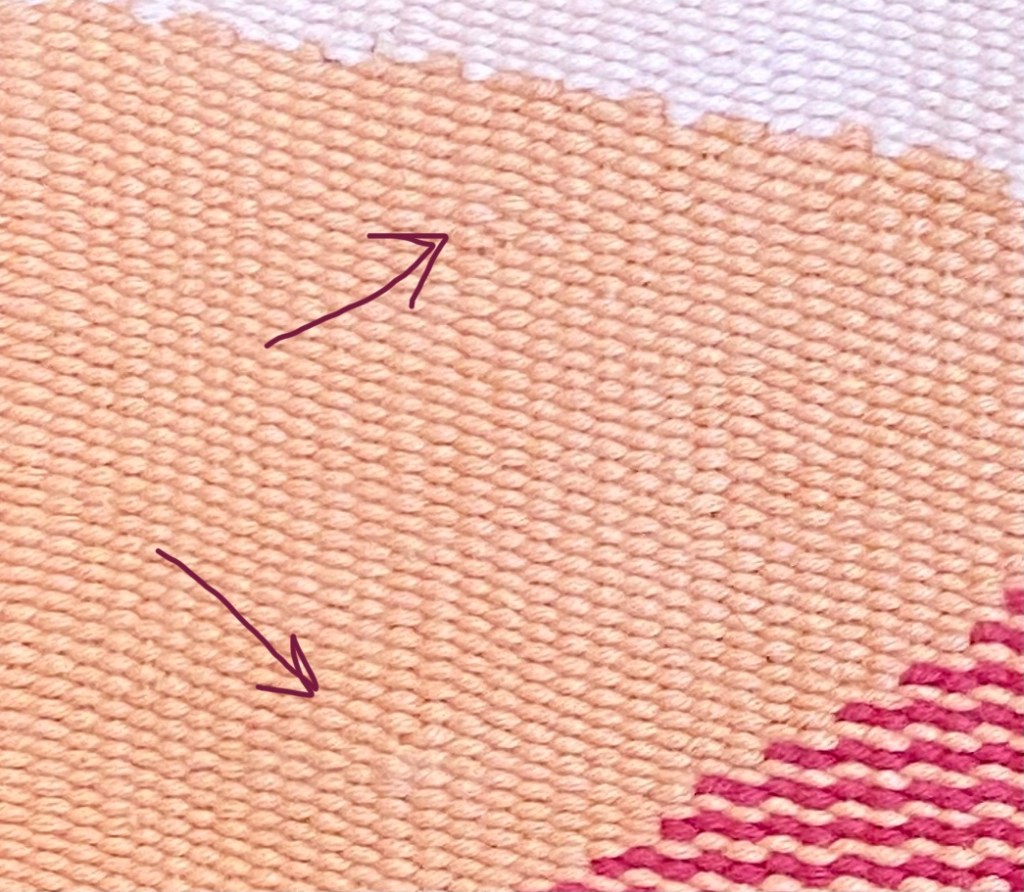
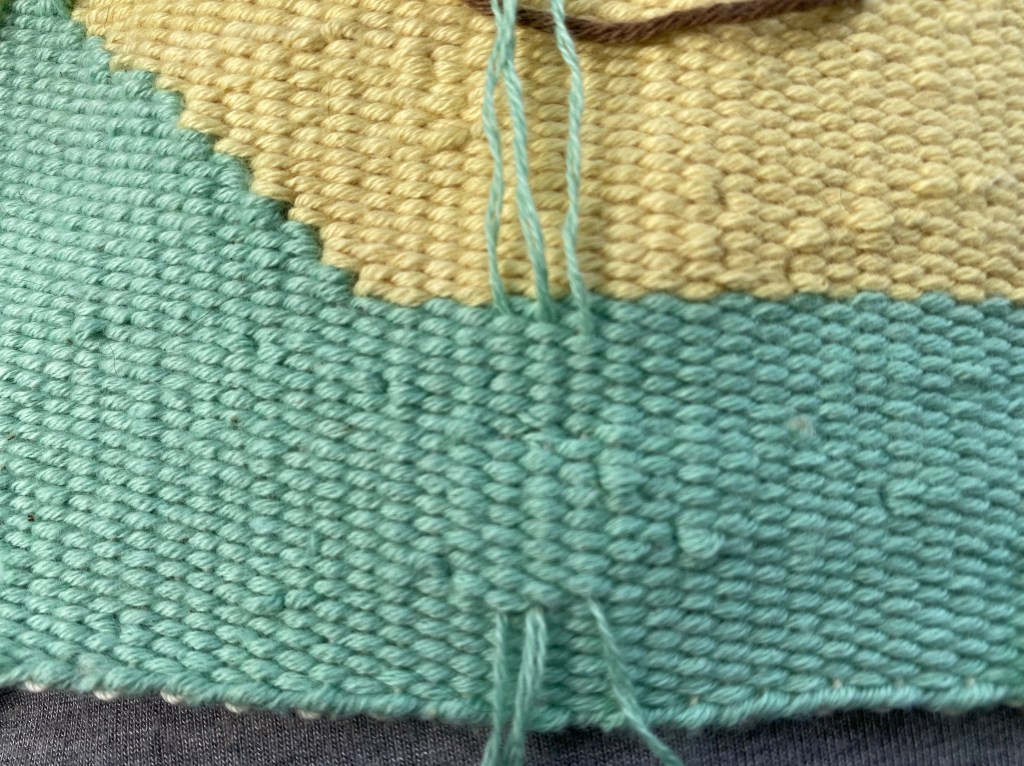
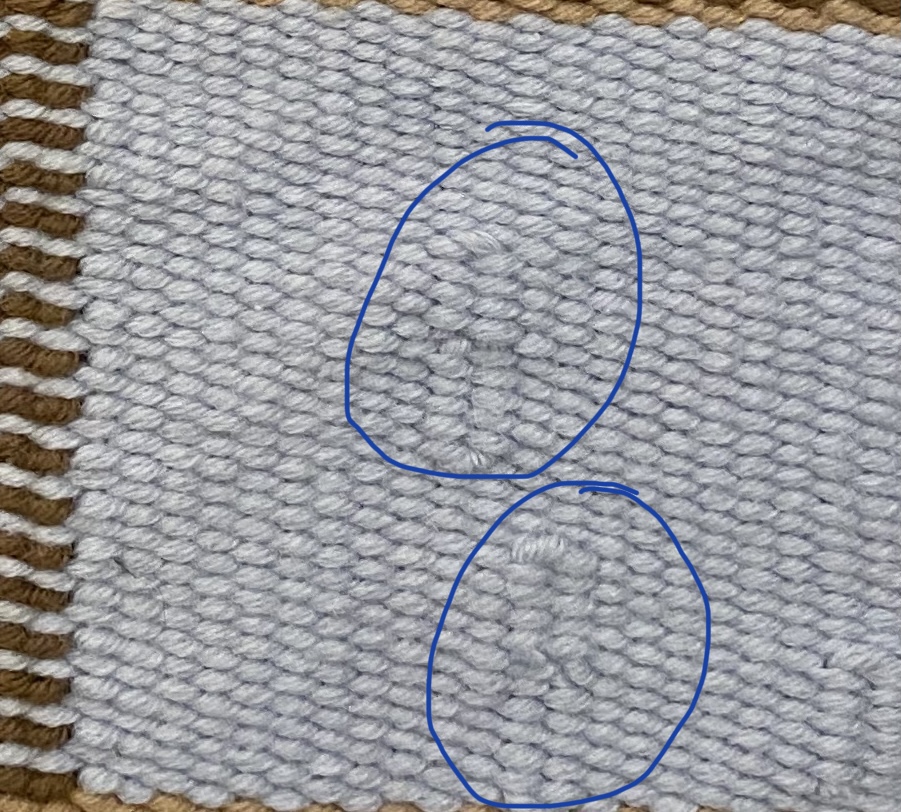
I’ve been experimenting with dealing with the ends of the yarn when weaving. I tried my standard way that I use for knitting and crochet, which involves running the end through the work and back again, which leaves visible traces. Then I tried splitting the yarn and weaving in sections, which gives a much nicer finish.

Back of cotton weaving with ends woven down and back, which makes a visible standing oval
Back of a cotton weaving with ends split and woven in, with arrows pointing to where the work was done
Back of cotton weaving with split and woven ends, before trimming

Yes, splitting the ends and weaving in the sections triples the times I thread a needle, but I think the end result is worth it.

Aw

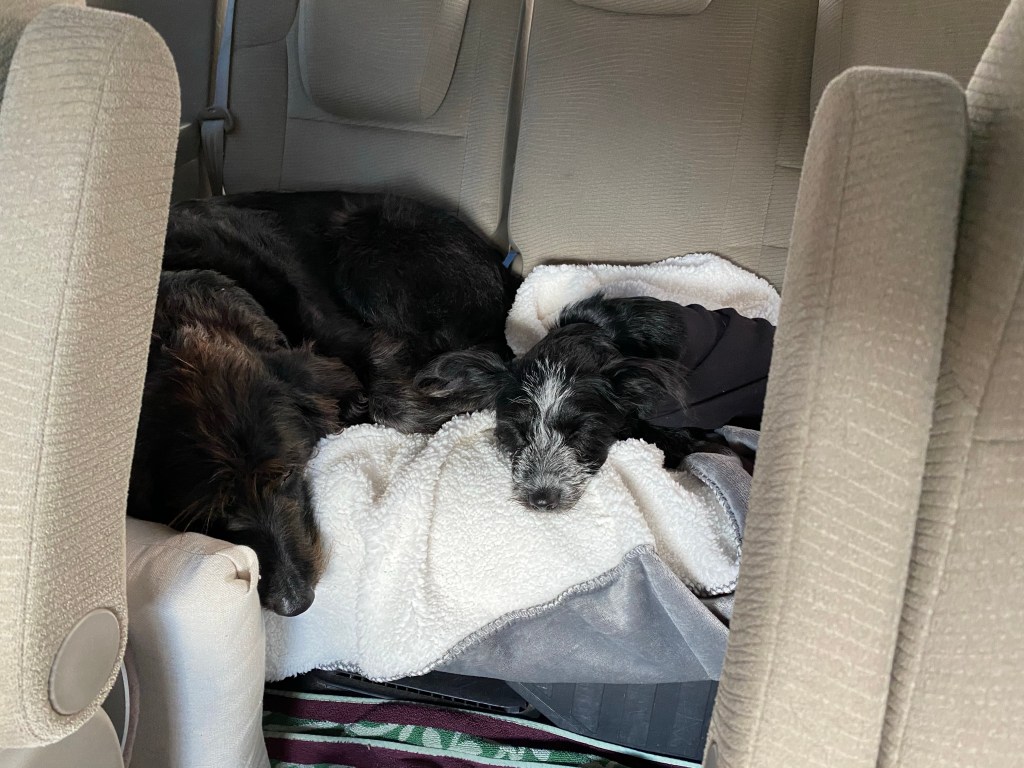
Griffin and Missy napping in the car

Griffin actually let the puppy lay next to him in the car. She has truly won him over!

Woven washcloth

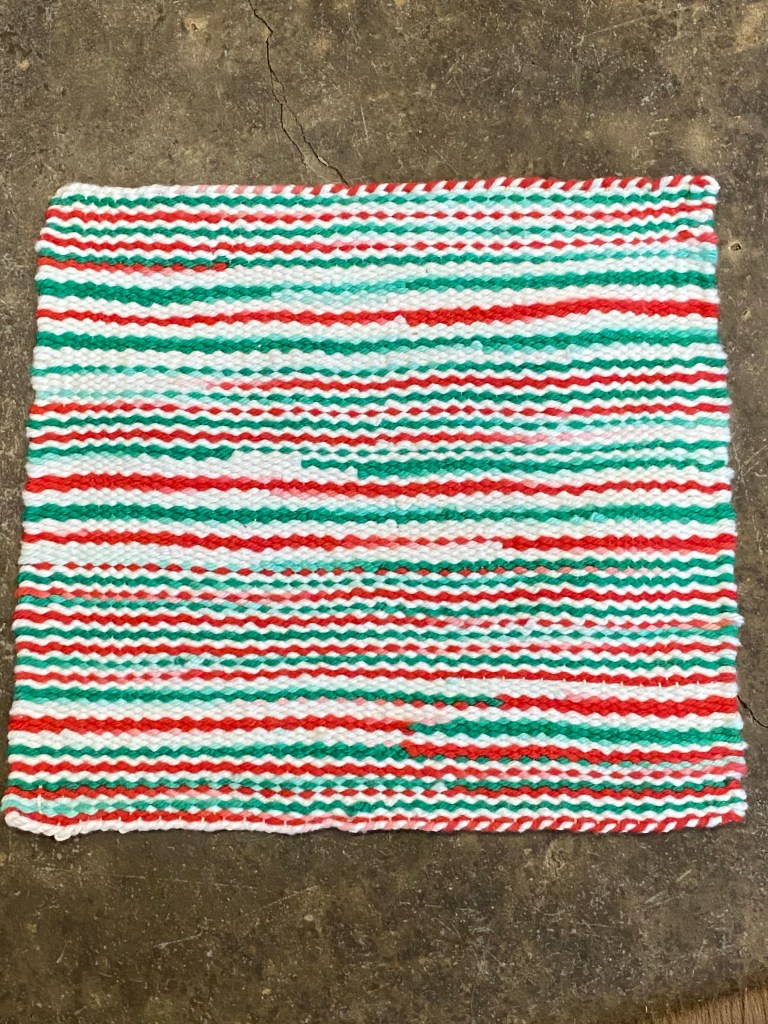
Washcloth woven with variegated yarn

So I’m learning. I blocked (got it wet, laid it flat to dry) my variegated yarn washcloth, and although the pattern of the yarn was interesting, my edges are definitely wonky. The sides are a little better where I used the meet and separate method described in Rebecca Mezoff’s book, and it also changed the variegation pattern, which is neat. (The three sections where the lines are thicker are done with two bundles of yarn, rather than taking one bundle all the way across.)

What I liked: the way the meet and separate weaving method made thicker lines.

What I learned: adding a twined pass at the bottom helps space the warp threads. I added another twined pass at the top for balance.