Chemistry

Had to dust off my chemistry degree to tend to Navi. The treatments for impacted crop were not working, so we moved on to treatments for sour crop, thinking that she has a fungal infection in her crop. I’m still following the advice in “The Chicken Health Handbook” by Gail Damerow. For sour crop, she recommends a flush, then treatment with Copper Sulfate. To make the Copper Sulfate drinking solution, first you have to make a stock solution, then add a little of the stock solution to a gallon of water. This is where my chemistry neurons had to be dusted off, and frankly I had to consult with my chemist Mom, because inorganic chemistry has never been my strong point. I made the stock solution and drinking water, which promptly turned cloudy and a little while later had precipitates at the bottom.

Copper Sulfate Solution made with softened water (precipitate formed)

Copper Sulfate solution should be clear. I figured out that it was probably that I used softened water from the sink, so remade both solutions using Reverse Osmosis water. Ah, a clear solution. My Mom hypothesizes that the precipitate was probably Copper Chloride Hydrate. I could have tested the precipitate, but I had already used the solution for a root killer in the yard, pouring it on poison ivy and saw briar stems. Copper Sulfate is a fungicide and a root killer.

Copper Sulfate solution made with reverse osmosis water (clear!)

We’ll see if this treatment helps Navi. She is in isolation, but I’m glad I took my Dad’s advice because the isolation ward is at a good height, I can lean in, and it is plenty big for one chicken. Navi can see the other chickens, has a roost, food, water, and even a small foot bath. Although with her medicated water, she only gets a frozen water bottle on a plate so she doesn’t drink foot water. Ugh.
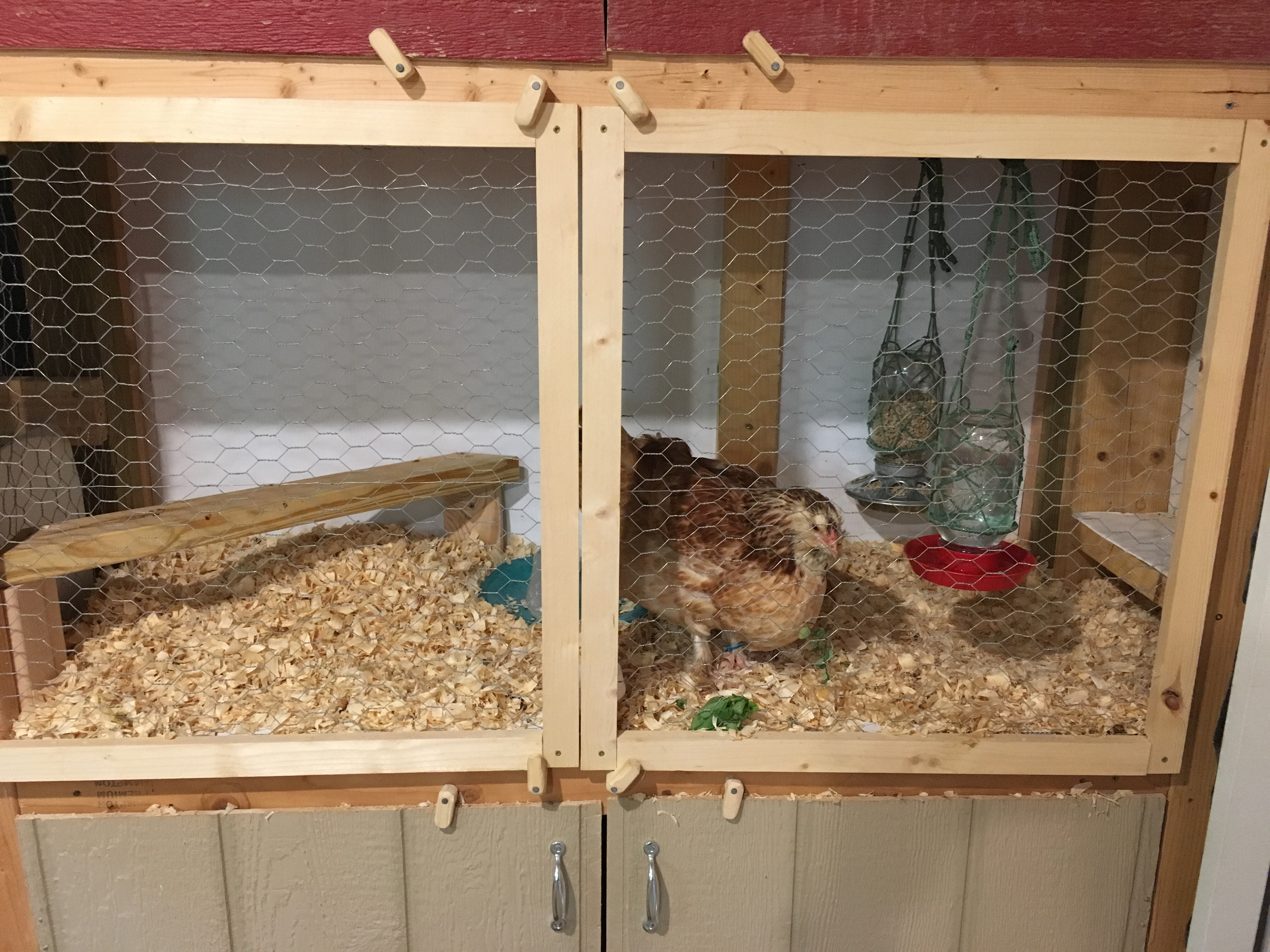
Navi in the isolation ward

Mohair hat

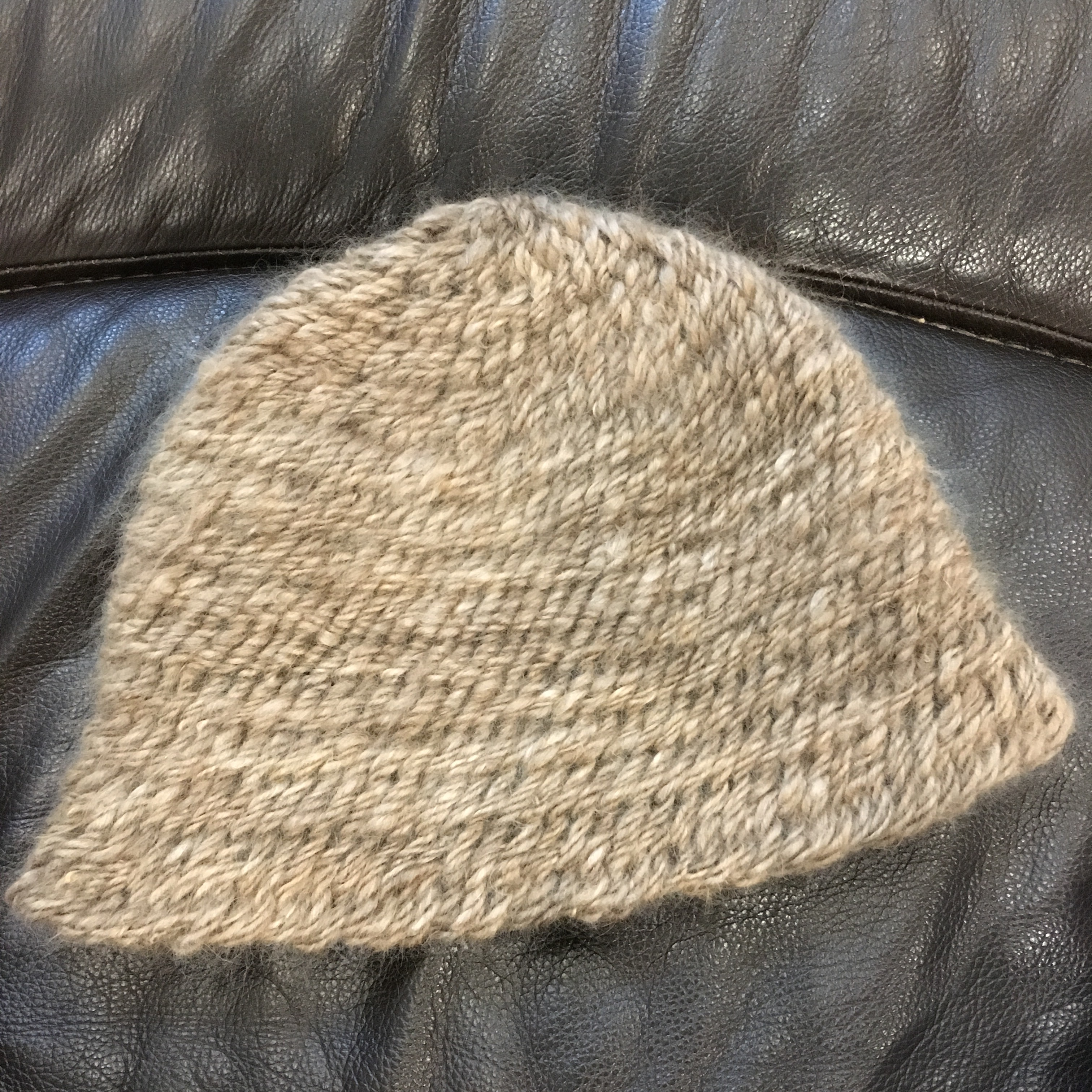
100% mohair, natural color (no dye), hand spun, 3 ply, nålbound with York stitch, cloche style hat.

York stitch hat

I love how the Z twist of the plied yarn goes perfectly with the York stitch so it looks like the twist goes from the crown to the brim. The mohair also has a lovely shine and an epic halo.

My youngest modeling the hat

My youngest wanted to be my hat model this time. The hat is a bit on the big side for her, but it is easier to see the mohair halo when the hat is being worn!

Plying

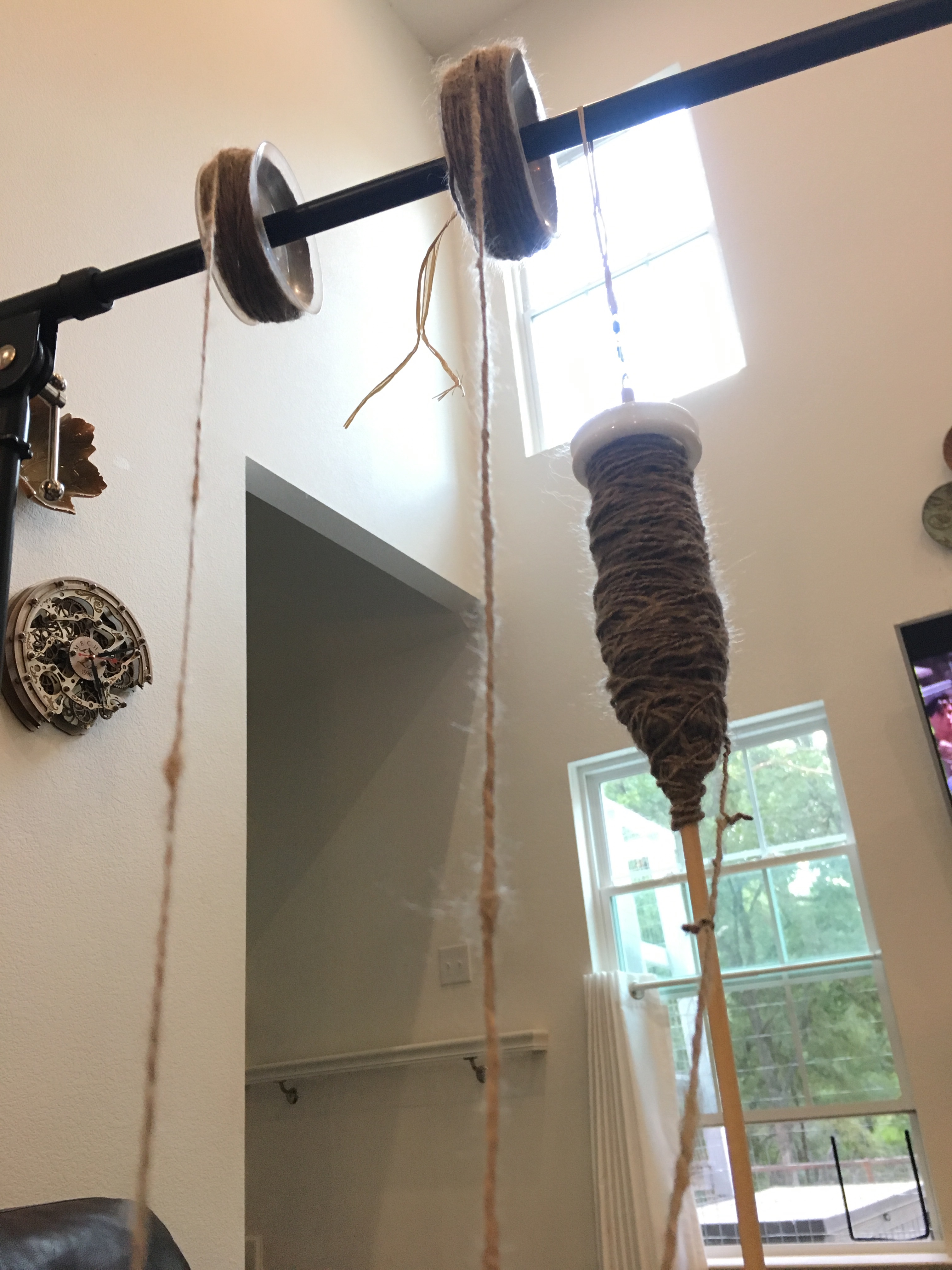
I have six bundles of Rutabaga’s fleece, so I decided to wash three, spin them separately, then make a three ply yarn. I don’t have (and haven’t yet made) a lazy Kate to hold the spools and spindles while I ply, so I hung them up to keep things from tangling. It worked pretty well.

Spools and spindle hanging from a microphone boom stand

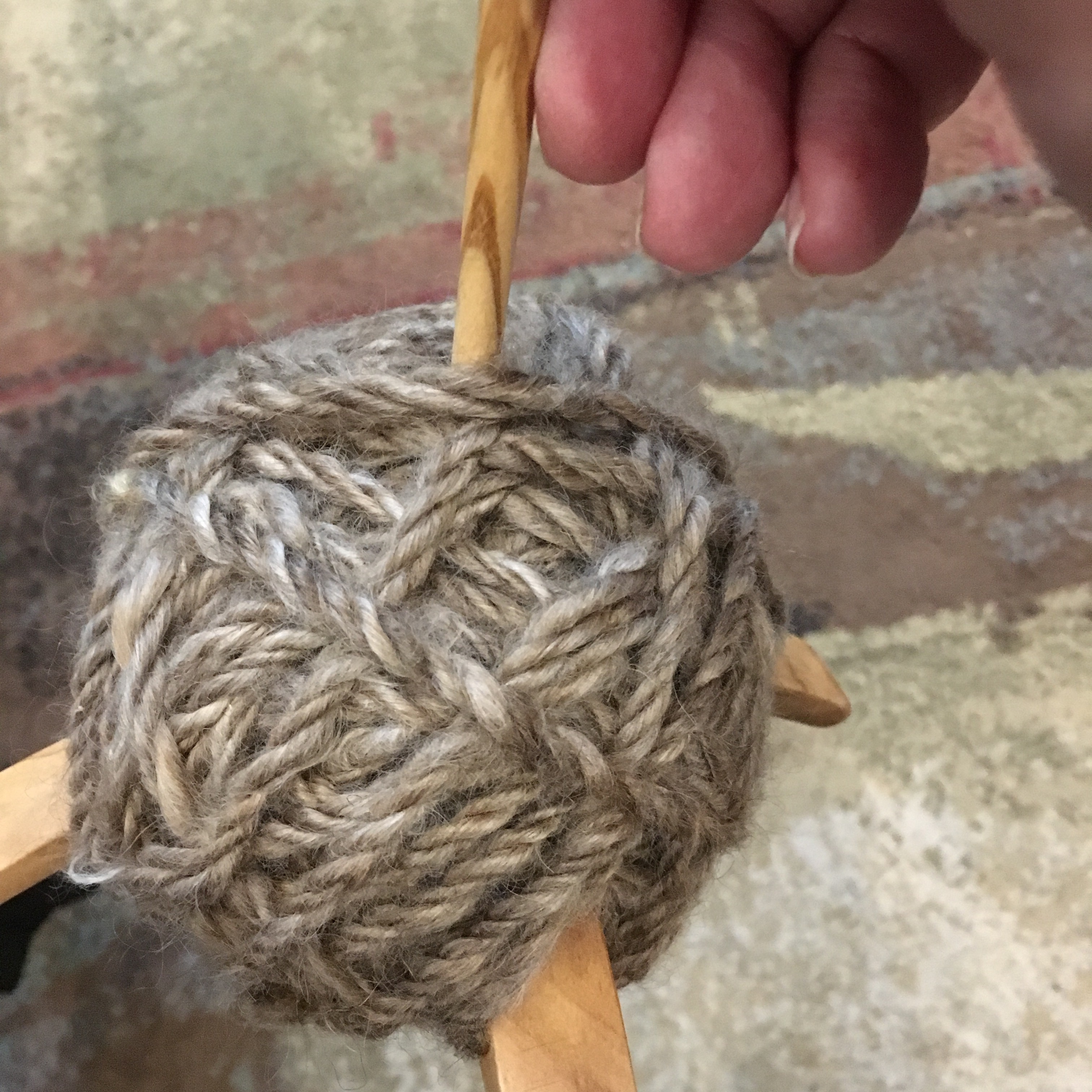
I used my Turkish spindle to ply because I left the last third of the single ply on my top whorl spindle. Plying involves twisting two or more strands of single ply yarn together, using the opposite twist. My single ply has an S (counterclockwise) twist, so I plied using a Z (clockwise) twist. Plying is much easier than spinning because there is no drafting! Although I did have to watch for tangles. Having the yarn under tension because the spools were suspended helped. Here is a short video.

Three ply mohair yarn

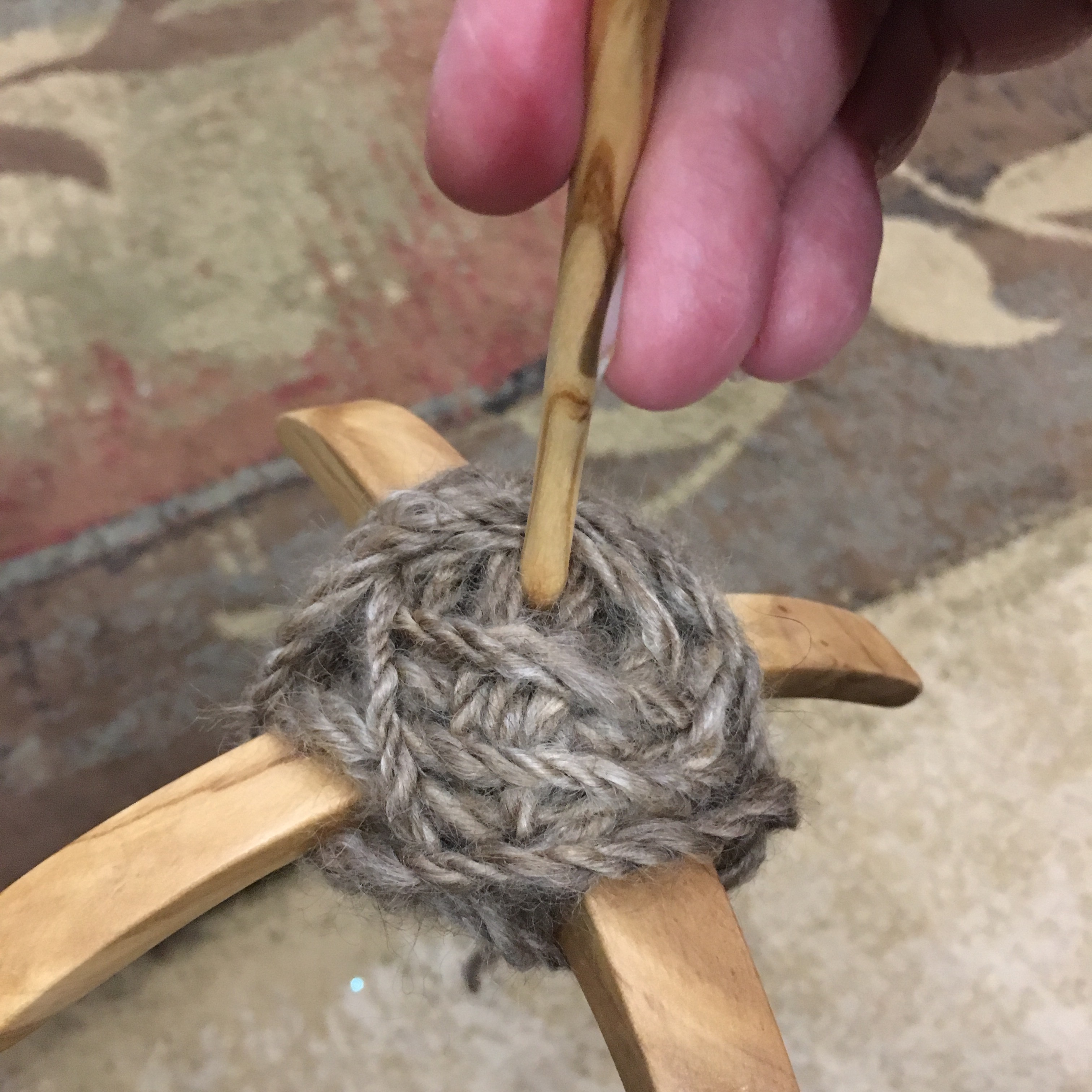
My single ply yarn wasn’t perfectly proportioned, so I ran out of one strand first. Rather than waste the ends of the other two, I chained plied the remaining yarn. Chain plying is like making a chain in crochet; by drawing a loop through another loop. It results in a three ply strand, but you only need one source of single ply rather than three. I had read that mohair was not a good candidate for chain ply, but I honestly can’t tell the difference in the finished yarn.

Chain plied mohair

Spinning more mohair

I washed some of Rutabaga’s fleece! I bought the goats’ first clip from the grower Merrytale Farm, and the owner also sent me a picture of Dottie (mom), Rutabaga, and Sasparilla (Rutabaga’s twin) to use in this blog. I absolutely love that I know the name of the animal that provided me fiber!

Angora goats, picture by Merrytale Farm
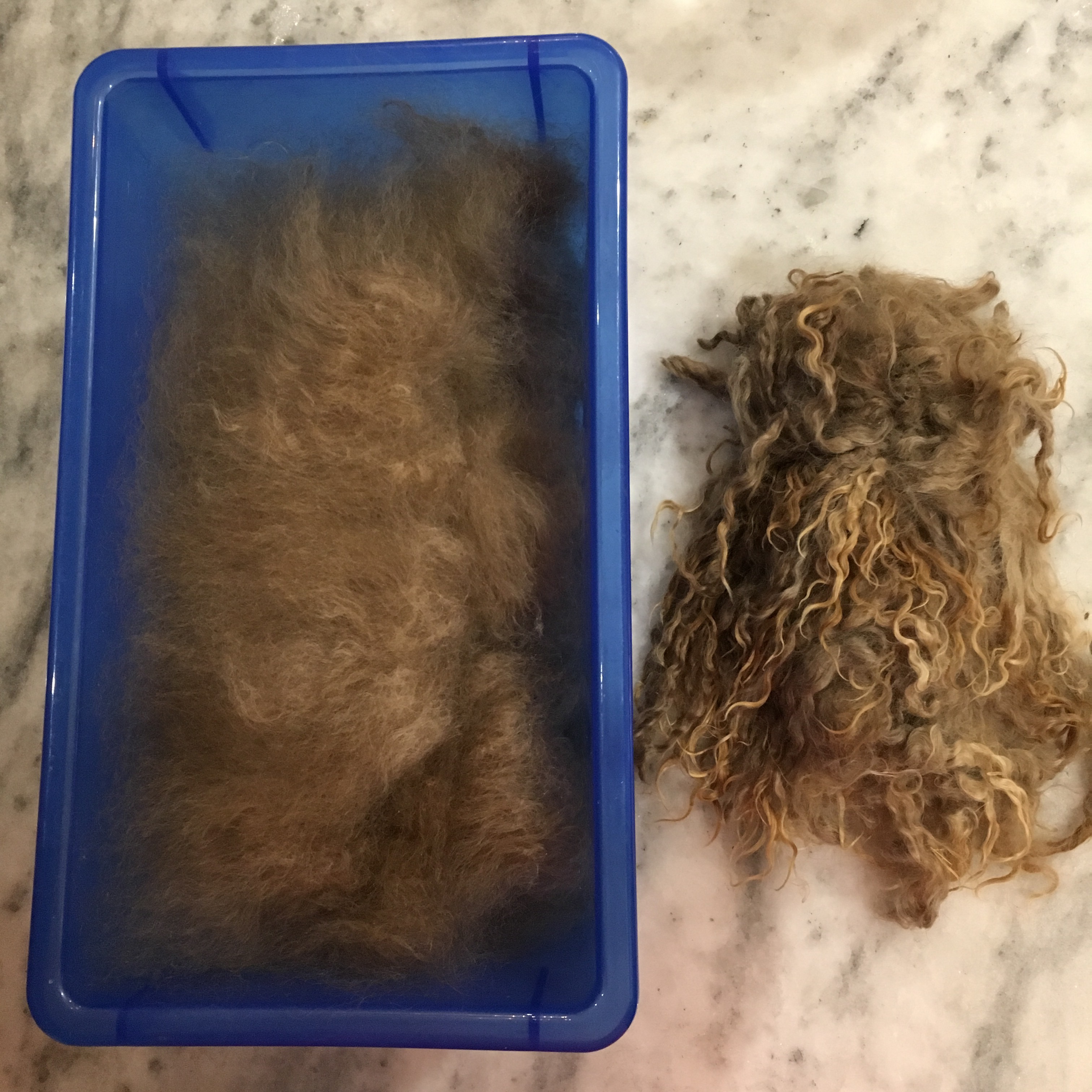
Washed and carded colored mohair (left), same amount of skirted fleece (right)

I washed this fleece the same way I did Dottie’s, and it came out well. Where I just flicked open the ends of the locks of the adult mohair, Rutabaga’s first cut locks were smaller, so I used two wire dog brushes to card small portions. I then spun a handful of fluff at a time. I am still at the park and draft method of spinning, but I posted a video to show what I’m doing.

Using a top whorl drop spindle to spin single ply
Transferring single ply yarn from the spindle to a spool (yes, I figured out a way to spin with the cat on my lap)

I like my Frankenstein’d top whorl drop spindle with the long shank because I can spin it by rolling it along the arm of my chair and spin with the cat on my lap. She appreciates that too.

Count the spiders

There are spiders in this photo

This is a photo of the sky above the coop. Spiders have made canopies spanning between the trees. It is a little intimidating walking to the coop and seeing these hunting trapeze artists suspended overhead, but I have to say that our fly population is low. Good for the spiders, good for us, good for the chickens. May have nightmares.

Spiders circled in red (ain’t tech neat)