The second Rambouillet wool sample I have was already scoured, combed, and prepped into roving.
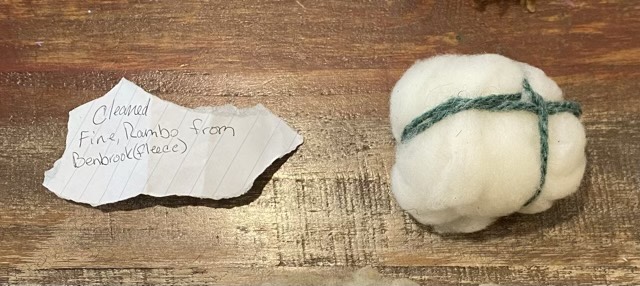
It also spun like a dream, with no waste and a cottony feel. I spun and plied this while walking in about an hour.


The second Rambouillet wool sample I have was already scoured, combed, and prepped into roving.
It also spun like a dream, with no waste and a cottony feel. I spun and plied this while walking in about an hour.
I was gifted samples of Rambouillet wool by a local spinner who also likes to encourage new spinners.

Getting started on this stash was precipitated by the acquisition of my wool combs. I love my mini Louet wool combs. They make such a nice preparation of the wool for spinning.
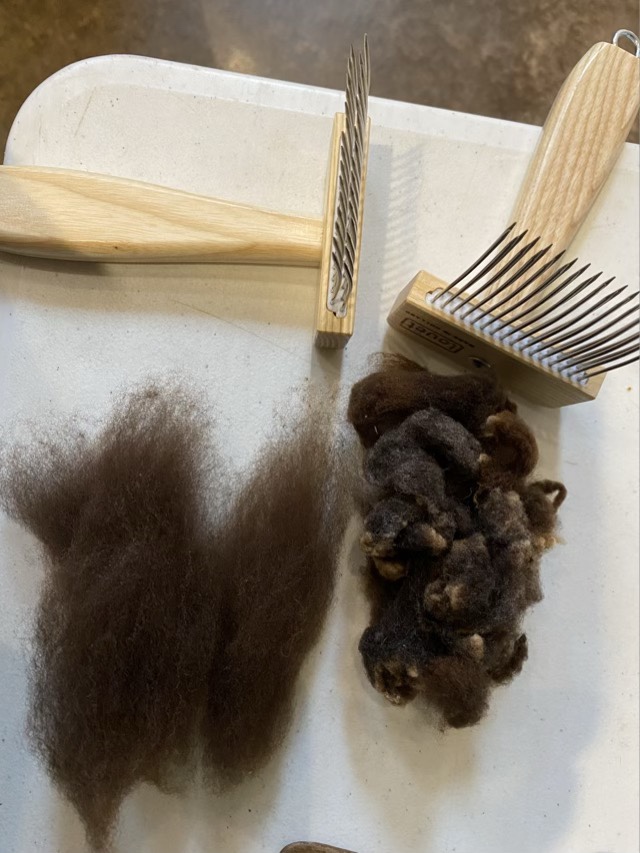
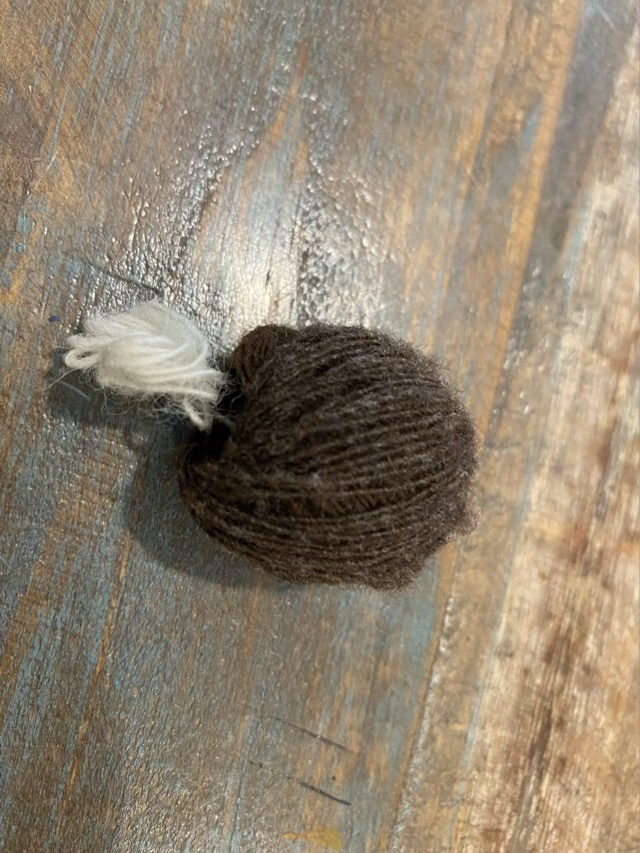
I spun the combed wool with my latest 3D printed spindle as I walked the neighborhood. Not only did the Rambouillet spin like a dream, my spindle didn’t break when I dropped it. Huzzah! I can give extra weight to my spindle by putting stone beads in the center cavity. To keep the beads from jumping out, I cap the space with a bit of wool. Easy to tuck in, easy to remove with a crochet hook.

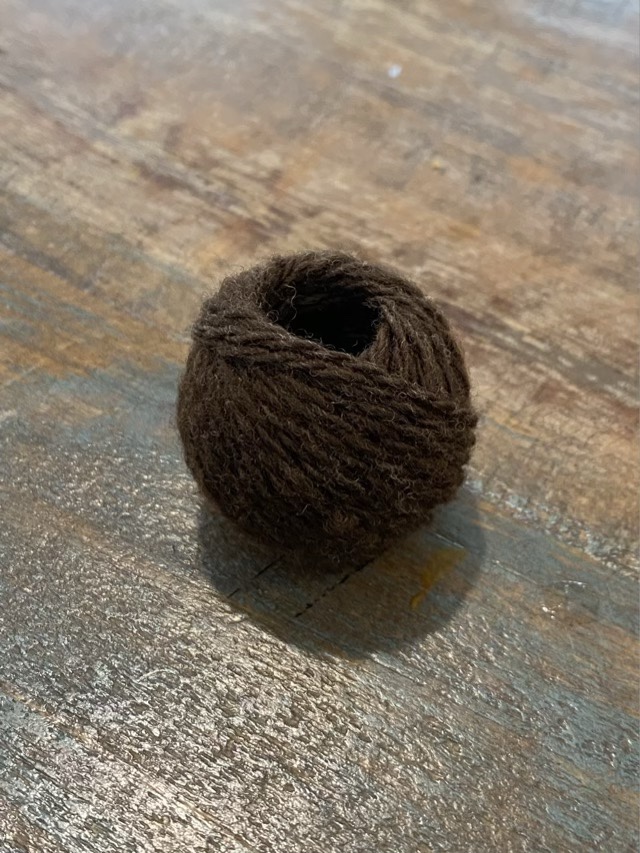
I plied the single right after spinning, using the same spindle. I slid the cop of yarn off the spindle, found the center end and joined it with the outside end, then two plied the yarn with an opposite spin. The spindle performed admirably, and the yarn is lovely.
I’ve divided this post into parts because I have loads of information to share! I understand why two thirds of the sheep in the US are Rambouillet (Brittanica), it is cottony and fine and absolutely a pleasure to spin.
I have finished spinning the singles from my Clun Forest wool roving for the Shave ‘Em to Save ‘Em campaign by the Livestock Conservancy. I’ve been spinning this wool on a drop spindle during my walks through the neighborhood over the past two months.
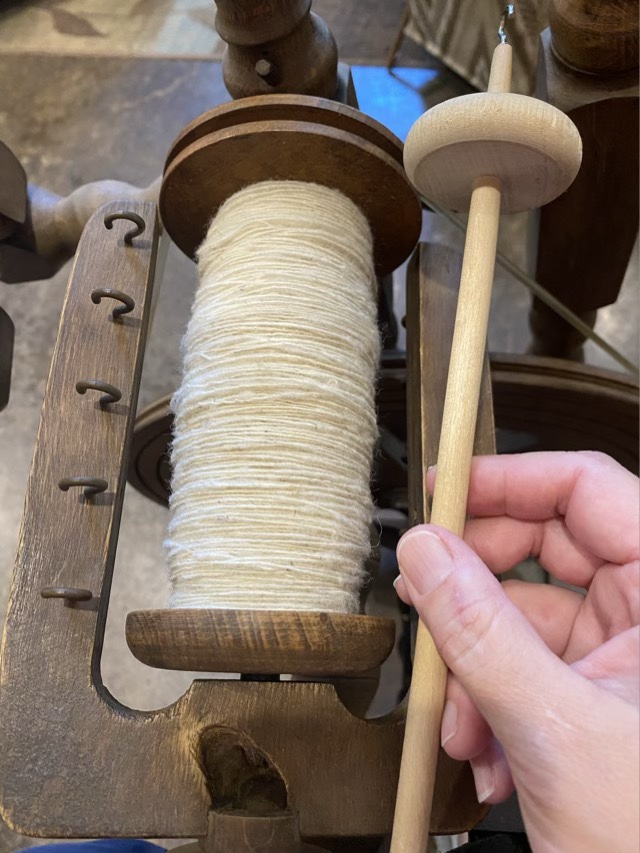
I decided to chain ply the singles to get the finished yarn mostly because I only had one bobbin available and I wanted a three ply yarn. The plying only took a couple hours, and made the yarn much fluffier.
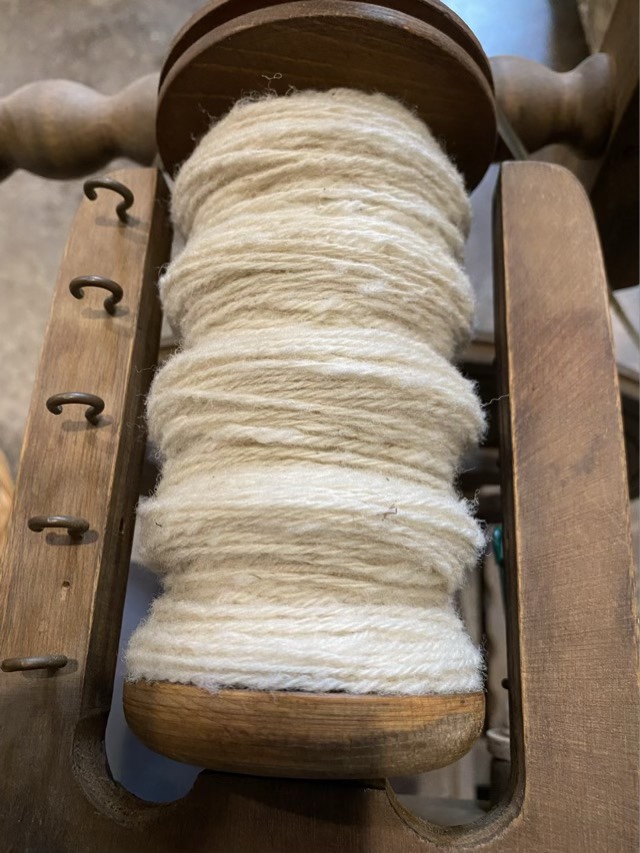
I’m still getting used to the spinning wheel, and the twist in the ply was inconsistent. To even it out some, I put out two chairs and wrapped the yarn around the backs of the chairs so the twist could travel. It worked well.
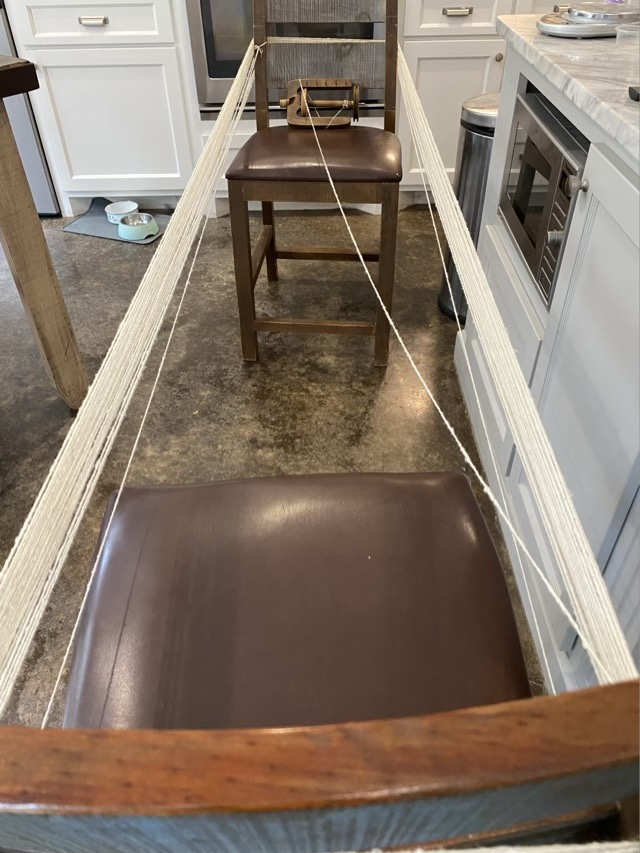
It was also easy to wind the yarn onto my niddy noddy from the chairs.
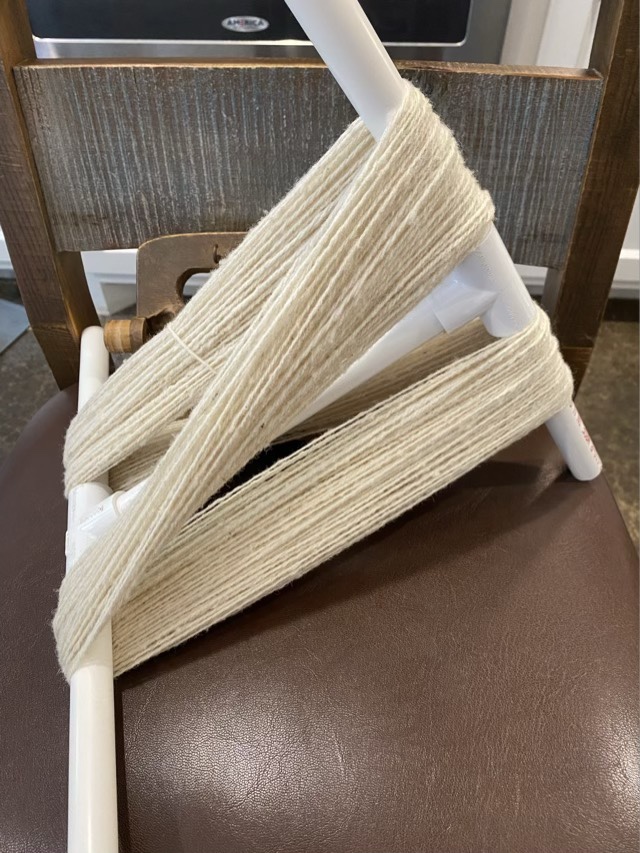
The next step is to wet the yarn to set the twist, then let it dry!
I found some more Texas grown spinning fiber! I was connected to another spinner through our local coffee shop, and she sent me many resources, including the name of a Texas rancher that raises Shetland Sheep (https://baizeshetlands.weebly.com/). Shetland sheep were developed in Scotland to be competition for Italian Merino wool. These sheep are also thriving in the Davis mountains of Texas! I ordered a prepared batt, since I wanted to see how the fiber is supposed to handle before I delve into the raw fleece. In the box with the wool was a passport stamp for the Shave ‘Em to Save ‘Em initiative by the Livestock conservancy. So of course I ordered a passport for my new sticker. There are many breeds of endangered sheep in the passport, and so many opportunities to learn about different wool!
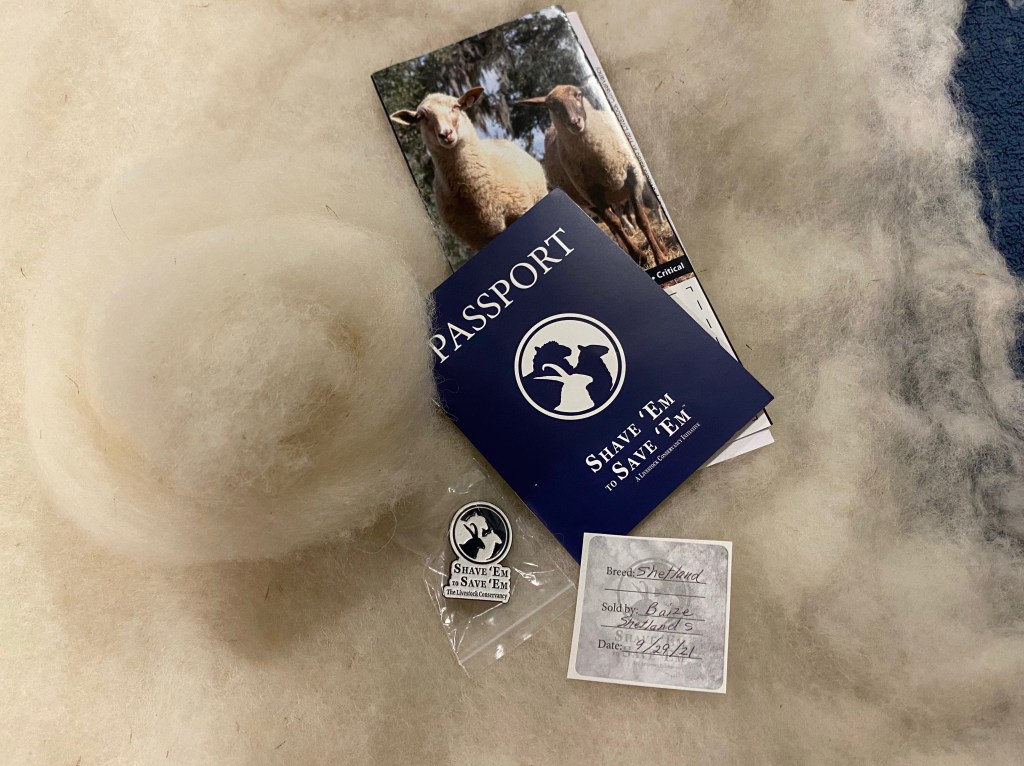
The Shetland knitters are known for “wedding ring” shawls; large lacy knitted fabric that is so fine, it can be passed through a wedding ring. I am awed by their skill. I read more and found out that the lace uses only knit stitches, no purl stitches so it is double sided. I am not fond of purl stitches, so this might be a way for me to enjoy knitting. I don’t intend on embarking on a wedding ring shawl, but maybe trying some of this lace on a small project. It seems only fitting to try Shetland knitting with Shetland wool. Oh, and knitters in Scotland historically used a knitting belt, which allowed them to walk and knit. I have my work cut out for me.
 Critters and Craft