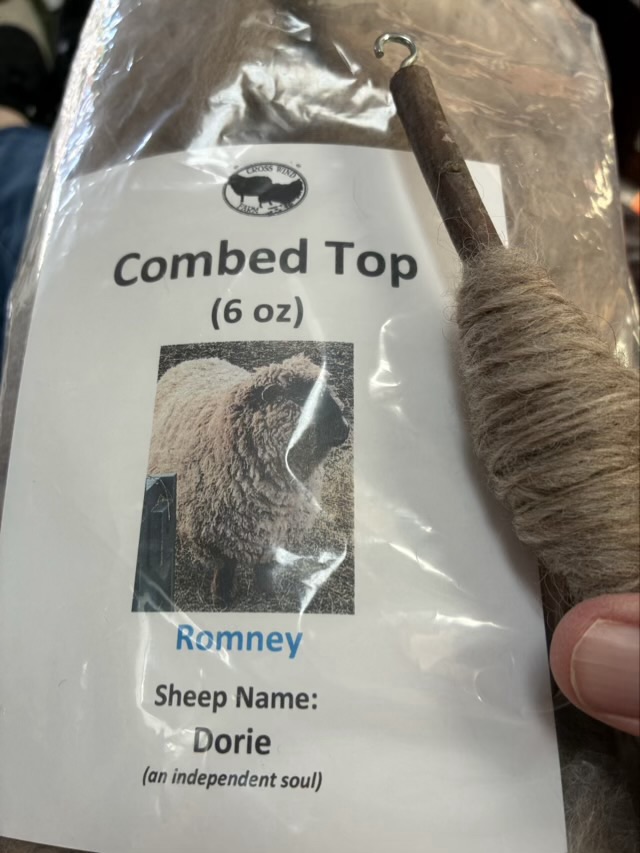
When I forgot to bring my spindle on my trip, I also left behind my fiber, which gave me an excuse to visit a local weaving shop and get more fiber. I was pleasantly surprised that the Woven Art Yarn Shop in East Lansing had some natural colored roving options, and picked a bag of Romney combed top from Dorie the sheep, who is apparently “an independent soul”, according to the label.
Photo description: Bag of Romney combed top fiber from Cross Wind Farms with a single spun on a stick with the bark still on and a cup hook screwed to the top
I love Romney wool, it spins up easily and is soft. Since I spun with a finger twirled stick, I made a thicker single because it needs less twist to hold together.
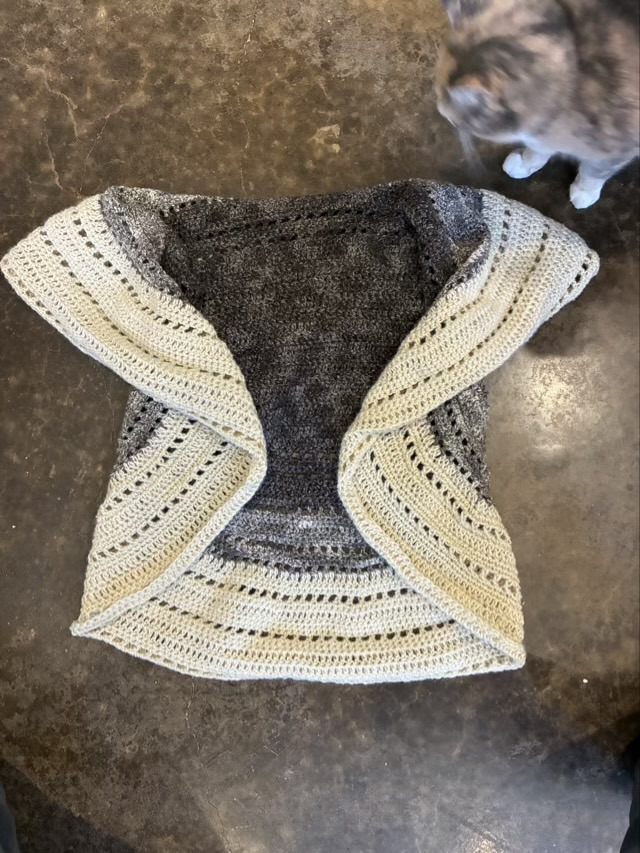
I crocheted several more rows onto LazyTCrochet’s circle vest pattern, past the “plus size” listed in the instructions. I followed the general feel of the pattern up to that point, and crocheted until I ran out of my hand-spun Teeswater yarn. It was still feeling small and tight.
Photo description: Circle vest crocheted from hand-spun Jacob and Teeswater wool showing three color variations, dilute calico cat photo bomb
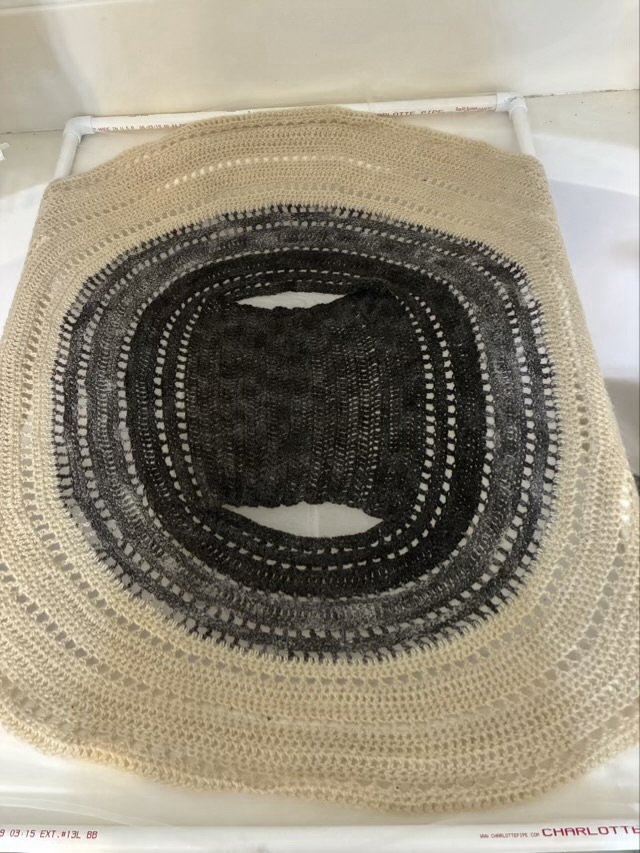
I do have more Teeswater roving, but need to spin it up. I decided to tie off the row and weave in the ends, then give the vest a good soak with some gentle fabric wash. I laid it out to dry on a homemade PVC and nylon mesh drying rack.
Photo description: same vest laid out to dry
The stitches relaxed and the vest increased in size.
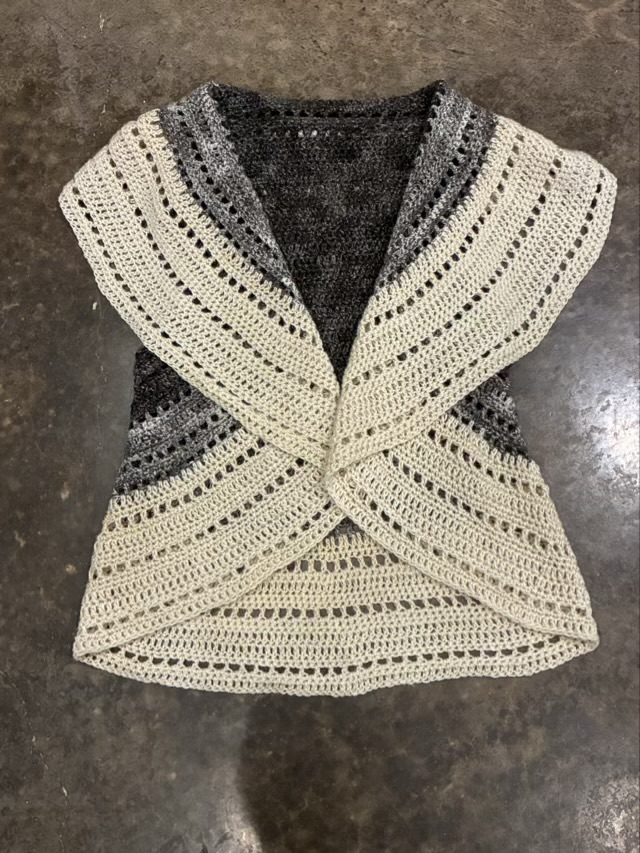
Photo description: same vest after blocking
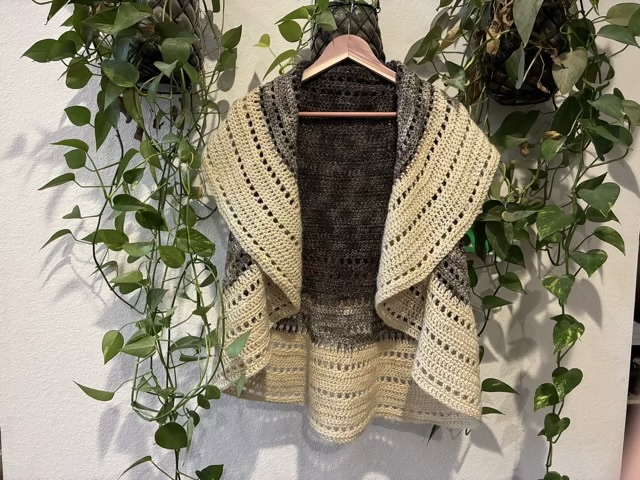
It is now a wearable garment. The wool feels softer after blocking and has a beautiful drape. I call this my “Shave ‘Em Two Save ‘Em” vest because both Jacob and Teeswater sheep are on the Livestock Conservancy list of Heritage Sheep. Jacob is Threatened and Teeswater is considered Critical.
Photo description: same vest hanging on a cedar hanger to show the drape
I’m rather excited that I have created something I will actually wear and supports farmers raising endangered heritage breeds.
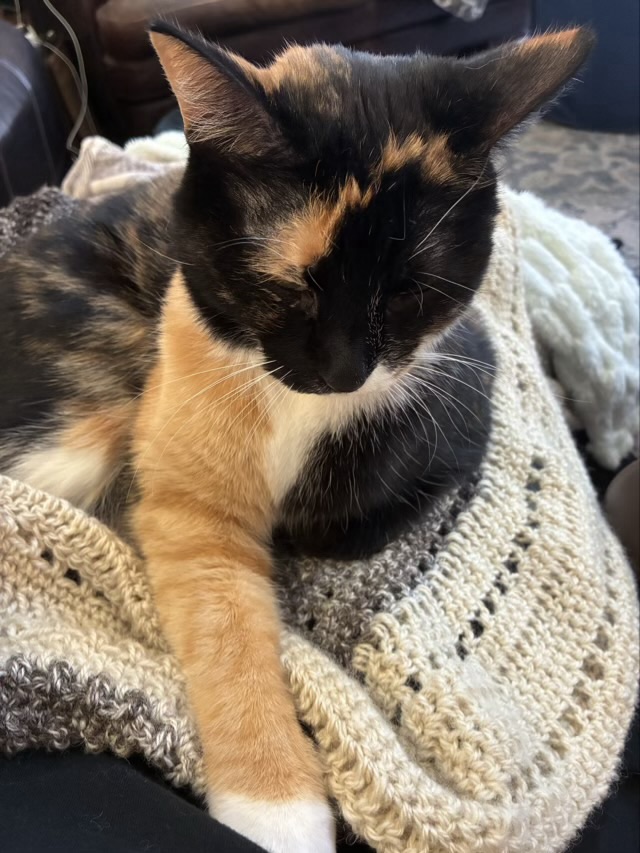
Photo description: calico cat sitting on crochet made with wool
Izzy the calico cat has been trying to lay on the wool vest I am crocheting for weeks. She finally found me distracted and cuddled in. I did continue to work on the piece and just rotated her as I went. She still stayed put. Purring.
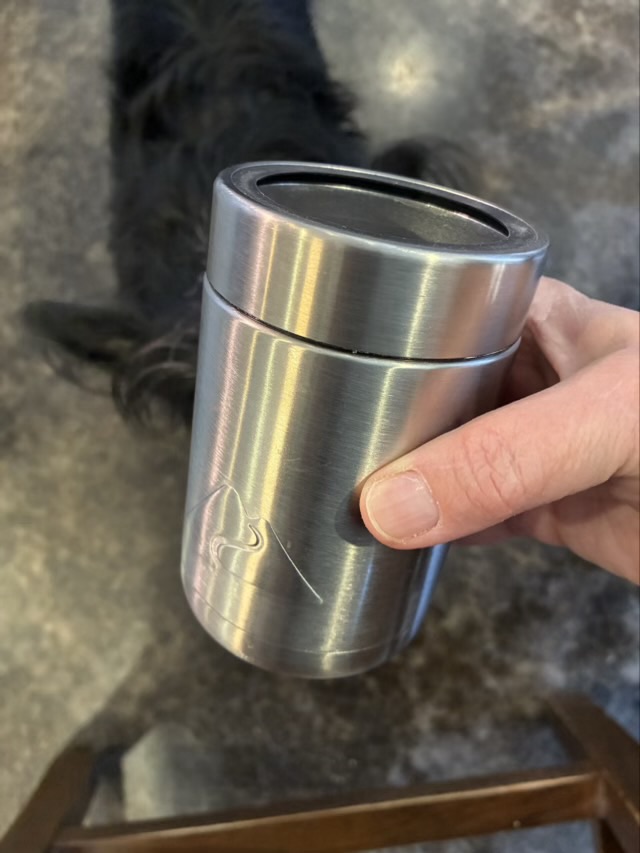
I wanted a travel case for my tiny Turkish style spindle, so went digging through my cupboards. I found a stainless steel can cozy that was just the right size, but didn’t have a lid.
Photo description: metal can cozy with open lid, curious dog in the background
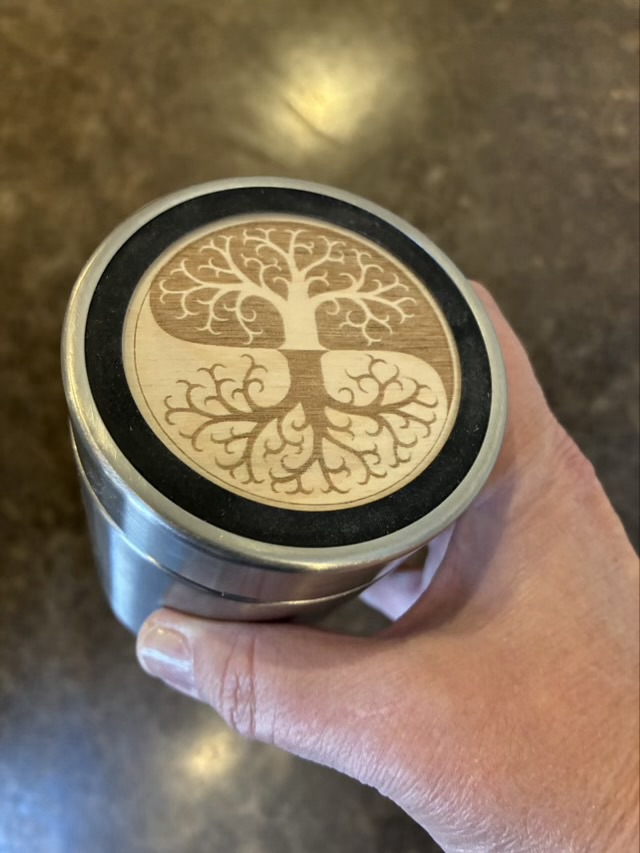
I measured the space and used my laser cutter to cut and engrave a piece of thin birch plywood. I sealed the wood with modge podge (white glue), which also holds the circle in place.
Photo description: same can cozy with a wood insert graved with my logo of a tree and roots
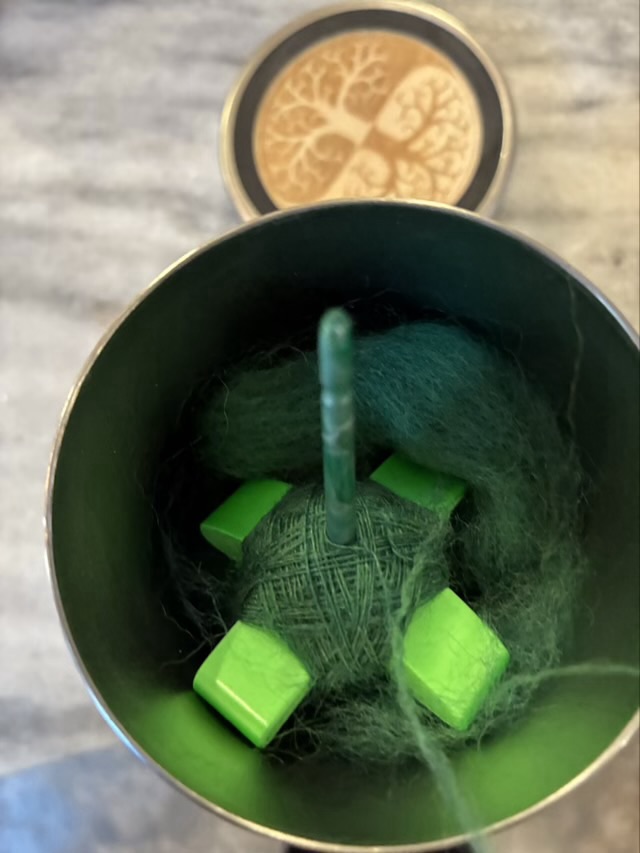
The can fits nicely in the bottle pocket on the side of my purse and fits a handful of wool and the spindle inside.
Photo description: Femto spindle by Turtle Made inside the repurposed can cozy
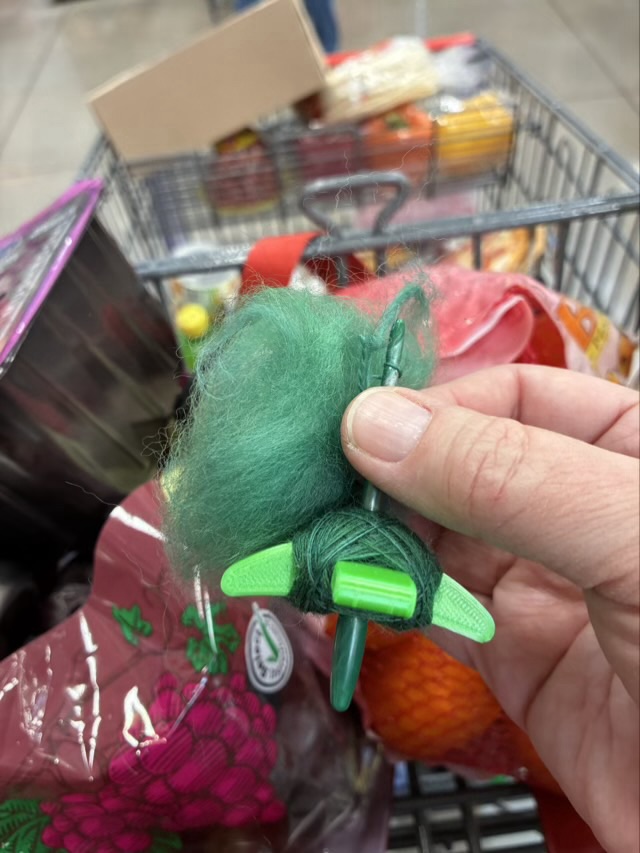
And yes, I really did pull it out and do some spinning waiting in the line at grocery store!
Photo description: spindle with in progress spinning with a grocery cart in the background
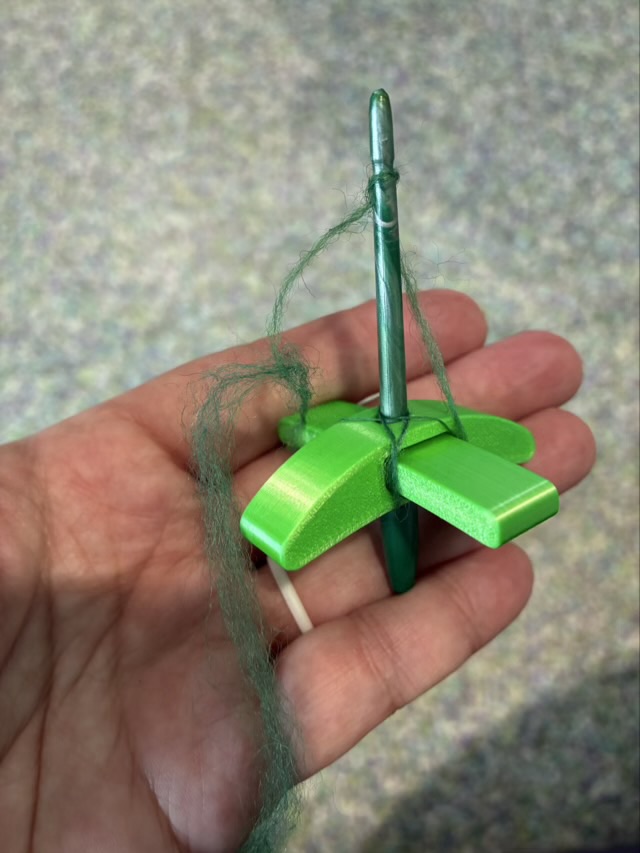
Squee! I ordered a femto spindle from Turtle Made on Etsy, which is a 3D printed Turkish style spindle that is teeny tiny!
Photo description: 3D printed spindle with dark green shaft and neon green arms sitting on my hand
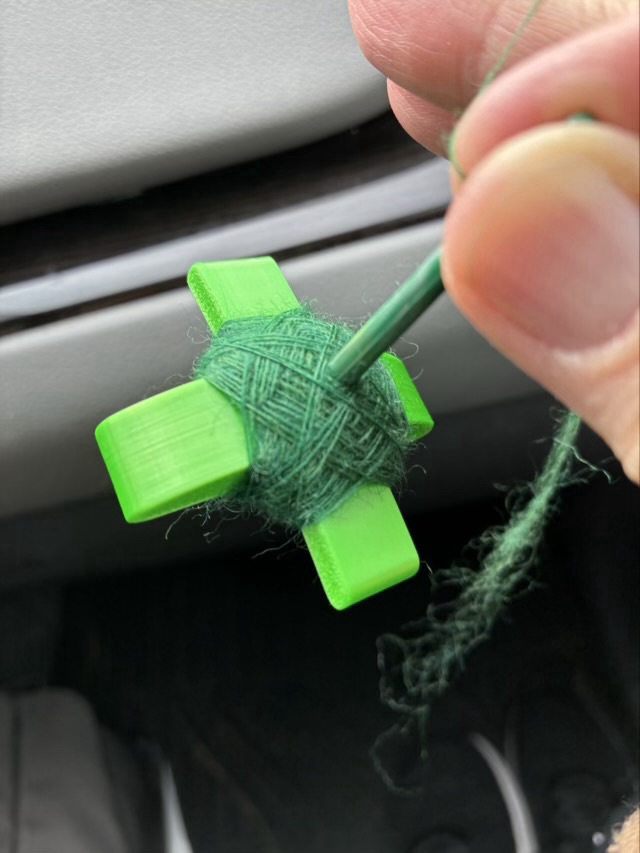
With a spindle this tiny, the obvious choice is to spin as thin as possible. I have some green dyed Corridale mix wool from AnnieWhere that I used to get started.
Photo description: same spindle, wrapped with single spun green wool thread
The spindle works amazingly well for something so small. I plan on finding a case for it and have it be my emergency spinning kit. The emergency would be if I am out and about without a project! Or need to meditatively spin anytime, anywhere.

 Critters and Craft