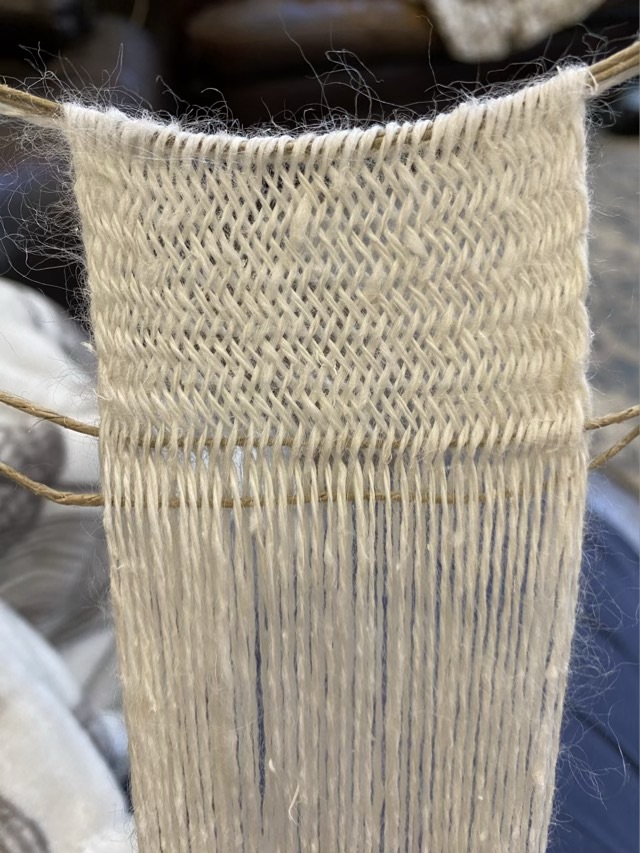
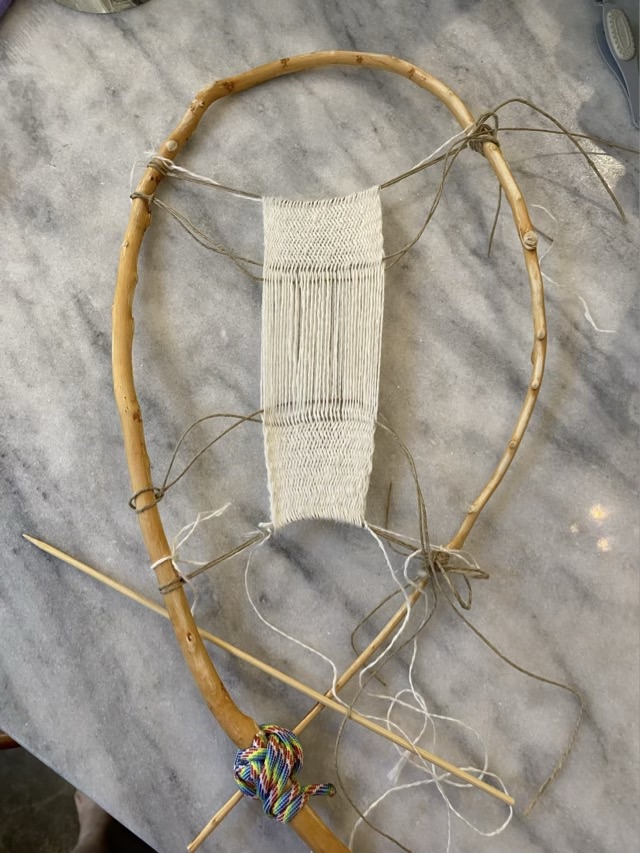
I setup my small sprang loom again, this time with hand spun pineapple fiber. I followed SolRhiza Arts’ video on how to do “interlaced horizonal ribs.” The technique alternates right and left hand twists on each row, which I hoped would solve the curl issue. The weave started out beautifully.
Photo description: hand spun pineapple fiber warped and partially woven with interlaced horizontal ribsPhoto description: sprang work in progress on the small loom
I finished with the chain method across the middle, which I still don’t like. When I removed the work from the loom I had a shock: it didn’t have the stretch effect I expect from sprang. It stretched, the horizontal ribs disappeared, and it didn’t return to the original shape.
Photo description: sprang sample off the loom showing the threads going diagonally (wonky middle makes me unhappy)
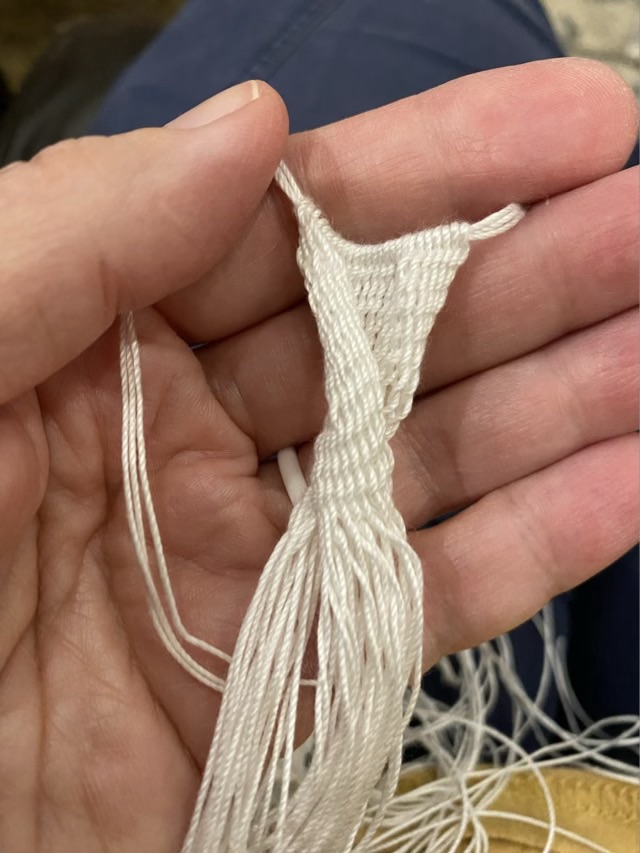
Upon closer inspection, I had done a twill (over two, under two) weave at a diagonal. I’m not sure if this is the intended result, or I somehow missed something in the instructions. It is an interesting effect, and one that might work for a different project. The fabric certainly doesn’t curl.
Photo description: close up picture of the interlaced horizonal rib sprang at a 45 degree angle from the warp angle.
I warped my small sprang loom again using dyed wool yarn, once again determined to make this one a little better than the last. I warped on a few more times to make it wider to help combat the natural inclination to twist.
Photo description: small bent cane sprang loom with orange and yellow dyed wool yarn interlinked in a single direction (all S twist on the top, all Z twist on the bottom)
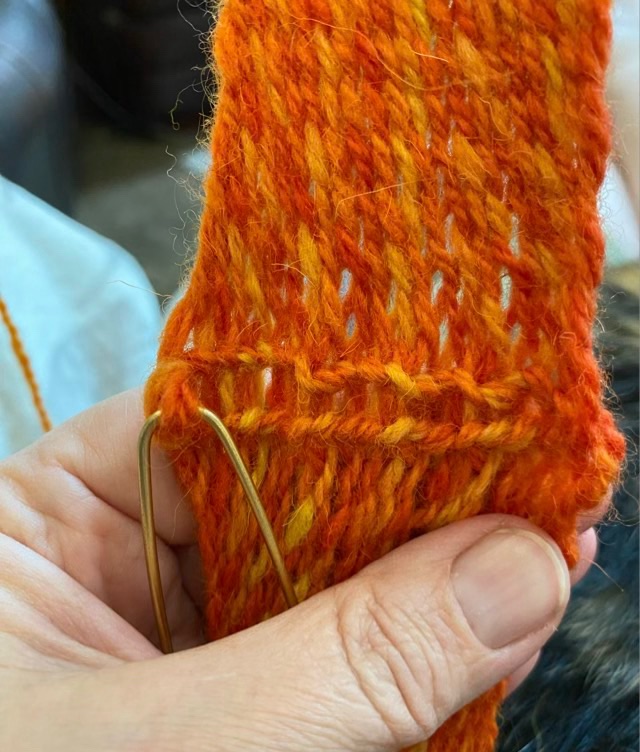
This attempt was an improvement on the previous tries. I achieved an even fabric, even though finishing the middle is still vexing me, it was less wonky than the last times. I tried a different method too: chaining each side separately, rather than both together. It still needs work.
Photo description: chain looped center of the sprang fabric, with a stitch holder in the last loop
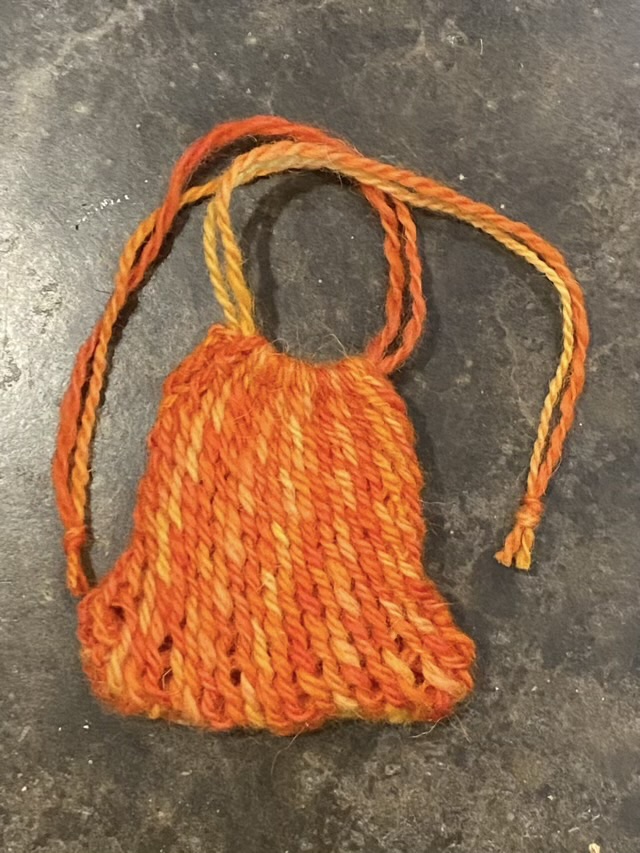
I used the extra yarn from warping to sew up the sides, and strung yarn through the top to make a drawstring bag.
Photo description: small wool sprang bag shown empty and closedPhoto description: same bag shown slightly stretched because it is holding a mandarin orange
The sideways stretch of the bag is easily double the height. There is no stretch vertically, which I need to take into account when designing a piece. This tiny bag would do well to hold dice. I’ve seen some larger bags made with wood handles that would outperform a similar bag in crochet because crochet stretches in all directions and tends to droop over time.
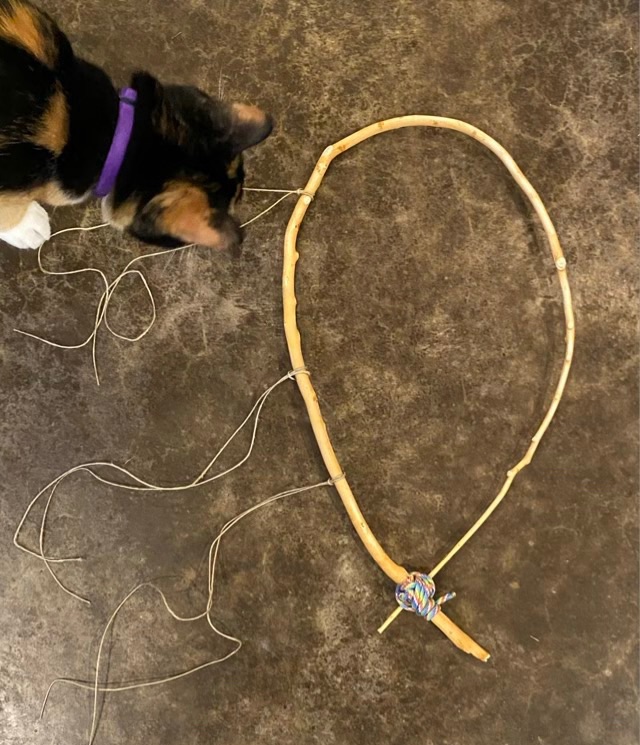
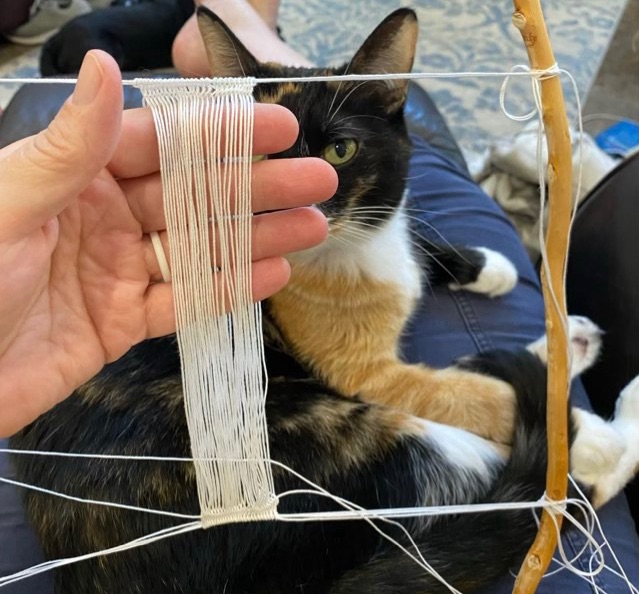
I’m determined to add Sprang to my crafting repertoire. This round, I secured the bottom of my small bent cane loom with some paracord so it was less loosey-goosey. I added life lines using hemp string, and used hemp for the header and footer ties. (Why hemp and paracord? That was what was next to me. The paracord is too thick for the lifelines (to me), so I replaced them with thinner hemp.)
Photo description: restructured small sprang loom with Izzy the cat investigating the string
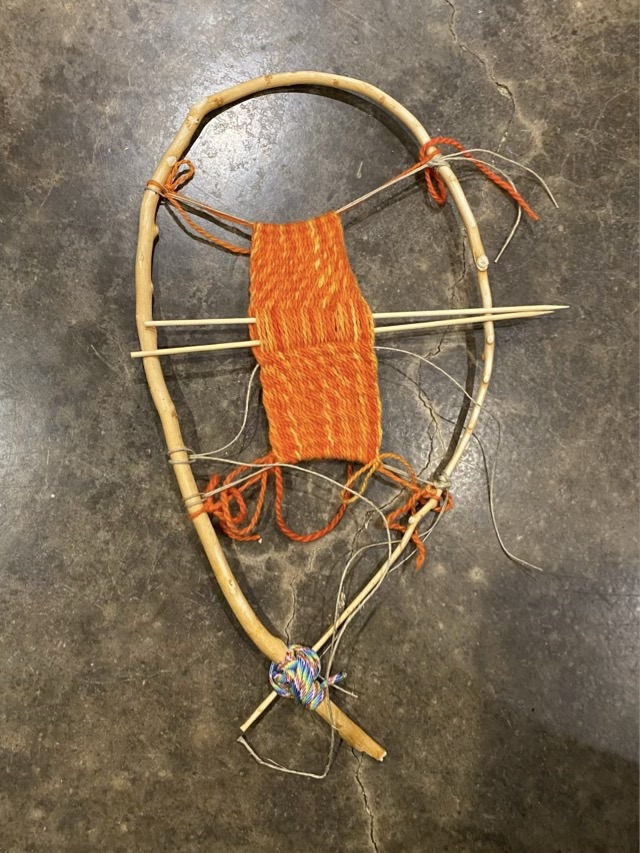
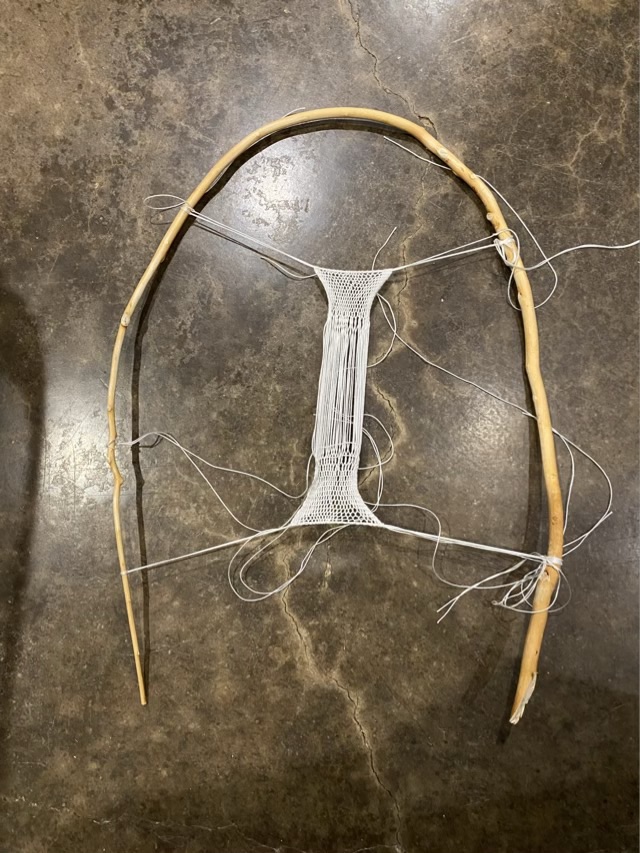
Using wool yarn and making a wider sample did help with the bias twist a little while I was working. I did some interlinked rows, and tried some intertwined rows to the middle.
Photo description: orange wool yarn woven on a small sprang loom using lifelines and bamboo skewers
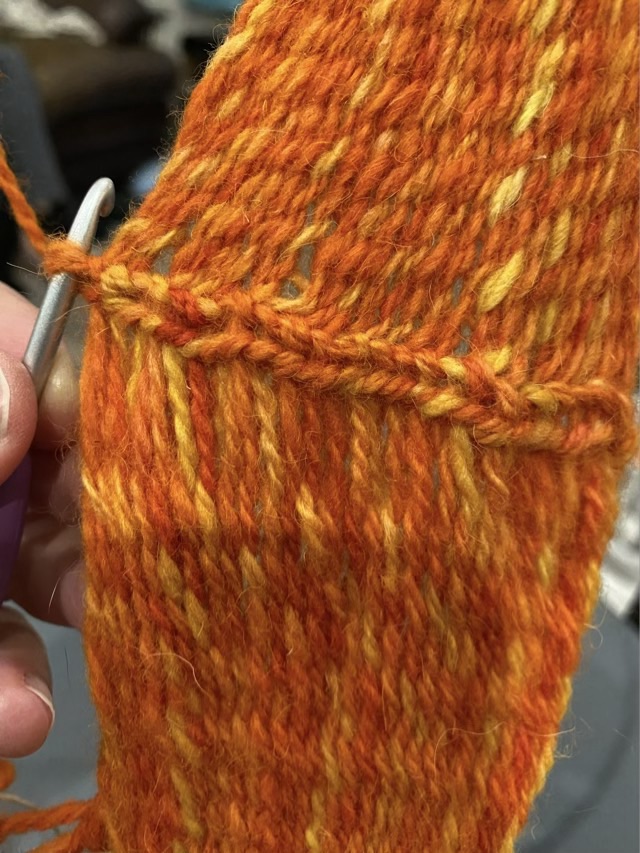
I went to finish the center with a crochet chain and everything went wonky. The chain crawled upward on the yarn, making the two uneven halves even more uneven.
Photo description: botched attempt at finishing the middle of the sprang with a crochet chain stitch
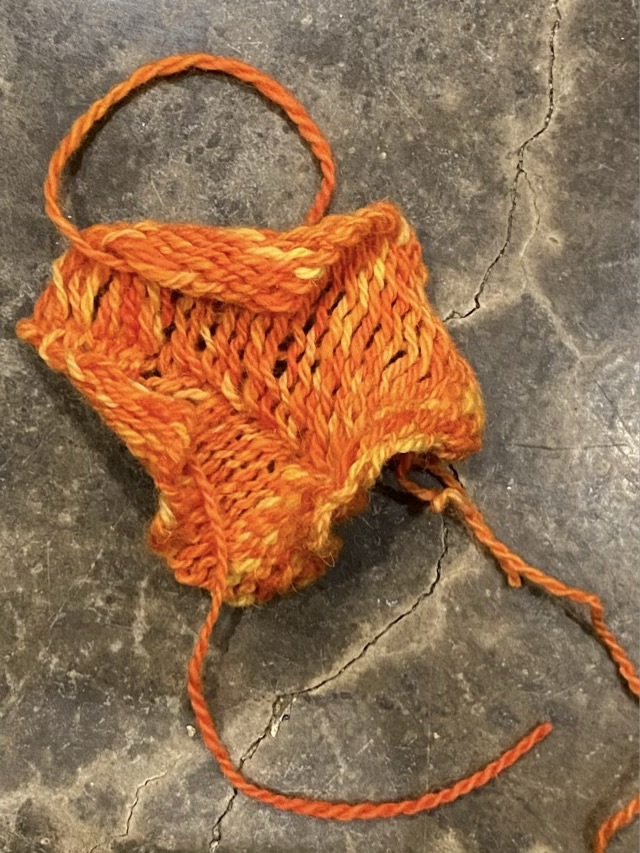
When I took the sample off the loom it curled unevenly, wonky and crumpled.
Photo description: sprang sample off the loom, twisted
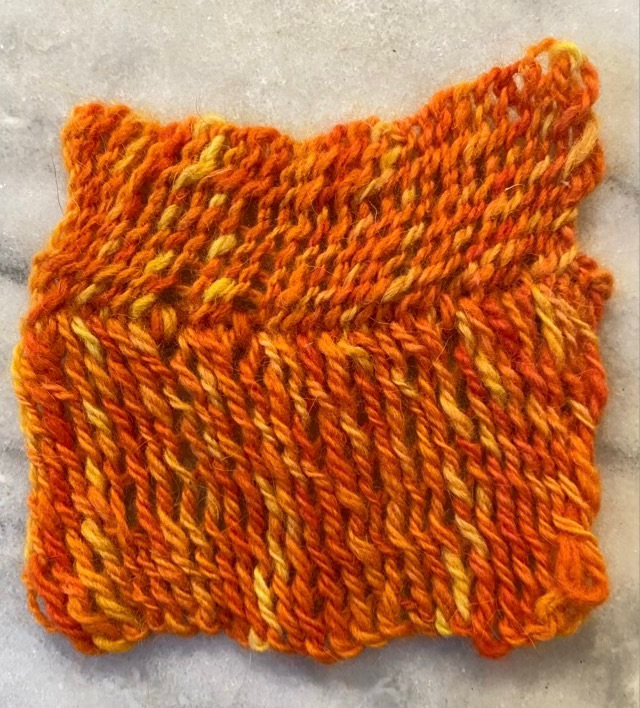
I wove in the ends, catching the live loop of the crochet chain when I went up the side, and blocked the piece by wetting and pinning it to dry.
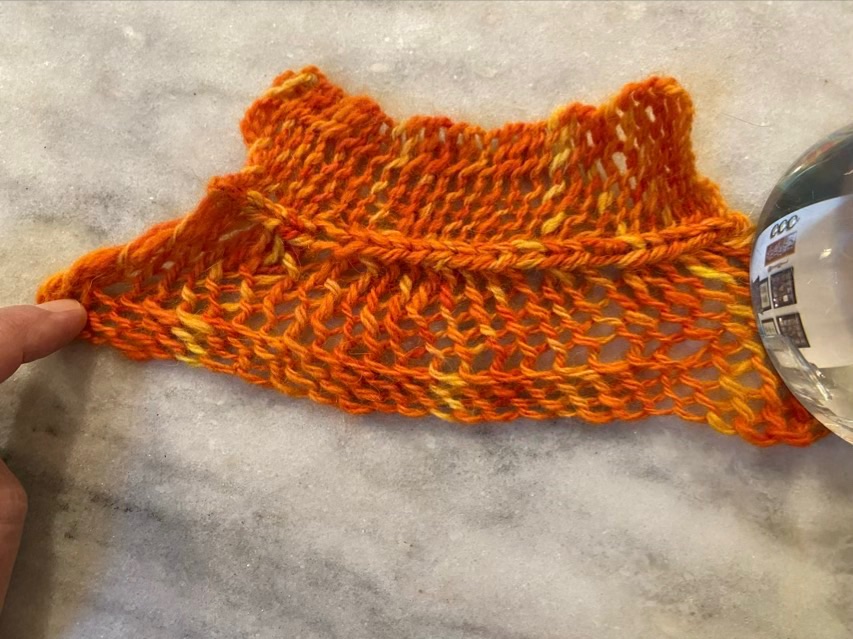
Photo description: blocked and slightly less wonky bit of sprang work in orange yarnPhoto description: same bit of sprang, opposite side, shown stretched, it really has a very pleasing sideways stretch
Undeterred, I made a third attempt. Rather than the chain finish, I tried warp and weft plain weaving the center part. Abysmal. The plain weave has no stretch and completely threw off the stretch of the sprang. I mention it only so I remember that I tried, and rejected, the method. It doesn’t even deserve its own post. I’m not giving up, though.
I’ve been wanting to attempt making sprang fabric for awhile now. I even made a small sprang loom from a trimmed elm branch. Sprang is a type of weaving where all the threads are warp threads (vertical), with no weft (horizontal). The threads are twisted around each other and the fabric is worked from the top or bottom simultaneously (what is done with threads at the top happens in opposite to the threads at the bottom). AI tells me that sprang dates back to the bronze age, although it seems like the summary was gleaned from Wikipedia, which at least gives me a list of references that confirm this art is ancient.
I had some #10 crochet cotton next to my chair (crochet is probably my youngest craft), so decided to use that after watching a video from Sally Pointer, who is an accomplished heritage educator.
Photo description: starting to weave sprang, I was warned that sprang holds special fascination for cats, and Izzy the cat was quite enthralled with the many stringsPhoto description: sprang in progress with the loom on the floor and several rows completed
I achieved several rows without too much panic, but then the fabric started to make a hard bias twist that made it difficult to sort where the threads needed to go. I gave up and removed it from the loom, took a picture, and consulted a Sprang group on FB.
Photo description: partially woven sprang made from cotton thread, removed from the loom to show the twist
I was assured that twisting is what sprang does, and to try wool which blocks very well. While scanning the group posts, I also noticed that some weavers secure the edges to the loom periodically, which would also help manage the twist. I was told that narrow bands are particularly susceptible, and another way to manage the phenomenon is to switch twist direction, which is a more advanced technique. I have my marching orders.




 Critters and Craft