Distaff experiment

I found this article by Kim Caulfield which talks about distaffs for fiber management and has images of ancient distaffs. I love my rosewood distaff, but it doesn’t work well with the rolags I’ve been making when I card fibers. I noticed that the pictures of the distaffs in the article are smaller and made of bronze or glass, so I decided to try to make one out of wire. I had gold colored 14 gauge aluminum wire in my stash and used about 24” of wire.
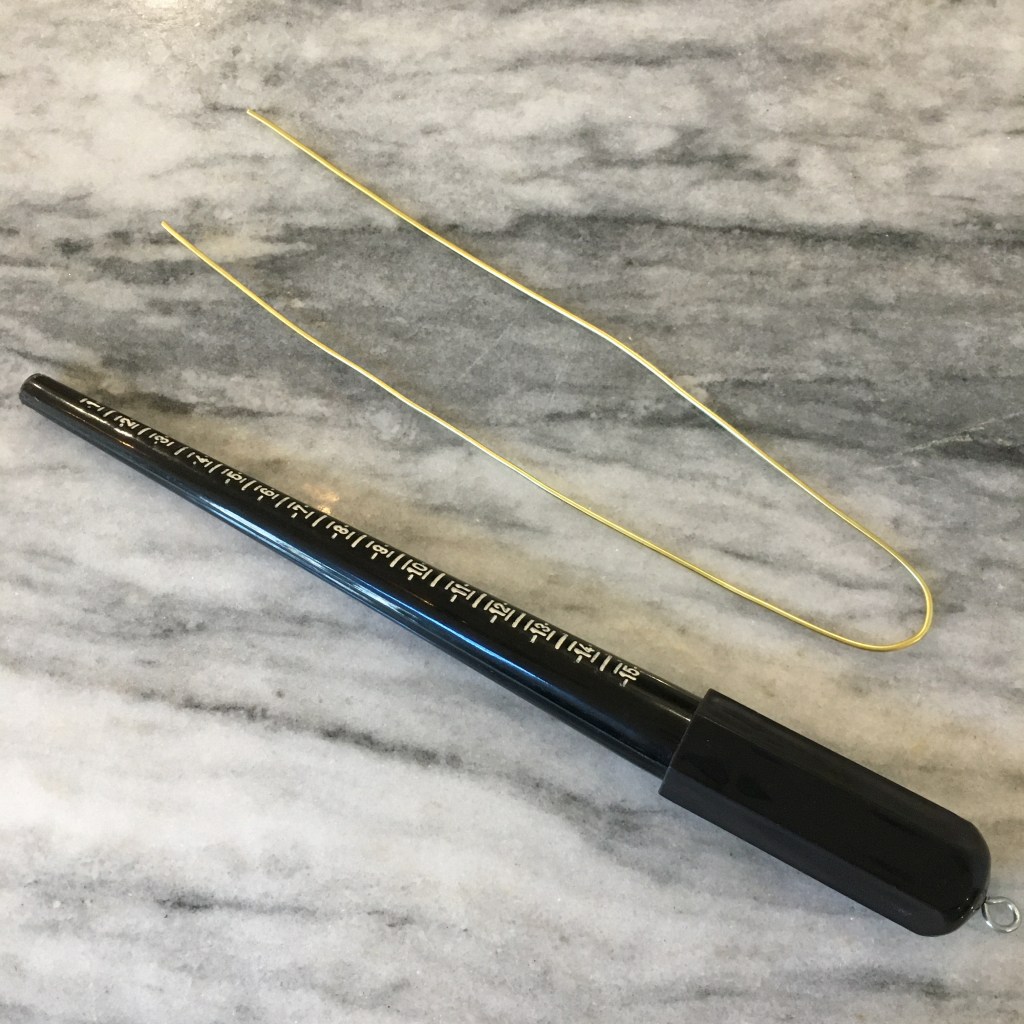
14 gauge wire and ring mandrel

I used the ring mandrel to form the loop at the end, then twisted the two strands of wire together in a spiral about 8” long. I originally thought that the ring was worn like a wedding ring, but it is really used to stabilize the distaff, so I made the loop bigger than my finger.
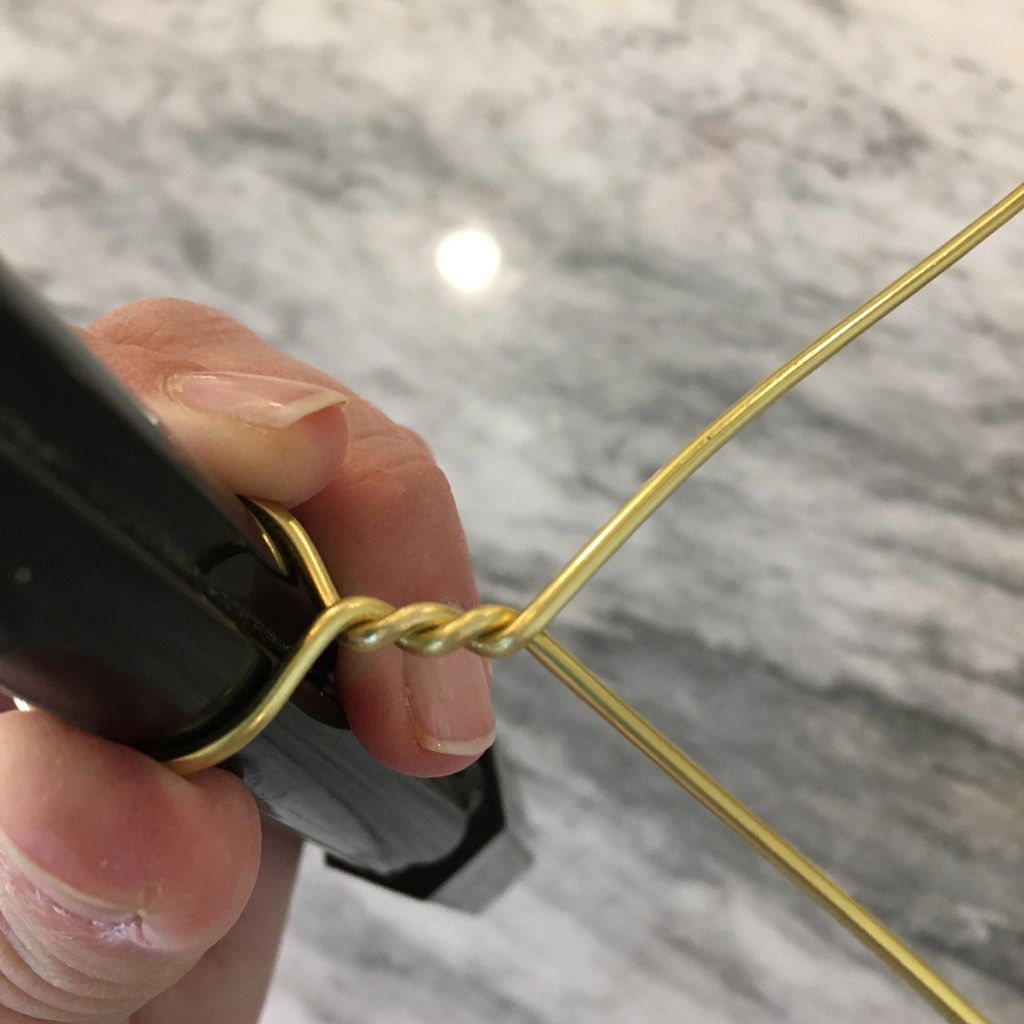
Forming the ring and starting the twist

At the end of the twist I needed something to catch the fibers. Most of the ancient examples have a little bird, I think because the beak is sharp and will catch in the fibers. Rather than a bird, I made a spiral. It works well to twist it into the end of a rolag, then gently wrap the rolag around the shaft.
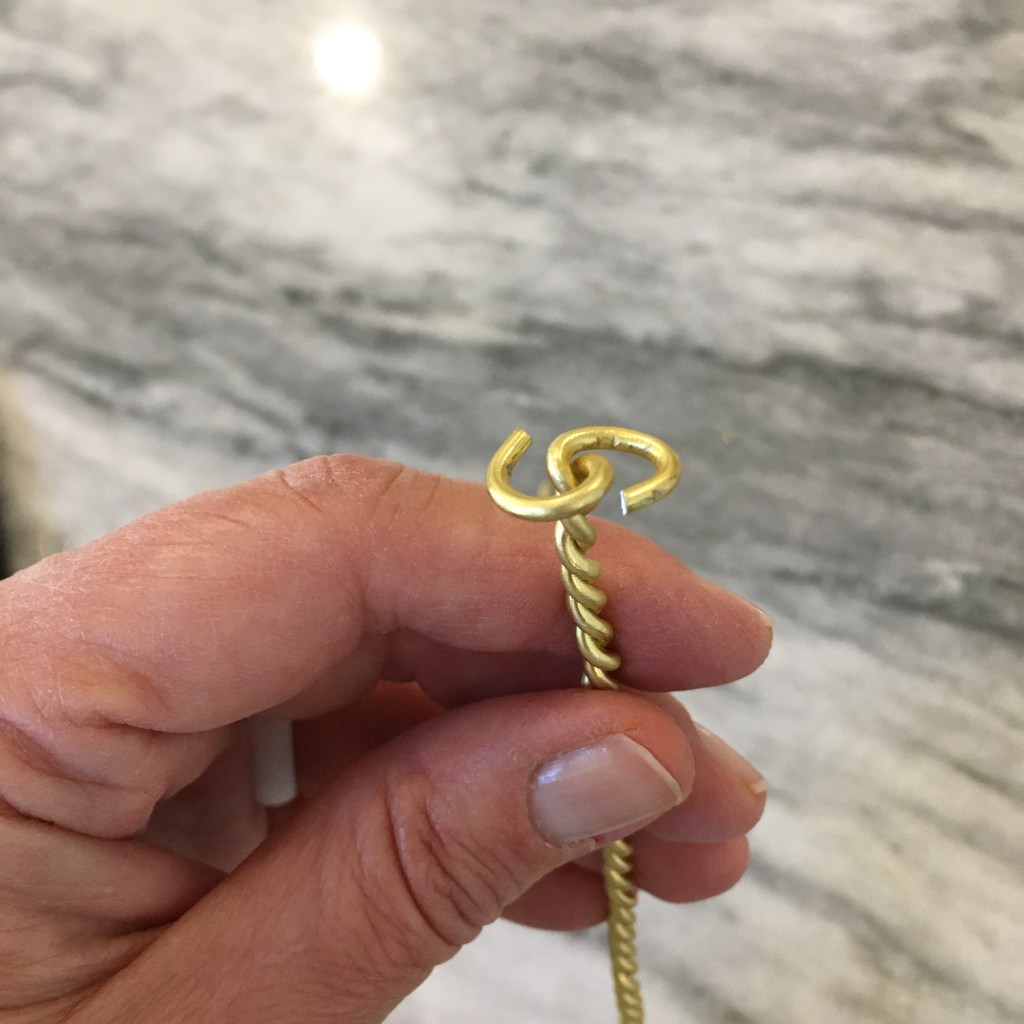
Spiral end

This distaff works so well with the rolags! The aluminum is extremely light, and it holds the fibers well so I am less likely to catch errant fibers in the twist of my yarn. A few fibers do get caught in the twist of wire, but it is a simple matter to free them.
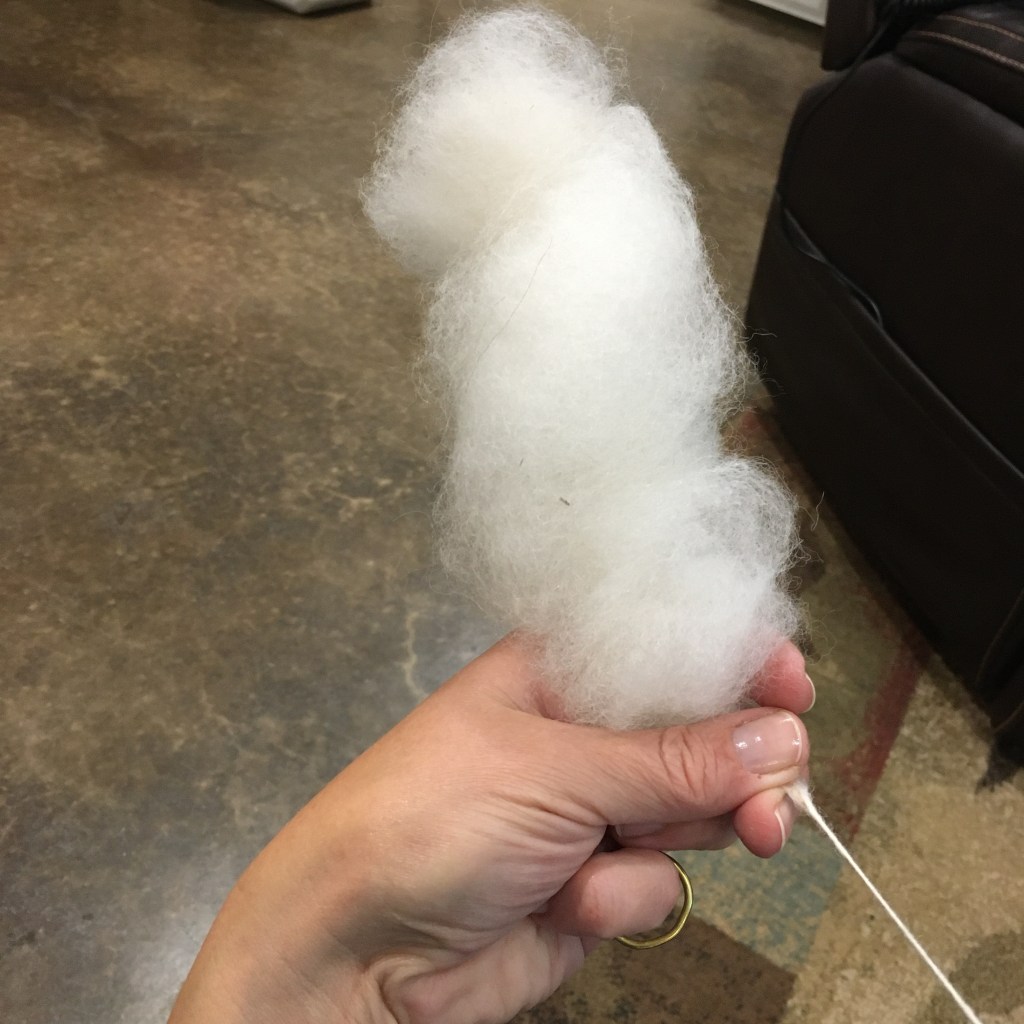
Wire ring distaff in use with rolag of carded alpaca fiber

In the picture above I have an extreme wrist angle because I had trouble getting a photograph showing the fiber, the yarn, and the ring. In practice the distaff makes it easier on my wrist than working without one.
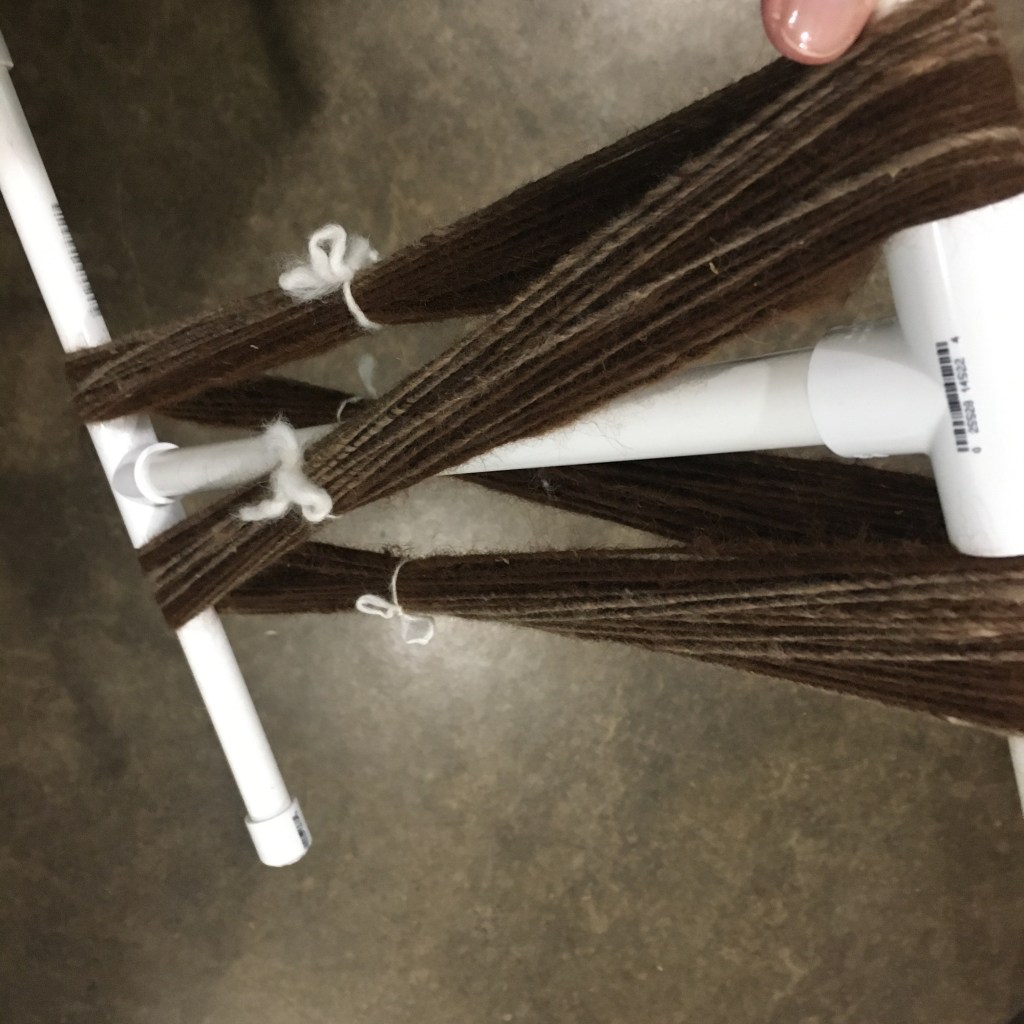
Spin, spun, almost done

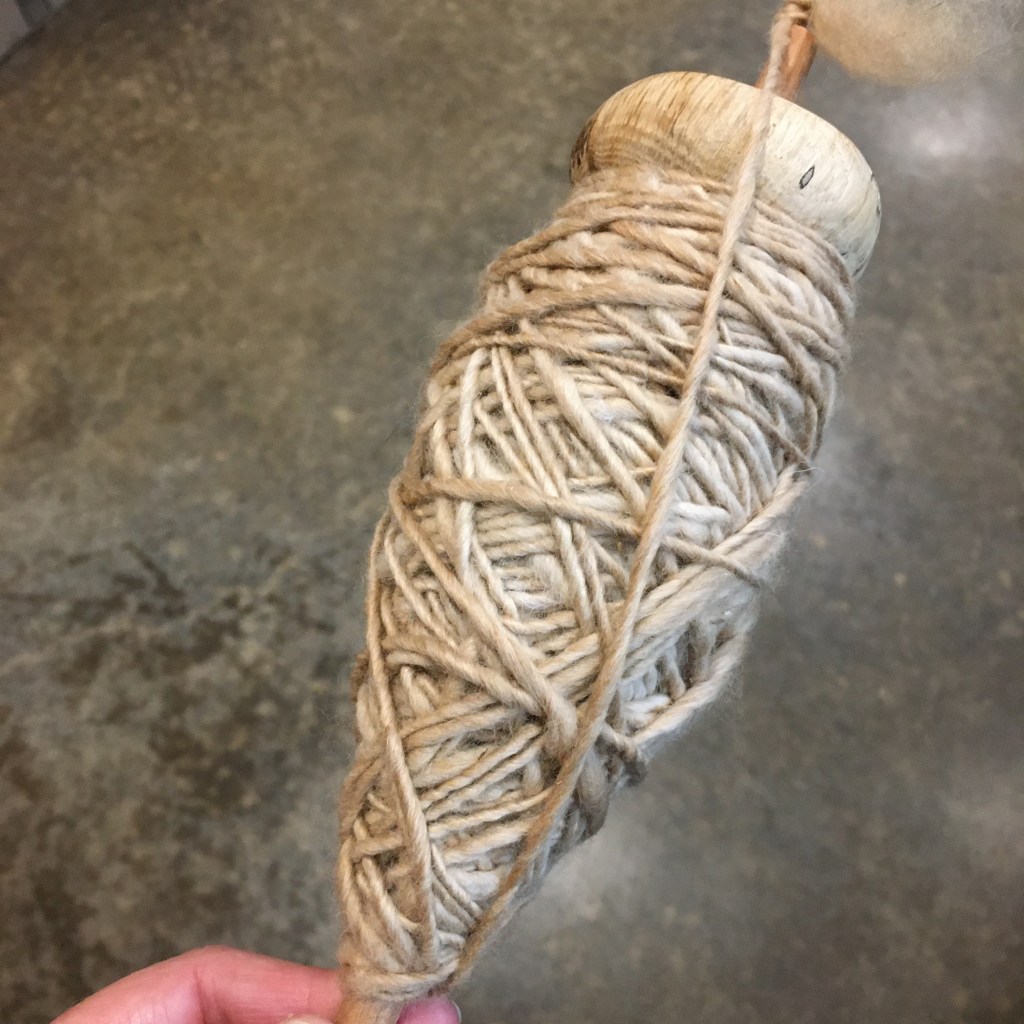
I spindle spun the blend of fawn and dark brown alpaca fiber. My consistency is decent when I am paying attention. If I am watching my youngest play Zelda Breath of the Wind, however, the yarn goes thin then thick pretty quickly. Oops.

Donabella and Amiee’s fiber spun up and then wrapped on the niddy noddy.

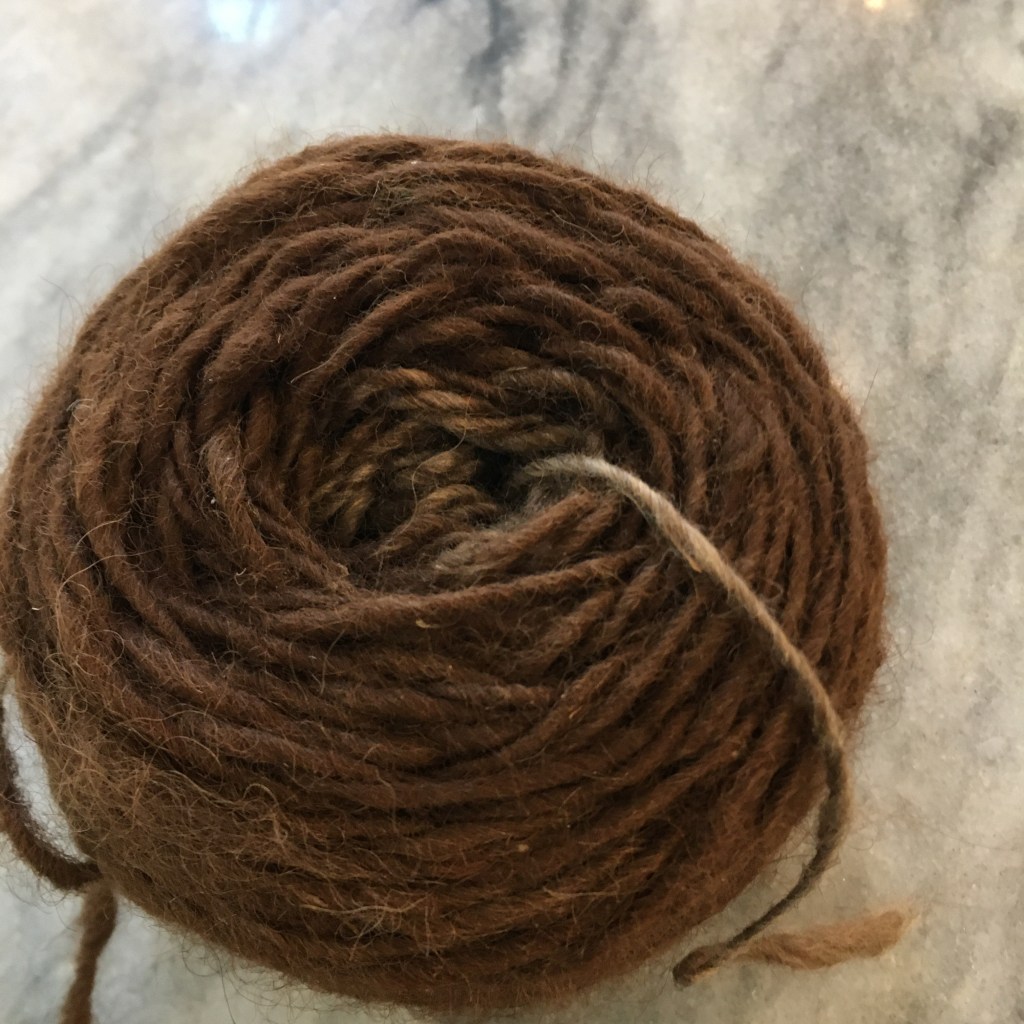
The fawn color really disappeared quickly into the brown. I’m not sure I’m going to get the gradient I was hoping for when I make something with this. We will see!

Yarn wound into a cake. The blended part is almost undetectable

Blending part 2

I blended Donnabella and Aimee’s fleece! The color difference is greater between the fawn and dark brown, and it didn’t take much brown to make a significant difference in the blend color.

Fawn and brown alpaca fleece loaded on a carder

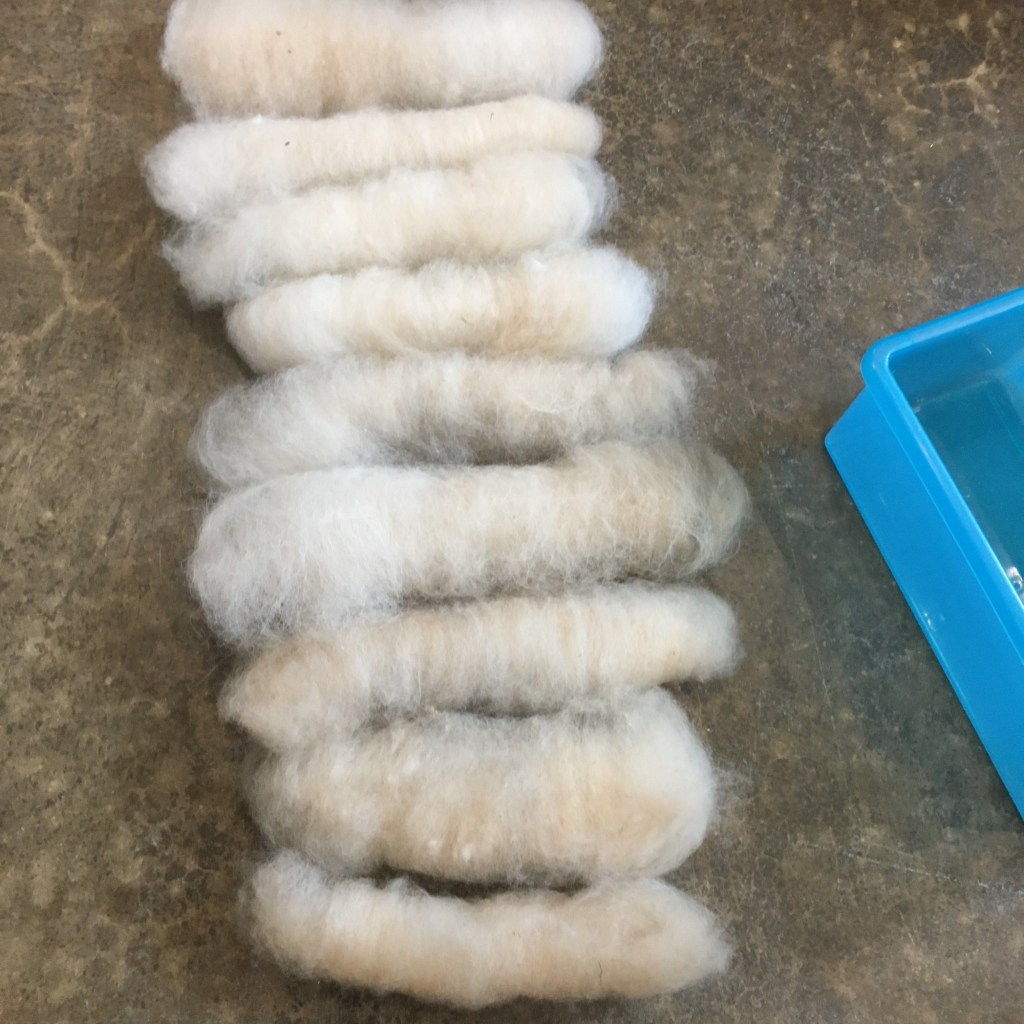
After blending, I color sorted the rolags before spinning.

Color sorted alpaca rolags

I am finding differences in fiber in the fleeces. I’m not sure if I selected raw fiber from different parts of each blanket (the fiber sheared from the back of the alpaca), or if there are differences in fiber diameter between animals (which makes sense), or both. I am pleased that I am learning and noticing the differences!

Spinning as I go

The rolags of alpaca wool I am carding are so light and fluffy, I don’t want to pack down the fibers by storing them until everything is carded. So I decided to spin as I go.

This is as much as I could pack on my spindle!

It is a nice pairing of tasks: card a box full of rolags, spin said rolags, repeat. When my spindle was just as full as I could get it, I did wind the yarn on my niddy noddy, rinsed it, and let it dry. Even though I washed the raw fleece, it still had some water resistance. The dried yarn is balanced and more consistent in thickness than my last spindle full.

Cake of single ply 100% un-dyed alpaca

The color shift from Sugar Plum’s fleece to Donnabella’s came out nicely!

Blending natural colors

I think I mentioned that I purchased three different colors of alpaca wool? Now comes the fun part (who am I kidding it has all been fun): blending! I used my fine carders to blend portions of Sugar Plum’s (white) and Donabella’s (fawn) fleece to make intermediate colors. The idea is to get a gradual change from one color to the next.

Natural alpaca fleece colors before blending
Color graded rolags

The color change is subtle; Donnabella’s fleece is only slightly darker than Sugar Plum’s, but there is a difference. Next I’ll try blending Donnabella’s with Aimee’s (dark brown).