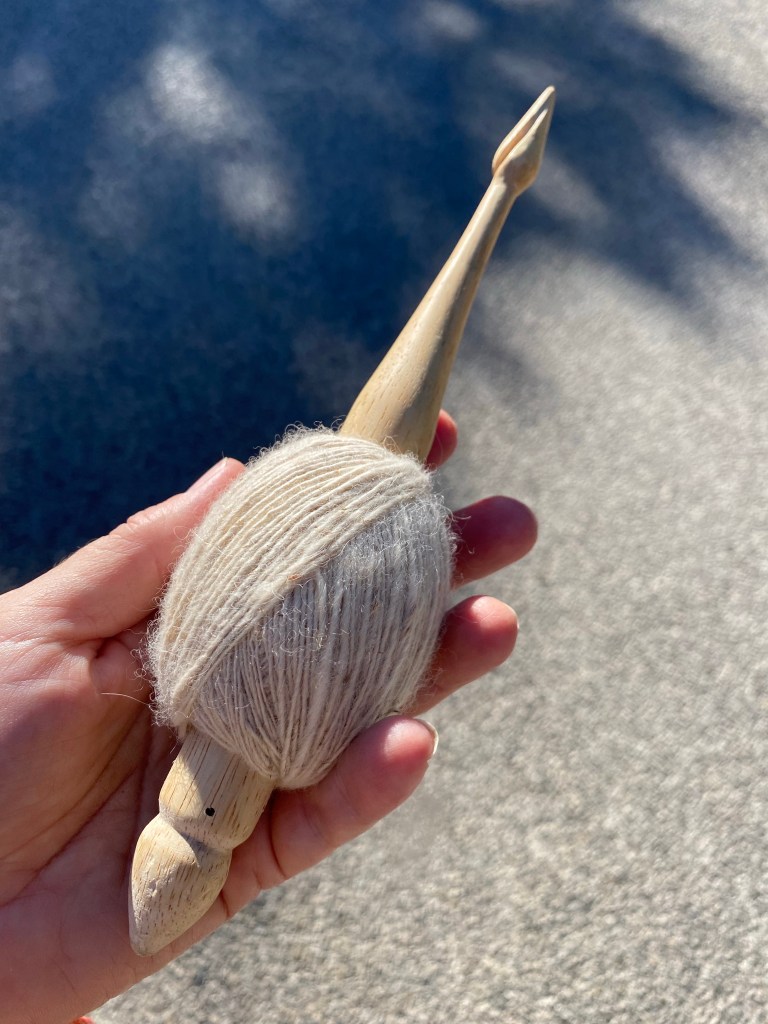
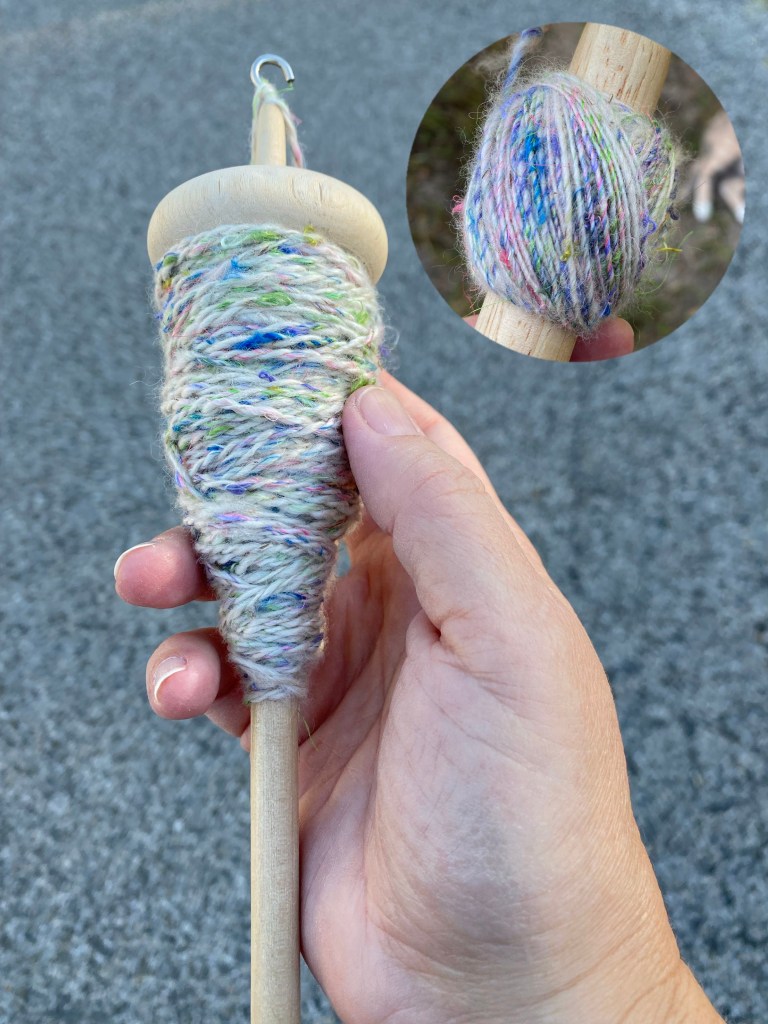
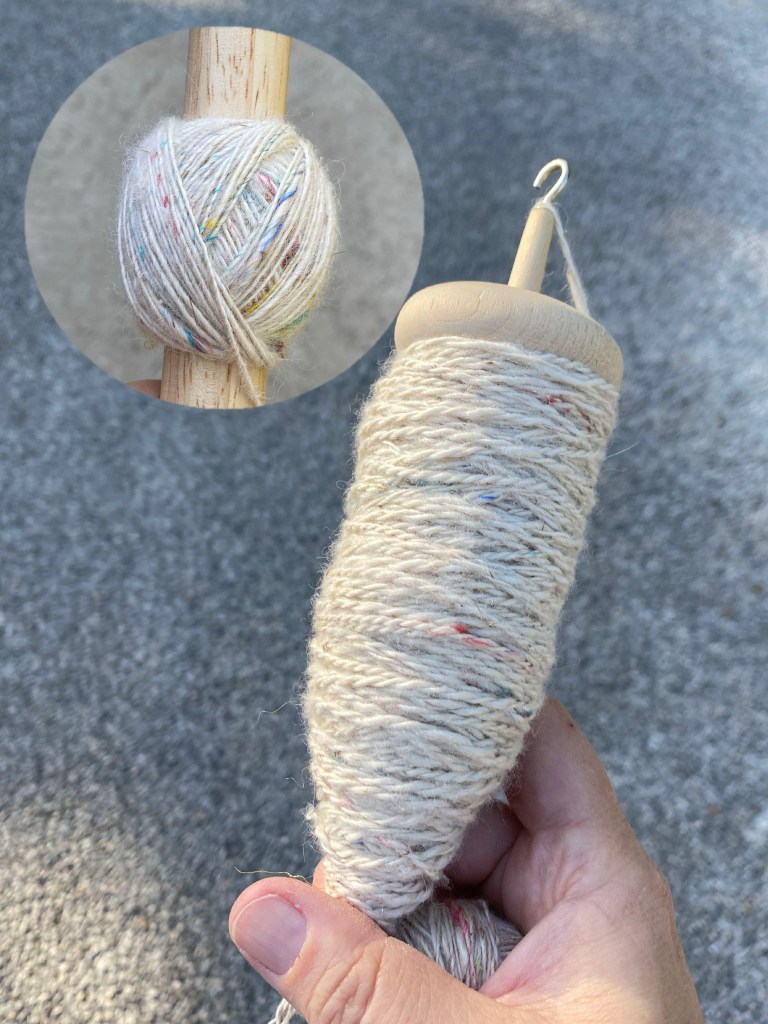
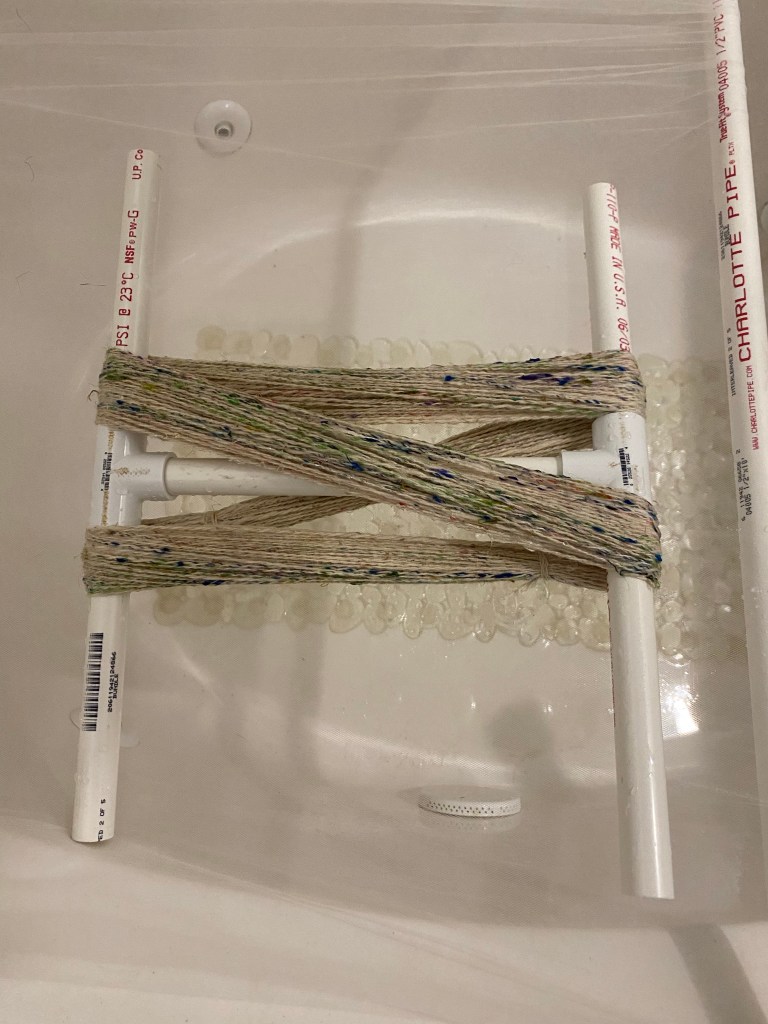
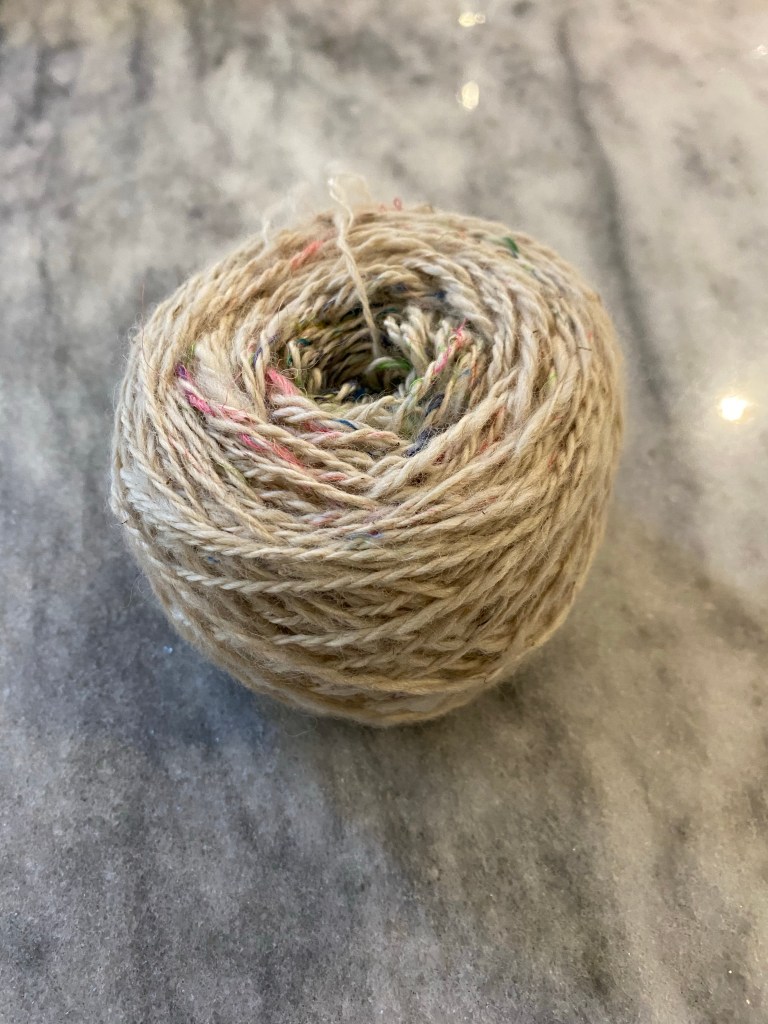
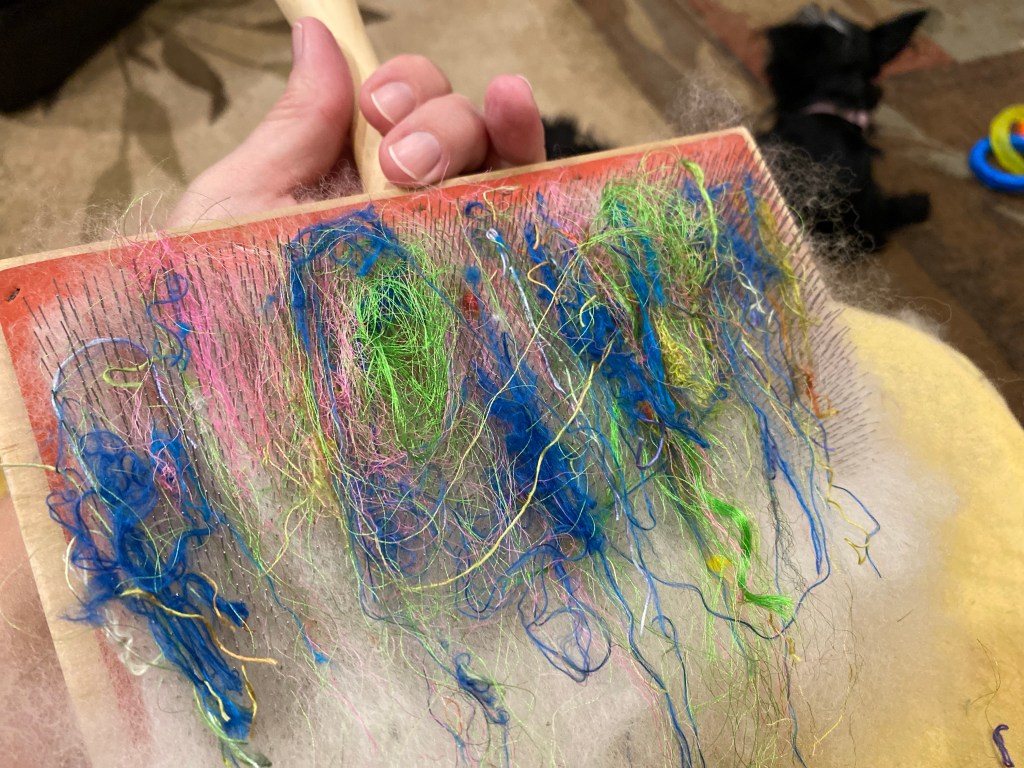
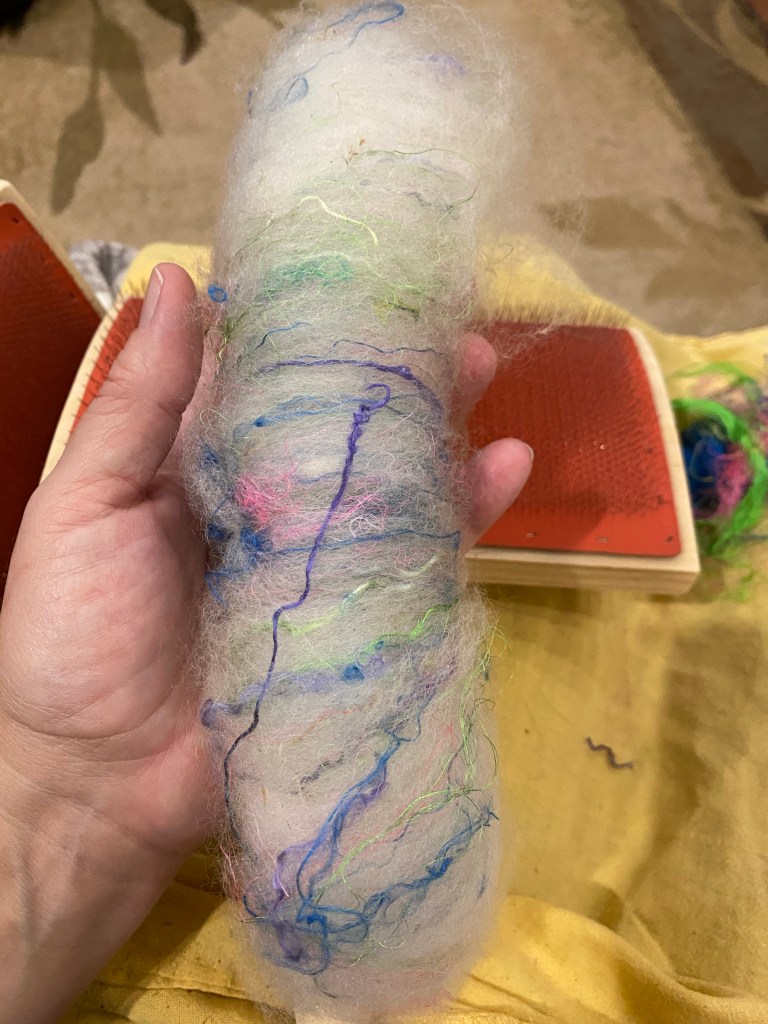
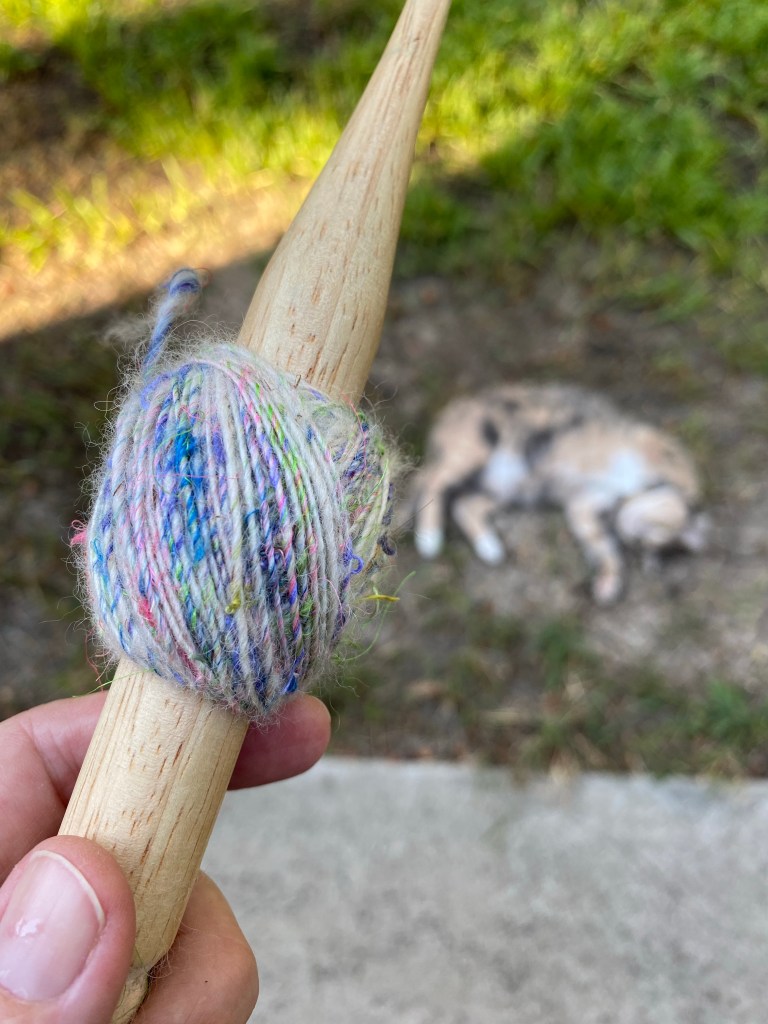
I tried adding some more colored sari silk waste to my cream alpaca fleece and went too far. Instead of touches of brilliant color I have a muddled pastel mess. Hm.
Sari silk waste added to the carderRolag with extra colorSpun alpaca and sari silk single
I did learn that trimming the silk threads down to about the same length as the alpaca fiber helps with carding, but gives more loose ends when spinning. Time to try again, maybe with trimmed silk, but less volume.
I’ve started a new spinning project. I read about using waste sari silk threads in spinning and had to order some.
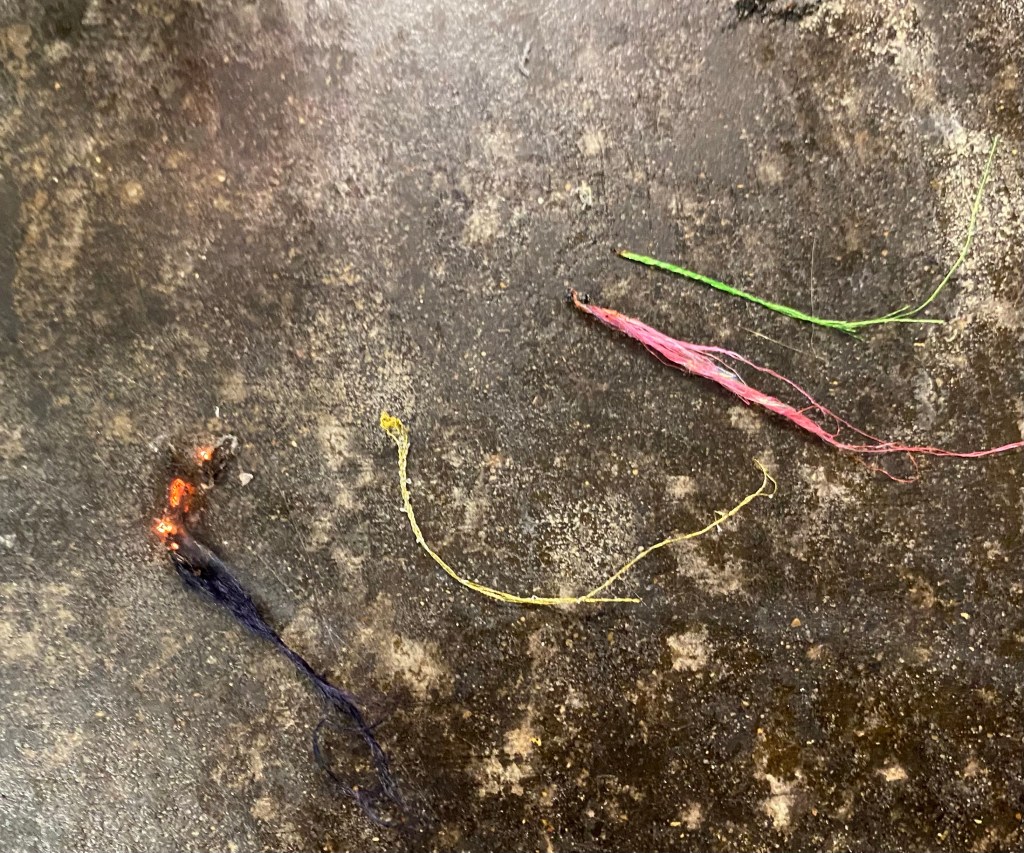
Sari silk waste threads
To get the color to pop, I chose the lightest color fleece I have, which is a light cream from an alpaca named Sugar Plum. I carded a small amount of the sari silk with the alpaca before rolling up the rolag.
Alpaca rolag with colored silk theeads
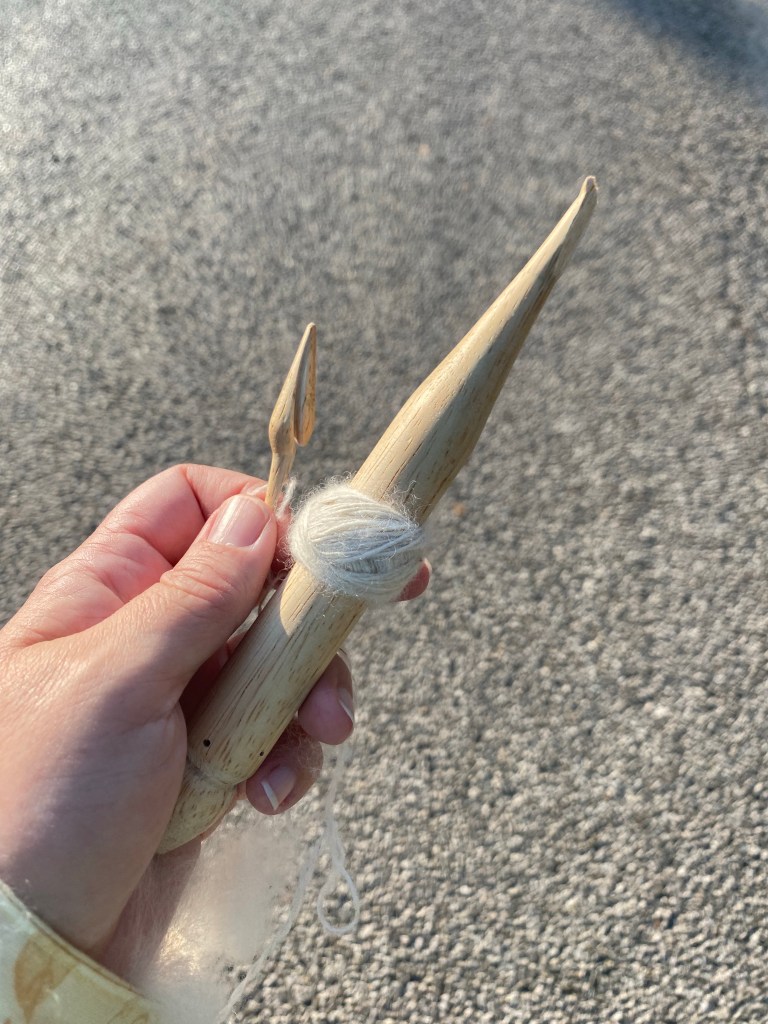
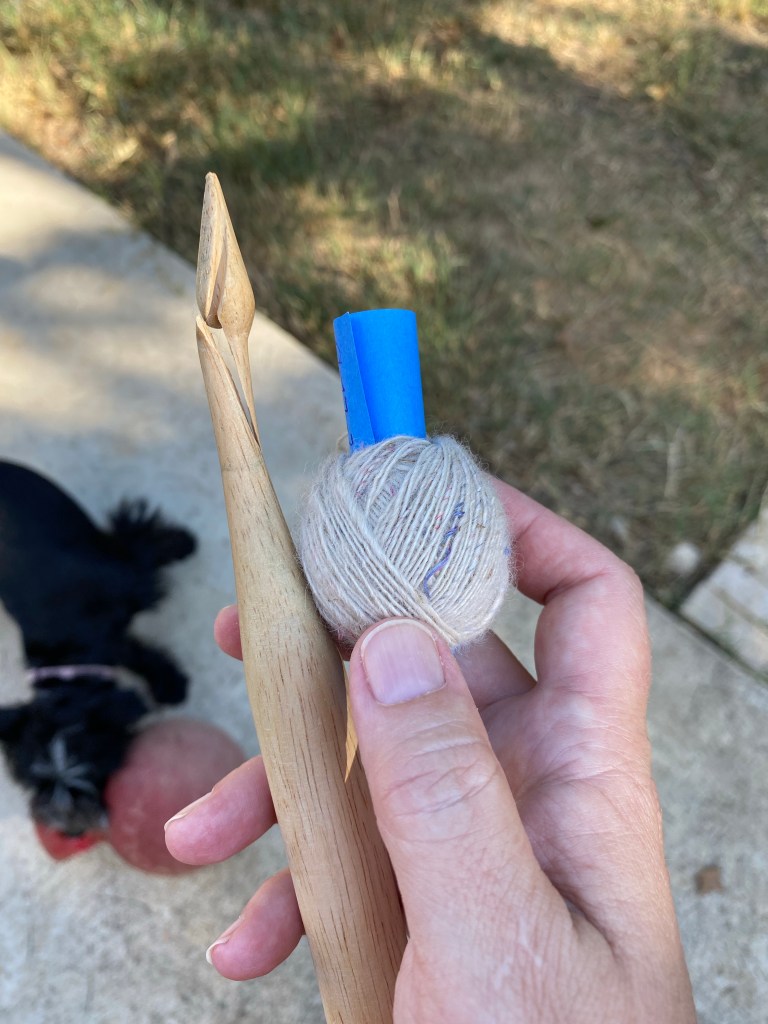
I’m spinning this up on my favorite drop spindle as I walk the neighborhood. The bits of color are nice, but I think I need a bit more.
Spun alpaca and silk single
Oh how joyous it was to get back to walking and spinning!
I now have three preparations of three colors of alpaca and silk. One with the colors carded separately, then rolled together into a rolag before spinning and cable plying; one carded and spun separately, then plied together; and one carded together to blend the fibers then spun and cable plied.
From left to right: marled, plied, and blended alpaca silk yarn
I had such small samples of the three different blend techniques, I decided to combine them into a single project.
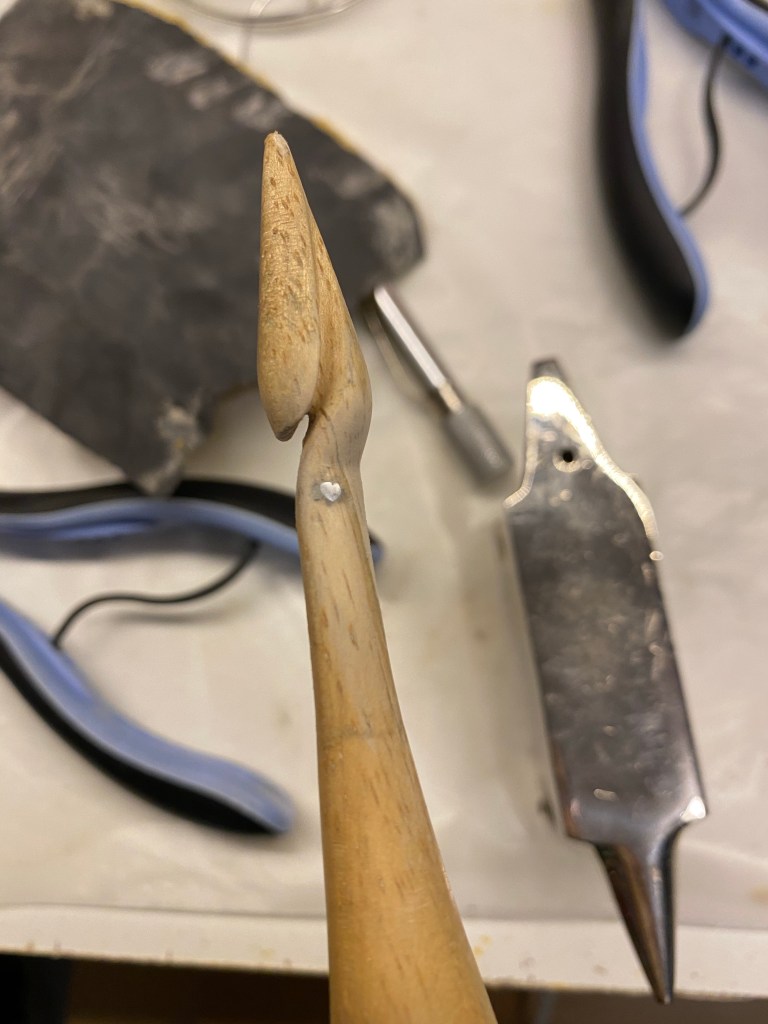
From top down: marled, plied, blended. Nål is osage orange
I think the effect of each yarn is interesting. The marled yarn has more variation, which resulted in some spots of darker and lighter color. The three ply is counter clockwise and unwinds somewhat for this stitch (which is my new favorite stitch: Dalarna from Sweden, Hansen’s Notation (U) O/U O:UO F1). The blended actually came out more uniform than I predicted. The intent was for this to be a hat, but I miscalculated and didn’t make it big enough. Since it is an experimental piece anyway, I also tried fulling it a bit by taking it back and forth from hot water to cold water. It did pull in some and became definitely too small for a hat.
Lightly fulled
So I took two pieces of leather lace and made it into a bag by weaving the leather through the edge. Problem solved.
Nålbound bag with leather lace
The finished fabric is very soft, but dense. It has a very nice drape, but not much elasticity, so I think the alpaca silk blend may work better as a scarf or shawl. I’ll have to test that idea!
Next color experiment with my three colors of alpaca fiber is blending them all together with a little silk. (The silk makes it so strong I can’t break the singles by hand. I’m undecided how I feel about that.) I aimed for equal portions of each color, but I didn’t get out the scale, so I knew there would be variations in the rolags I produced from carding. (Honestly, there will be variation even if I weighed, but the subtle change in color can be quite pleasant.)
Blended alpaca silk rolags in my arm bag ready for spinningCable plied (4 ply: spun, plied, plied again) alpaca silk blend
I think I like the subtlety of this yarn, but I want to make it up into something to be sure. Yarns can look very different in the ball or skein than they do in a finished piece!
Three colors of alpaca, three ply yarn; seems a natural choice for my continued color combination experiments. I carded the colors separately again, but this time added a little silk to each preparation (as I have read that silk and alpaca complement each other), and then spun the colors individually. Taking the inside end of each tiny yarn ball, I plied them together. This made an interesting visual effect, very bold upclose.
Alpaca and silk singles Three-ply alpaca/silk yarn