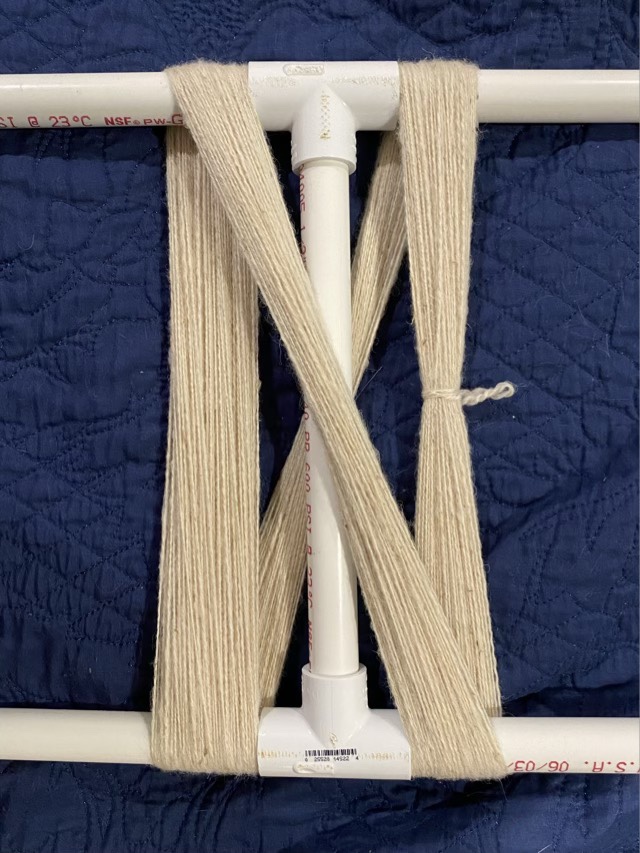
After wrapping my two-ply yarn onto a PVC niddy noddy, I rinsed the fibers and left it to dry. When it was dry, I used my yarn swift and cake winder to get the yarn ready for use. This 100% alpaca yarn will join the other yarn I’ve spun from Sugar Plum’s fleece in a knit lace shawl project.
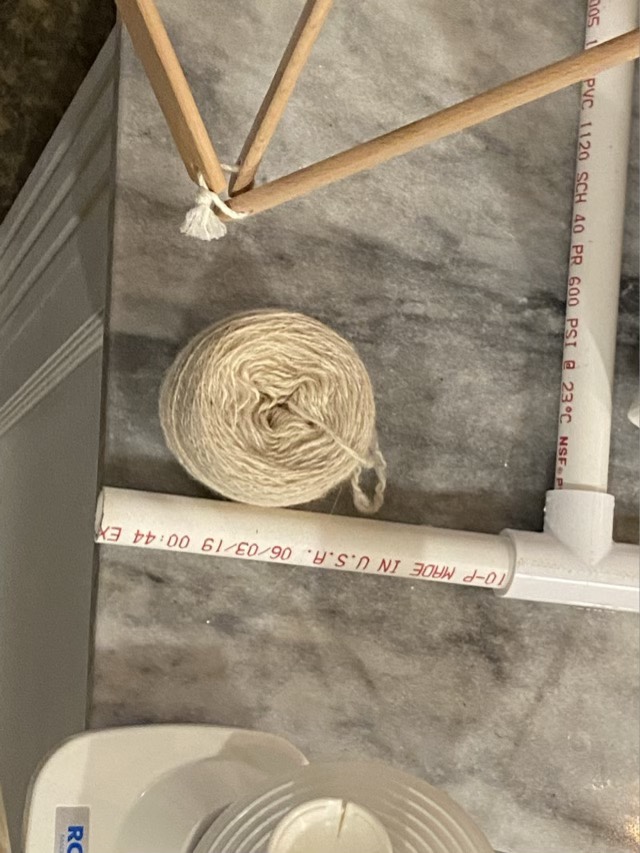
Yarn on a niddy noddyYarn cake (center), swift (top), niddy noddy (right), ball winder (bottom)
The PVC niddy noddy is an easy DIY. The swift and ball winder are good investments for yarn enthusiasts, although your local specialty yarn store may have a set and be willing to help wind skeins into cakes.
Today’s theme is if something doesn’t work one way, try another. I started plying my alpaca singles with my upcycled spinning wheel.
Plying ball and upcycled spinning wheel
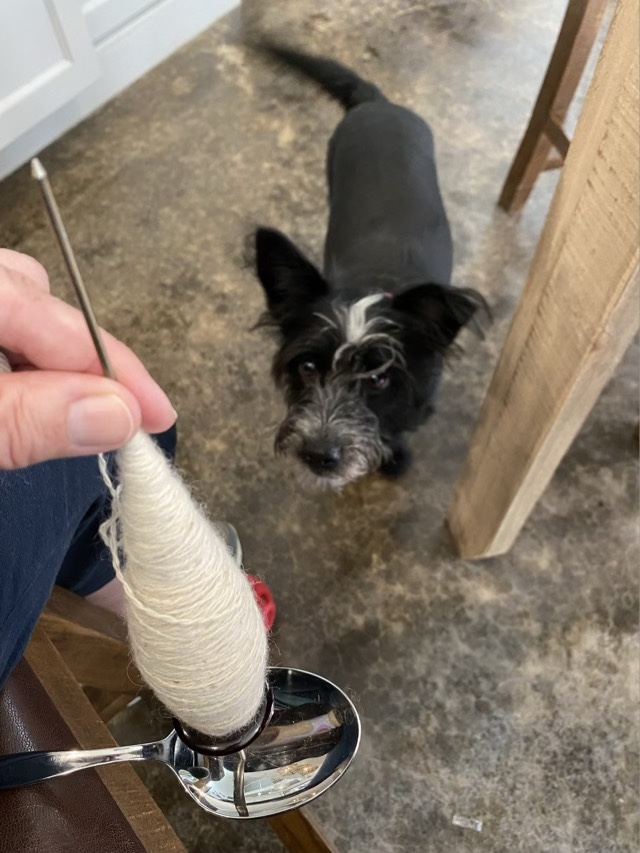
The converted mini bike worked OK for the first two of three center pull balls, but the third was too much for the spindle supports (two holes through a ballister). So instead, I used the spindle as a supported spindle, used a serving spoon with the handle tucked under my leg as the spinning bowl, and was able to finish plying the third ball.
Plying with a supported spindle and a spoon (Missy would like me to throw the ball.)
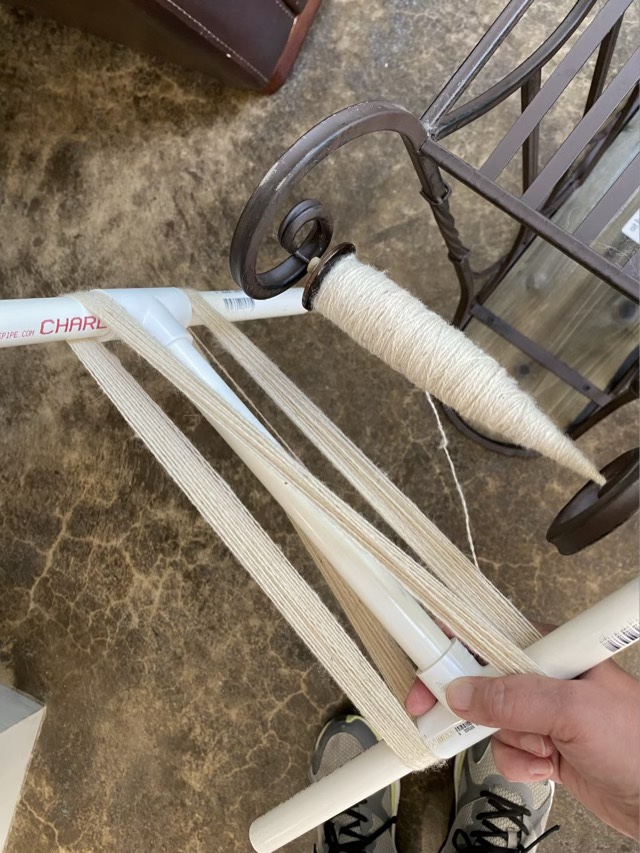
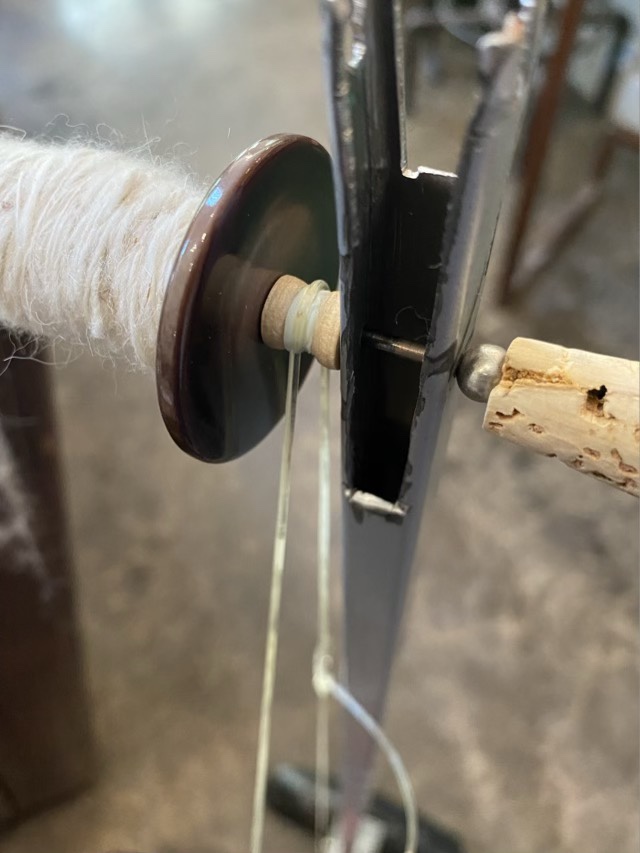
The spindle was too heavy to rest back on the upcycled wheel supports, so I looked around the house for something to hold the spindle while I transferred the yarn to a niddy noddy. I found that the wrought iron (or at least imitation wrought iron) legs of a side table were the perfect distance to hold the spindle shaft. So I flipped the table over and was able to wind on to the niddy noddy. The curves of the legs actually did a fantastic job of keeping the shaft from jumping all over.
Using curved table legs to hold a spindle to load yarn onto a PVC niddy noddy
Sometimes it is not what you can buy, but what you can repurpose.
I’ve been working through my carded alpaca rolags (although they have unrolled in the basket so are now more like small batts) both with the upcycled wheel and walking with the drop spindle. The charkha-like motion of the converted stationary mini bike means I have to wrap the newly spun yarn into a cone shape on the spindle. To ply, I like to have center-pull balls, so I have to rewrap the yarn.
Transferring alpaca singles yarn from the spindle to a center-pull yarn ballWheel spun singles (left) and drop spindle spun singles (right)
I’ll let the balls sit for while, then get to plying. The thicknesses of yarn produced by the two different methods is close enough that I will combine it all together into one skein.
I’ve been stalking online spinning groups, reading others’ questions and the answers given. On a post about drive bands on spinning wheels, I read a discussion on cotton versus hemp bands and adjusting the tension, and in that discussion someone causally mentioned stretchy drive bands. Hm? What an intriguing idea. I dug through my stash and found some stretchy cord usually used for jewelry. Only the largest diameter (1.5mm) was still in decent condition, the rest had dry rotted and was brittle. Taking the warning for the long term stability of rubber, I tossed the useless bits and used the thicker cord for my bicycle spinning wheel.
Clear rubber cord used as a drive band
I had been having trouble with the cotton cord drive band slipping, even with a couple coats of beeswax. So I removed it and tried the clear rubber cord with surgeon’s knot. While I was experimenting, I also wrapped a couple tiny rubber bands around the spindle’s hub to give some grip. It took a couple tries to get the tension right, but then everything worked even better! Hurray!
I’m still nursing my achilles tendon back to health. PT helped with the surrounding muscle strength, and I was approved to start taking walks again! My first walk I paid close attention to the road, so did not take my spinning. The second walk I grabbed my spindle and fiber! I still have quite a bit of build up to get through to take the long walks I used to, by at least I’m back on the road.





 Critters and Craft