Sponge bracelet

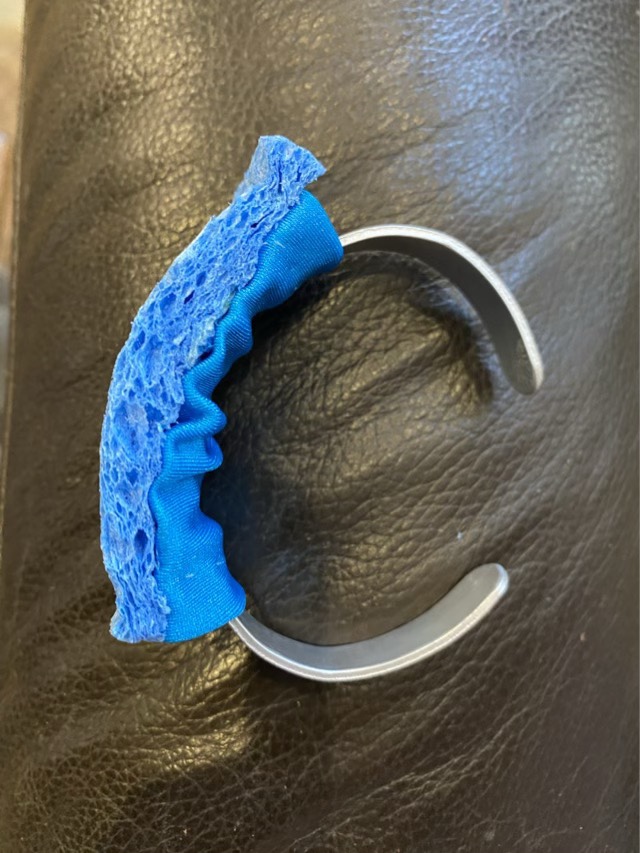
For spinning flax, author Stephenie Gaustad recommends wetting the point of contact between the leader and fibers to be drafted with moistened fingers. To facilitate this, I made a sponge bracelet. I cut a rectangle of sponge, sewed on some swim suit material, and slipped it over a metal cuff-style bracelet.

Bracelet mounted sponge

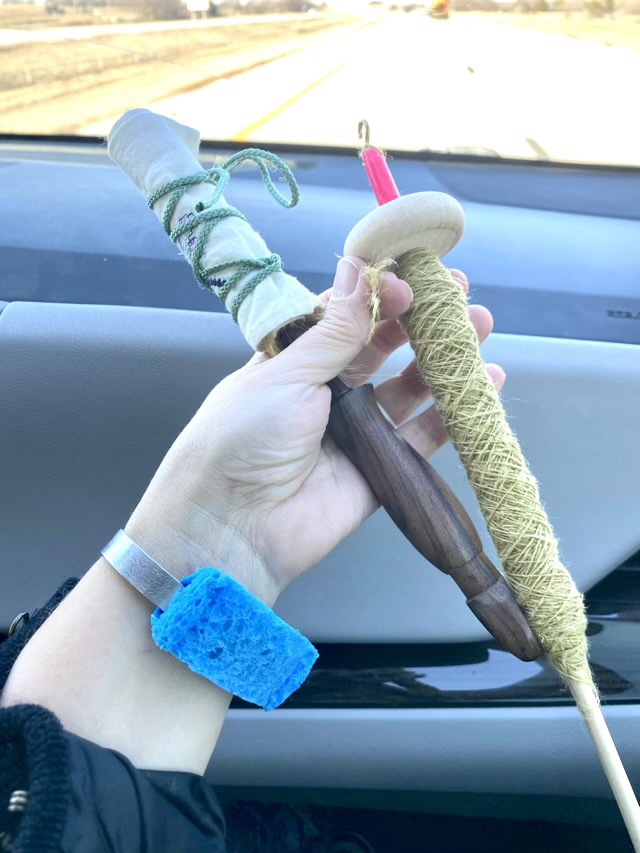
Before I start spinning, I wet the sponge. My favorite spit substitute is alcohol-free lens cleaner. I usually have a spray bottle for cleaning my glasses, so it is readily available for spinning use as well. And yes, I did try actual saliva, but since this is flax roving it has many short fibers that get caught on fingers and tongue. Yuck.

Spinning flax in the car with a drop spindle, distaff, and sponge bracelet

Rambouillet page

I finished my Rambouillet wool fiber page. I had samples of three preparations of wool given to me: raw fleece, scoured (but not combed), and roving. I love this wool. I enjoyed scouring and combing it, and I love how the finished pieces feel. When I’m ready to buy a new raw fleece this is the kind I’m going to get. It cleans well, and spins beautifully. I love the woven sample with my first plaid pattern. I understand why this sheep is so popular.

Rambouillet fiber page
Page with swatch descriptions showing

Fiber squee

Assortment of combed top fibers

My sister sent me an assortment of spinning fibers! There are preparations that I never knew existed! Squee! (This post already has an abundance of exclamation points. There will probably be more.) Banana? Rose? How facinating to learn that fiber preparations can be made from these sources! There is enough material in each sample bag for me to get a feel for spinning it, and to make my swatches for my fiber book. I also have the name of a new (to me) fiber store, which is nearly as exciting as the bags themselves! (See, more exclamation points. I warned you.)

Antique spinning mule bobbin

Harrisville Designs in New Hampshire has moved their machines back to the original factory floor in town, to strengthen the ties to the community, switch to renewable energy, and return the historic buildings to their original purpose. To celebrate, they offered customers a piece of history, an antique spinning mule bobbin, if you purchased a skein of yarn. I ordered yarn.

Antique maple spinning mule bobbin and new silk and wool yarn from Harrisville Designs

A spinning mule is a machine used to spin yarn on multiple bobbins as once. (Here is a place to get started on more information.) It drastically improved the amount of yarn that could be spun at one time and replaced the spinning wheel as the main production of yarn in the 1700s. This bobbin is between 50 and 100 years old. Fascinating. I can’t collect many antiques, I just don’t have the room, but this is small and will go with my hand spindles.

Prepping pages

I needed a new fiber page for my spinning book, so I made five. Honestly, it is easier to make multiples for most things, since the tools are out and the groove is worn. I chose five because that is how many end papers I had when I cut the fancy paper to size. Random, but effective. I chose the colors to go with the end paper as well.

Newly constructed fiber pages

Getting the pages in the book has proven a bit more difficult than prepping the pages. I need longer metal posts, and something to space out the pages in the spine, to match the thickness of the page. Hm. That means I need to venture into a craft store. In December. With the other thousand people that need to do the same. Hm.