Chain ply cotton

Since I had more spun cotton single than I needed for my crepe yarn, I tried chain plying it to make a three ply yarn sample. It did not go well. The cotton single was difficult to handle and kept breaking if the strands rubbed together. The resulting yarn is very haphazard with sections that coiled mixed in with the smooth ply.
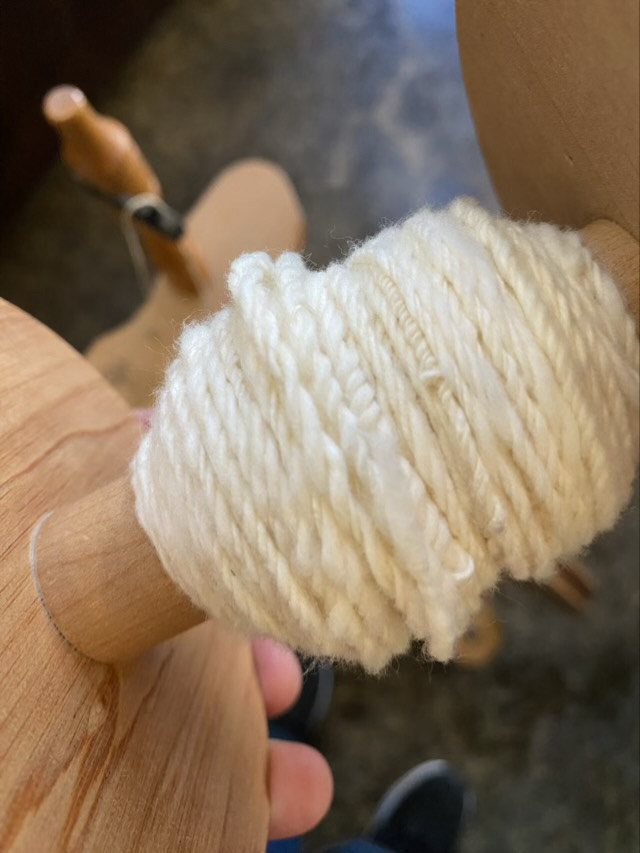
Photo description: three ply cotton yarn on a wood bobbin

The chain ply and the crepe yarn don’t look that different on casual observation because of the irregularity of the single spin. The variations in width cause more visual texture than the plying techniques. I will have to try this comparison with a different fiber preparation.

Photo description: crepe yarn (left) and chain plied yarn (right) on a PVC niddy noddy

Cotton crepe yarn

I found out about crepe yarn, which is a three ply yarn with a different construction. A single is spun in the S direction, then two plied in the Z direction. Then another single is spun with a Z twist, the plied with the two ply in an S direction. The resulting yarn has an interesting texture. I decided to try this method with the natural cotton I am spinning on the Ashford Traveller wheel.

Photo description: two bobbins full of spun cotton, the top is a Z twist two ply, then bottom a Z twist single
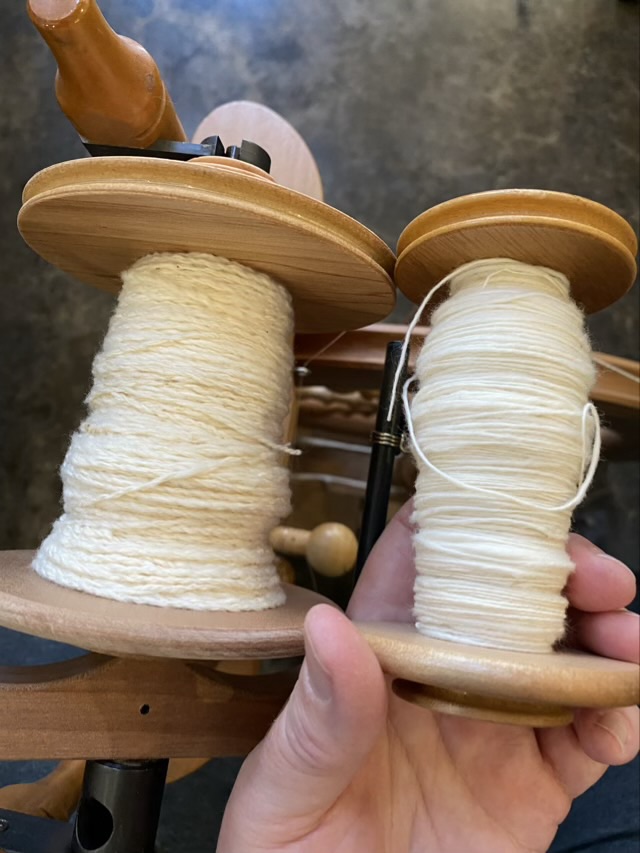
Photo description: three ply crepe yarn on a jumbo bobbin on the left, and leftover Z twist single on a regular bobbin on the right

I grossly misjudged the amount of Z twist single and ended up with way more than I needed to ply the three ply. Sigh.

It will be interesting to see how the yarn knits up. It does have more texture than a standard three ply, but because my cotton was spun from raw bolls that had not been carded, the yarn already had a variations in the spin.

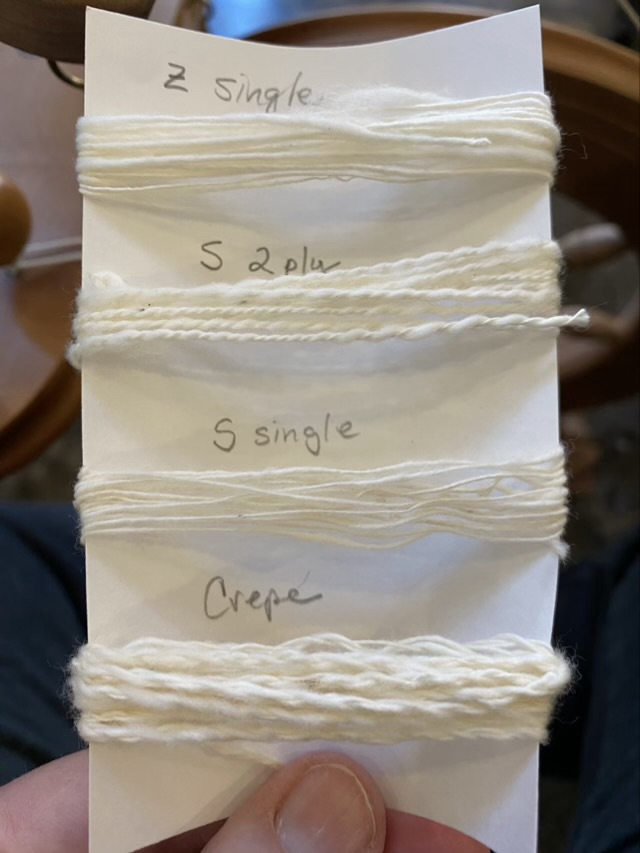
Photo description: four hand-spun cotton yarn samples, from the top down: Z twist single, S twist 2-ply, S twist single, crepe three ply

Cotton bolls

I’m enjoying spinning my cotton bolls. It is a meditative process, from picking the seeds out of the fiber to spinning it up. I have the time and no deadlines so I can enjoy the process. I absolutely see why cotton gins were invented, because seed picking bales of cotton by hand would be an arduous task.

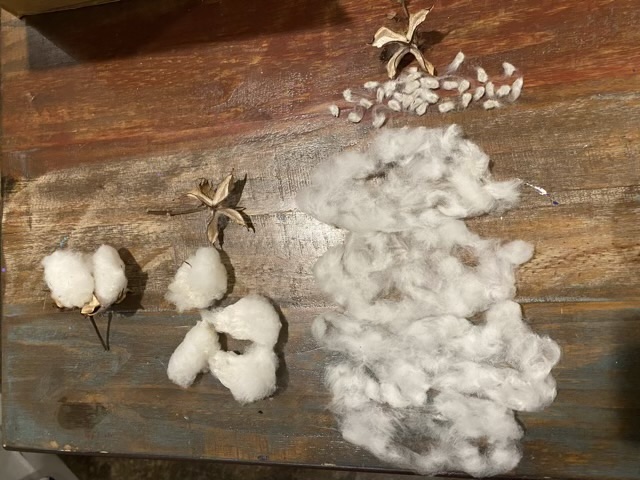
For grins, I laid out a cotton seed head, then another with the bolls removed, then another with the seeds removed.

Photo description: three cotton seed heads, the left intact, the middle with the bolls separated, the right with the seeds removed from the fiber

I also did a video showing how I remove the boll and seeds, then spin the fiber. I have not been carding the fiber, but experimenting with the pulled fluff.

Orange peel texture

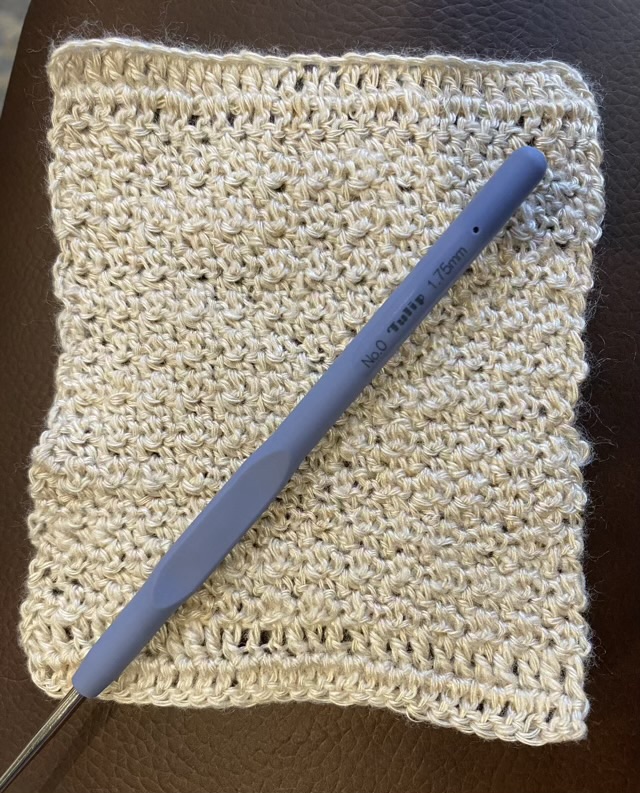
This is one of my favorite crochet textures. I’ve heard it called many names, but orange or lemon peel is what sticks in my head. It is an alternating pattern of single and double crochet stitches across, the on row two the single crochets go in the previous double crochet, and the double crochets go in the previous row’s single crochet. It takes a little time to recognize which stitch is which, but the finished project is very forgiving.

Photo description: swatch of orange peel crochet with double crochet top and bottom edge made with hand-spun mint infused cellulose fiber and a 1.75mm crochet hook

In need of a nostepinne

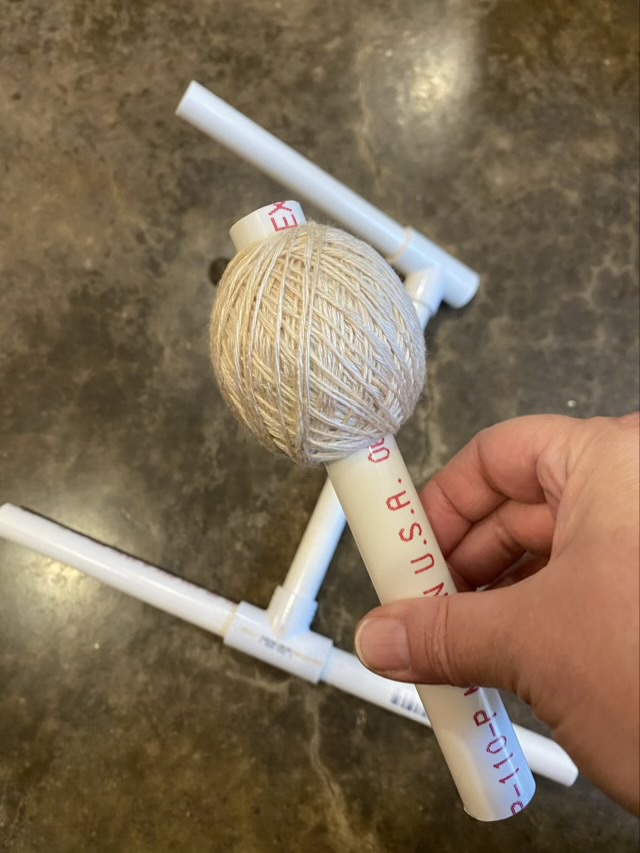
I finished plying the rose combed top fiber, wound it onto my PVC niddy noddy, and gave it a rinse. When it was dry, I took the skein and hung it over the back of a chair, but I went to wind it into a ball, and couldn’t find my nostepinne, or the rolled card stock I had been using. Hm. Then I noticed the PVC pipe is about the right size. Perfect.

Photo description: nostepinne style ball wrap on a PVC pipe from a home made niddy noddy

Are swifts and ball winders and wooden niddy noddys nice? Yes, of course. Are they necessary to the yarn making process? Nope. The back of a chair, or an extra pair of hands, and a rolled paper or a length of pipe will do.