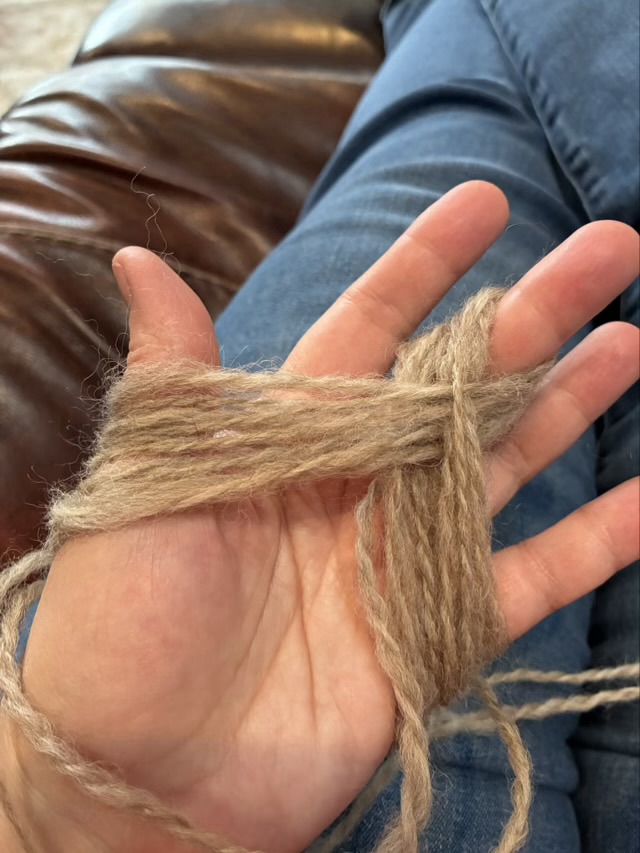
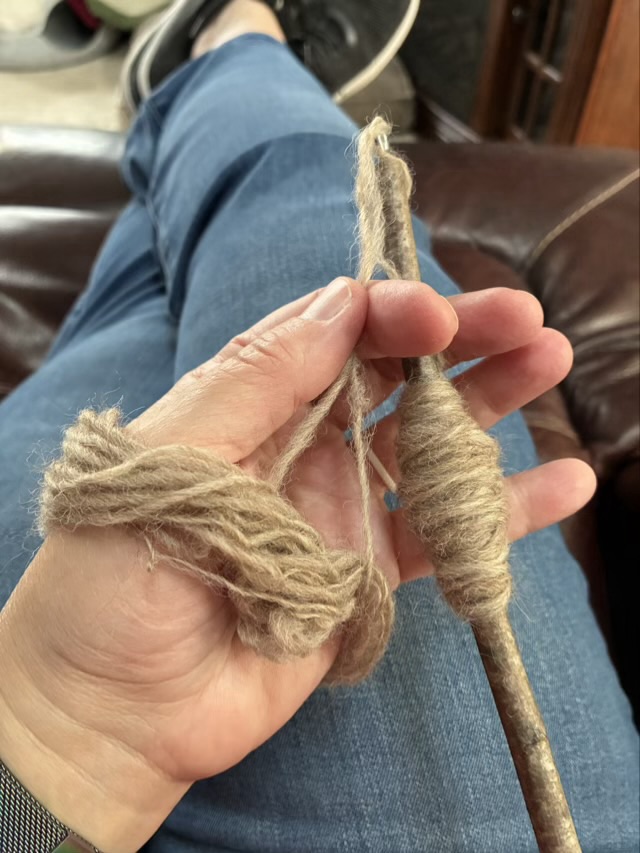
When spinning with my literal stick and my newly purchased Romney wool, I wanted to know how it would look plied, because this is the lowest twist I’ve ever put in making a yarn. This was a good opportunity to experiment with plying bracelets. A plying bracelet is made by wrapping the yarn around your hand (or other object) in a certain pattern so that when it is slipped onto the wrist, it is easy to ply from both ends without tangles. It is pretty magical, really, and worth exploring. There are several different ways to wrap a plying bracelet, here is the one I used.
Photo description: two plied yarn wrapped around my hand to form a plying bracelet Photo description: plying from both ends of a plying bracelet to make a two ply yarn
The photos are a little out of order, I forgot to take a picture of the plying bracelet to make the two ply yarn, but then took that yarn and made another plying bracelet to make a four-ply cabled yarn.
This is an interesting technique and a nice little rabbit hole to explore.
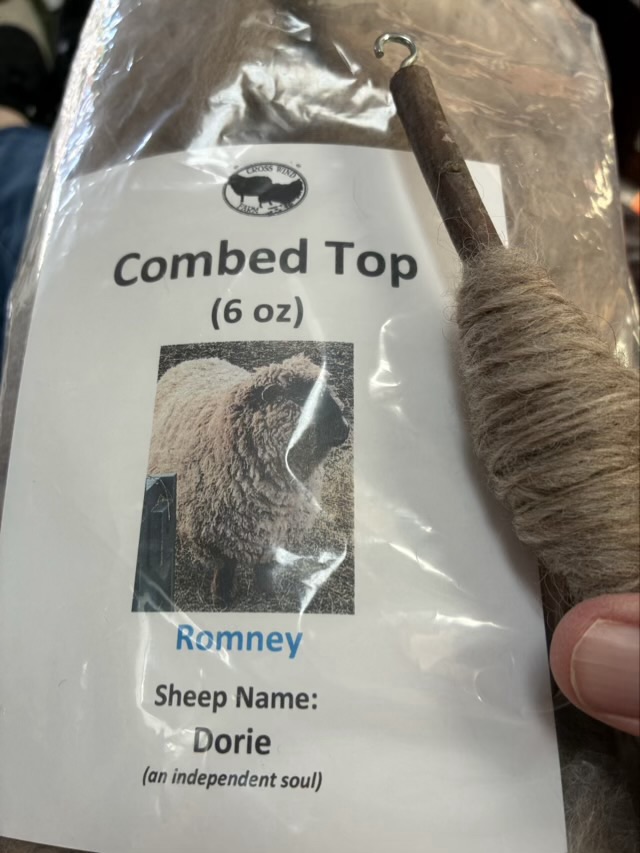
When I forgot to bring my spindle on my trip, I also left behind my fiber, which gave me an excuse to visit a local weaving shop and get more fiber. I was pleasantly surprised that the Woven Art Yarn Shop in East Lansing had some natural colored roving options, and picked a bag of Romney combed top from Dorie the sheep, who is apparently “an independent soul”, according to the label.
Photo description: Bag of Romney combed top fiber from Cross Wind Farms with a single spun on a stick with the bark still on and a cup hook screwed to the top
I love Romney wool, it spins up easily and is soft. Since I spun with a finger twirled stick, I made a thicker single because it needs less twist to hold together.
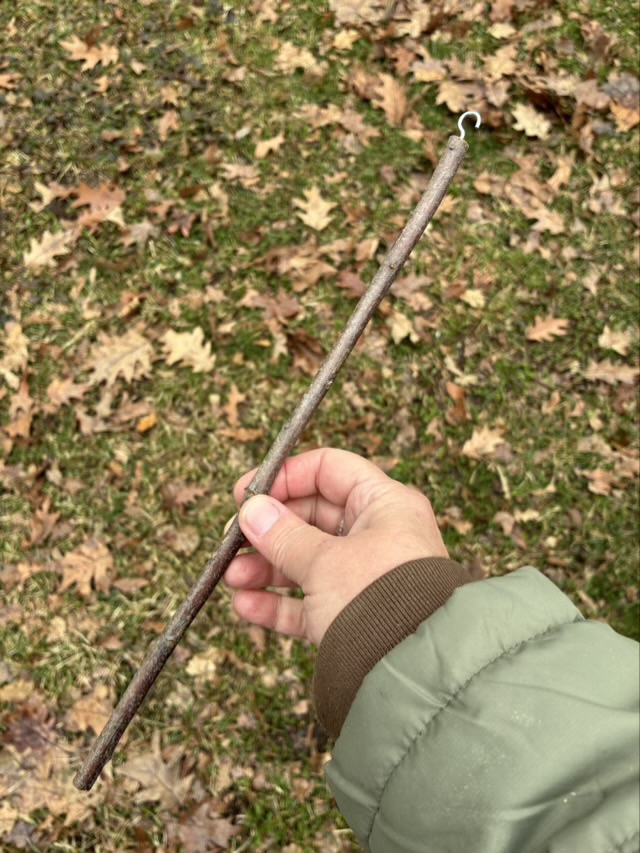
I did forget to bring a spindle when I went on my trip north. Horrifying, I know. I rallied by finding a smooth stick and screwed in a cup hook at the end.
Photo description: smooth stick with a metal hook on the end
Using a stick with a hook is actually my preferred method to teach people spinning. It slows down the twist, making it easier to see and control.
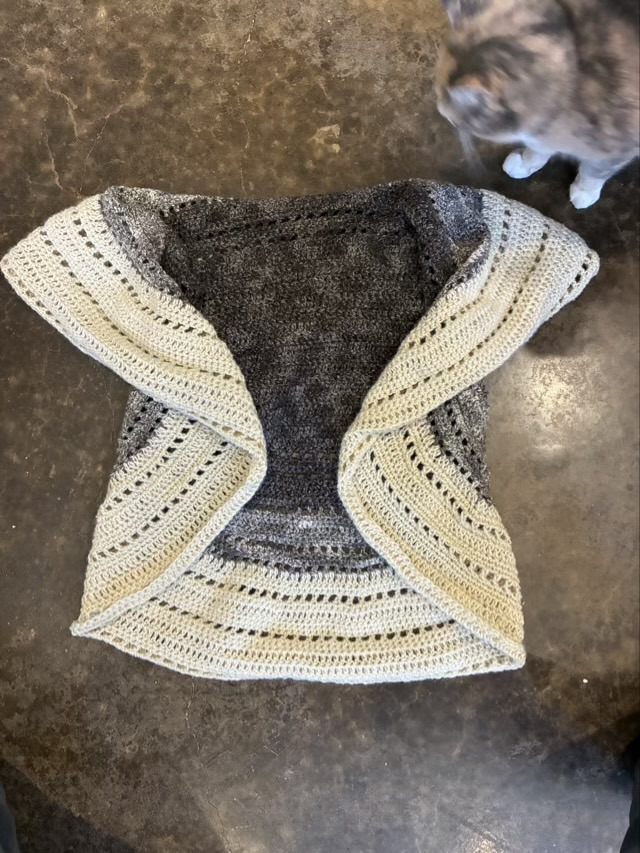
I crocheted several more rows onto LazyTCrochet’s circle vest pattern, past the “plus size” listed in the instructions. I followed the general feel of the pattern up to that point, and crocheted until I ran out of my hand-spun Teeswater yarn. It was still feeling small and tight.
Photo description: Circle vest crocheted from hand-spun Jacob and Teeswater wool showing three color variations, dilute calico cat photo bomb
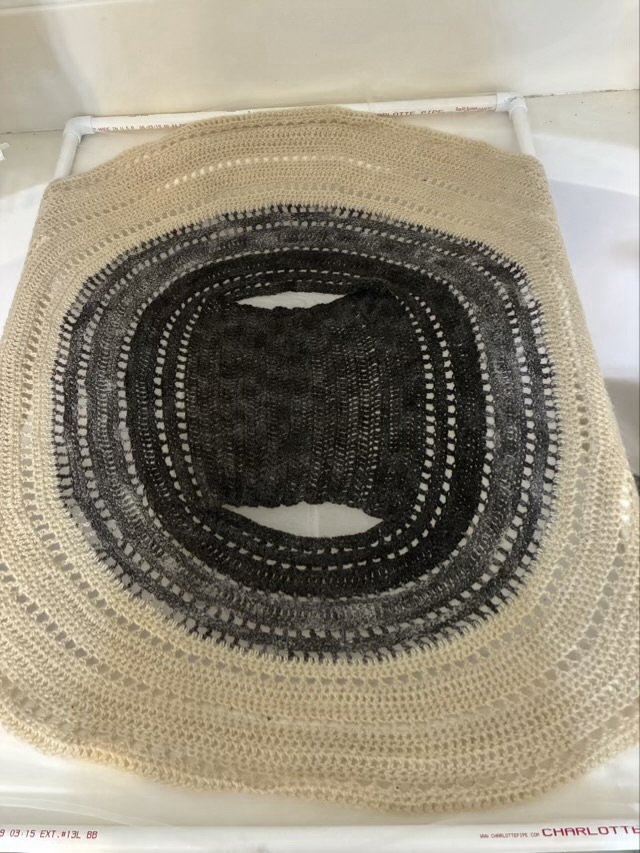
I do have more Teeswater roving, but need to spin it up. I decided to tie off the row and weave in the ends, then give the vest a good soak with some gentle fabric wash. I laid it out to dry on a homemade PVC and nylon mesh drying rack.
Photo description: same vest laid out to dry
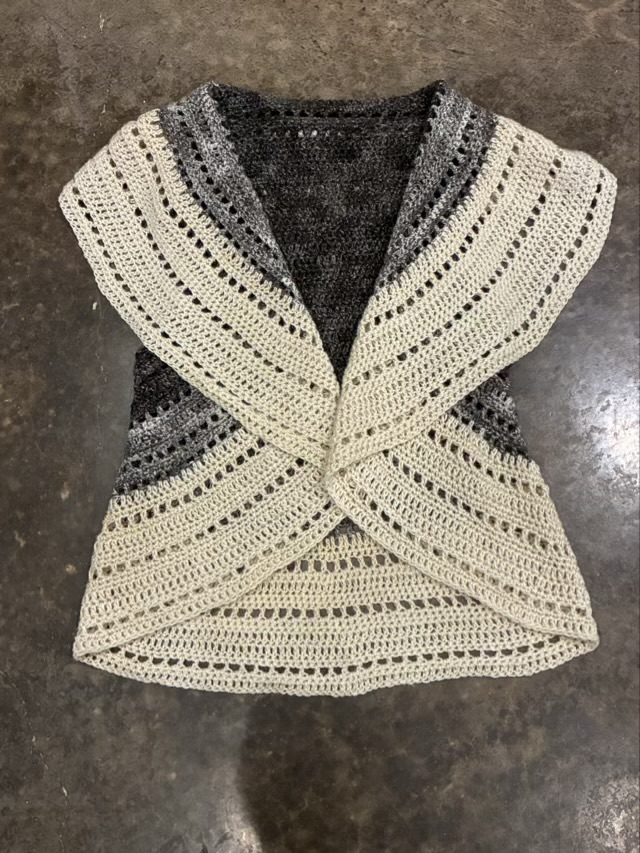
The stitches relaxed and the vest increased in size.
Photo description: same vest after blocking
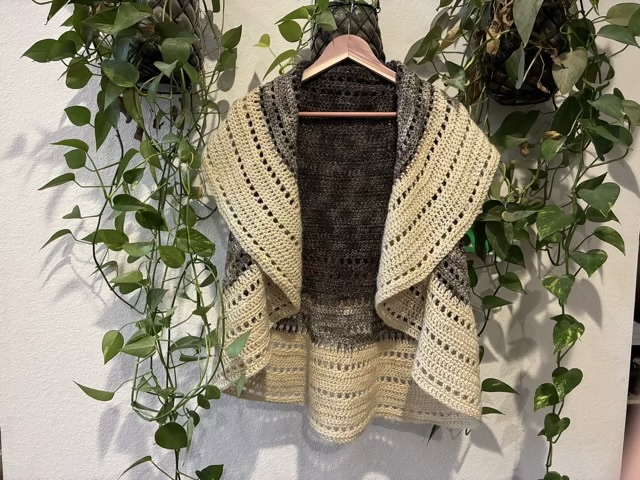
It is now a wearable garment. The wool feels softer after blocking and has a beautiful drape. I call this my “Shave ‘Em Two Save ‘Em” vest because both Jacob and Teeswater sheep are on the Livestock Conservancy list of Heritage Sheep. Jacob is Threatened and Teeswater is considered Critical.
Photo description: same vest hanging on a cedar hanger to show the drape
I’m rather excited that I have created something I will actually wear and supports farmers raising endangered heritage breeds.
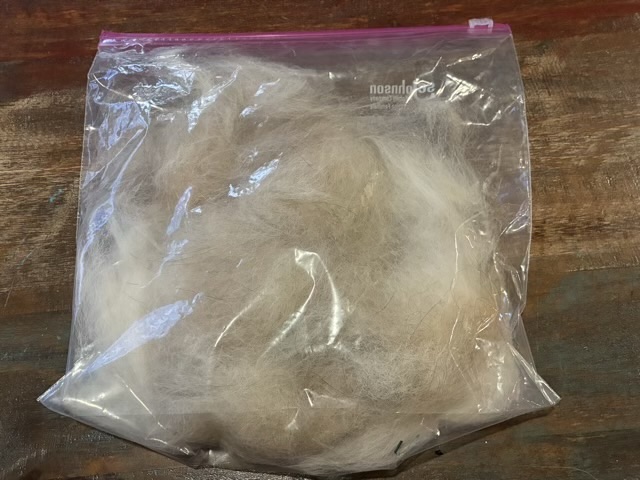
My friend brought me a bag of dog hair! For a spinner, this is an exciting thing, especially when the dog has an undercoat.
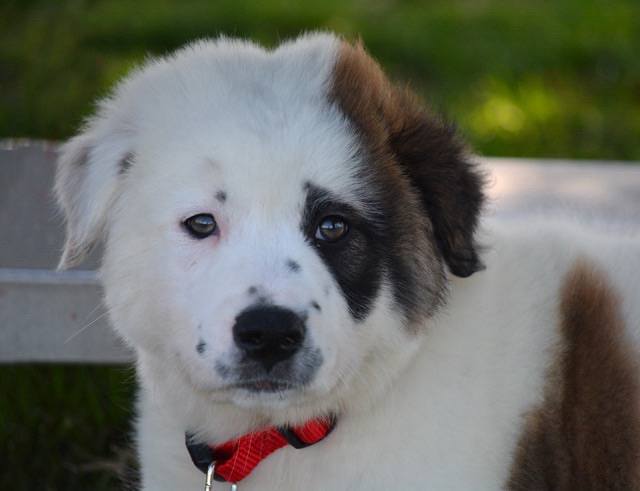
Photo description: white and fawn colored dog hair in a gallon plastic bagPhoto description: Baxter as a puppy. He is 30% Great Pyrenees, 30% Cattle Dog, 20% Boxer, and 20% Belgian Malinois according to a DNA test.
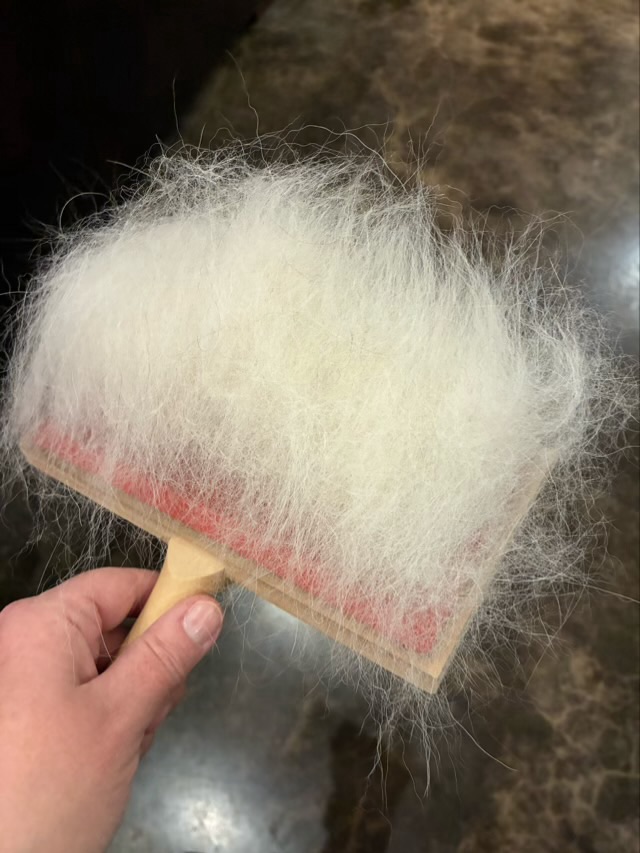
I chose to separate out the white and fawn colored hair, because it didn’t seem right to blend it when Baxter the dog is spotted. The hair was clean with only a slight doggy smell, so I did not wash it. I did card it with a fine toothed set of carders.
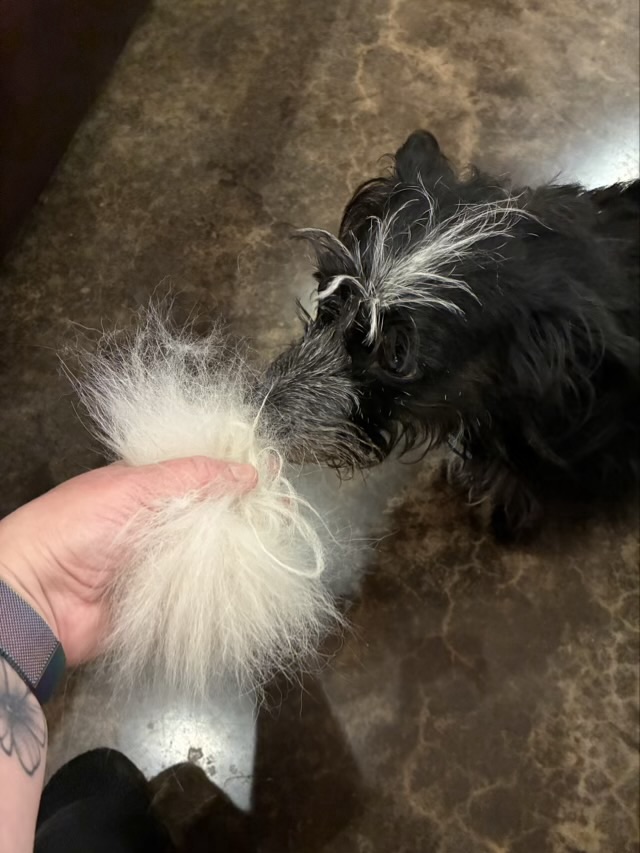
Photo description: the white portion of dog hair loaded on one carderPhoto description: Missy the dog is very interested in the smell of the carded fiber. (Her hair smooth and is very, very difficult to spin.)
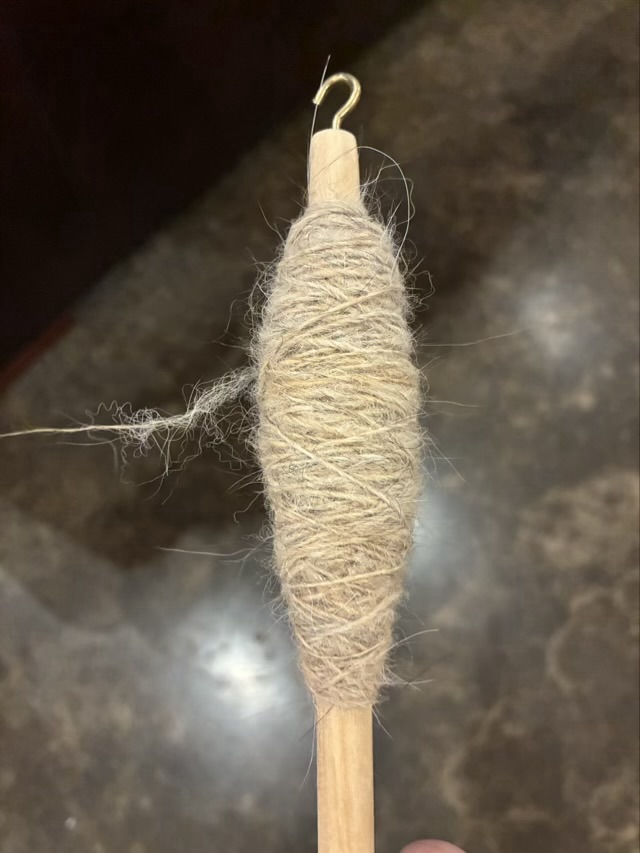
I chose to spin Baxter’s fur with a spindle shaft without a whorl, so I could have absolute control over the twist. It was a moderately difficult spin, not as easy as Samoyed, but still spin able.
Photo description: single spun dog hair on a shaft with cup hook
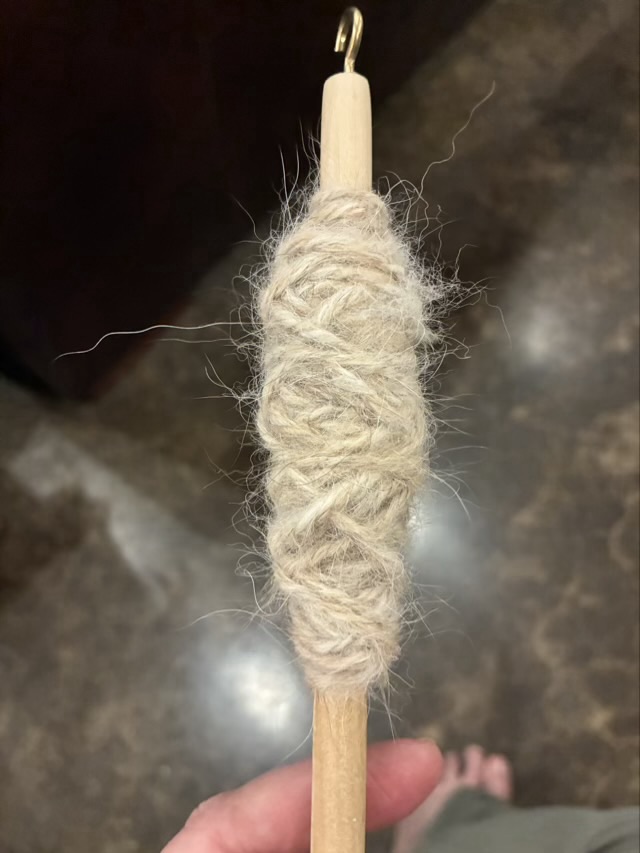
I chain plied the singles to make a three ply yarn. I like chain plying potentially delicate singles because if I do get a break, I can ply it together relatively easily.
Photo description: three ply yarn on a spindle shaft wrapped in a crisscross style
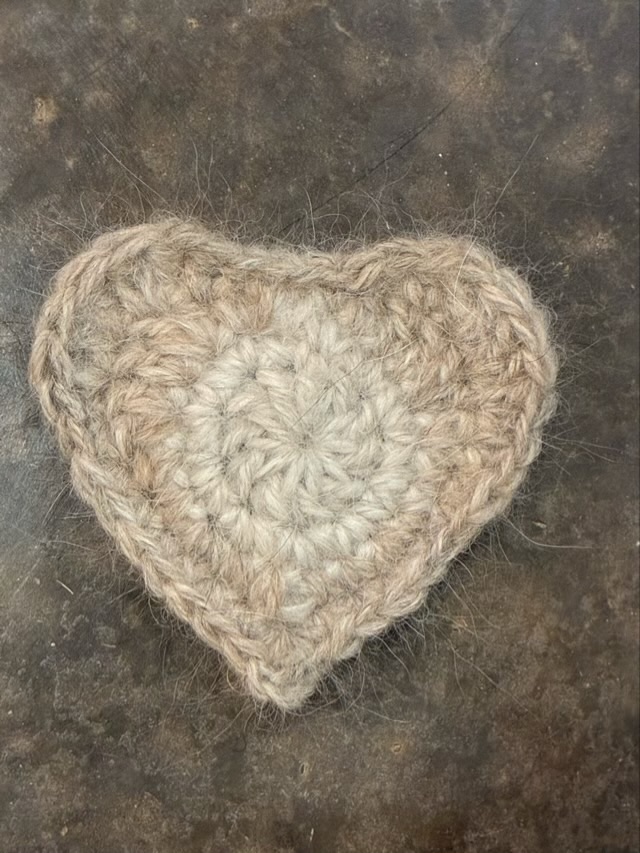
Because Baxter is a beloved pet, I decided to make a small keepsake with this yarn. I crocheted the white yarn in a circle, then used the fawn colored yarn to crochet a heart shape.
Photo description: heart crocheted from two colors of hand spun 100% dog hair
I believe scent is an important link in memories, so I did not block or wash the heart, but instead placed it in a plastic bag to preserve the scent so it will be a comfort when my friend pulls it out in the future.

 Critters and Craft